Institute of Horticultural Plant Physiology, Biochemistry and Molecular Biology, Fujian Agriculture and Forestry University, Fuzhou, China.
BMC Plant Biol. 2010 Mar 7;10:42. doi: 10.1186/1471-2229-10-42.
Very little is known about the effects of manganese (Mn)-excess on citrus photosynthesis and antioxidant systems. Seedlings of sour pummelo (Citrus grandis) were irrigated for 17 weeks with nutrient solution containing 2 microM (control) or 500 microM (excess) MnSO4. The objective of this study were to understand the mechanisms by which Mn-excess leads to a decrease in CO2 assimilation and to test the hypothesis that Mn-induced changes in antioxidant systems differ between roots and leaves.
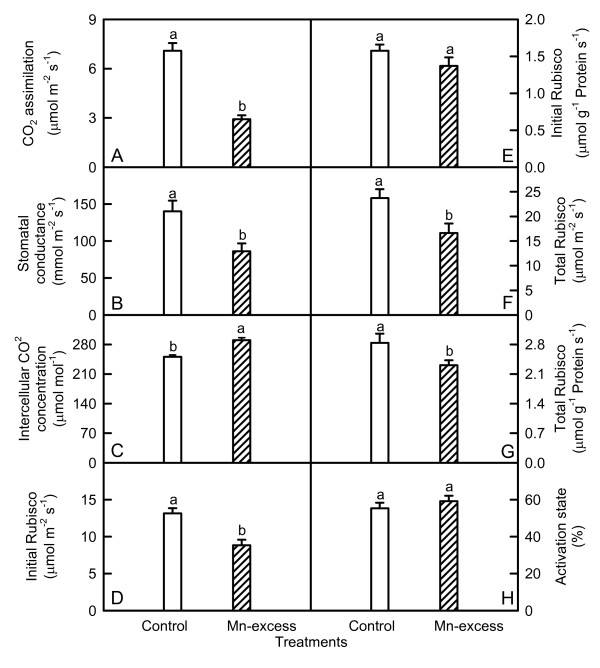
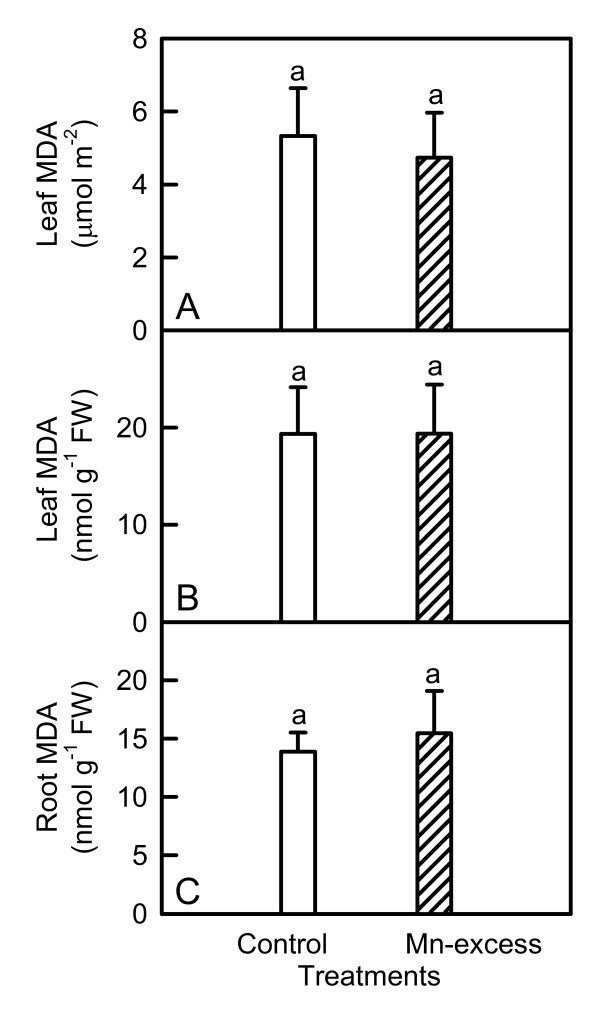
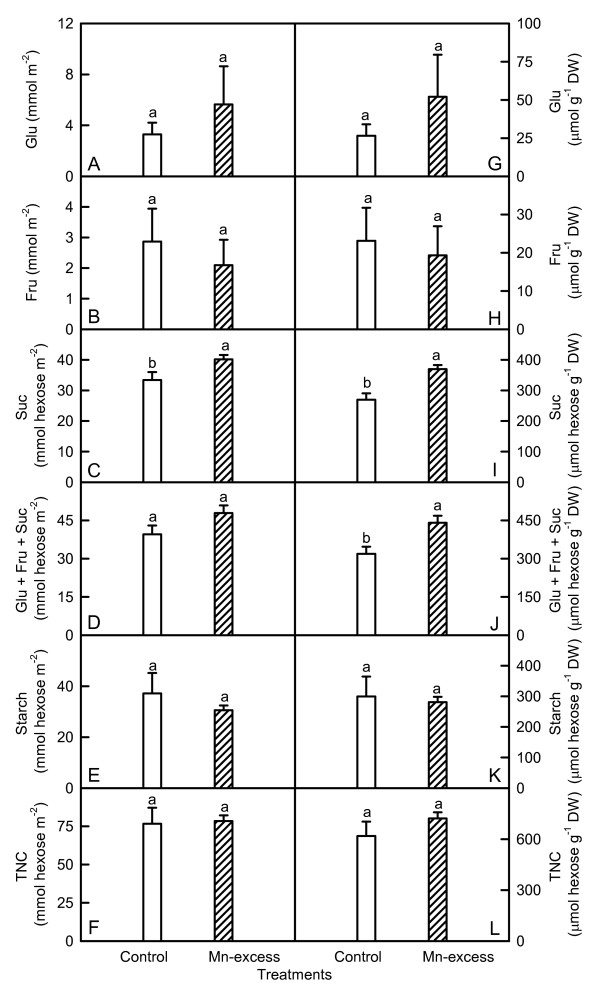
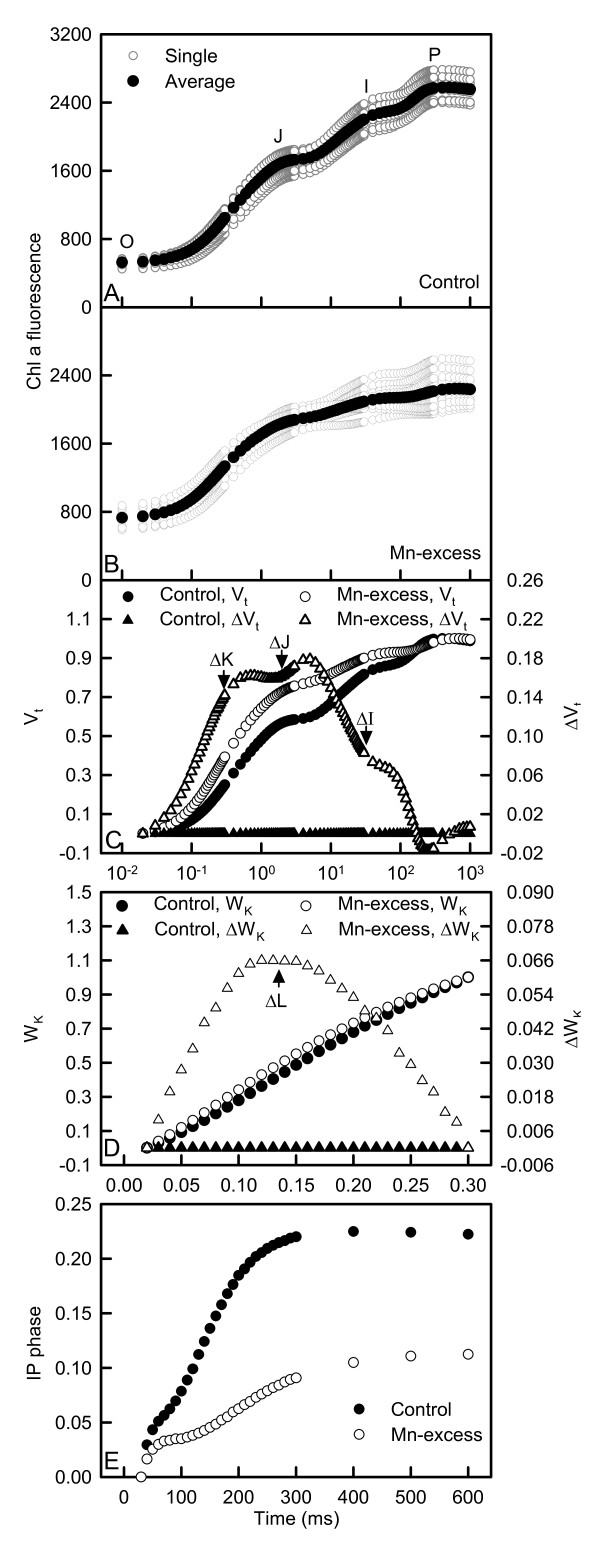
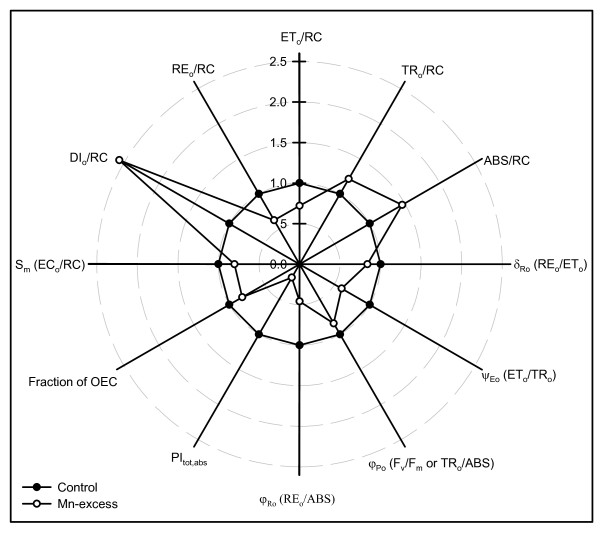
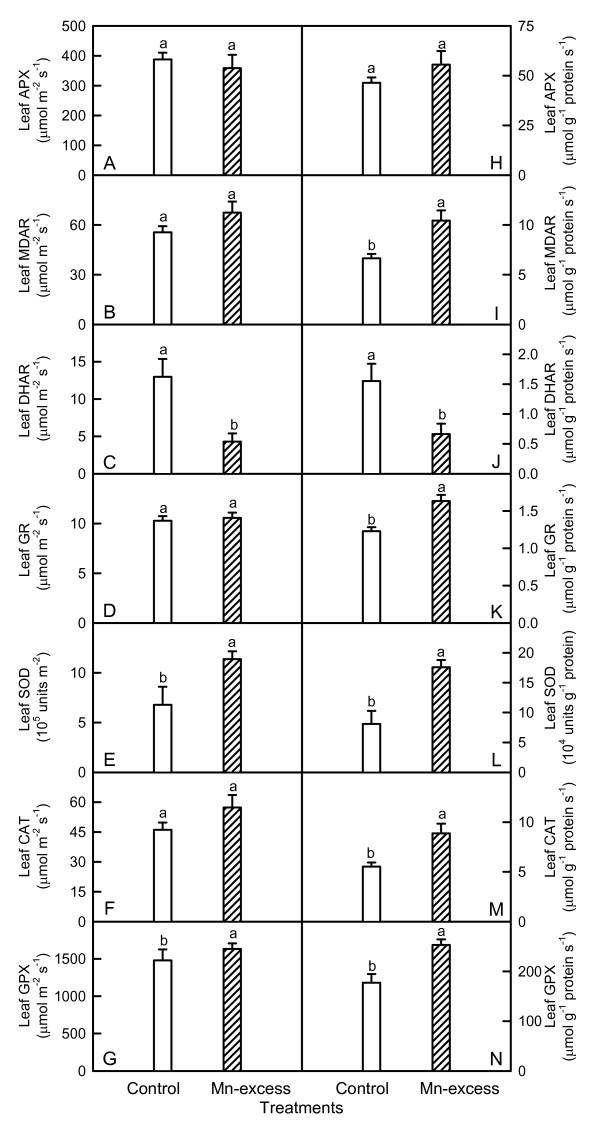
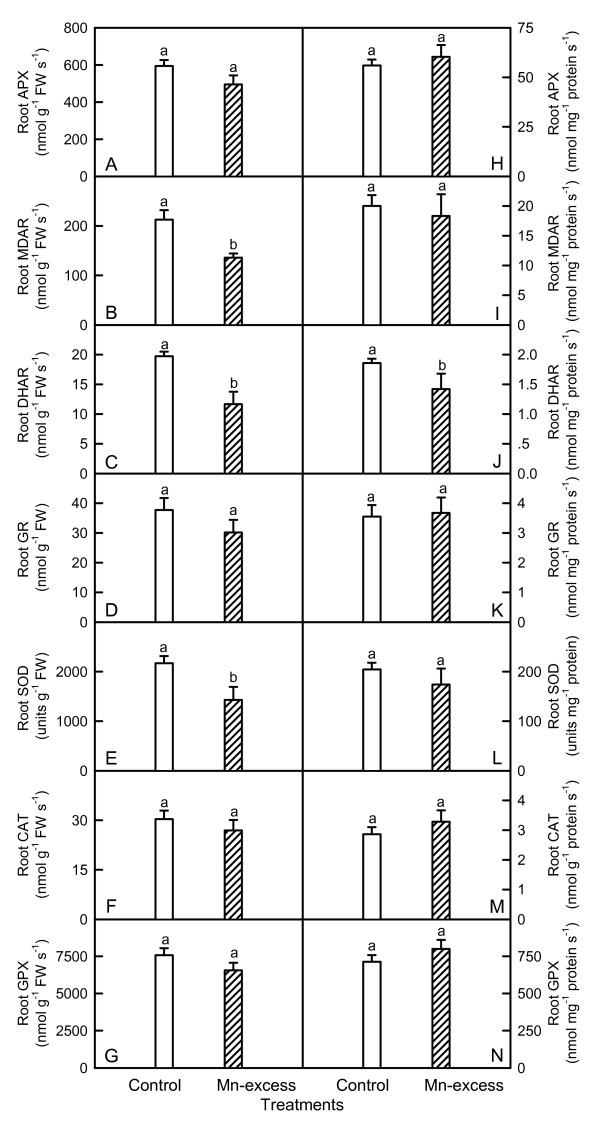
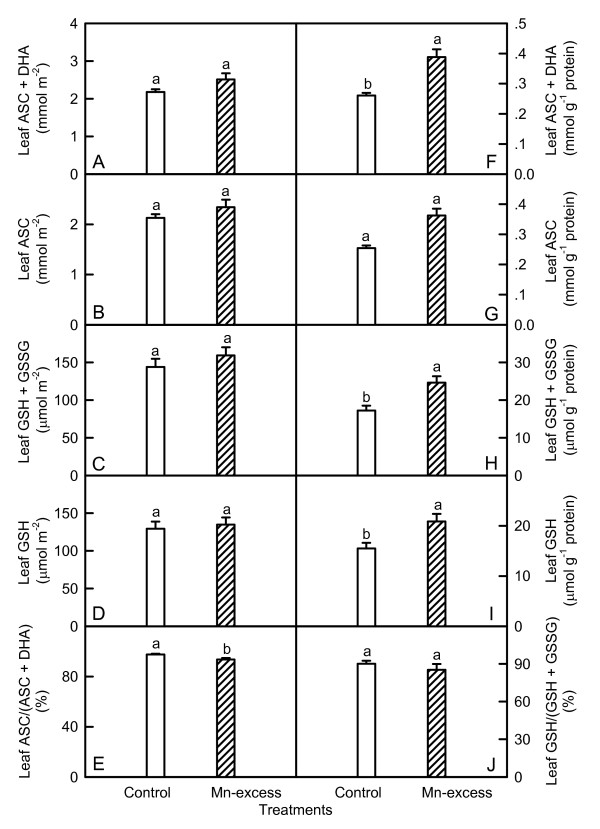
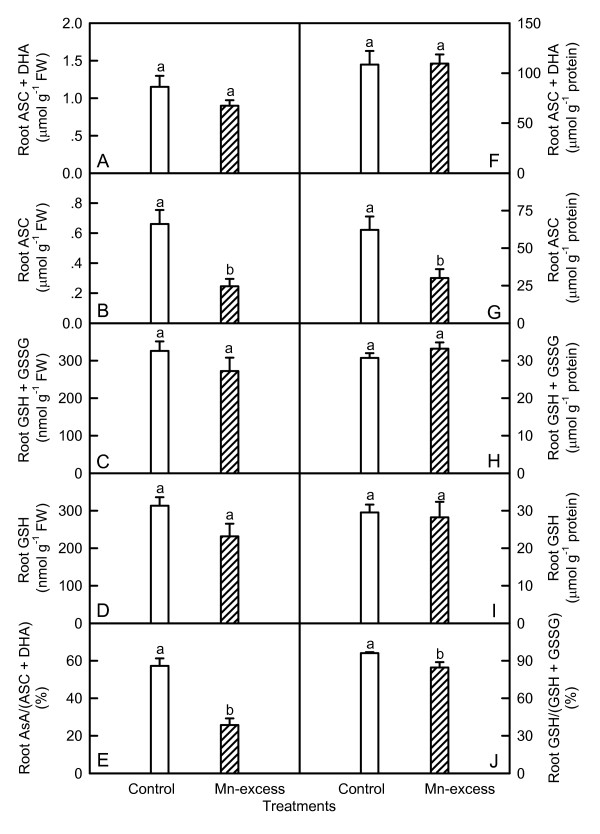
Mn-excess decreased CO2 assimilation and stomatal conductance, increased intercellular CO2 concentration, but did not affect chlorophyll (Chl) level. Both initial and total ribulose-1,5-bisphosphate carboxylase/oxygenase (Rubisco) activity in Mn-excess leaves decreased to a lesser extent than CO2 assimilation. Contents of glucose, fructose, starch and total nonstructural carbohydrates did not differ between Mn-excess leaves and controls, while sucrose content was higher in the former. Chl a fluorescence (OJIP) transients from Mn-excess leaves showed increased O-step and decreased P-step, accompanied by positive L- and K-bands. Mn-excess decreased maximum quantum yield of primary photochemistry (Fv/Fm) and total performance index (PItot,abs), but increased relative variable fluorescence at I-steps (VI) and energy dissipation. On a protein basis, Mn-excess leaves displayed higher activities of monodehydroascorbate reductase (MDAR), glutathione reductase (GR), superoxide dismutase (SOD), catalase (CAT) and guaiacol peroxidase (GPX) and contents of antioxidants, similar ascorbate peroxidase (APX) activities and lower dehydroascorbate reductase (DHAR) activities; while Mn-excess roots had similar or lower activities of antioxidant enzymes and contents of antioxidants. Mn-excess did not affect malondialdehyde (MDA) content of roots and leaves.
Mn-excess impaired the whole photosynthetic electron transport chain from the donor side of photosystem II (PSII) up to the reduction of end acceptors of photosystem I (PSI), thus limiting the production of reducing equivalents, and hence the rate of CO2 assimilation. Both the energy dissipation and the antioxidant systems were enhanced in Mn-excess leaves, while the antioxidant systems in Mn-excess roots were not up-regulated, but still remained high activity. The antioxidant systems in Mn-excess roots and leaves provided sufficient protection to them against oxidative damage.
关于锰过量对柑橘光合作用和抗氧化系统的影响知之甚少。用含有 2 μM(对照)或 500 μM(过量)MnSO4 的营养液浇灌 17 周的酸橙(Citrus grandis)幼苗。本研究的目的是了解锰过量导致 CO2 同化减少的机制,并验证假设,即锰诱导的抗氧化系统变化在根和叶之间不同。
锰过量降低 CO2 同化和气孔导度,增加胞间 CO2 浓度,但不影响叶绿素(Chl)水平。过量 Mn 叶片的初始和总核酮糖-1,5-二磷酸羧化酶/加氧酶(Rubisco)活性下降幅度小于 CO2 同化。过量 Mn 叶片与对照叶片之间的葡萄糖、果糖、淀粉和总非结构性碳水化合物含量没有差异,而前者的蔗糖含量较高。过量 Mn 叶片的叶绿素 a 荧光(OJIP)瞬变显示 O 步增加,P 步减少,同时 L-和 K-带为正。锰过量降低了初级光化学的最大量子产量(Fv/Fm)和总性能指数(PItot,abs),但增加了 I 步的相对可变荧光(VI)和能量耗散。在蛋白质基础上,过量 Mn 叶片显示出更高的单脱氢抗坏血酸还原酶(MDAR)、谷胱甘肽还原酶(GR)、超氧化物歧化酶(SOD)、过氧化氢酶(CAT)和愈创木酚过氧化物酶(GPX)活性,以及抗氧化剂含量,类似的抗坏血酸过氧化物酶(APX)活性和更低的脱氢抗坏血酸还原酶(DHAR)活性;而过量 Mn 根的抗氧化酶活性和抗氧化剂含量相似或更低。锰过量不影响根和叶的丙二醛(MDA)含量。
锰过量损害了从 PSII 供体侧到 PSI 末端受体的整个光合作用电子传递链,从而限制了还原当量的产生,进而限制了 CO2 同化的速率。过量 Mn 叶片中的能量耗散和抗氧化系统都得到了增强,而过量 Mn 根中的抗氧化系统没有被上调,但仍保持高活性。过量 Mn 根和叶中的抗氧化系统为它们提供了足够的保护,防止氧化损伤。