Guangdong Key Laboratory of Plant Epigenetics, College of Life Sciences and Oceanography, Shenzhen University, Shenzhen, 518060, China.
Department for Sustainable Food Process, Università Cattolica del Sacro Cuore, Via Emilia Parmense 84, 29122, Piacenza, Italy.
Plant Cell Rep. 2024 Feb 27;43(3):80. doi: 10.1007/s00299-024-03153-7.
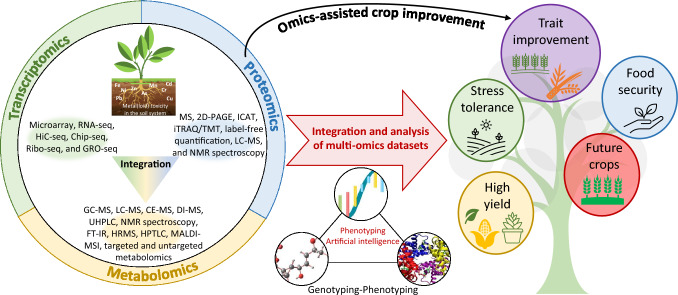
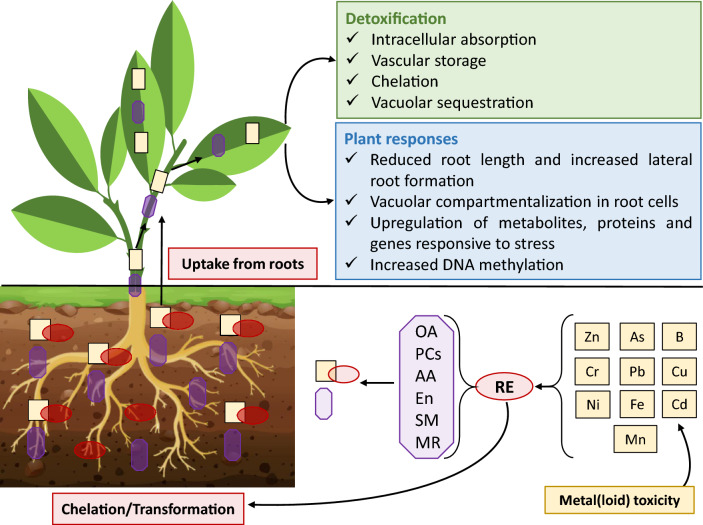
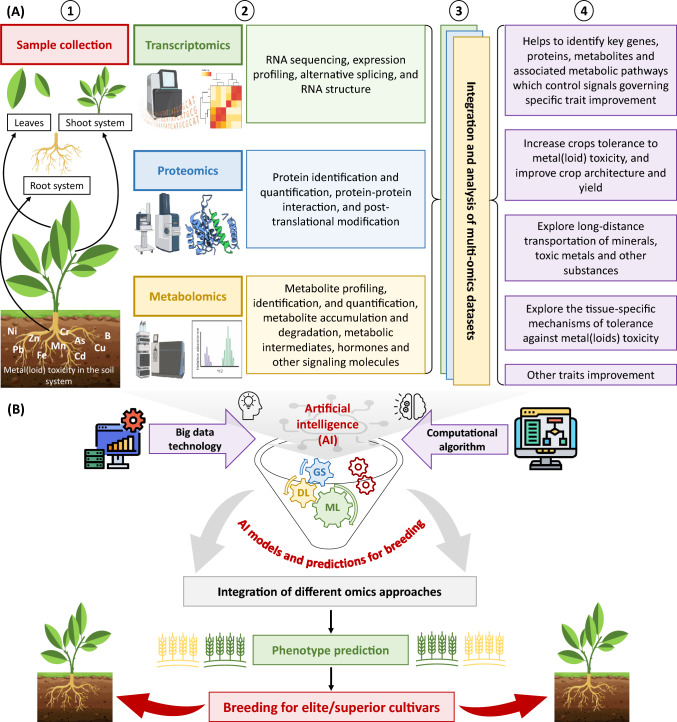
The escalating challenges posed by metal(loid) toxicity in agricultural ecosystems, exacerbated by rapid climate change and anthropogenic pressures, demand urgent attention. Soil contamination is a critical issue because it significantly impacts crop productivity. The widespread threat of metal(loid) toxicity can jeopardize global food security due to contaminated food supplies and pose environmental risks, contributing to soil and water pollution and thus impacting the whole ecosystem. In this context, plants have evolved complex mechanisms to combat metal(loid) stress. Amid the array of innovative approaches, omics, notably transcriptomics, proteomics, and metabolomics, have emerged as transformative tools, shedding light on the genes, proteins, and key metabolites involved in metal(loid) stress responses and tolerance mechanisms. These identified candidates hold promise for developing high-yielding crops with desirable agronomic traits. Computational biology tools like bioinformatics, biological databases, and analytical pipelines support these omics approaches by harnessing diverse information and facilitating the mapping of genotype-to-phenotype relationships under stress conditions. This review explores: (1) the multifaceted strategies that plants use to adapt to metal(loid) toxicity in their environment; (2) the latest findings in metal(loid)-mediated transcriptomics, proteomics, and metabolomics studies across various plant species; (3) the integration of omics data with artificial intelligence and high-throughput phenotyping; (4) the latest bioinformatics databases, tools and pipelines for single and/or multi-omics data integration; (5) the latest insights into stress adaptations and tolerance mechanisms for future outlooks; and (6) the capacity of omics advances for creating sustainable and resilient crop plants that can thrive in metal(loid)-contaminated environments.
农业生态系统中金属(类)毒性所带来的日益严峻的挑战,加之快速的气候变化和人为压力的影响,亟待引起关注。土壤污染是一个关键问题,因为它会极大地影响作物的生产力。由于受污染的食物供应以及对环境的风险,金属(类)毒性的广泛威胁可能会危及全球粮食安全,造成土壤和水污染,并因此影响整个生态系统。在这种情况下,植物已经进化出了复杂的机制来对抗金属(类)胁迫。在众多创新方法中,组学,特别是转录组学、蛋白质组学和代谢组学,已经成为变革性的工具,揭示了参与金属(类)胁迫反应和耐受机制的基因、蛋白质和关键代谢物。这些鉴定出的候选物有望开发出具有理想农艺性状的高产量作物。计算生物学工具,如生物信息学、生物数据库和分析管道,通过利用多样化的信息并促进在胁迫条件下的基因型到表型关系的映射,为这些组学方法提供支持。本综述探讨了:(1)植物在其环境中适应金属(类)毒性的多方面策略;(2)不同植物物种中金属(类)介导的转录组学、蛋白质组学和代谢组学研究的最新发现;(3)将组学数据与人工智能和高通量表型分析进行整合;(4)最新的生物信息学数据库、工具和管道,用于单和/或多组学数据的整合;(5)对未来展望的应激适应和耐受机制的最新见解;以及(6)组学进展在创造能够在金属(类)污染环境中茁壮成长的可持续和有弹性的作物植物方面的能力。