• 文献检索
  • 文档翻译
  • 深度研究
  • 学术资讯
  • Suppr Zotero 插件Zotero 插件
  • 邀请有礼
  • 套餐&价格
  • 历史记录
应用&插件
Suppr Zotero 插件Zotero 插件浏览器插件Mac 客户端Windows 客户端微信小程序
定价
高级版会员购买积分包购买API积分包
服务
文献检索文档翻译深度研究API 文档MCP 服务
关于我们
关于 Suppr公司介绍联系我们用户协议隐私条款
关注我们

Suppr 超能文献

核心技术专利:CN118964589B侵权必究
粤ICP备2023148730 号-1Suppr @ 2026

文献检索

告别复杂PubMed语法,用中文像聊天一样搜索,搜遍4000万医学文献。AI智能推荐,让科研检索更轻松。

立即免费搜索

文件翻译

保留排版,准确专业,支持PDF/Word/PPT等文件格式,支持 12+语言互译。

免费翻译文档

深度研究

AI帮你快速写综述,25分钟生成高质量综述,智能提取关键信息,辅助科研写作。

立即免费体验

FGSC:用于边缘 AI 实时车辆检测和分类计数设计的模糊引导尺度选择 SSD 模型。

FGSC: Fuzzy Guided Scale Choice SSD Model for Edge AI Design on Real-Time Vehicle Detection and Class Counting.

机构信息

Department of Electronic Engineering, National Yunlin University of Science and Technology, Douliu 64002, Taiwan.

Department of Computer Science and Information Engineering, National Chin-Yi University of Technology, Taichung 411030, Taiwan.

出版信息

Sensors (Basel). 2021 Nov 7;21(21):7399. doi: 10.3390/s21217399.

DOI:10.3390/s21217399
PMID:34770704
原文链接:https://pmc.ncbi.nlm.nih.gov/articles/PMC8587874/
Abstract

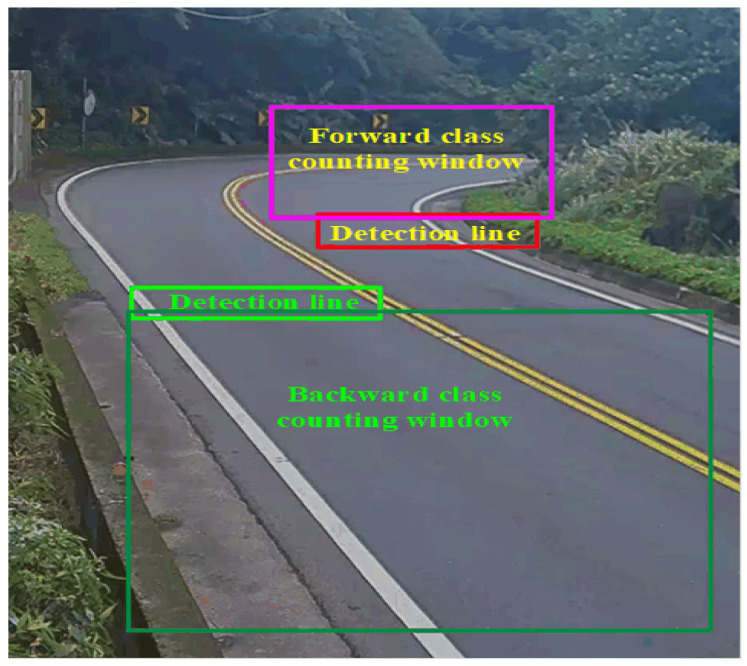
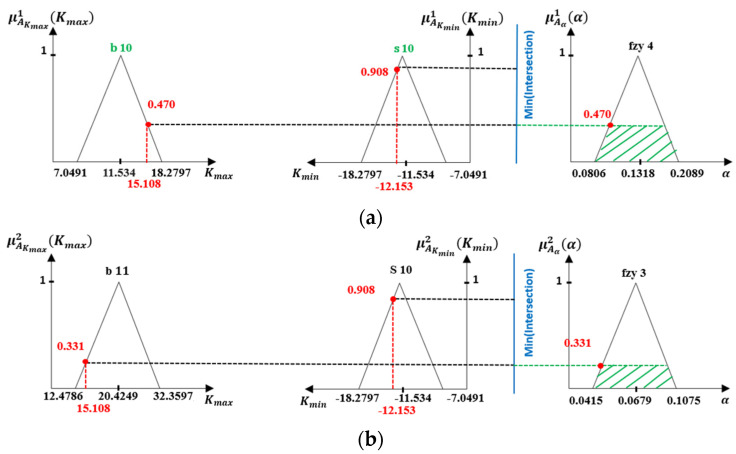
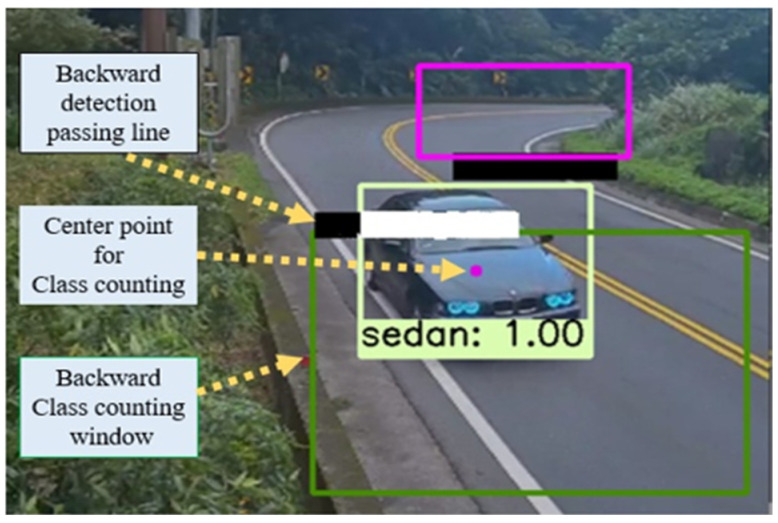
The aim of this paper is to distinguish the vehicle detection and count the class number in each classification from the inputs. We proposed the use of Fuzzy Guided Scale Choice (FGSC)-based SSD deep neural network architecture for vehicle detection and class counting with parameter optimization. The 'FGSC' blocks are integrated into the convolutional layers of the model, which emphasize essential features while ignoring less important ones that are not significant for the operation. We created the passing detection lines and class counting windows and connected them with the proposed FGSC-SSD deep neural network model. The 'FGSC' blocks in the convolution layer emphasize essential features and find out unnecessary features by using the scale choice method at the training stage and eliminate that significant speedup of the model. In addition, FGSC blocks avoided many unusable parameters in the saturation interval and improved the performance efficiency. In addition, the Fuzzy Sigmoid Function (FSF) increases the activation interval through fuzzy logic. While performing operations, the FGSC-SSD model reduces the computational complexity of convolutional layers and their parameters. As a result, the model tested Frames Per Second (FPS) on edge artificial intelligence (AI) and reached a real-time processing speed of 38.4 and an accuracy rate of more than 94%. Therefore, this work might be considered an improvement to the traffic monitoring approach by using edge AI applications.

摘要

本文旨在从输入中区分车辆检测和分类计数的类别数量。我们提出了使用基于模糊引导比例选择(FGSC)的 SSD 深度神经网络架构进行车辆检测和类别计数,并进行参数优化。“FGSC”块被集成到模型的卷积层中,在训练阶段通过比例选择方法强调重要特征,同时忽略对操作不重要的不太重要的特征,从而排除了模型的显著加速。我们创建了通过检测线和分类计数窗口,并将其与所提出的 FGSC-SSD 深度神经网络模型连接起来。卷积层中的“FGSC”块通过使用比例选择方法来强调重要特征并找出不必要的特征,从而消除了模型的显著加速。此外,FGSC 块避免了饱和区间内的许多无用参数,并提高了性能效率。此外,模糊 Sigmoid 函数(FSF)通过模糊逻辑增加激活区间。在执行操作时,FGSC-SSD 模型减少了卷积层及其参数的计算复杂度。结果,该模型在边缘人工智能(AI)上测试的每秒帧数(FPS)达到了 38.4,准确率超过 94%。因此,这项工作可以被认为是通过使用边缘 AI 应用改进交通监控方法的一种改进。

https://cdn.ncbi.nlm.nih.gov/pmc/blobs/e4ff/8587874/af5025ec1937/sensors-21-07399-g022.jpg
https://cdn.ncbi.nlm.nih.gov/pmc/blobs/e4ff/8587874/807e613626be/sensors-21-07399-g001.jpg
https://cdn.ncbi.nlm.nih.gov/pmc/blobs/e4ff/8587874/c02abfbd6d25/sensors-21-07399-g002.jpg
https://cdn.ncbi.nlm.nih.gov/pmc/blobs/e4ff/8587874/29640109b169/sensors-21-07399-g003.jpg
https://cdn.ncbi.nlm.nih.gov/pmc/blobs/e4ff/8587874/225dba9187e9/sensors-21-07399-g004.jpg
https://cdn.ncbi.nlm.nih.gov/pmc/blobs/e4ff/8587874/9a4b4557a4da/sensors-21-07399-g005.jpg
https://cdn.ncbi.nlm.nih.gov/pmc/blobs/e4ff/8587874/f9e646d78948/sensors-21-07399-g006.jpg
https://cdn.ncbi.nlm.nih.gov/pmc/blobs/e4ff/8587874/393e8ab5f0bc/sensors-21-07399-g007.jpg
https://cdn.ncbi.nlm.nih.gov/pmc/blobs/e4ff/8587874/b46f8b36791c/sensors-21-07399-g008.jpg
https://cdn.ncbi.nlm.nih.gov/pmc/blobs/e4ff/8587874/a1c72cf48054/sensors-21-07399-g009.jpg
https://cdn.ncbi.nlm.nih.gov/pmc/blobs/e4ff/8587874/e4b0a702ce5c/sensors-21-07399-g010.jpg
https://cdn.ncbi.nlm.nih.gov/pmc/blobs/e4ff/8587874/aa449bccd355/sensors-21-07399-g011.jpg
https://cdn.ncbi.nlm.nih.gov/pmc/blobs/e4ff/8587874/fd23b8b2f9f5/sensors-21-07399-g012.jpg
https://cdn.ncbi.nlm.nih.gov/pmc/blobs/e4ff/8587874/512a36059cab/sensors-21-07399-g013.jpg
https://cdn.ncbi.nlm.nih.gov/pmc/blobs/e4ff/8587874/de688fa31857/sensors-21-07399-g014.jpg
https://cdn.ncbi.nlm.nih.gov/pmc/blobs/e4ff/8587874/423f58a9b707/sensors-21-07399-g015.jpg
https://cdn.ncbi.nlm.nih.gov/pmc/blobs/e4ff/8587874/ff49bd7dca49/sensors-21-07399-g016.jpg
https://cdn.ncbi.nlm.nih.gov/pmc/blobs/e4ff/8587874/dc521aa59d65/sensors-21-07399-g017.jpg
https://cdn.ncbi.nlm.nih.gov/pmc/blobs/e4ff/8587874/8bce15464f35/sensors-21-07399-g018.jpg
https://cdn.ncbi.nlm.nih.gov/pmc/blobs/e4ff/8587874/28990e51a33c/sensors-21-07399-g019.jpg
https://cdn.ncbi.nlm.nih.gov/pmc/blobs/e4ff/8587874/6661858a9946/sensors-21-07399-g020.jpg
https://cdn.ncbi.nlm.nih.gov/pmc/blobs/e4ff/8587874/5948952b998e/sensors-21-07399-g021.jpg
https://cdn.ncbi.nlm.nih.gov/pmc/blobs/e4ff/8587874/af5025ec1937/sensors-21-07399-g022.jpg
https://cdn.ncbi.nlm.nih.gov/pmc/blobs/e4ff/8587874/807e613626be/sensors-21-07399-g001.jpg
https://cdn.ncbi.nlm.nih.gov/pmc/blobs/e4ff/8587874/c02abfbd6d25/sensors-21-07399-g002.jpg
https://cdn.ncbi.nlm.nih.gov/pmc/blobs/e4ff/8587874/29640109b169/sensors-21-07399-g003.jpg
https://cdn.ncbi.nlm.nih.gov/pmc/blobs/e4ff/8587874/225dba9187e9/sensors-21-07399-g004.jpg
https://cdn.ncbi.nlm.nih.gov/pmc/blobs/e4ff/8587874/9a4b4557a4da/sensors-21-07399-g005.jpg
https://cdn.ncbi.nlm.nih.gov/pmc/blobs/e4ff/8587874/f9e646d78948/sensors-21-07399-g006.jpg
https://cdn.ncbi.nlm.nih.gov/pmc/blobs/e4ff/8587874/393e8ab5f0bc/sensors-21-07399-g007.jpg
https://cdn.ncbi.nlm.nih.gov/pmc/blobs/e4ff/8587874/b46f8b36791c/sensors-21-07399-g008.jpg
https://cdn.ncbi.nlm.nih.gov/pmc/blobs/e4ff/8587874/a1c72cf48054/sensors-21-07399-g009.jpg
https://cdn.ncbi.nlm.nih.gov/pmc/blobs/e4ff/8587874/e4b0a702ce5c/sensors-21-07399-g010.jpg
https://cdn.ncbi.nlm.nih.gov/pmc/blobs/e4ff/8587874/aa449bccd355/sensors-21-07399-g011.jpg
https://cdn.ncbi.nlm.nih.gov/pmc/blobs/e4ff/8587874/fd23b8b2f9f5/sensors-21-07399-g012.jpg
https://cdn.ncbi.nlm.nih.gov/pmc/blobs/e4ff/8587874/512a36059cab/sensors-21-07399-g013.jpg
https://cdn.ncbi.nlm.nih.gov/pmc/blobs/e4ff/8587874/de688fa31857/sensors-21-07399-g014.jpg
https://cdn.ncbi.nlm.nih.gov/pmc/blobs/e4ff/8587874/423f58a9b707/sensors-21-07399-g015.jpg
https://cdn.ncbi.nlm.nih.gov/pmc/blobs/e4ff/8587874/ff49bd7dca49/sensors-21-07399-g016.jpg
https://cdn.ncbi.nlm.nih.gov/pmc/blobs/e4ff/8587874/dc521aa59d65/sensors-21-07399-g017.jpg
https://cdn.ncbi.nlm.nih.gov/pmc/blobs/e4ff/8587874/8bce15464f35/sensors-21-07399-g018.jpg
https://cdn.ncbi.nlm.nih.gov/pmc/blobs/e4ff/8587874/28990e51a33c/sensors-21-07399-g019.jpg
https://cdn.ncbi.nlm.nih.gov/pmc/blobs/e4ff/8587874/6661858a9946/sensors-21-07399-g020.jpg
https://cdn.ncbi.nlm.nih.gov/pmc/blobs/e4ff/8587874/5948952b998e/sensors-21-07399-g021.jpg
https://cdn.ncbi.nlm.nih.gov/pmc/blobs/e4ff/8587874/af5025ec1937/sensors-21-07399-g022.jpg

相似文献

1
FGSC: Fuzzy Guided Scale Choice SSD Model for Edge AI Design on Real-Time Vehicle Detection and Class Counting.FGSC:用于边缘 AI 实时车辆检测和分类计数设计的模糊引导尺度选择 SSD 模型。
Sensors (Basel). 2021 Nov 7;21(21):7399. doi: 10.3390/s21217399.
2
Performance evaluation of artificial intelligence paradigms-artificial neural networks, fuzzy logic, and adaptive neuro-fuzzy inference system for flood prediction.人工智能范式的性能评估——人工神经网络、模糊逻辑和自适应神经模糊推理系统在洪水预测中的应用。
Environ Sci Pollut Res Int. 2021 May;28(20):25265-25282. doi: 10.1007/s11356-021-12410-1. Epub 2021 Jan 16.
3
A multimodal convolutional neuro-fuzzy network for emotion understanding of movie clips.用于电影片段情绪理解的多模态卷积神经模糊网络。
Neural Netw. 2019 Oct;118:208-219. doi: 10.1016/j.neunet.2019.06.010. Epub 2019 Jul 2.
4
Fuzzy jump wavelet neural network based on rule induction for dynamic nonlinear system identification with real data applications.基于规则归纳的模糊跃变小波神经网络在具有实际数据应用的动态非线性系统辨识中的应用。
PLoS One. 2019 Dec 9;14(12):e0224075. doi: 10.1371/journal.pone.0224075. eCollection 2019.
5
Fuzzy Inspired Deep Belief Network for the Traffic Flow Prediction in Intelligent Transportation System Using Flow Strength Indicators.基于流强度指标的智能交通系统中交通流预测的模糊启发式深度信念网络。
Big Data. 2020 Aug;8(4):291-307. doi: 10.1089/big.2019.0007. Epub 2020 Jul 6.
6
Fuzzy Edge-Detection as a Preprocessing Layer in Deep Neural Networks for Guitar Classification.模糊边缘检测作为用于吉他分类的深度神经网络中的预处理层
Sensors (Basel). 2022 Aug 7;22(15):5892. doi: 10.3390/s22155892.
7
NSD-SSD: A Novel Real-Time Ship Detector Based on Convolutional Neural Network in Surveillance Video.NSD-SSD:一种基于卷积神经网络的监控视频中船舶实时检测新方法
Comput Intell Neurosci. 2021 Sep 8;2021:7018035. doi: 10.1155/2021/7018035. eCollection 2021.
8
Coordinated Control of Intelligent Fuzzy Traffic Signal Based on Edge Computing Distribution.基于边缘计算分布的智能模糊交通信号协调控制
Sensors (Basel). 2022 Aug 9;22(16):5953. doi: 10.3390/s22165953.
9
Deep convolutional neural network and IoT technology for healthcare.用于医疗保健的深度卷积神经网络和物联网技术。
Digit Health. 2024 Jan 17;10:20552076231220123. doi: 10.1177/20552076231220123. eCollection 2024 Jan-Dec.
10
FACNN: fuzzy-based adaptive convolution neural network for classifying COVID-19 in noisy CXR images.基于模糊自适应卷积神经网络的嘈杂胸部 X 光图像 COVID-19 分类器
Med Biol Eng Comput. 2024 Sep;62(9):2893-2909. doi: 10.1007/s11517-024-03107-x. Epub 2024 May 7.

本文引用的文献

1
Synthesizing Supervision for Learning Deep Saliency Network without Human Annotation.无人工标注的深度学习显著图网络合成监督学习
IEEE Trans Pattern Anal Mach Intell. 2020 Jul;42(7):1755-1769. doi: 10.1109/TPAMI.2019.2900649. Epub 2019 Feb 20.
2
Attention CoupleNet: Fully Convolutional Attention Coupling Network for Object Detection.关注 CoupleNet:用于目标检测的全卷积注意力耦合网络。
IEEE Trans Image Process. 2019 Jan;28(1):113-126. doi: 10.1109/TIP.2018.2865280. Epub 2018 Aug 13.