Medvedev Nikita, Chalupský Jaromír, Juha Libor
Department of Radiation and Chemical Physics, Institute of Physics, Czech Academy of Sciences, Na Slovance 2, 182 21 Prague 8, Czech Republic.
Laser Plasma Department, Institute of Plasma Physics, Czech Academy of Sciences, Za Slovankou 3, 182 00 Prague 8, Czech Republic.
Molecules. 2021 Nov 5;26(21):6701. doi: 10.3390/molecules26216701.
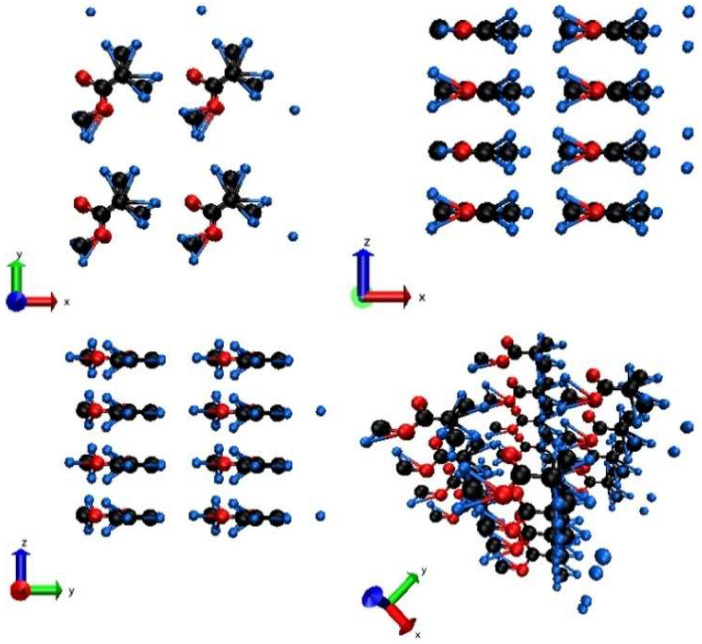
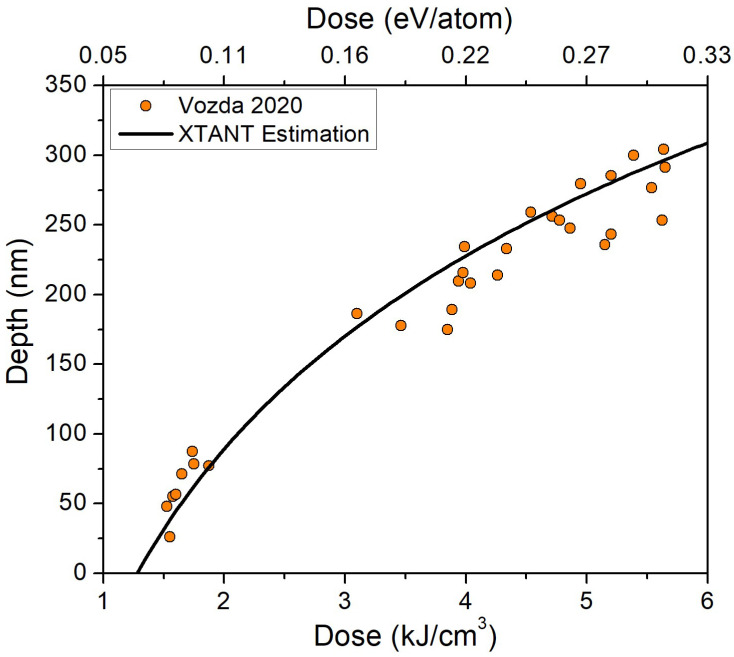
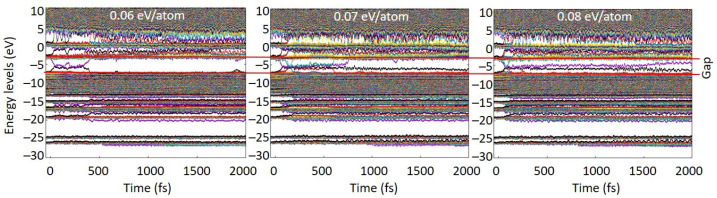
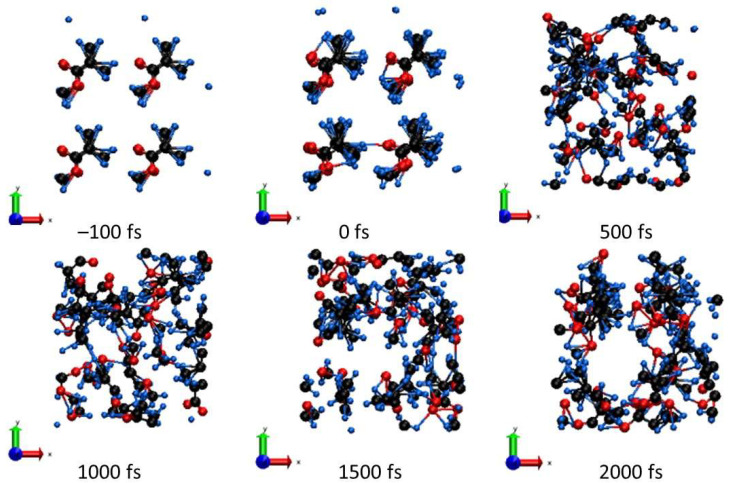
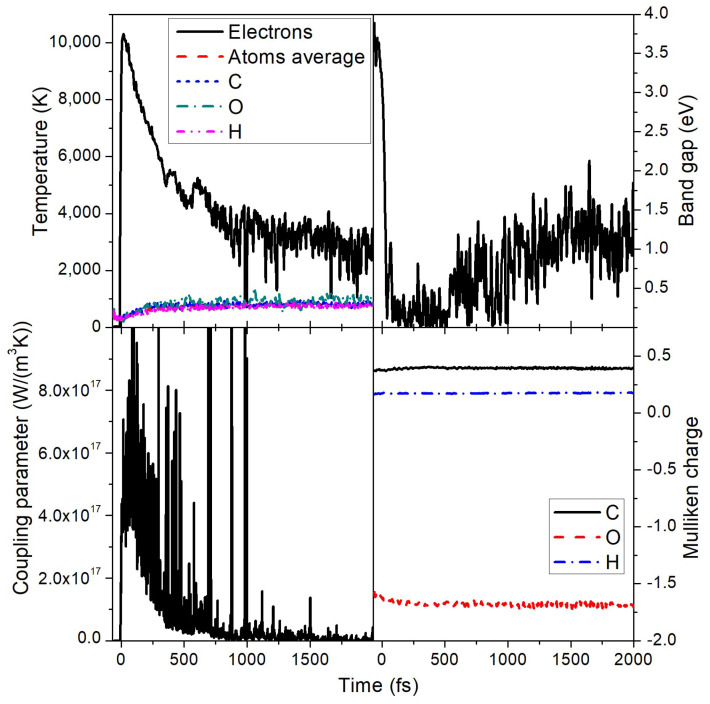
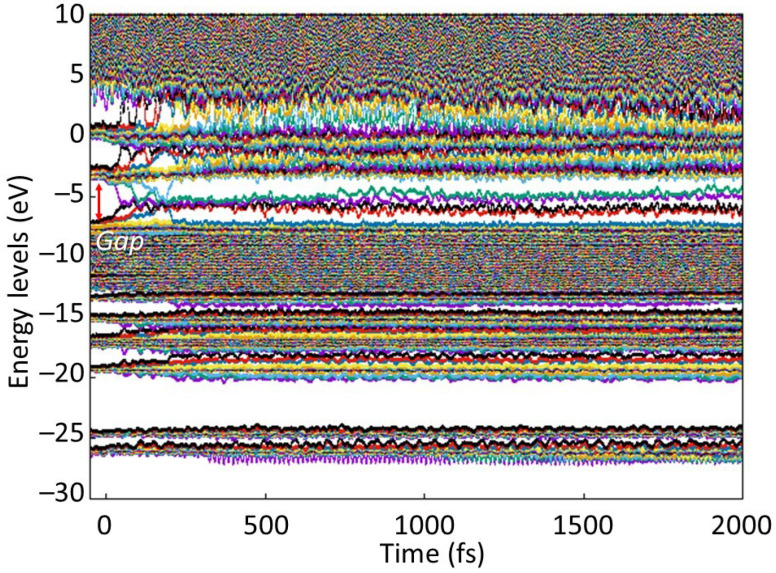
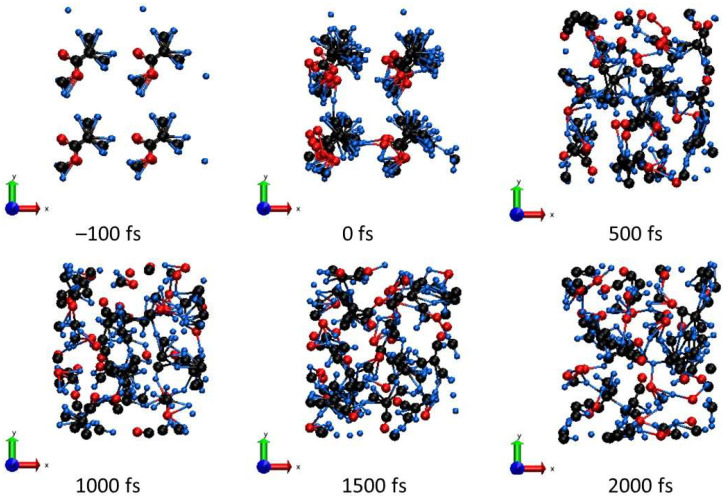
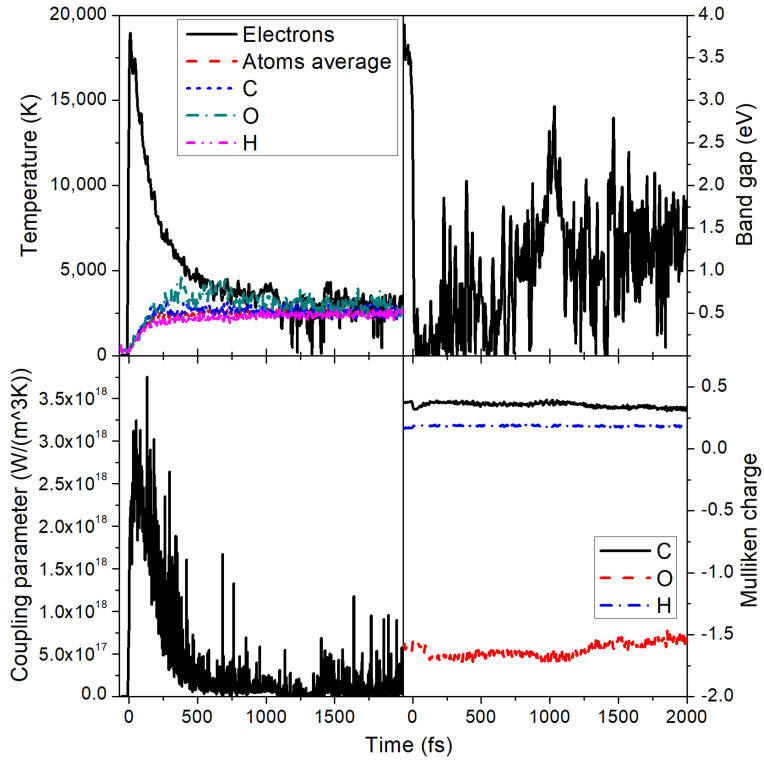
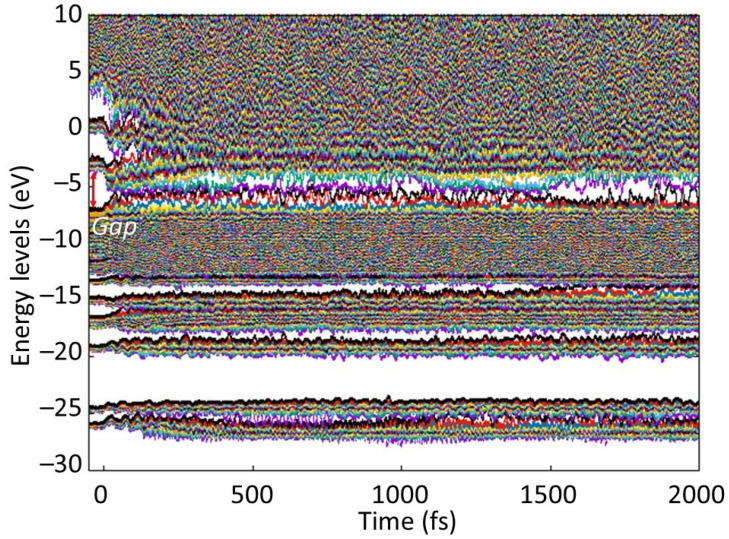
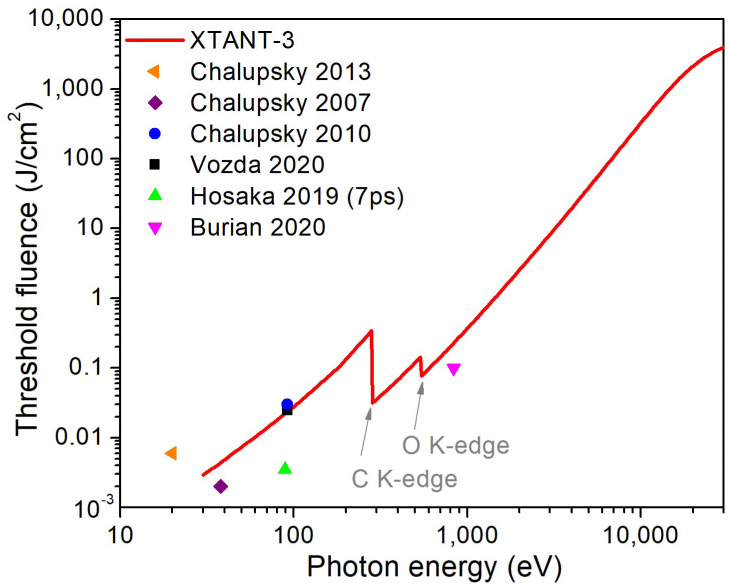
We study the behavior of poly(methyl methacrylate) (PMMA) exposed to femtosecond pulses of extreme ultraviolet and X-ray laser radiation in the single-shot damage regime. The employed microscopic simulation traces induced electron cascades, the thermal energy exchange of electrons with atoms, nonthermal modification of the interatomic potential, and a triggered atomic response. We identify that the nonthermal hydrogen decoupling triggers ultrafast fragmentation of PMMA strains at the absorbed threshold dose of ~0.07 eV/atom. At higher doses, more hydrogen atoms detach from their parental molecules, which, at the dose of ~0.5 eV/atom, leads to a complete separation of hydrogens from carbon and oxygen atoms and fragmentation of MMA molecules. At the dose of ~0.7 eV/atom, the band gap completely collapses indicating that a metallic liquid is formed with complete atomic disorder. An estimated single-shot ablation threshold and a crater depth as functions of fluence agree well with the experimental data collected.
我们研究了聚甲基丙烯酸甲酯(PMMA)在单次损伤模式下暴露于极紫外和X射线激光辐射的飞秒脉冲时的行为。所采用的微观模拟追踪了诱导电子级联、电子与原子的热能交换、原子间势的非热改性以及触发的原子响应。我们发现,在吸收阈值剂量约为0.07 eV/原子时,非热氢解耦触发了PMMA链段的超快碎片化。在更高剂量下,更多氢原子与其母体分子分离,在约0.5 eV/原子的剂量下,导致氢与碳和氧原子完全分离以及甲基丙烯酸甲酯分子碎片化。在约0.7 eV/原子的剂量下,带隙完全崩溃,表明形成了具有完全原子无序的金属液体。估计的单次烧蚀阈值和坑深作为能量密度的函数与所收集的实验数据吻合良好。