Department of Neurology, University Medical Center Hamburg-Eppendorf, Martinistraße 52, 20246, Hamburg, Germany.
Department of Neurobiology Research, Institute of Molecular Medicine, University of Southern Denmark, Odense, Denmark.
J Neuroinflammation. 2021 Nov 13;18(1):265. doi: 10.1186/s12974-021-02316-7.
Lymphocytes have dichotomous functions in ischemic stroke. Regulatory T cells are protective, while IL-17A from innate lymphocytes promotes the infarct growth. With recent advances of T cell-subtype specific transgenic mouse models it now has become possible to study the complex interplay of T cell subpopulations in ischemic stroke.
In a murine model of experimental stroke we analyzed the effects of IL-10 on the functional outcome for up to 14 days post-ischemia and defined the source of IL-10 in ischemic brains based on immunohistochemistry, flow cytometry, and bone-marrow chimeric mice. We used neutralizing IL-17A antibodies, intrathecal IL-10 injections, and transgenic mouse models which harbor a deletion of the IL-10R on distinct T cell subpopulations to further explore the interplay between IL-10 and IL-17A pathways in the ischemic brain.
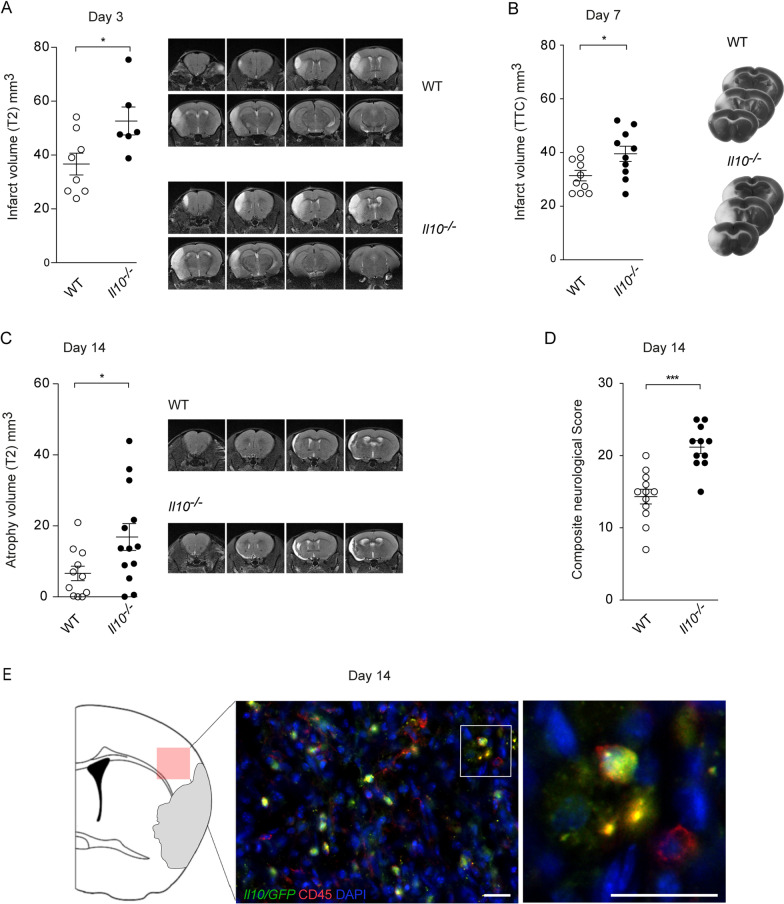
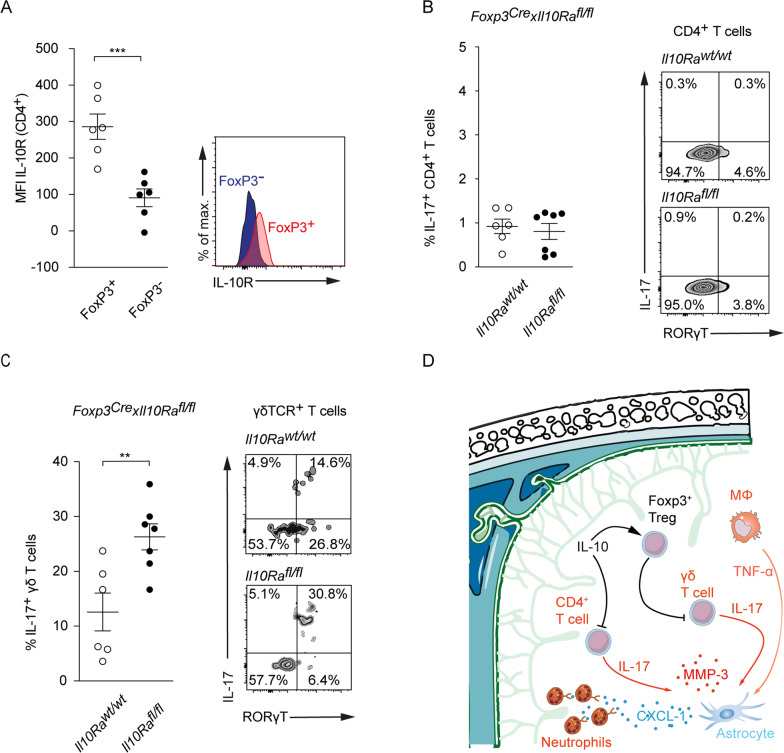
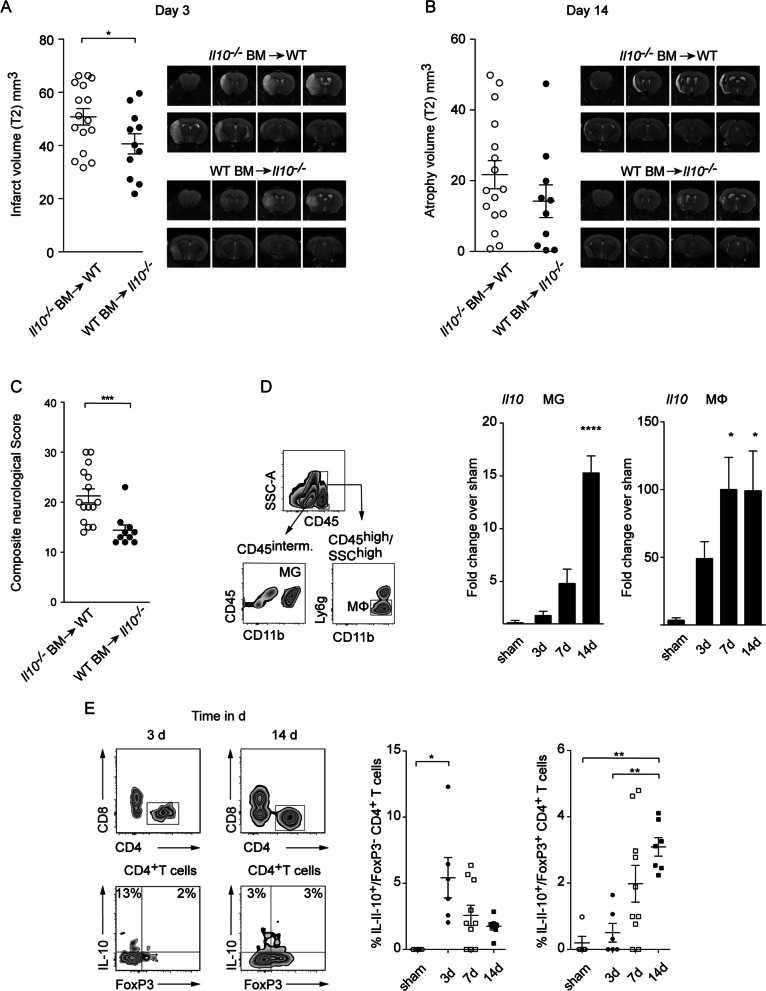
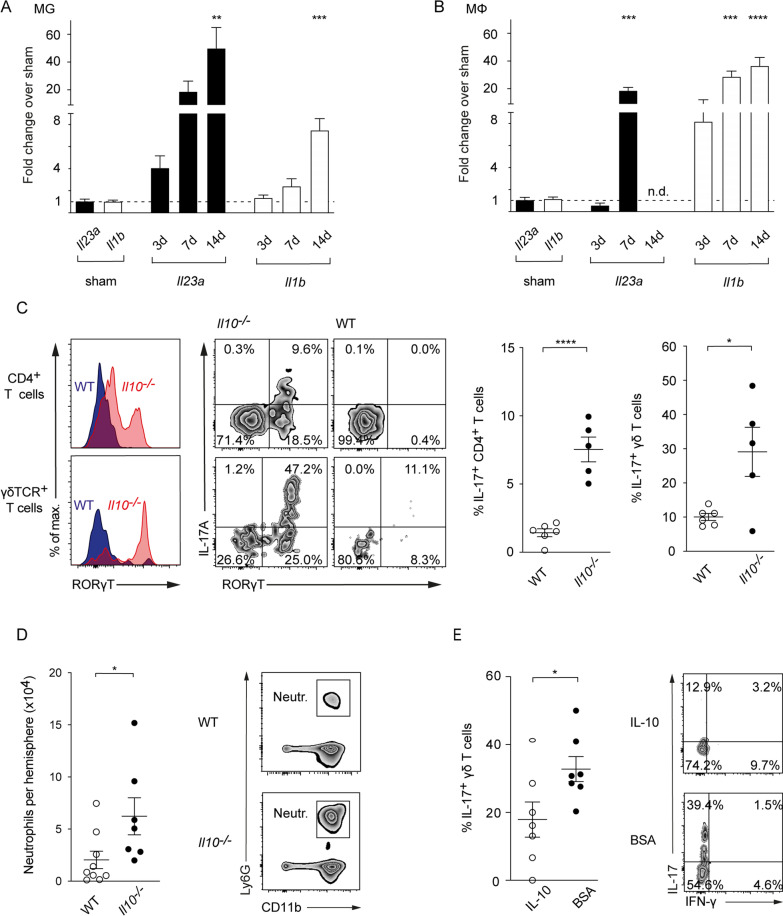
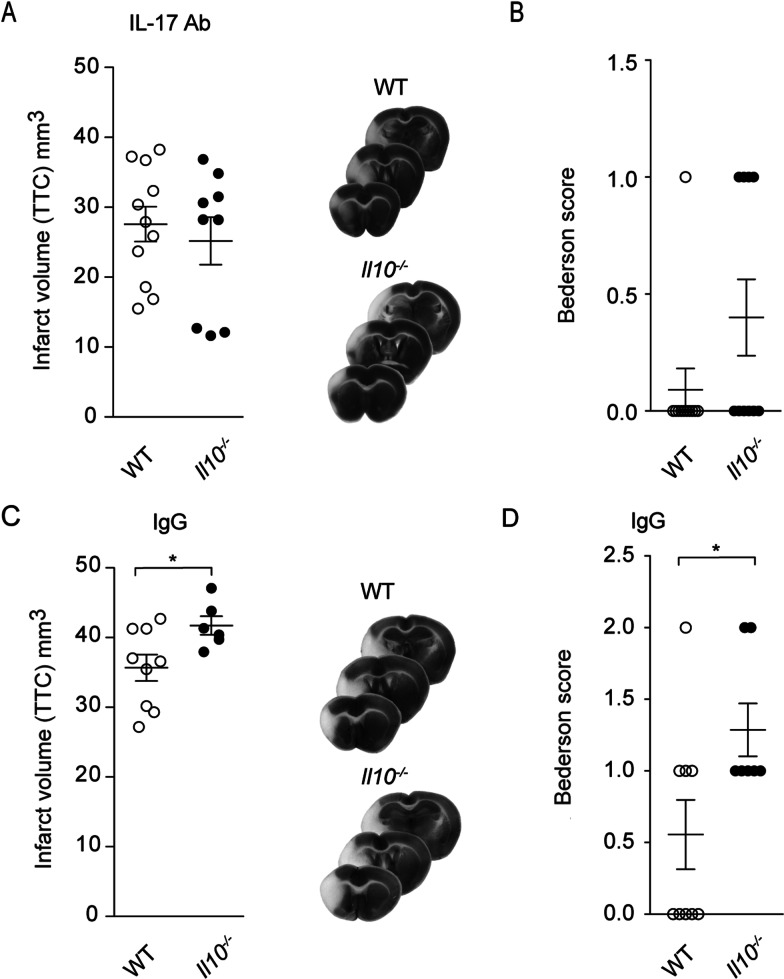
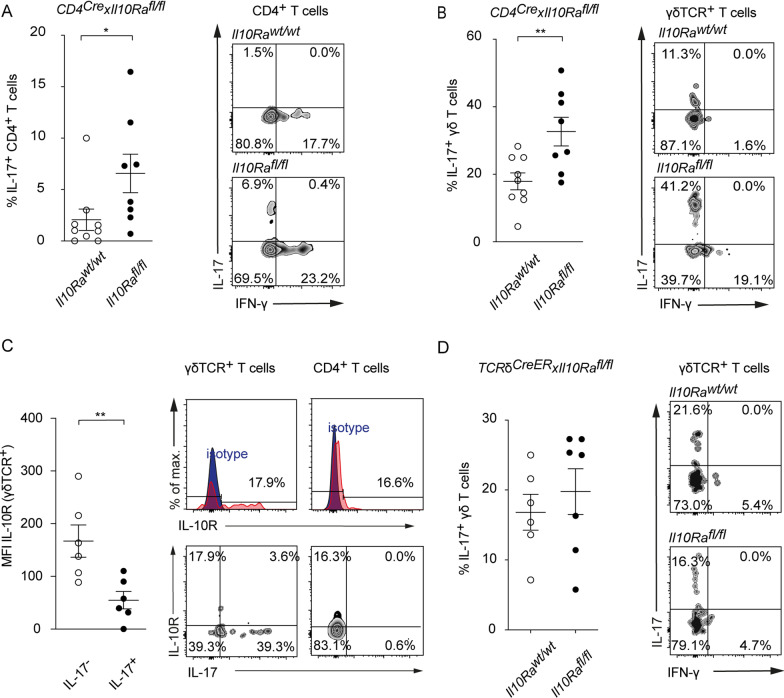
We demonstrate that IL-10 deficient mice exhibit significantly increased infarct sizes on days 3 and 7 and enlarged brain atrophy and impaired neurological outcome on day 14 following tMCAO. In ischemic brains IL-10 producing immune cells included regulatory T cells, macrophages, and microglia. Neutralization of IL-17A following stroke reversed the worse outcome in IL-10 deficient mice and intracerebral treatment with recombinant IL-10 revealed that IL-10 controlled IL-17A positive lymphocytes in ischemic brains. Importantly, IL-10 acted differentially on αβ and γδ T cells. IL-17A producing CD4 αβ T cells were directly controlled via their IL-10-receptor (IL-10R), whereas IL-10 by itself had no direct effect on the IL-17A production in γδ T cells. The control of the IL-17A production in γδ T cells depended on an intact IL10R signaling in regulatory T cells (Tregs).
Taken together, our data indicate a key function of IL-10 in restricting the detrimental IL-17A-signaling in stroke and further supports that IL-17A is a therapeutic opportunity for stroke treatment.
淋巴细胞在缺血性中风中具有双重功能。调节性 T 细胞具有保护作用,而固有淋巴细胞产生的白细胞介素 17A(IL-17A)则促进梗死灶的扩大。随着 T 细胞亚群特异性转基因小鼠模型的最新进展,现在已经有可能研究 T 细胞亚群在缺血性中风中的复杂相互作用。
在实验性中风的小鼠模型中,我们分析了白细胞介素 10(IL-10)对缺血后 14 天内功能结果的影响,并基于免疫组织化学、流式细胞术和骨髓嵌合小鼠确定了缺血性脑内 IL-10 的来源。我们使用中和白细胞介素 17A(IL-17A)抗体、鞘内注射白细胞介素 10(IL-10)和在特定 T 细胞亚群中缺失白细胞介素 10 受体(IL-10R)的转基因小鼠模型,进一步探讨了缺血性脑内白细胞介素 10(IL-10)和白细胞介素 17A(IL-17A)途径之间的相互作用。
我们证明,IL-10 缺陷小鼠在大脑中动脉闭塞(tMCAO)后第 3 天和第 7 天梗死灶明显增大,第 14 天脑萎缩和神经功能障碍加重。在缺血性脑内,产生白细胞介素 10(IL-10)的免疫细胞包括调节性 T 细胞、巨噬细胞和小胶质细胞。中风后中和白细胞介素 17A(IL-17A)可逆转 IL-10 缺陷小鼠的不良预后,而脑内给予重组白细胞介素 10(IL-10)则表明白细胞介素 10(IL-10)控制缺血性脑内白细胞介素 17A(IL-17A)阳性淋巴细胞。重要的是,白细胞介素 10(IL-10)对 αβ 和 γδ T 细胞的作用不同。白细胞介素 17A(IL-17A)产生的 CD4αβT 细胞通过其白细胞介素 10 受体(IL-10R)直接受到控制,而白细胞介素 10(IL-10)本身对 γδ T 细胞中白细胞介素 17A(IL-17A)的产生没有直接影响。γδ T 细胞中白细胞介素 17A(IL-17A)产生的控制依赖于调节性 T 细胞(Tregs)中完整的白细胞介素 10 受体(IL-10R)信号。
综上所述,我们的数据表明白细胞介素 10(IL-10)在限制中风中有害的白细胞介素 17A 信号方面具有关键作用,并进一步支持白细胞介素 17A(IL-17A)是中风治疗的一个有治疗潜力的靶点。