Department of Cardiology, Jiangxi Provincial People's Hospital Affiliated to Nanchang University, Nanchang, 330006, China.
Department of Endocrinology, Jiangxi Provincial People's Hospital Affiliated to Nanchang University, Nanchang, 330006, China.
Lipids Health Dis. 2021 Nov 14;20(1):161. doi: 10.1186/s12944-021-01594-7.
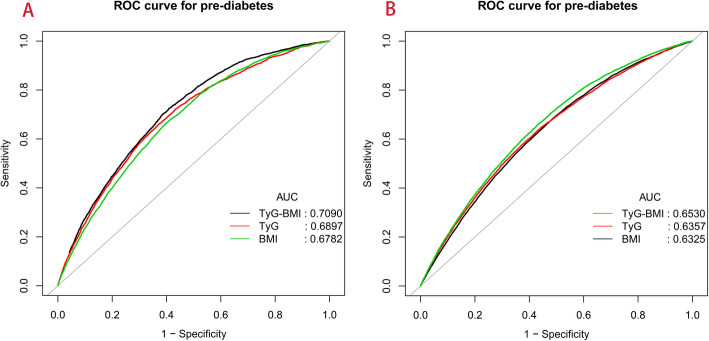
Triglyceride glucose-body mass index (TyG-BMI) has been recommended as an alternative indicator of insulin resistance. However, the association between TyG-BMI and pre-diabetes remains to be elucidated.
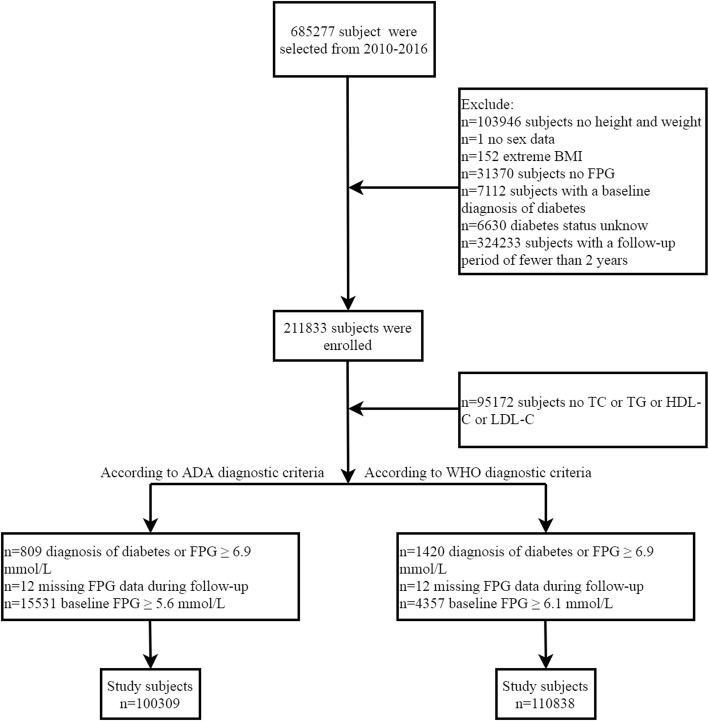
More than 100,000 subjects with normal glucose at baseline received follow-up. The main outcome event of concern was pre-diabetes defined according to the diagnostic criteria recommended by the American Diabetes Association (ADA) in 2018 and the World Health Organization (WHO) in 1999. A Cox proportional hazard regression model was used to evaluate the role of TyG-BMI in identifying people at high risk of pre-diabetes.
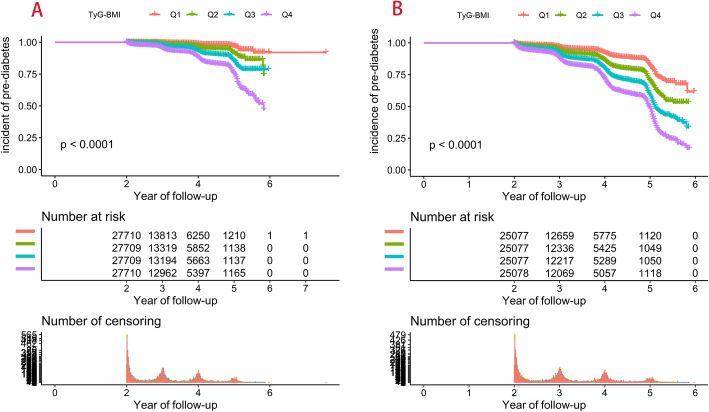
At a mean observation period of 3.1 years, the incidence of pre-diabetes in the cohort was 3.70 and 12.31% according to the WHO and ADA diagnostic criteria for pre-diabetes, respectively. The multivariate Cox regression analysis demonstrated that TyG-BMI was independently positively correlated with pre-diabetes, and there was a special population dependence phenomenon. Among them, non-obese people, women and people under 50 years old had a significantly higher risk of TyG-BMI-related pre-diabetes (P-interaction< 0.05).
These findings suggest that a higher TyG-BMI significantly increases an individual's risk of pre-diabetes, and this risk is significantly higher in women, non-obese individuals, and individuals younger than 50 years of age.
甘油三酯葡萄糖-体重指数(TyG-BMI)已被推荐作为胰岛素抵抗的替代指标。然而,TyG-BMI 与糖尿病前期之间的关系仍需阐明。
超过 100,000 名基线血糖正常的受试者接受了随访。主要关注的结局事件是根据 2018 年美国糖尿病协会(ADA)和 1999 年世界卫生组织(WHO)推荐的诊断标准定义的糖尿病前期。采用 Cox 比例风险回归模型评估 TyG-BMI 在识别糖尿病前期高危人群中的作用。
在平均 3.1 年的观察期内,根据 WHO 和 ADA 糖尿病前期诊断标准,队列中糖尿病前期的发生率分别为 3.70%和 12.31%。多变量 Cox 回归分析表明,TyG-BMI 与糖尿病前期独立正相关,且存在特殊人群依赖性现象。其中,非肥胖人群、女性和 50 岁以下人群 TyG-BMI 相关糖尿病前期的风险显著升高(P 交互<0.05)。
这些发现表明,较高的 TyG-BMI 显著增加个体患糖尿病前期的风险,且这种风险在女性、非肥胖人群和 50 岁以下人群中显著更高。