Department of Pathology, Laboratory of Translational Medicine Research, Deyang Key Laboratory of Tumor Molecular Research, Deyang People's Hospital, No. 173 First Section of TaishanBei Road, Jiangyang District, Deyang, 618000, China.
Department of Child Healthcare, Shenzhen Baoan Women's and Children's Hospital, Jinan University, 56 Yulyu Road, Baoan District, Shenzhen, 518000, China.
BMC Med Genomics. 2021 Nov 14;14(1):270. doi: 10.1186/s12920-021-01119-2.
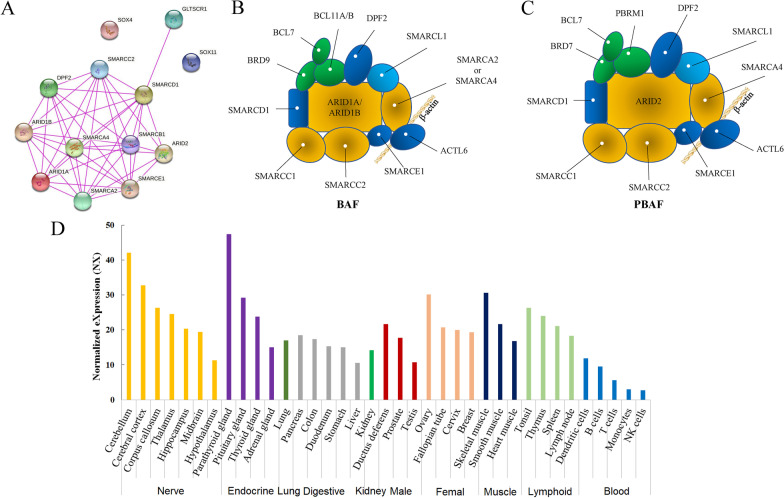
Coffin-Siris syndrome (CSS) is a multiple malformation syndrome characterized by intellectual disability associated with coarse facial features, hirsutism, sparse scalp hair, and hypoplastic or absent fifth fingernails or toenails. CSS represents a small group of intellectual disability, and could be caused by at least twelve genes. The genetic background is quite heterogenous, making it difficult for clinicians and genetic consultors to pinpoint the exact disease types.
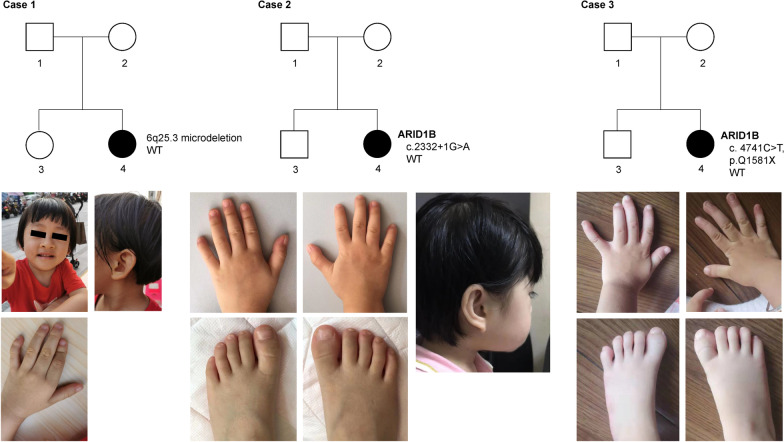
Array-Comparative Genomic Hybridization (array-CGH) and whole exome sequencing (WES) were applied for three trios affected with intellectual disability and clinical features similar with those of Coffin-Siris syndrome. Sanger sequencing was used to verify the detected single-nucleotide variants (SNVs).
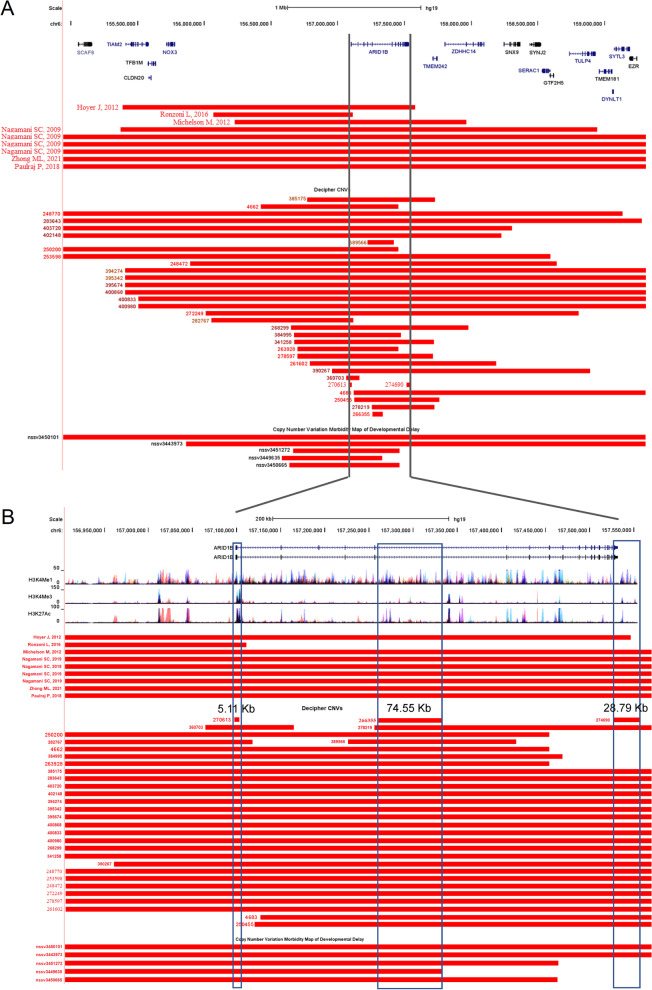
All of the three cases were female with normal karyotypes of 46, XX, born of healthy, non-consanguineous parents. A 6q25 microdeletion (arr[hg19]6q25.3(155,966,487-158,803,979) × 1) (2.84 Mb) (case 1) and two loss-of-function (LoF) mutations of ARID1B [c.2332 + 1G > A in case 2 and c.4741C > T (p.Q1581X) in case 3] were identified. All of the three pathogenic abnormalities were de novo, not inherited from their parents. After comparison of publicly available microdeletions containing ARID1B, four types of microdeletions leading to insufficient production of ARID1B were identified, namely deletions covering the whole region of ARID1B, deletions covering the promoter region, deletions covering the termination region or deletions covering enhancer regions.
Here we identified de novo ARID1B mutations in three Chinese trios. Four types of microdeletions covering ARID1B were identified. This study broadens current knowledge of ARID1B mutations for clinicians and genetic consultors.
Coffin-Siris 综合征(CSS)是一种多种畸形综合征,其特征为智力障碍,伴有粗糙的面部特征、多毛症、稀疏的头皮毛发、发育不良或缺失的第五指甲或脚趾甲。CSS 代表了一小群智力障碍患者,可能由至少 12 个基因引起。遗传背景相当异质,使得临床医生和遗传顾问难以确定确切的疾病类型。
应用比较基因组杂交芯片(array-CGH)和外显子组测序(WES)对三例智力障碍和 Coffin-Siris 综合征临床特征相似的先证者家系进行分析。Sanger 测序用于验证检测到的单核苷酸变异(SNVs)。
所有三例均为女性,核型正常为 46,XX,均由健康、非近亲父母所生。发现 1 例 6q25 微缺失(arr[hg19]6q25.3(155,966,487-158,803,979)×1)(2.84 Mb)(病例 1)和 2 例 ARID1B 功能丧失(LoF)突变[c.2332+1G>A(病例 2)和 c.4741C>T(p.Q1581X)(病例 3)]。所有这三种致病性异常均为新生突变,而非遗传自父母。在比较含有 ARID1B 的公共微缺失后,发现了四种导致 ARID1B 产生不足的微缺失类型,即覆盖 ARID1B 整个区域的缺失、覆盖启动子区域的缺失、覆盖终止区域的缺失或覆盖增强子区域的缺失。
本研究在三例中国先证者家系中发现了新生的 ARID1B 突变。发现了四种覆盖 ARID1B 的微缺失。本研究拓宽了临床医生和遗传顾问对 ARID1B 突变的认识。