Liu Sumei, Zhao Xingwang, Nichols Stephen R, Bonilha Murilo W, Derwinski Tricia, Auxier James T, Chen Qingyan
Tianjin Key Laboratory of Indoor Air Environmental Quality Control, School of Environmental Science and Engineering, Tianjin University, Tianjin, 300072, China.
School of Energy and Environment, Southeast University, Nanjing, 210096, China.
Build Environ. 2022 Jan;207:108543. doi: 10.1016/j.buildenv.2021.108543. Epub 2021 Nov 8.
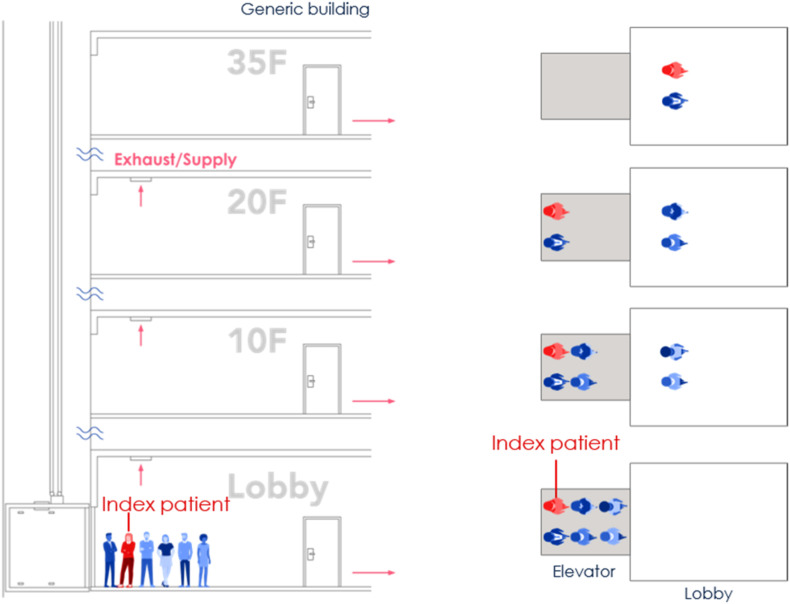
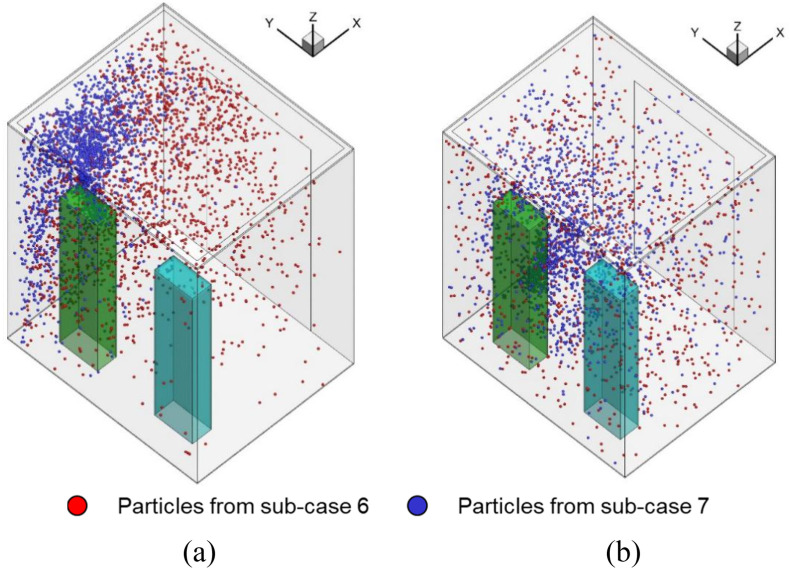
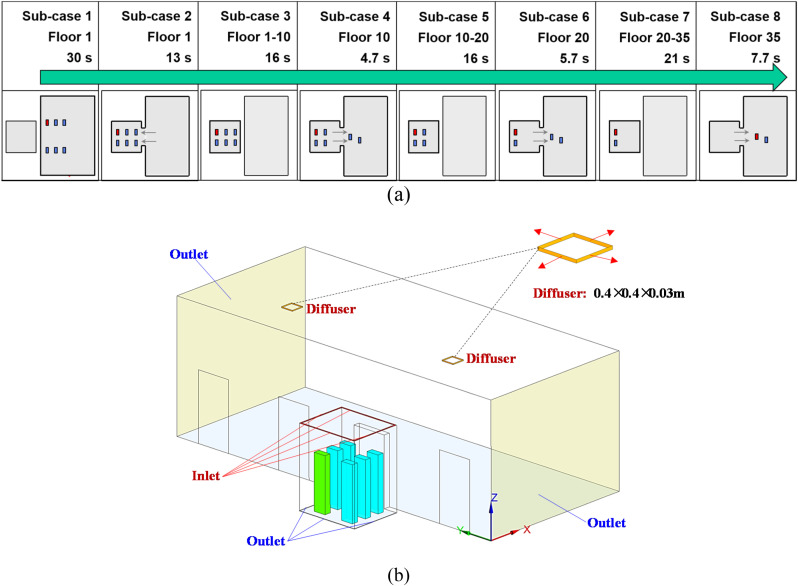
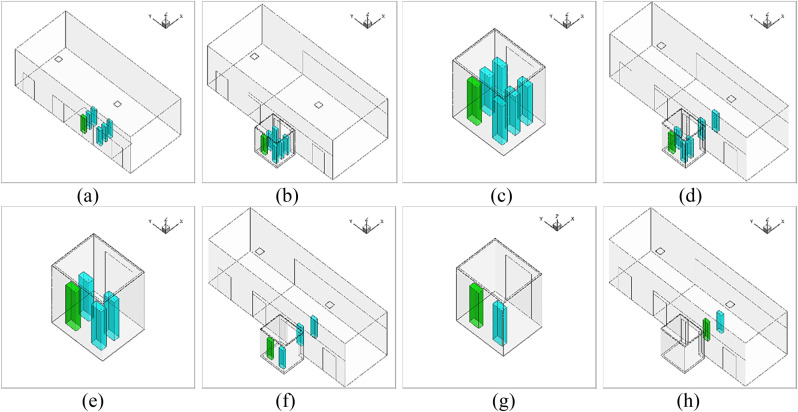
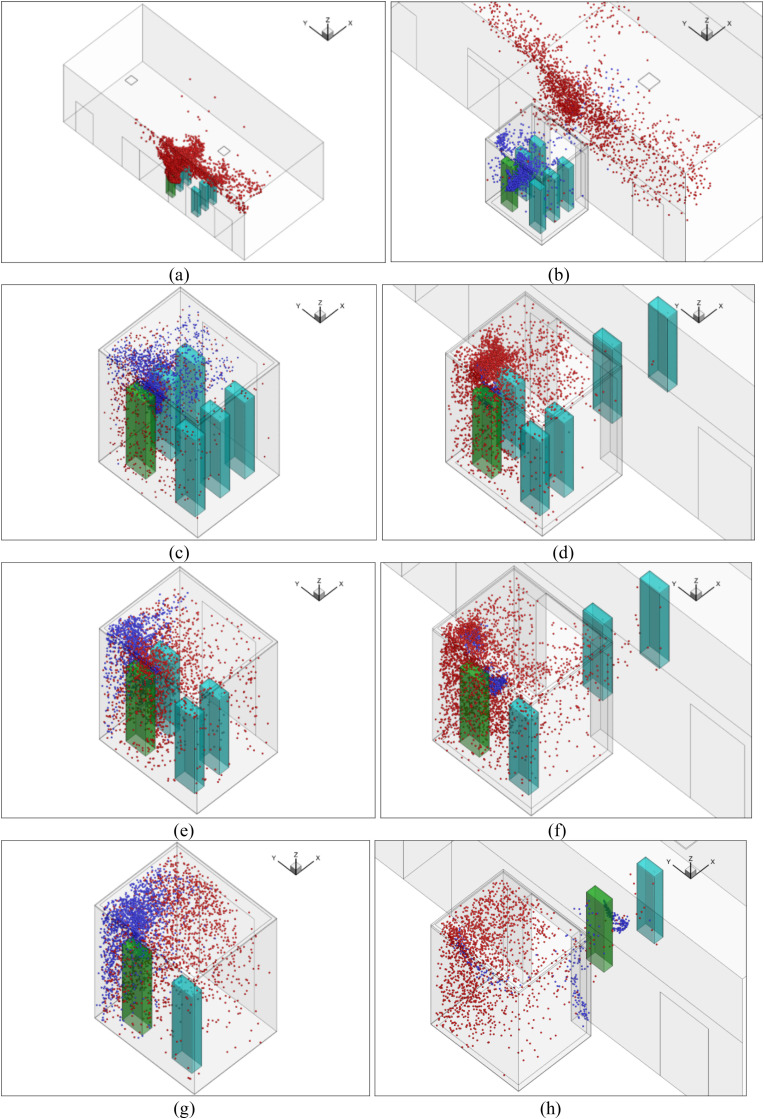
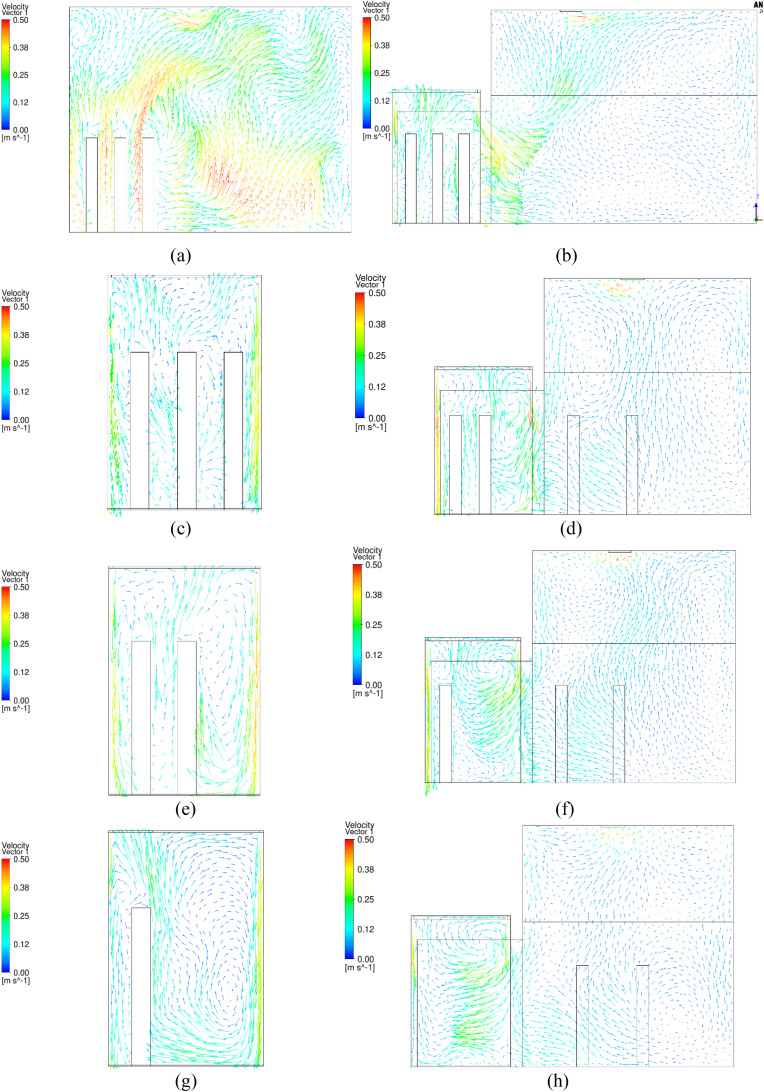
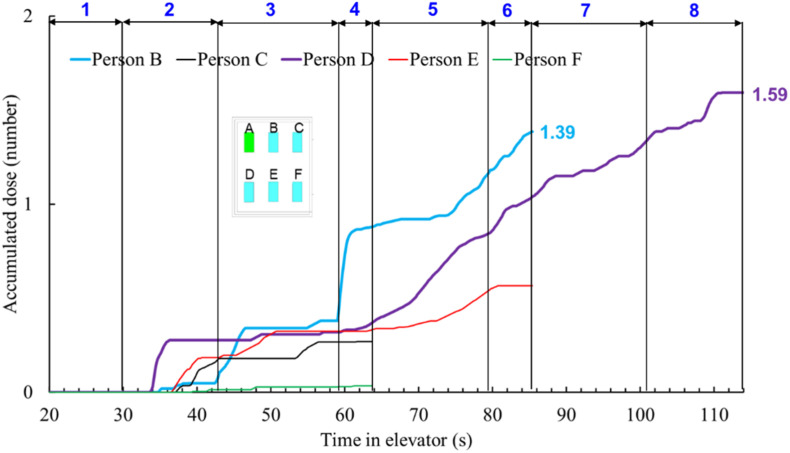
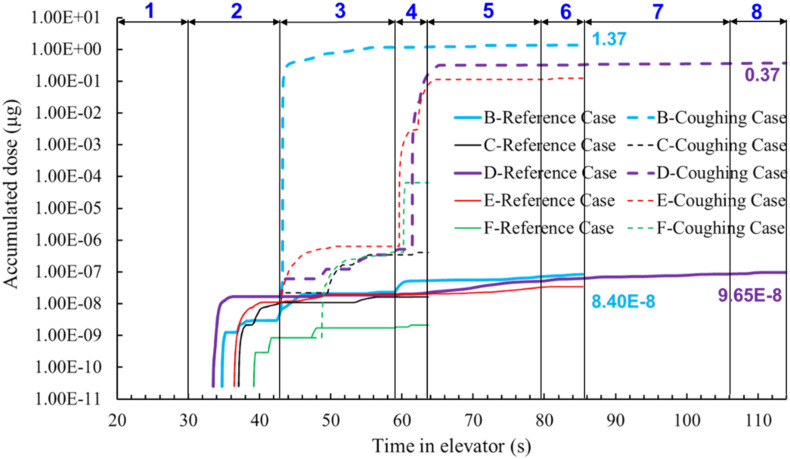
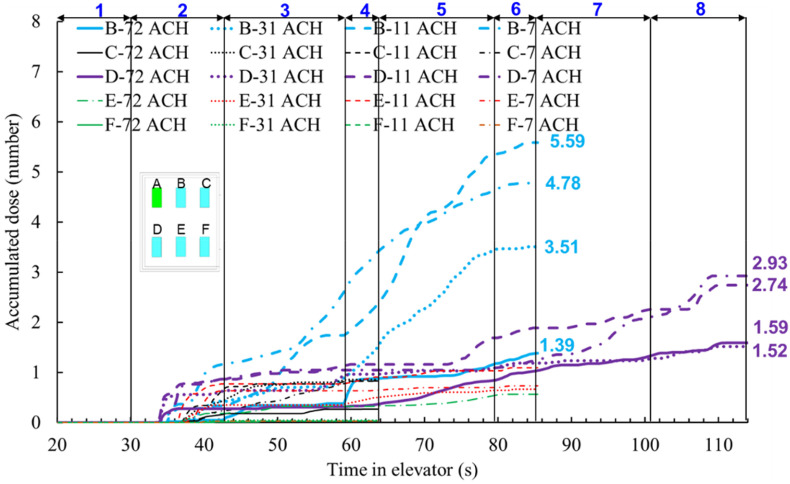
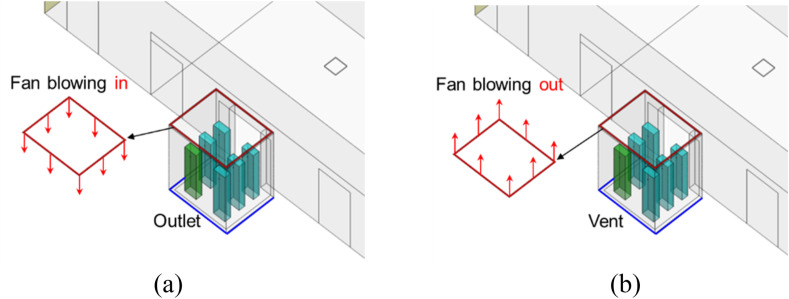
Social distancing is a key factor for health during the COVID-19 pandemic. In many indoor spaces, such as elevators, it is difficult to maintain social distancing. This investigation used computational-fluid-dynamics (CFD) to study airborne particle exposure in riding an elevator in a typical building with 35 floors. The elevator traveled from the ground floor to the 35th floor with two stops on floor 10 and floor 20, comprising 114 s. The CFD simulated the dispersion of the aerosolized particles exhaled by an index person while breathing in both lobby and elevator areas. The study calculated the accumulated dose of susceptible riders riding in elevators with the index person under different conditions including different ventilation rates, air supply methods, and elevator cab geometries. This investigation also studied a case with a single cough from the index person as the person entered the elevator. The results show that, due to the short duration of the average elevator ride, the number of particles inhaled by a susceptible rider was low. For the reference case with a 72 ACH (air changes per hour) ventilation rate, the highest accumulated particle dose by a susceptible passenger close to the index person was only 1.59. The cough would cause other riders to inhale approximately 8 orders of magnitude higher particle mass than from continuous breathing by the index person for the whole duration of the ride.
社交距离是新冠疫情期间保障健康的关键因素。在许多室内空间,如电梯内,保持社交距离很困难。本研究采用计算流体动力学(CFD)来研究在一栋35层的典型建筑中乘坐电梯时空气中颗粒物的暴露情况。电梯从底层升至35层,在10层和20层各停靠一次,全程用时114秒。CFD模拟了一名指示人员在大厅和电梯区域呼吸时呼出的雾化颗粒的扩散情况。该研究计算了在不同条件下,包括不同通风率、送风方式和电梯轿厢几何形状等,与指示人员同乘电梯的易感乘客的累积剂量。本研究还研究了指示人员进入电梯时单次咳嗽的情况。结果表明,由于平均电梯乘坐时间较短,易感乘客吸入的颗粒数量较少。对于通风率为每小时72次换气(ACH)的参考案例,靠近指示人员的易感乘客的最高累积颗粒剂量仅为1.59。咳嗽会导致其他乘客吸入的颗粒质量比指示人员在整个乘坐过程中持续呼吸产生的颗粒质量高出约8个数量级。