Mani Hiroki, Miyagishima Saori, Kozuka Naoki, Inoue Takahiro, Hasegawa Naoya, Asaka Tadayoshi
Faculty of Welfare and Health Science, Physical Therapy Courses, Oita University, Oita, Japan.
Division of Rehabilitation, Sapporo Medical University Hospital, Sapporo Medical University, Sapporo, Japan.
Front Hum Neurosci. 2021 Oct 28;15:740509. doi: 10.3389/fnhum.2021.740509. eCollection 2021.
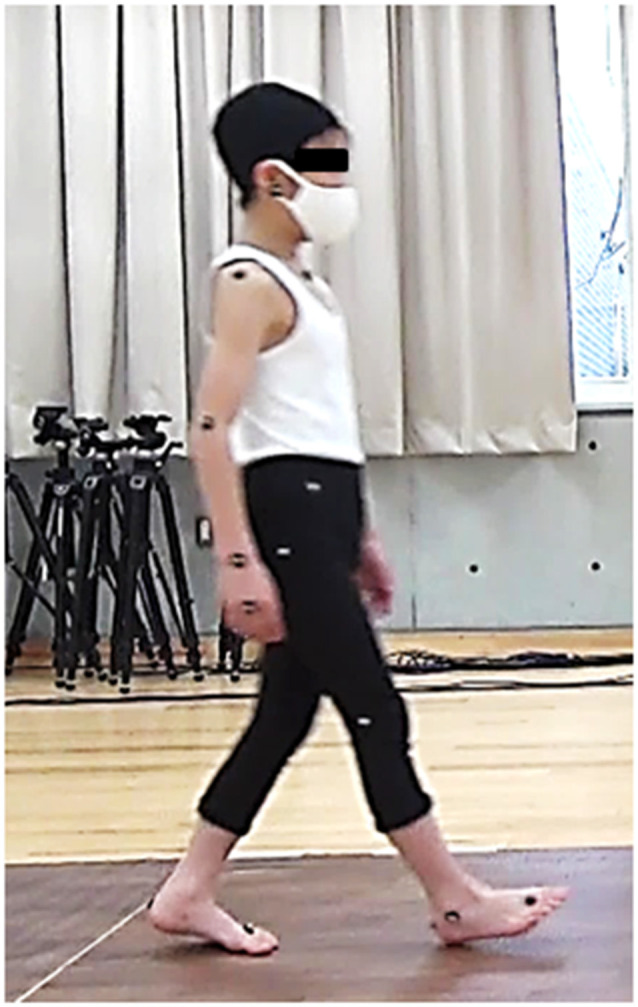
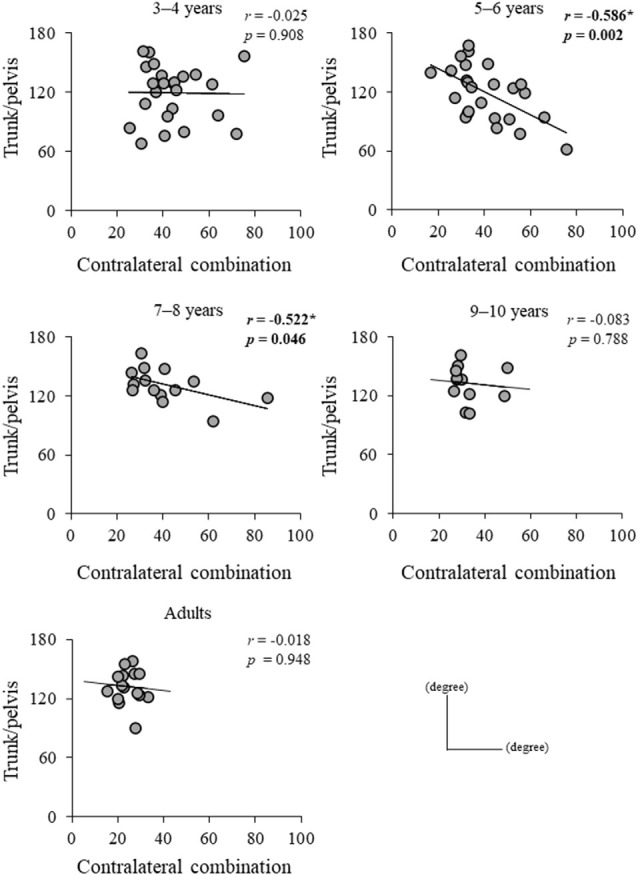
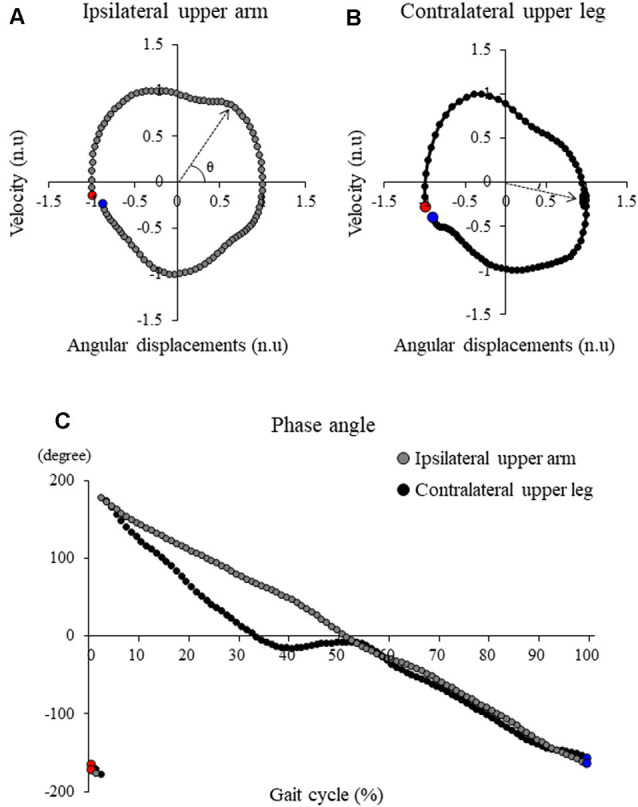
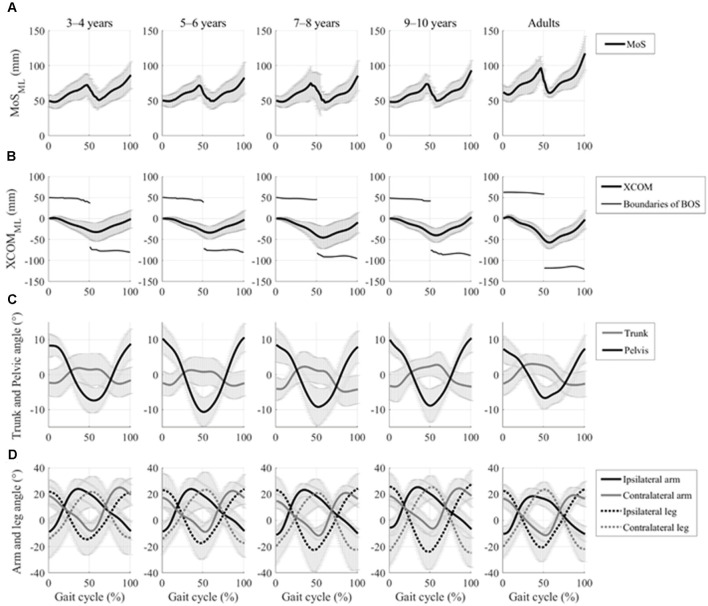
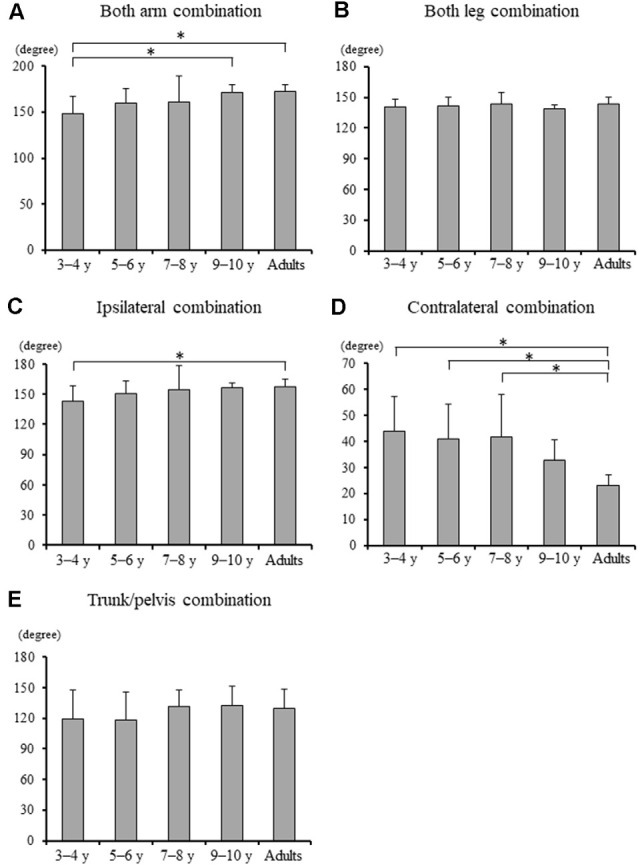
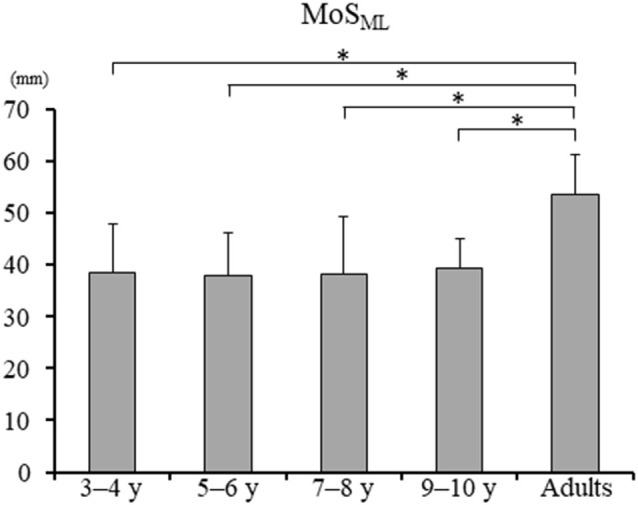
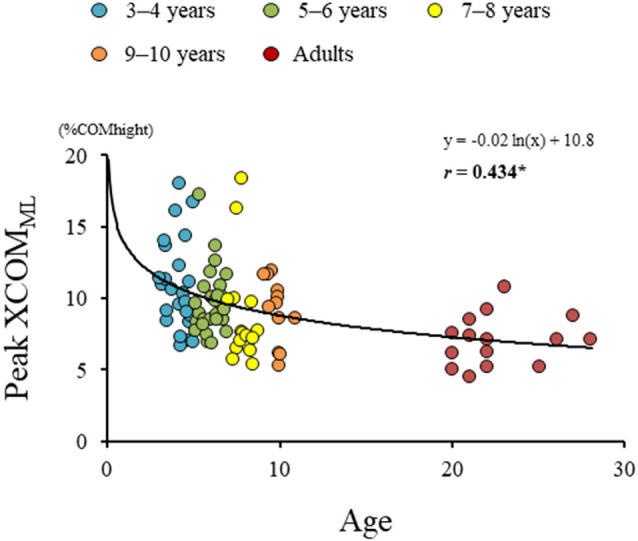
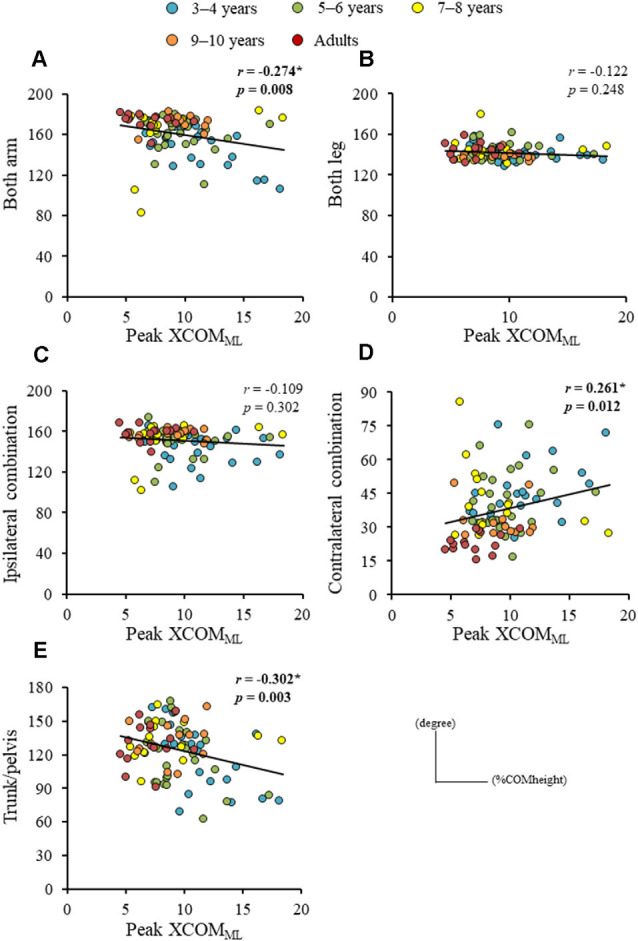
Knowledge about the developmental process of dynamic balance control comprised of upper arms and upper legs coordination and trunk and pelvis twist coordination is important to advance effective balance assessment for abnormal development. However, the mechanisms of these coordination and stability control during gait in childhood are unknown.This study examined the development of dynamic postural stability, upper arm and upper leg coordination, and trunk and pelvic twist coordination during gait, and investigated the potential mechanisms integrating the central nervous system with inter-limb coordination and trunk and pelvic twist coordination to control extrapolated center of the body mass (XCOM). This study included 77 healthy children aged 3-10 years and 15 young adults. The child cohort was divided into four groups by age: 3-4, 5-6, 7-8, and 9-10 years. Participants walked barefoot at a self-selected walking speed along an 8 m walkway. A three-dimensional motion capture system was used for calculating the XCOM, the spatial margin of stability (MoS), and phase coupling movements of the upper arms, upper legs, trunk, and pelvic segments. MoS in the mediolateral axis was significantly higher in the young adults than in all children groups. Contralateral coordination (ipsilateral upper arm and contralateral upper leg combination) gradually changed to an in-phase pattern with increasing age until age 9 years. Significant correlations of XCOM with contralateral coordination and with trunk and pelvic twist coordination (trunk/pelvis coordination) were found. Significant correlations between contralateral coordination and trunk/pelvis coordination were observed only in the 5-6 years and at 7-8 years groups.Dynamic postural stability during gait was not fully mature at age 10. XCOM control is associated with the development of contralateral coordination and trunk and pelvic twist coordination. The closer to in-phase pattern of contralateral upper limb coordination improved the XCOM fluctuations. Conversely, the out-of-phase pattern (about 90 degrees) of the trunk/pelvis coordination increased theXCOM fluctuation. Additionally, a different control strategy was used among children 3-8 years of age and individuals over 9 years of age, which suggests that 3-4-year-old children showed a disorderly coordination strategy between limb swing and torso movement, and in children 5-8 years of age, limb swing depended on trunk/pelvis coordination.
了解由上臂和大腿协调以及躯干和骨盆扭转协调组成的动态平衡控制的发育过程,对于推进针对异常发育的有效平衡评估至关重要。然而,儿童期步态中这些协调和稳定性控制的机制尚不清楚。本研究考察了步态中动态姿势稳定性、上臂和大腿协调以及躯干和骨盆扭转协调的发育情况,并研究了将中枢神经系统与肢体间协调以及躯干和骨盆扭转协调相结合以控制身体质量外推中心(XCOM)的潜在机制。本研究纳入了77名3至10岁的健康儿童和15名年轻成年人。儿童队列按年龄分为四组:3至4岁、5至6岁、7至8岁和9至10岁。参与者沿着一条8米长的通道以自选的步行速度赤脚行走。使用三维运动捕捉系统来计算XCOM、稳定性空间边缘(MoS)以及上臂、大腿、躯干和骨盆节段的相位耦合运动。年轻成年人在内外侧轴上的MoS显著高于所有儿童组。对侧协调(同侧上臂和对侧大腿组合)随着年龄增长逐渐转变为同相模式,直至9岁。发现XCOM与对侧协调以及与躯干和骨盆扭转协调(躯干/骨盆协调)之间存在显著相关性。仅在5至6岁组和7至8岁组中观察到对侧协调与躯干/骨盆协调之间存在显著相关性。10岁时步态中的动态姿势稳定性尚未完全成熟。XCOM控制与对侧协调以及躯干和骨盆扭转协调的发育相关。对侧上肢协调越接近同相模式,XCOM波动越小。相反,躯干/骨盆协调的异相模式(约90度)会增加XCOM波动。此外,3至8岁儿童和9岁以上个体采用了不同的控制策略,这表明3至4岁儿童在肢体摆动和躯干运动之间表现出无序的协调策略,而在5至8岁儿童中,肢体摆动依赖于躯干/骨盆协调。