Anglin Noelle L, Robles Ronald, Rossel Genoveva, Alagon Rocio, Panta Ana, Jarret Robert L, Manrique Norma, Ellis David
International Potato Center (CIP), Lima, Peru.
Plant Genetic Resources Conservation Unit, United States Department of Agriculture, Agricultural Research Service, Griffin, GA, United States.
Front Plant Sci. 2021 Oct 28;12:660012. doi: 10.3389/fpls.2021.660012. eCollection 2021.
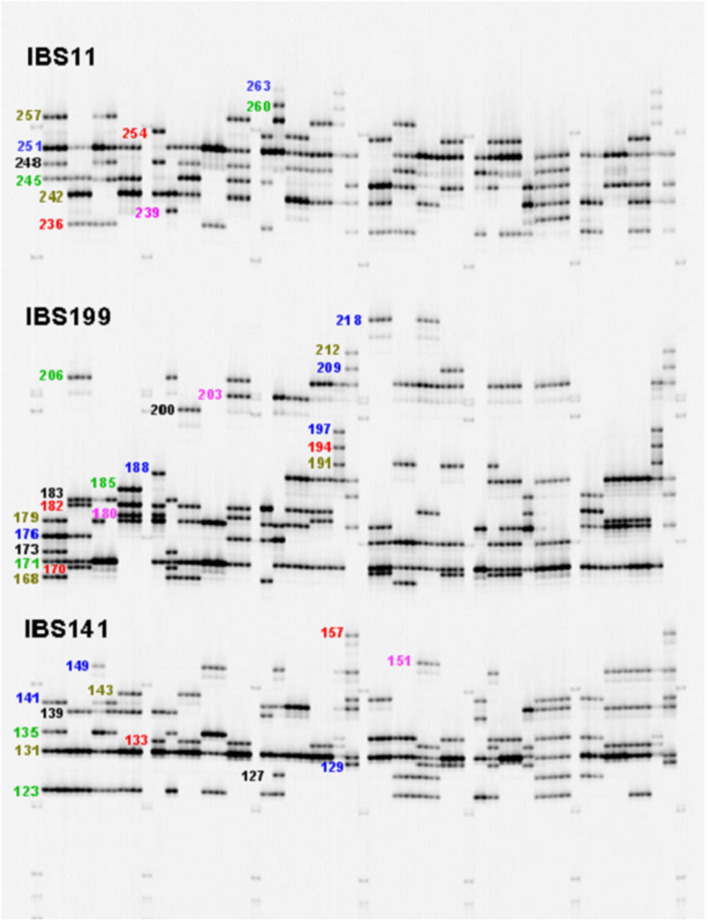
The sweetpotato collection housed by the International Center of Potato (CIP) is one of the largest assemblages of plant material representing the genetic resources of this important staple crop. The collection currently contains almost 6,000 accessions of (cultivated sweetpotato) and over 1,000 accessions of sweetpotato crop wild relatives (CWRs). In this study, the entire cultivated collection (5,979 accessions) was genotyped with a panel of 20 simple sequence repeat (SSR) markers to assess genetic identity, diversity, and population structure. Genotyping and phenotyping of plantlets and mother plants were conducted simultaneously on 2,711 accessions (45% of the total collection) to identify and correct possible genetic identity errors which could have occurred at any time over the thirty plus years of maintenance in the collection. Within this group, 533 accessions (19.6%) had errors in identity. Field evaluations of morphological descriptors were carried out to confirm the marker data. A phylogenetic tree was constructed to reveal the intraspecific relationships in the population which uncovered high levels of redundancy in material from Peru and Latin America. These genotypic data were supported by morphological data. Population structure analysis demonstrated support for four ancestral populations with many of the accessions having lower levels of gene flow from the other populations. This was especially true of germplasm derived from Peru, Ecuador, and Africa. The set of 20 SSR markers was subsequently utilized to examine a subset of 189 accessions from the USDA sweetpotato germplasm collection and to identify and reconcile potential errors in the identification of clones shared between these collections. Marker analysis demonstrated that the USDA subset of material had 65 unique accessions that were not found in the larger CIP collection. As far as the authors are aware, this is the first report of genotyping an entire sweetpotato germplasm collection in its entirety.
国际马铃薯中心(CIP)保存的甘薯种质库是代表这种重要主食作物遗传资源的最大植物材料集合之一。该种质库目前包含近6000份栽培甘薯种质以及1000多份甘薯作物野生近缘种(CWR)种质。在本研究中,利用一组20个简单序列重复(SSR)标记对整个栽培种质(5979份)进行基因分型,以评估遗传一致性、多样性和群体结构。对2711份种质(占总收集量的45%)的组培苗和母株同时进行基因分型和表型分析,以识别和纠正可能在该种质库三十多年的保存过程中随时出现的遗传一致性错误。在这一组中,有533份种质(19.6%)存在一致性错误。对形态学描述符进行田间评估以确认标记数据。构建了系统发育树以揭示群体内的种内关系,该树揭示了来自秘鲁和拉丁美洲的材料存在高度冗余。这些基因型数据得到了形态学数据的支持。群体结构分析表明支持四个祖先群体,许多种质从其他群体获得的基因流水平较低。来自秘鲁、厄瓜多尔和非洲的种质尤其如此。随后利用这组20个SSR标记对美国农业部甘薯种质库中的189份种质进行子集分析,并识别和协调这些种质库之间共享克隆鉴定中的潜在错误。标记分析表明,美国农业部的材料子集中有65份独特的种质在更大的国际马铃薯中心种质库中未发现。据作者所知,这是首次对整个甘薯种质库进行全基因组基因分型的报告。