Pesantez Jorge E, Alghamdi Faisal, Sabu Shreya, Mahinthakumar G, Berglund Emily Zechman
Graduate Student, Department of Civil, Construction, and Environmental Engineering, North Carolina State University, Raleigh, NC 27695, USA.
Graduate Assistant, Department of Civil and Environmental Engineering, King Abdulaziz University, Jeddah, Saudi Arabia.
Sustain Cities Soc. 2022 Feb;77:103520. doi: 10.1016/j.scs.2021.103520. Epub 2021 Nov 6.
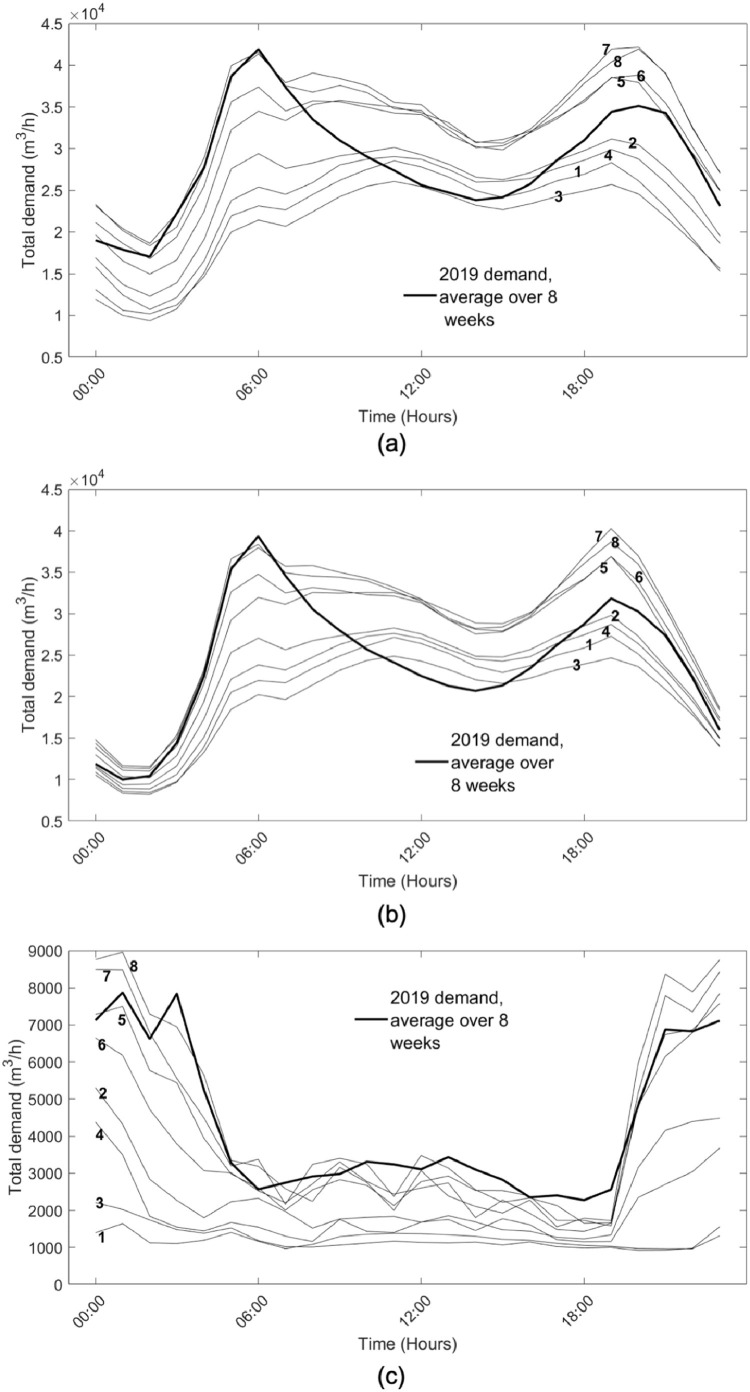
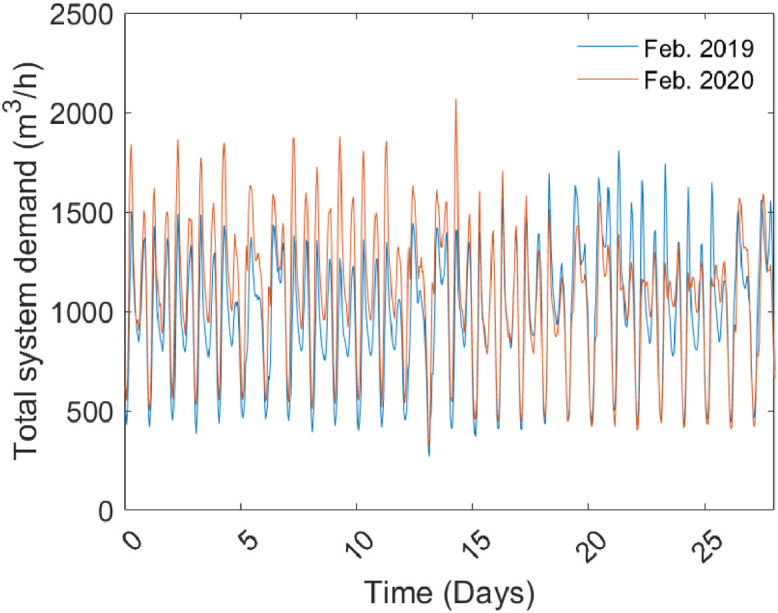
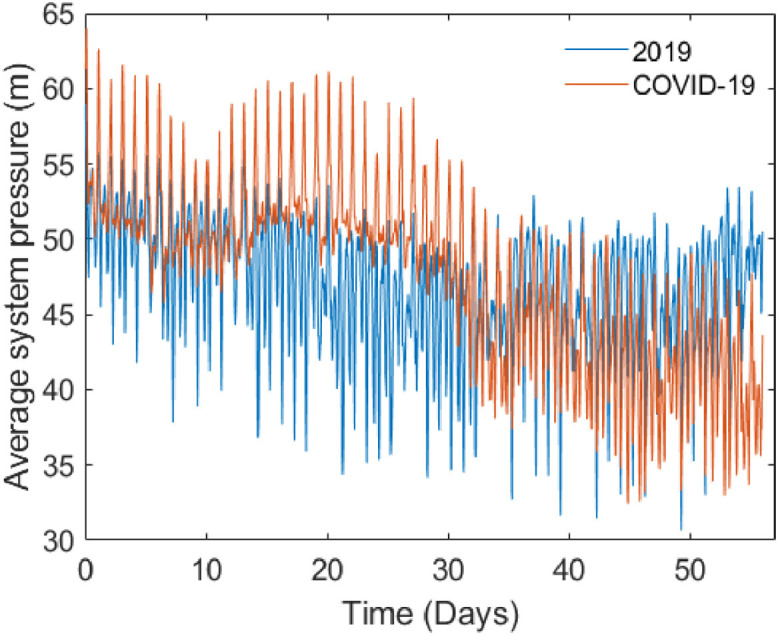
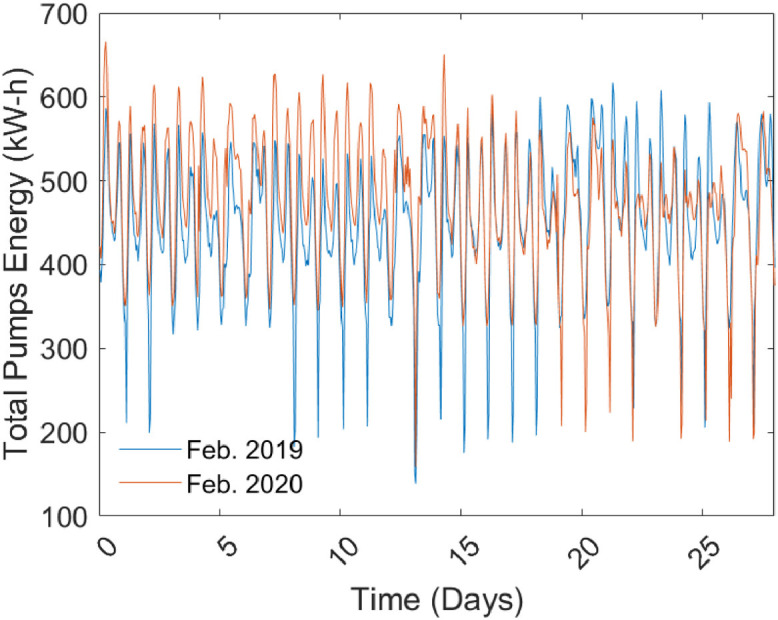
During the coronavirus disease 2019 (COVID-19) pandemic, the daily pattern of activities changed dramatically for people across the globe, as they socially distanced and worked remotely. Changes in daily routines created changes in water consumption patterns. Significant changes in water demands can affect the operation of water distribution systems, resulting in new patterns of flow, with implications for water age, pressure, and energy consumption. This research develops a digital twin to couple Advanced Metering Infrastructure (AMI) data with a hydraulic model to assess impacts on infrastructure due to changes in water demands associated with the COVID-19 pandemic for a case study. Using 2019 and COVID-19 modeling scenarios, the hydraulic model was executed to evaluate changes to water quality based on water age, pressure across nodes in the network, and the energy required by the system to distribute potable water. A water supply interruption event was modeled as a water main break to assess network resiliency for 2019 and COVID-19 demands. A digital twin provides the capabilities to explore and visualize emerging consumption patterns and their effects on the functioning of water systems, providing valuable analyses for water utility managers and insight for optimizing infrastructure operations and planning for long-term impacts.
在2019年冠状病毒病(COVID-19)大流行期间,全球各地人们的日常活动模式发生了巨大变化,因为他们保持社交距离并远程工作。日常活动的变化导致了用水模式的改变。用水需求的显著变化会影响供水系统的运行,从而产生新的水流模式,对水龄、压力和能源消耗产生影响。本研究开发了一个数字孪生模型,将先进计量基础设施(AMI)数据与水力模型相结合,以评估因COVID-19大流行导致的用水需求变化对基础设施的影响,进行案例研究。利用2019年和COVID-19建模场景,运行水力模型以根据水龄、网络中各节点的压力以及系统分配饮用水所需的能量来评估水质变化。将供水中断事件模拟为水管爆裂,以评估2019年和COVID-19需求下的网络弹性。数字孪生模型提供了探索和可视化新出现的消费模式及其对水系统功能影响的能力,为水务管理人员提供有价值的分析,并为优化基础设施运营和规划长期影响提供见解。