Kalbusch Andreza, Henning Elisa, Brikalski Miqueias Paulo, Luca Felipe Vieira de, Konrath Andrea Cristina
Santa Catarina State University, Joinville, Brazil.
Companhia Águas de Joinville, Joinville, Brazil.
Resour Conserv Recycl. 2020 Dec;163:105098. doi: 10.1016/j.resconrec.2020.105098. Epub 2020 Aug 6.
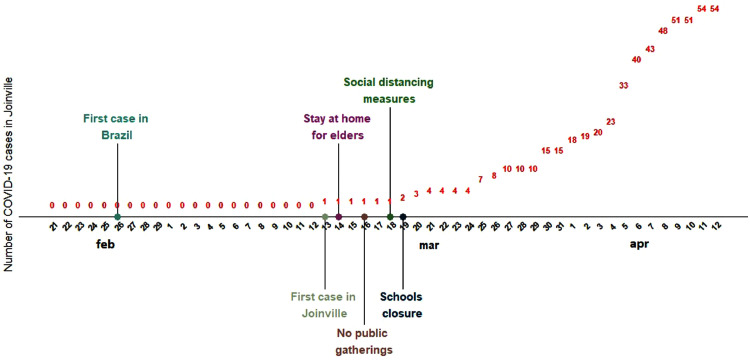
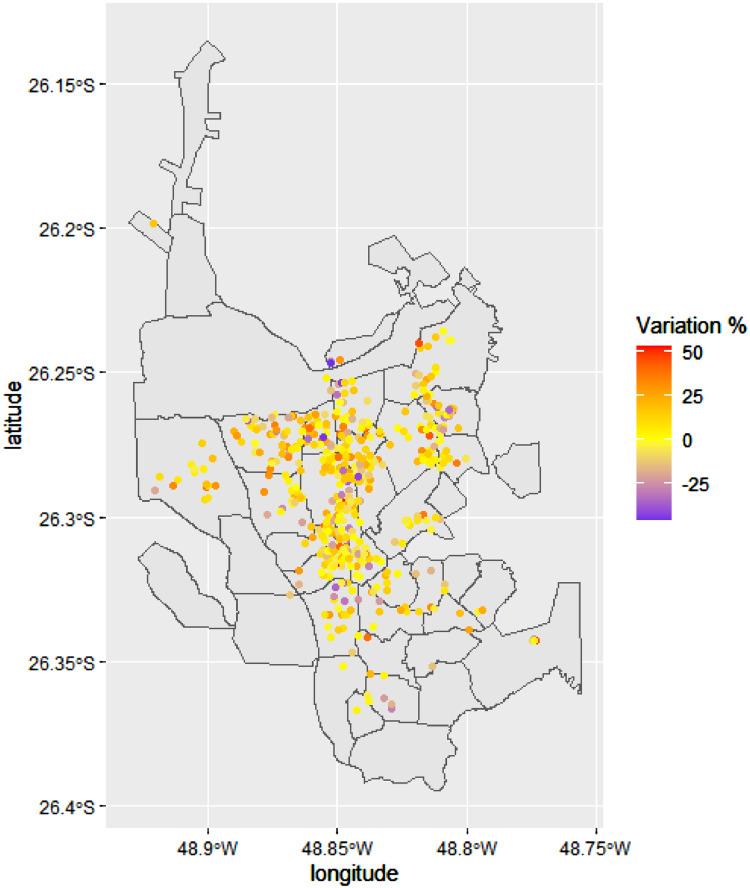
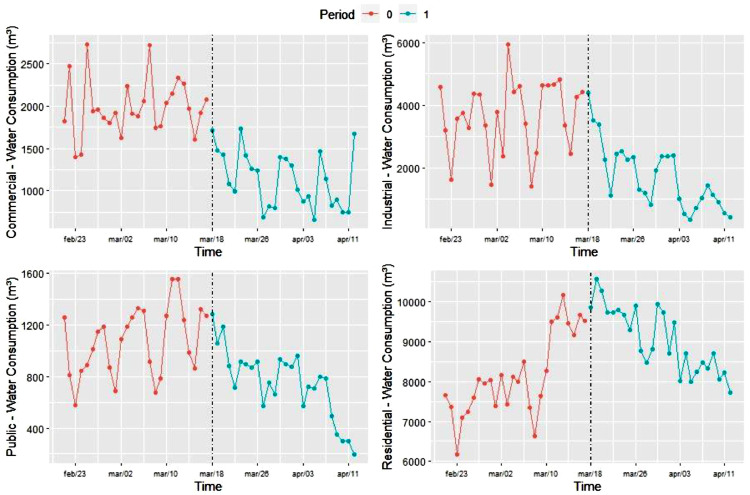
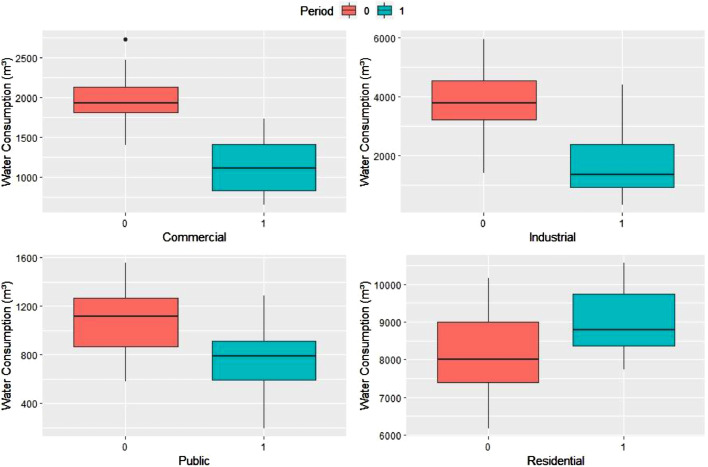
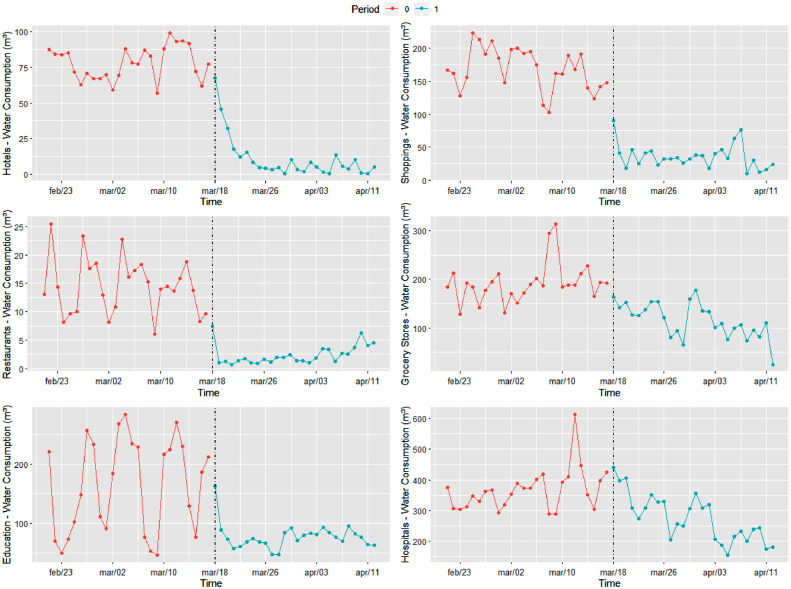
This article aims to assess the impact of coronavirus (COVID-19) spread-prevention actions on water consumption, based on a case study in Joinville, Southern Brazil. Residential water consumption data, obtained through telemetry in two periods (before and after a governmental action imposing quarantine and social isolation), were analyzed. Complementarily, the analyses were also applied to the commercial, industrial and public consumption categories. For the analysis, Wilcoxon and Kruskal-Wallis non-parametric tests were applied and Prais-Winsten regression models were adjusted. The results of the Wilcoxon test show that there are significant differences between the analyzed periods, indicating a water consumption drop in the commercial, industrial and public categories, and an increase in the residential category. The regression model results confirm the effect of the restrictive actions in reducing consumption in non-residential categories. The results also indicate an increase in water consumption, which was steeper in apartment buildings than in houses, whether isolated or grouped in condominiums. A weak association was found between the variation in water consumption and the spatial distribution of buildings. Understanding water consumption related aspects is important to gather essential information to ensure the urban water supply system is resilient in a pandemic situation.
本文旨在基于巴西南部约维内尔的一个案例研究,评估冠状病毒(COVID-19)传播预防行动对用水量的影响。分析了通过遥测在两个时期(政府实施检疫和社会隔离行动之前和之后)获得的住宅用水量数据。此外,这些分析还应用于商业、工业和公共用水类别。为了进行分析,应用了威尔科克森和克鲁斯卡尔-沃利斯非参数检验,并调整了普赖斯-温斯坦回归模型。威尔科克森检验的结果表明,分析的时期之间存在显著差异,表明商业、工业和公共用水类别用水量下降,而住宅用水类别用水量增加。回归模型结果证实了限制行动对减少非住宅用水类别的用水量的影响。结果还表明用水量有所增加,无论是独立式住宅还是公寓楼群,公寓楼的用水量增长幅度都比独栋房屋更大。用水量变化与建筑物空间分布之间存在微弱关联。了解与用水量相关的方面对于收集必要信息以确保城市供水系统在大流行情况下具有弹性非常重要。