Xia Xiao-Dan, Peng Zhong-Sheng, Gu Hong-Mei, Wang Maggie, Wang Gui-Qing, Zhang Da-Wei
Department of Orthopedics, The Sixth Affiliated Hospital of Guangzhou Medical University, Qingyuan People's Hospital, Qingyuan, China.
School of Economics, Management and Law, University of South China, Hengyang, China.
Front Cardiovasc Med. 2021 Oct 15;8:764038. doi: 10.3389/fcvm.2021.764038. eCollection 2021.
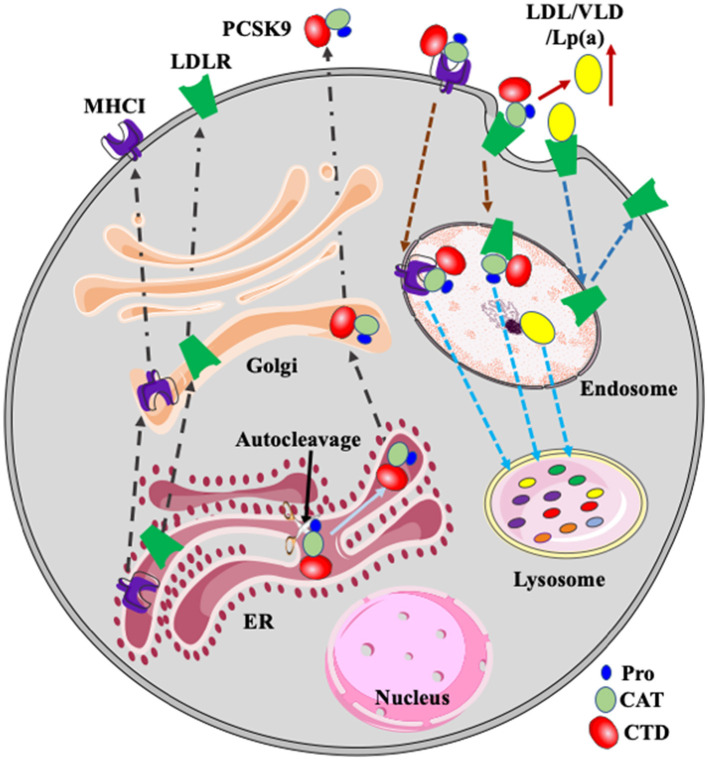
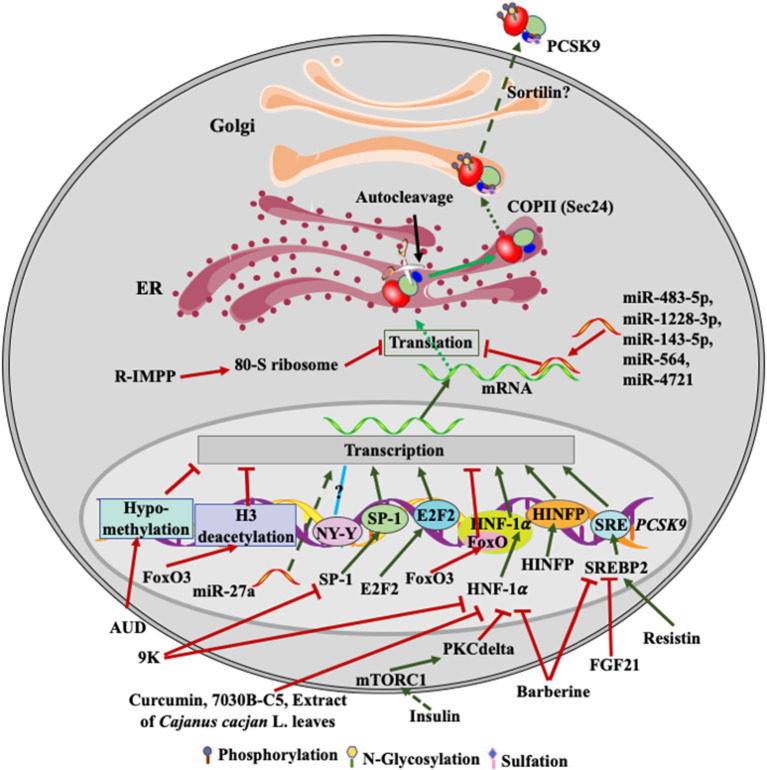
Proprotein convertase subtilisin/kexin type 9 (PCSK9) promotes degradation of low-density lipoprotein receptor (LDLR) and plays a central role in regulating plasma levels of LDL cholesterol levels, lipoprotein(a) and triglyceride-rich lipoproteins, increasing the risk of cardiovascular disease. Additionally, PCSK9 promotes degradation of major histocompatibility protein class I and reduces intratumoral infiltration of cytotoxic T cells. Inhibition of PCSK9 increases expression of LDLR, thereby reducing plasma levels of lipoproteins and the risk of cardiovascular disease. PCSK9 inhibition also increases cell surface levels of major histocompatibility protein class I in cancer cells and suppresses tumor growth. Therefore, PCSK9 plays a vital role in the pathogenesis of cardiovascular disease and cancer, the top two causes of morbidity and mortality worldwide. Monoclonal anti-PCSK9 antibody-based therapy is currently the only available treatment that can effectively reduce plasma LDL-C levels and suppress tumor growth. However, high expenses limit their widespread use. PCSK9 promotes lysosomal degradation of its substrates, but the detailed molecular mechanism by which PCSK9 promotes degradation of its substrates is not completely understood, impeding the development of more cost-effective alternative strategies to inhibit PCSK9. Here, we review our current understanding of PCSK9 and focus on the regulation of its expression and functions.
前蛋白转化酶枯草溶菌素/kexin 9型(PCSK9)促进低密度脂蛋白受体(LDLR)的降解,并在调节血浆低密度脂蛋白胆固醇水平、脂蛋白(a)和富含甘油三酯的脂蛋白中起核心作用,增加心血管疾病风险。此外,PCSK9促进主要组织相容性复合体I类蛋白的降解,并减少细胞毒性T细胞的肿瘤内浸润。抑制PCSK9可增加LDLR的表达,从而降低血浆脂蛋白水平和心血管疾病风险。PCSK9抑制还可增加癌细胞中主要组织相容性复合体I类蛋白的细胞表面水平,并抑制肿瘤生长。因此,PCSK9在心血管疾病和癌症的发病机制中起着至关重要的作用,而心血管疾病和癌症是全球发病和死亡的两大主要原因。基于单克隆抗PCSK9抗体的治疗是目前唯一可有效降低血浆低密度脂蛋白胆固醇水平并抑制肿瘤生长的治疗方法。然而,高昂的费用限制了它们的广泛应用。PCSK9促进其底物的溶酶体降解,但其促进底物降解的详细分子机制尚未完全阐明,这阻碍了开发更具成本效益的抑制PCSK9的替代策略。在此,我们综述了目前对PCSK9的认识,并重点关注其表达和功能的调节。