Cancer Center, Union Hospital, Tongji Medical College, Huazhong University of Science and Technology, Wuhan, China.
Key Laboratory of Molecular Biophysics of the Ministry of Education, Hubei Key Laboratory of Bioinformatics and Molecular-Imaging, Department of Bioinformatics and Systems Biology, College of Life Science and Technology, Huazhong University of Science and Technology, Wuhan, China.
Microbiol Spectr. 2021 Dec 22;9(3):e0080221. doi: 10.1128/Spectrum.00802-21. Epub 2021 Nov 17.
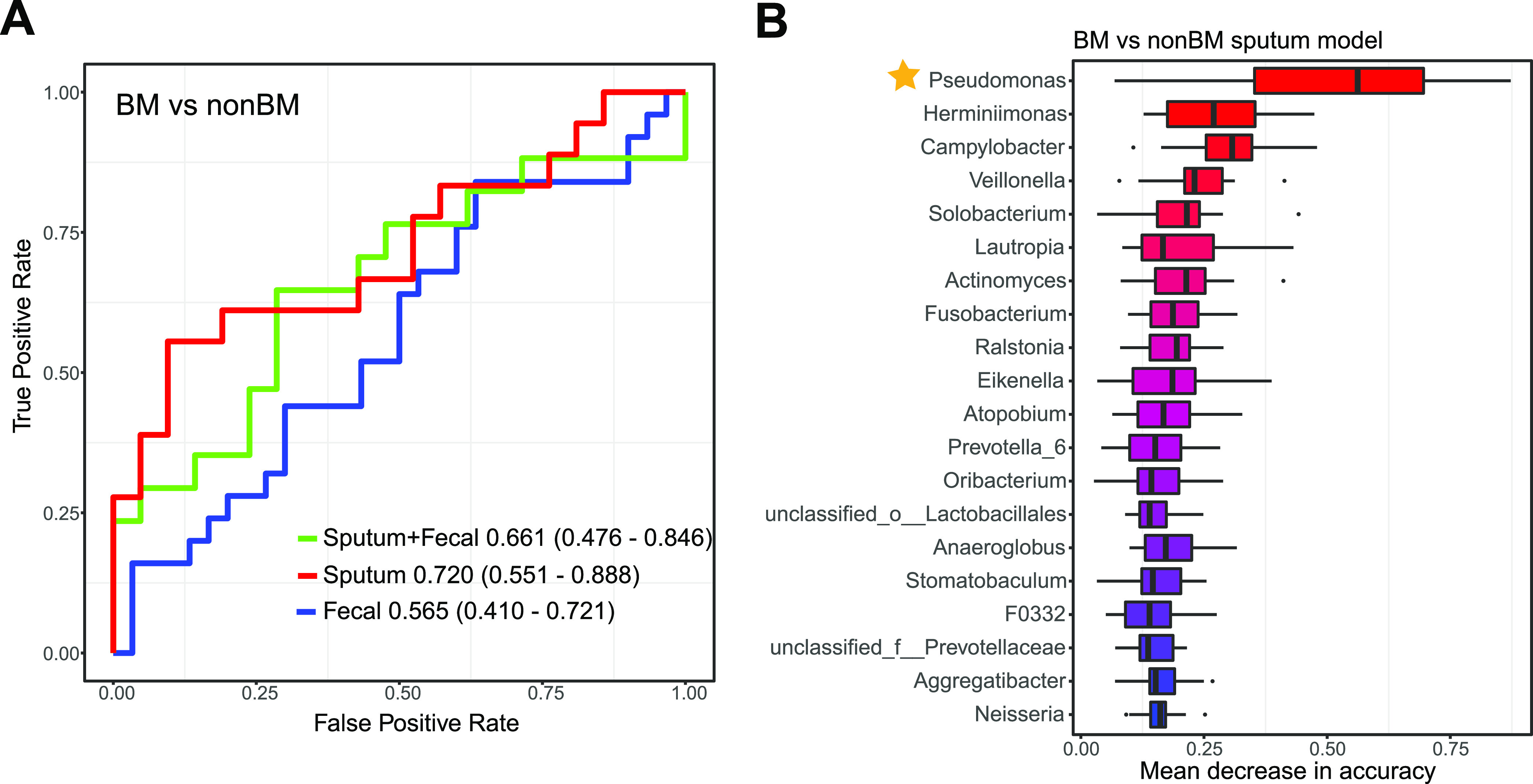
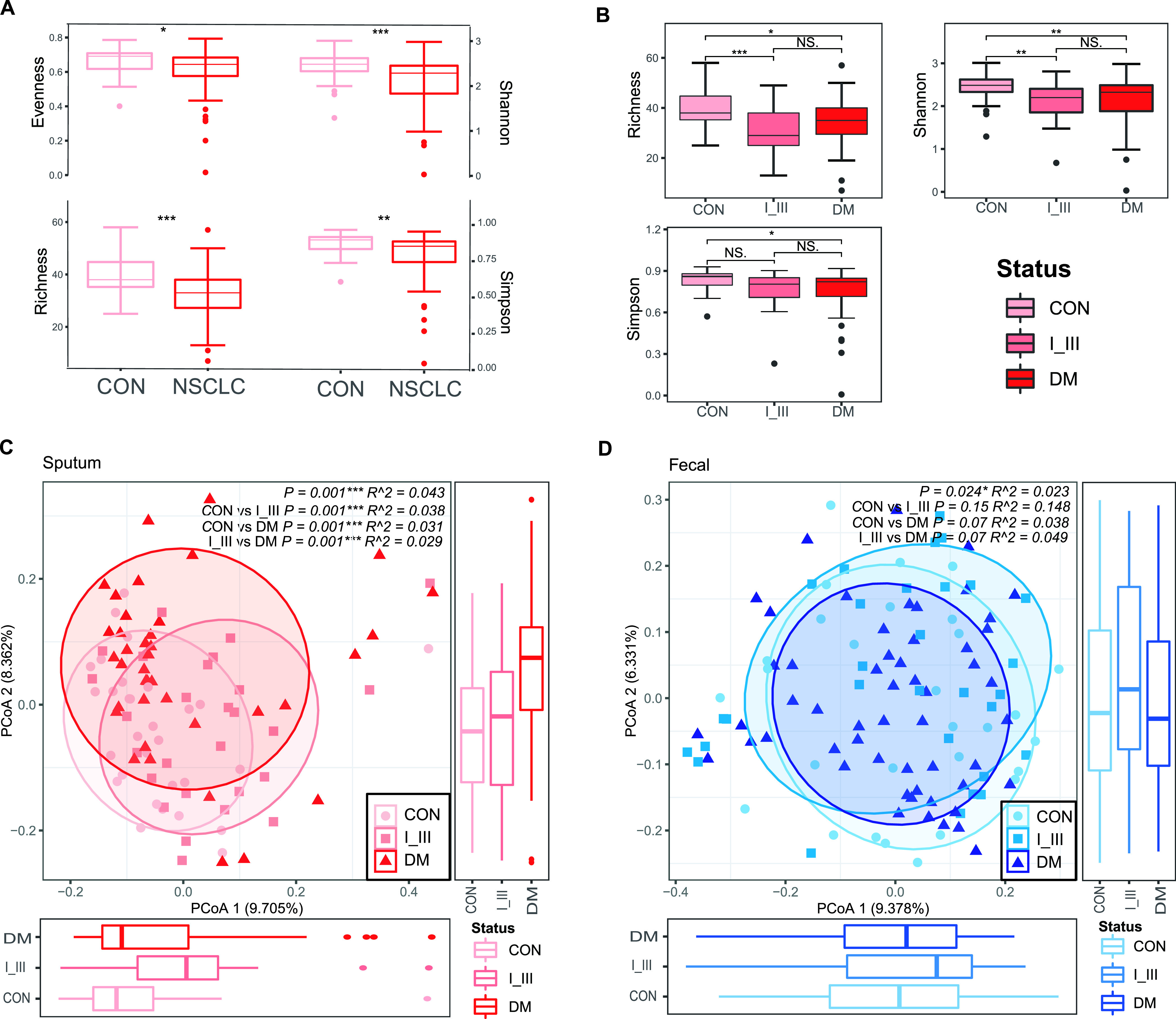
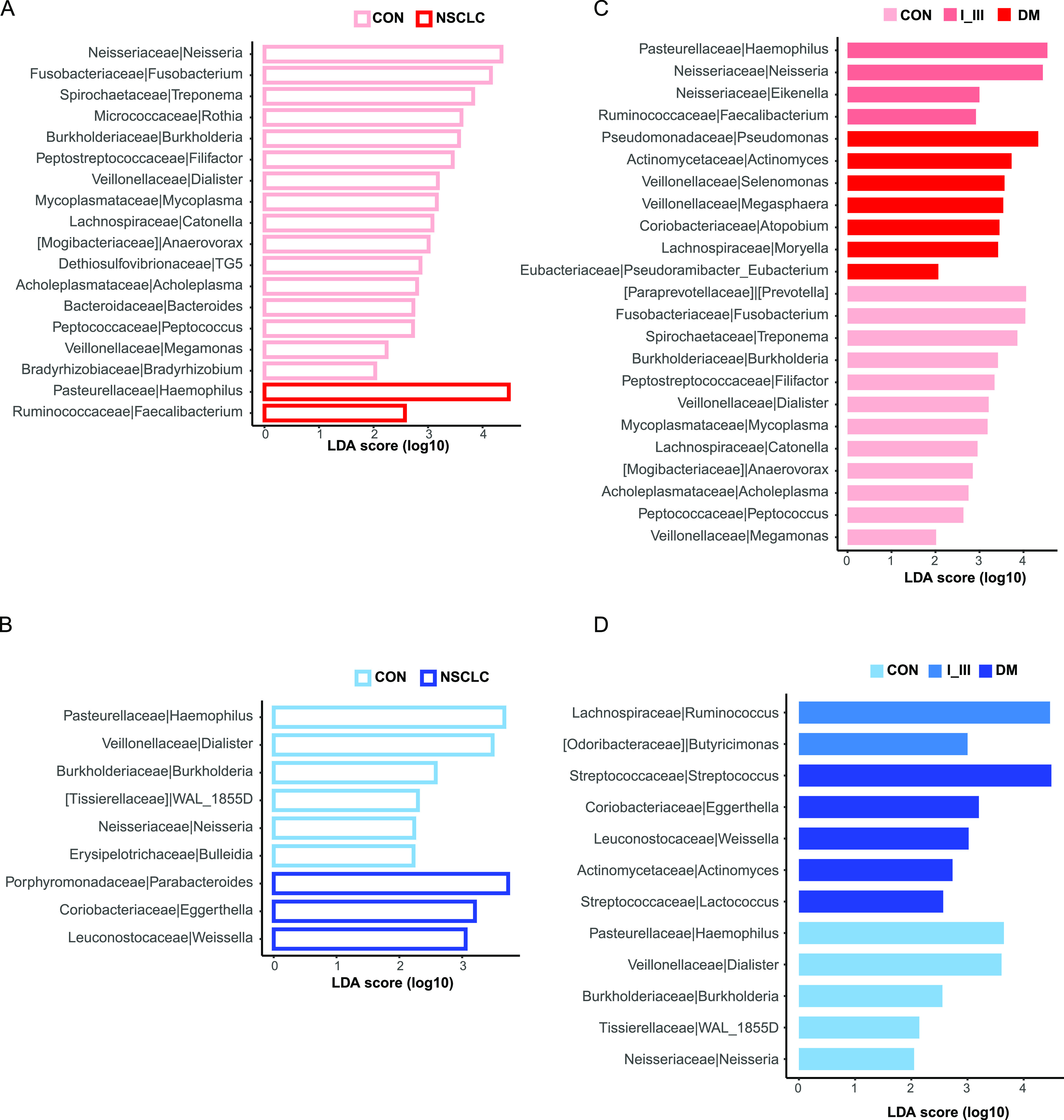
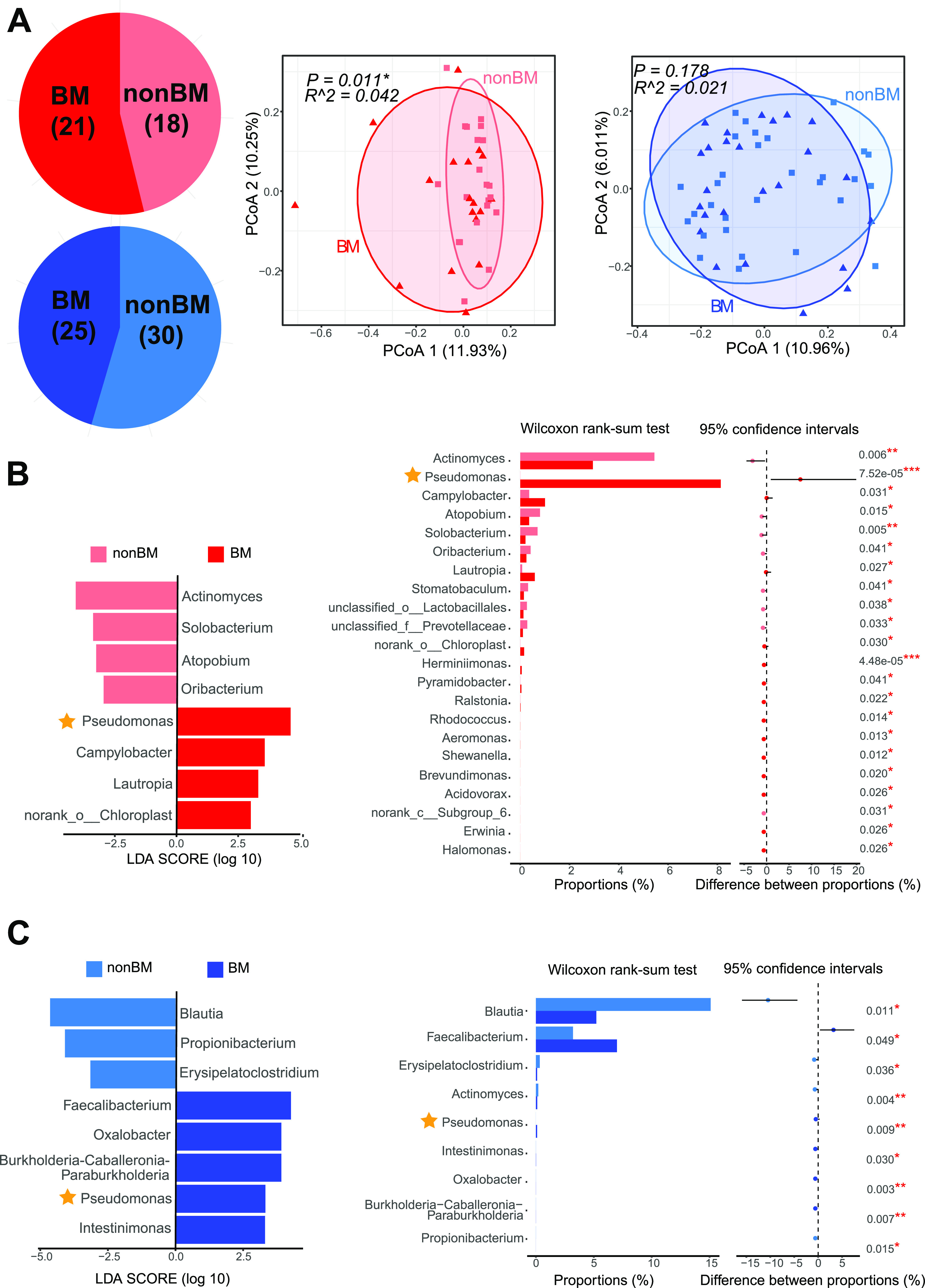
Non-small cell lung cancer (NSCLC) is the leading cause of cancer-related deaths worldwide. Although dysbiosis of the lung and gut microbiota have been associated with NSCLC, their relative contributions are unclear; in addition, their roles in distant metastasis (DM) are still illusive. We recruited in total 121 participants, including 87 newly diagnosed treatment-naive NSCLC patients of various stages and 34 healthy volunteers, and surveyed their fecal and sputum microbiota. We compared the microbial profiles between groups, identified microbial biomarkers, and generated machine learning models for distinguishing healthy individuals from patients with NSCLC and patients of various stages. We found significant perturbations of gut and sputum microbiota in patients with NSCLC and DM. A machine learning model combining both microbiota (combined model) performed better than an individual data set in patient stratification, with the highest area under the curve (AUC) value of 0.896. Sputum and gut microbiota both contributed to the combined model; in most cases, sputum-only models performed similar to the combined models. Several microbial biomarkers were shared by both microbiotas, indicating their similar roles at distinct body sites. Microbial biomarkers of distinct disease stages were mostly shared, suggesting biomarkers for DM could be acquired early. Furthermore, Pseudomonas aeruginosa, a species previously associated with wound infections, was significantly more abundant in brain metastasis, indicating that distinct types of DMs could have different microbes. Our results indicate that alterations of the sputum microbiota have stronger relationships with NSCLC and DM than the gut and strongly support the feasibility of metagenome-based noninvasive disease diagnosis and risk evaluation. (This study has been registered at ClinicalTrials.gov under registration no. NCT03454685). Our survey on gut and sputum microbiota revealed that both were significantly disturbed in non-small cell lung cancer (NSCLC) and associated with distant metastasis (DM) while only the sputum microbiota was associated with non-DM NSCLC. The lung microbiota could therefore have a stronger association with (and thus may contribute more to) disease development than the gut microbiota. Mathematic models using both microbiotas performed better in patient stratification than using individual microbiota. Sputum models, however, performed similar to the combined models, suggesting a convenient, noninvasive diagnostic for NSCLC. Microbial biomarkers of distinct disease stages were mostly shared, suggesting that the same set of microbes were underlying disease progression, and the signals for distant metastasis could be acquired at early stages of the disease. Our results strongly support the feasibility of noninvasive diagnosis of NSCLC, including distant metastasis, are of clinical importance, and should warrant further research on the underlying molecular mechanisms.
非小细胞肺癌 (NSCLC) 是全球癌症相关死亡的主要原因。尽管肺部和肠道微生物群的失调与 NSCLC 有关,但它们的相对贡献尚不清楚;此外,它们在远处转移 (DM) 中的作用仍然难以捉摸。我们总共招募了 121 名参与者,包括 87 名不同阶段的新诊断未经治疗的 NSCLC 患者和 34 名健康志愿者,并调查了他们的粪便和痰液微生物群。我们比较了组间的微生物谱,鉴定了微生物标志物,并为区分健康个体与 NSCLC 患者和不同阶段的患者生成了机器学习模型。我们发现 NSCLC 患者和 DM 患者的肠道和痰液微生物群存在明显的扰动。结合两组微生物群的机器学习模型(组合模型)在患者分层中的表现优于单个数据集,曲线下面积 (AUC) 值最高为 0.896。痰液和肠道微生物群均为组合模型做出了贡献;在大多数情况下,仅痰液模型的表现与组合模型相似。两个微生物群都有一些共同的微生物生物标志物,这表明它们在不同的身体部位具有相似的作用。不同疾病阶段的微生物生物标志物大多是共享的,这表明 DM 的标志物可能很早就可以获得。此外,先前与伤口感染相关的铜绿假单胞菌在脑转移中显著更为丰富,表明不同类型的 DM 可能具有不同的微生物。我们的结果表明,与 NSCLC 和 DM 相比,痰液微生物群的改变与 NSCLC 和 DM 的关系更强,而肠道微生物群的改变与非 DM NSCLC 的关系更强。我们对肠道和痰液微生物群的调查表明,两者在非小细胞肺癌 (NSCLC) 中均受到显著干扰,并与远处转移 (DM) 相关,而只有痰液微生物群与非 DM NSCLC 相关。因此,与肠道微生物群相比,肺部微生物群可能与(并因此可能更多地促成)疾病发展有更强的关联。使用两种微生物群的数学模型在患者分层中的表现优于使用单个微生物群。然而,痰液模型与组合模型的表现相似,这表明这是一种方便、非侵入性的 NSCLC 诊断方法。不同疾病阶段的微生物生物标志物大多是共享的,这表明疾病进展的基础是相同的微生物群,而远处转移的信号可能在疾病的早期阶段获得。我们的研究结果强烈支持 NSCLC 包括远处转移的非侵入性诊断的可行性,这具有临床意义,应该进一步研究潜在的分子机制。