
用于上肢协调康复的软模块化外骨骼的路径规划与阻抗控制
Path Planning and Impedance Control of a Soft Modular Exoskeleton for Coordinated Upper Limb Rehabilitation.
作者信息
Liu Quan, Liu Yang, Li Yi, Zhu Chang, Meng Wei, Ai Qingsong, Xie Sheng Q
机构信息
School of Information Engineering, Wuhan University of Technology, Wuhan, China.
School of Electronic and Electrical Engineering, University of Leeds, Leeds, United Kingdom.
出版信息
Front Neurorobot. 2021 Nov 1;15:745531. doi: 10.3389/fnbot.2021.745531. eCollection 2021.
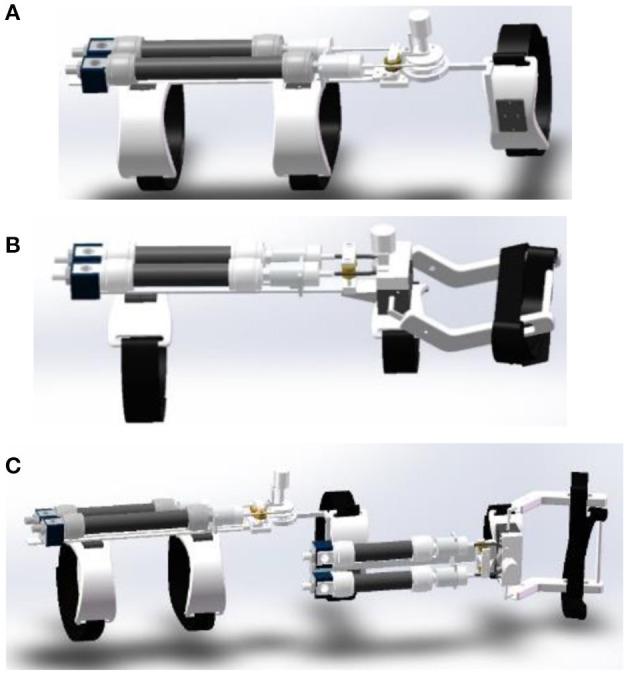
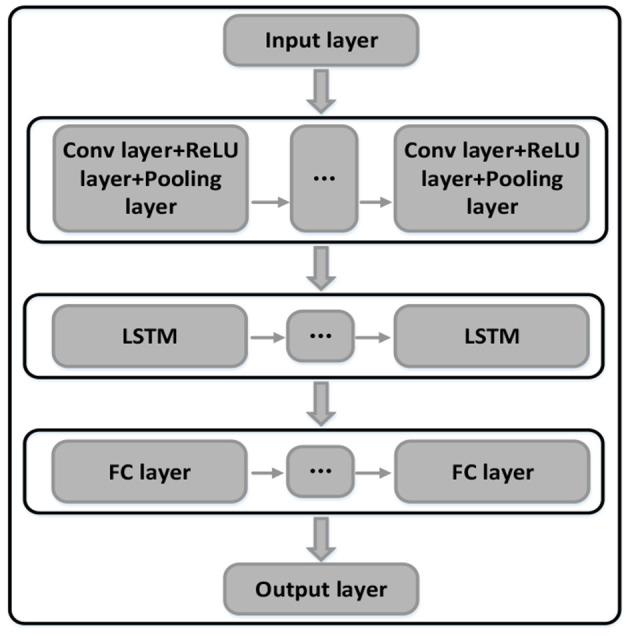
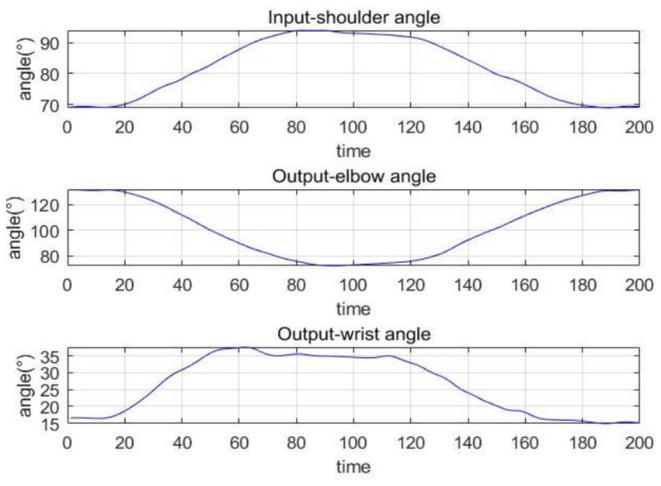
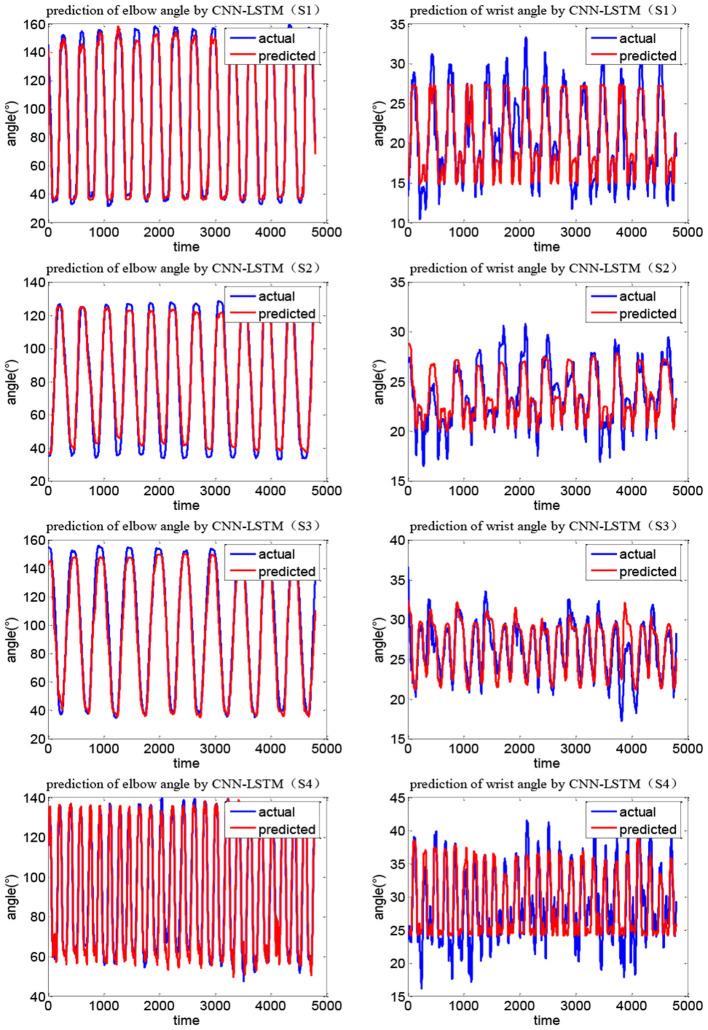
The coordinated rehabilitation of the upper limb is important for the recovery of the daily living abilities of stroke patients. However, the guidance of the joint coordination model is generally lacking in the current robot-assisted rehabilitation. Modular robots with soft joints can assist patients to perform coordinated training with safety and compliance. In this study, a novel coordinated path planning and impedance control method is proposed for the modular exoskeleton elbow-wrist rehabilitation robot driven by pneumatic artificial muscles (PAMs). A convolutional neural network-long short-term memory (CNN-LSTM) model is established to describe the coordination relationship of the upper limb joints, so as to generate adaptive trajectories conformed to the coordination laws. Guided by the planned trajectory, an impedance adjustment strategy is proposed to realize active training within a virtual coordinated tunnel to achieve the robot-assisted upper limb coordinated training. The experimental results showed that the CNN-LSTM hybrid neural network can effectively quantify the coordinated relationship between the upper limb joints, and the impedance control method ensures that the robotic assistance path is always in the virtual coordination tunnel, which can improve the movement coordination of the patient and enhance the rehabilitation effectiveness.
上肢的协同康复对于中风患者日常生活能力的恢复至关重要。然而,当前机器人辅助康复中普遍缺乏关节协调模型的指导。具有柔性关节的模块化机器人可以协助患者安全、合规地进行协同训练。在本研究中,针对由气动人工肌肉(PAM)驱动的模块化外骨骼肘腕康复机器人,提出了一种新颖的协同路径规划和阻抗控制方法。建立了卷积神经网络-长短期记忆(CNN-LSTM)模型来描述上肢关节的协调关系,从而生成符合协调规律的自适应轨迹。在规划轨迹的引导下,提出了一种阻抗调整策略,以实现在虚拟协同通道内的主动训练,从而实现机器人辅助的上肢协同训练。实验结果表明,CNN-LSTM混合神经网络能够有效地量化上肢关节之间的协调关系,阻抗控制方法确保机器人辅助路径始终处于虚拟协同通道内,可改善患者的运动协调性,提高康复效果。








 Zotero 插件