Ke Yao, Chen Xiaoying, Su Yuting, Chen Cuilan, Lei Shunmei, Xia Lianping, Wei Dan, Zhang Han, Dong Caihua, Liu Xia, Yin Fuqiang
Life Sciences Institute, Guangxi Medical University, Nanning, China.
Key Laboratory of Longevity and Ageing-Related Disease of Chinese Ministry of Education, Centre for Translational Medicine and School of Preclinical Medicine, Guangxi Medical University, Nanning, China.
Front Oncol. 2021 Nov 1;11:744940. doi: 10.3389/fonc.2021.744940. eCollection 2021.
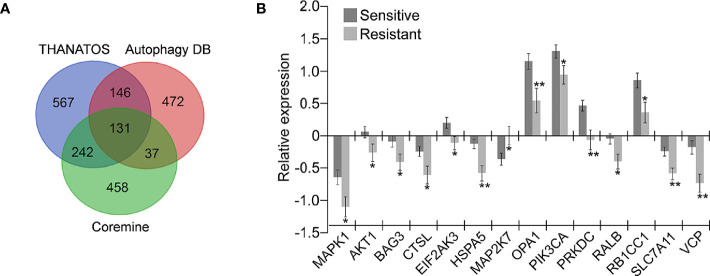
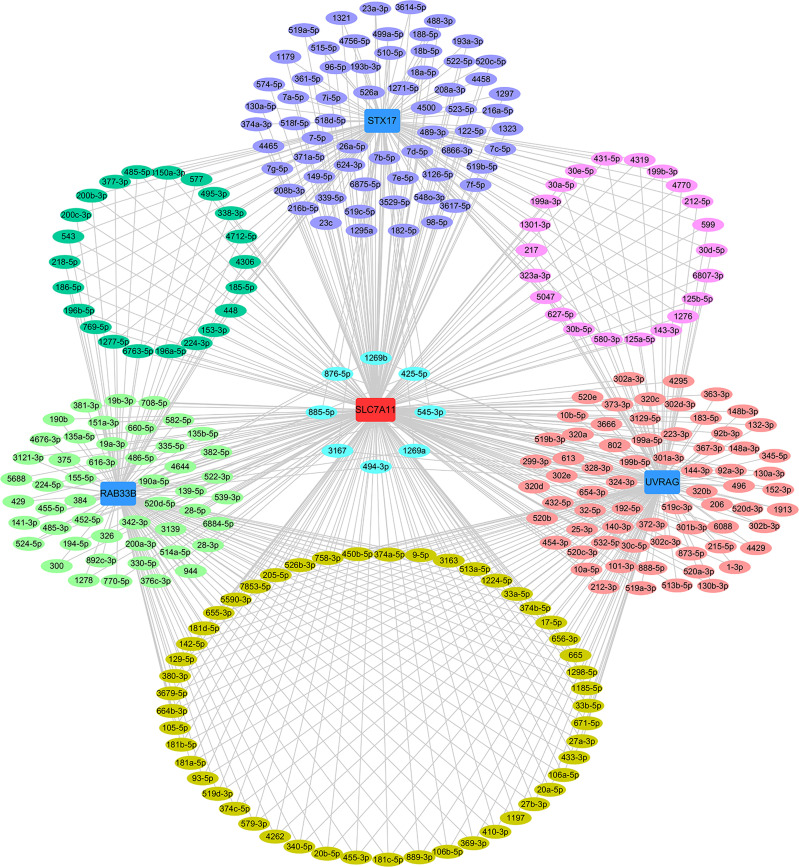
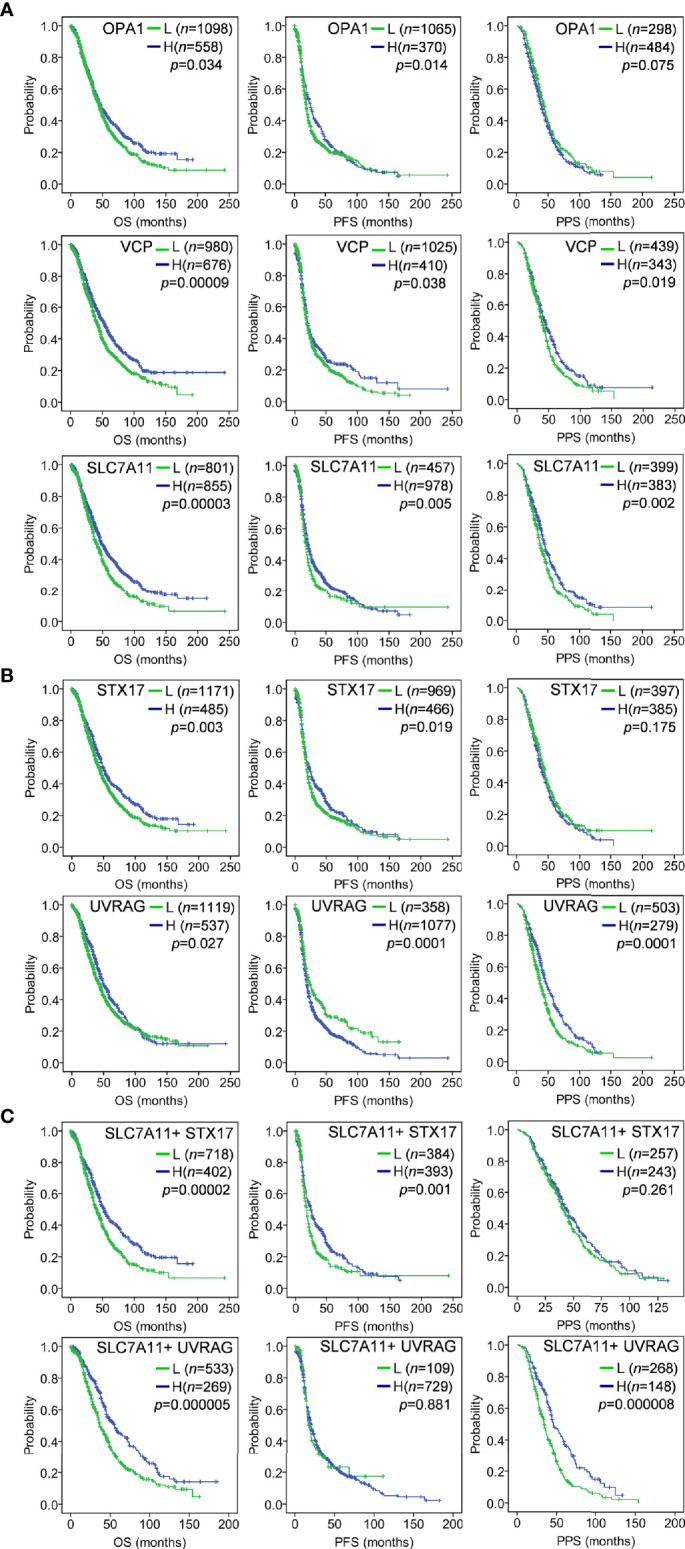
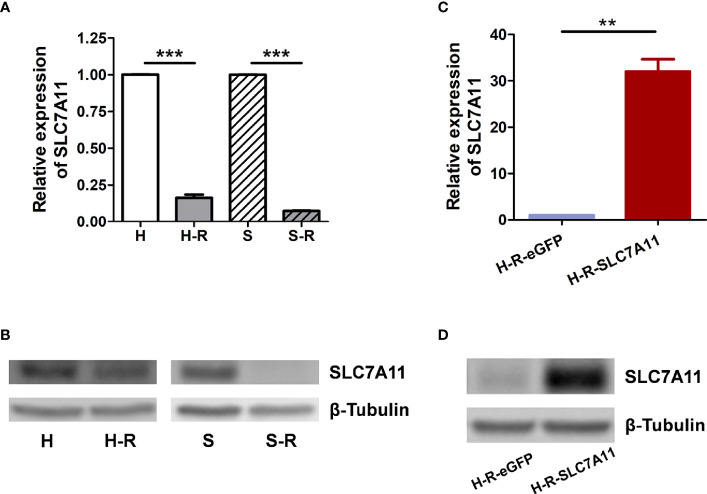
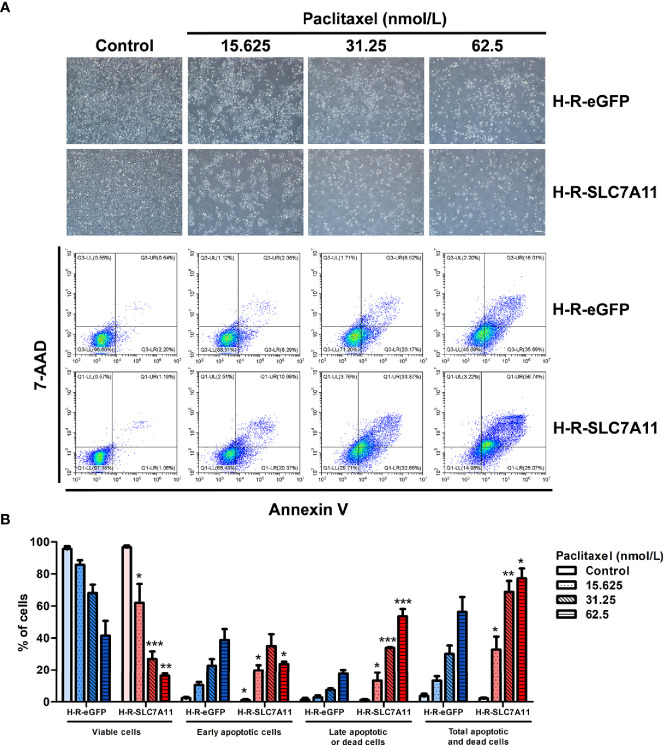
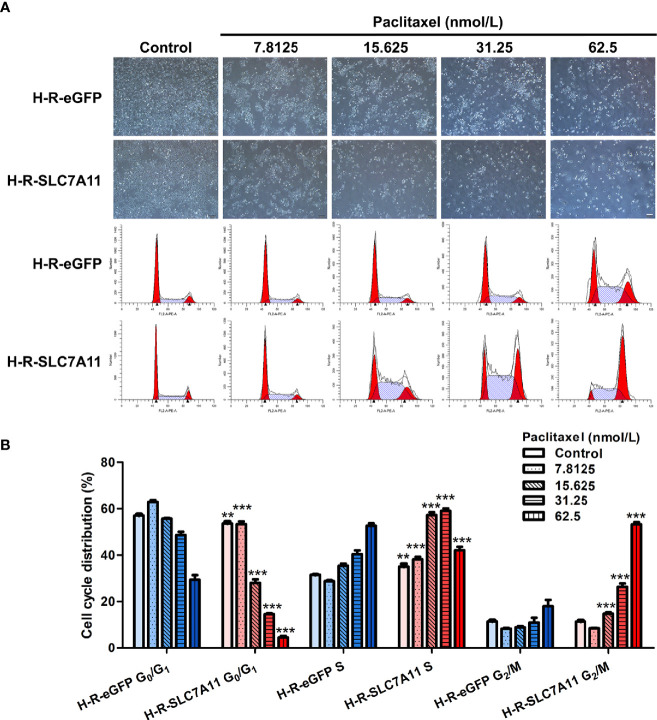
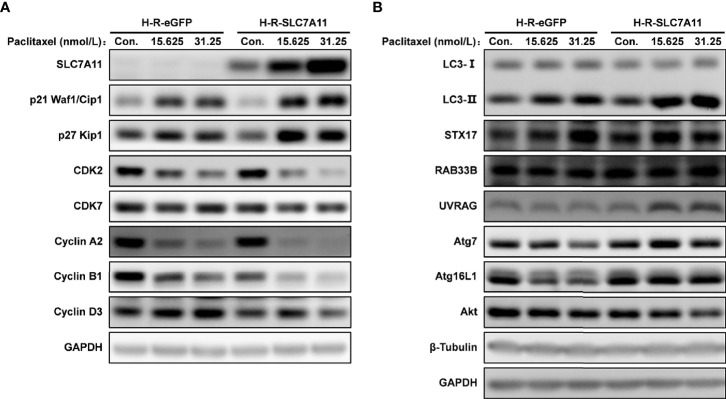
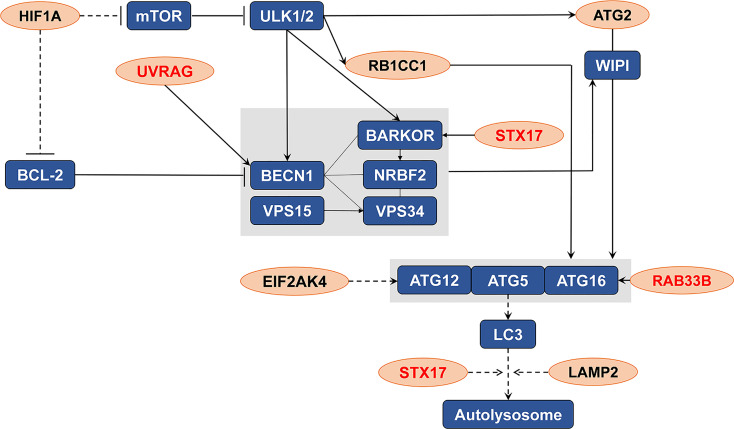
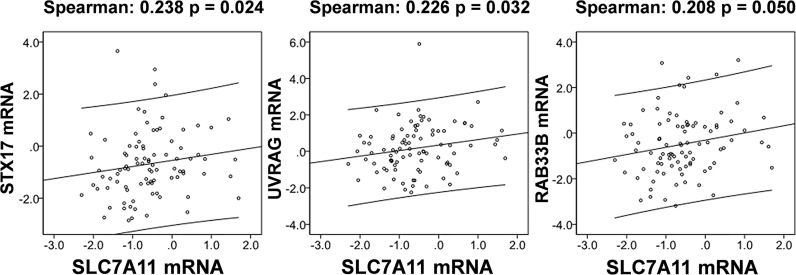
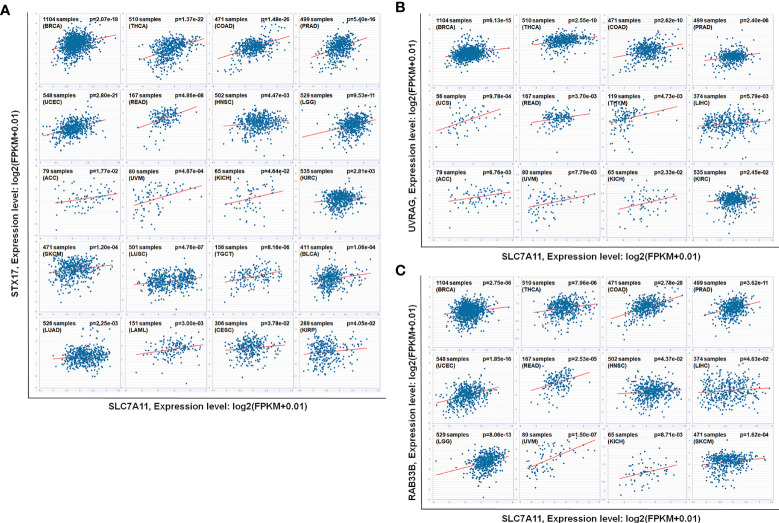
Drug resistance is the main cause of chemotherapy failure in ovarian cancer (OC), and identifying potential druggable targets of autophagy is a novel and promising approach to overcoming drug resistance. In this study, 131 genes associated with autophagy were identified from three autophagy-related databases, and of these, 14 were differentially expressed in 90 drug-resistant OC tissues versus 197 sensitive tissues according to the Cancer Genome Atlas ovarian cancer cohort. Among these 14 genes, SLC7A11 was significantly decreased in two paclitaxel-resistant OC cells (HeyA8-R and SKOV3-R) and in 90 drug-resistant tissues compared with their controls. overexpression of SLC7A11 significantly increased the sensitivity of HeyA8-R cells to paclitaxel, inhibited colony formation, induced apoptosis, and arrested cell cycle. Further, low SLC7A11 expression was correlated with poor overall survival (OS), progression-free survival (PFS), and post-progression survival (PPS) in 1815 OC patients. Mechanistically, SLC7A11 strongly regulated cell autophagy as a competing endogenous RNA (ceRNA) based on pan-cancer analyses of 32 tumor types. Specifically, as a ceRNA for autophagy genes STX17, RAB33B, and UVRAG, SLC7A11 was strongly and positively co-expressed with these three genes in 20, 12, and 12 different tumors, respectively, in 379 OC tissues and in 90 drug-resistant OC tissues, and the former two were significantly upregulated in SLC7A11-overexpressed HeyA8-R cells. Further, SLC7A11 induced the protein expression of other autophagy genes, such as LC3, Atg16L1, and Atg7, and the expression of the respective proteins was further increased when the cells were treated with paclitaxel. The results strongly suggest that SLC7A11 regulates autophagy ceRNA interactions with the three abovementioned genes in pan-cancer and in drug-resistant OC. Moreover, low expression of STX17 and UVRAG also significantly predicted low OS, PFS, and PPS. The combination of SLC7A11 with STX17 was more predictive of OS and PFS than either individually, and the combination of SLC7A11 with UVRAG was highly predictive of OS and PPS. The above results indicated that decreased SLC7A11 resulted in drug resistance and effected low rates of survival in OC patients, probably ceRNA interactions with autophagy genes, and thus the gene could serve as a therapeutic target and potential biomarker in OC.
耐药性是卵巢癌(OC)化疗失败的主要原因,确定自噬的潜在可药物作用靶点是克服耐药性的一种新颖且有前景的方法。在本研究中,从三个自噬相关数据库中鉴定出131个与自噬相关的基因,根据癌症基因组图谱卵巢癌队列,其中14个基因在90个耐药OC组织与197个敏感组织中差异表达。在这14个基因中,与对照相比,溶质载体家族7成员11(SLC7A11)在两个耐紫杉醇OC细胞系(HeyA8-R和SKOV3-R)以及90个耐药组织中显著降低。SLC7A11的过表达显著增加了HeyA8-R细胞对紫杉醇的敏感性,抑制集落形成,诱导凋亡,并使细胞周期停滞。此外,在1815例OC患者中,SLC7A11低表达与总生存期(OS)、无进展生存期(PFS)和进展后生存期(PPS)较差相关。机制上,基于对32种肿瘤类型的泛癌分析,SLC7A11作为一种竞争性内源RNA(ceRNA)强烈调节细胞自噬。具体而言,作为自噬基因 syntaxin 17(STX17)、RAB33B和紫外线辐射抗性相关基因(UVRAG)的ceRNA,SLC7A11在379个OC组织和90个耐药OC组织中的20种、12种和12种不同肿瘤中分别与这三个基因强烈且正相关表达,并且前两者在SLC7A11过表达的HeyA8-R细胞中显著上调。此外,SLC7A11诱导其他自噬基因如微管相关蛋白1轻链3(LC3)、自噬相关蛋白16样蛋白1(Atg16L1)和自噬相关蛋白7(Atg7)的蛋白表达,并在用紫杉醇处理细胞时各自蛋白的表达进一步增加。结果强烈表明,SLC7A11在泛癌和耐药OC中通过ceRNA与上述三个基因相互作用调节自噬。此外,STX17和UVRAG的低表达也显著预测低OS、PFS和PPS。SLC7A11与STX17联合对OS和PFS的预测性比单独使用任何一个都更好,SLC7A11与UVRAG联合对OS和PPS具有高度预测性。上述结果表明,SLC7A11降低导致耐药性并影响OC患者低生存率,可能是通过与自噬基因的ceRNA相互作用,因此该基因可作为OC的治疗靶点和潜在生物标志物。