Graduate Program in Immunology, Tufts Graduate School of Biomedical Sciences, Boston, USA.
Department of Molecular Biology and Microbiology, Tufts University School of Medicine, Boston, USA.
Gut Microbes. 2021 Jan-Dec;13(1):1988390. doi: 10.1080/19490976.2021.1988390.
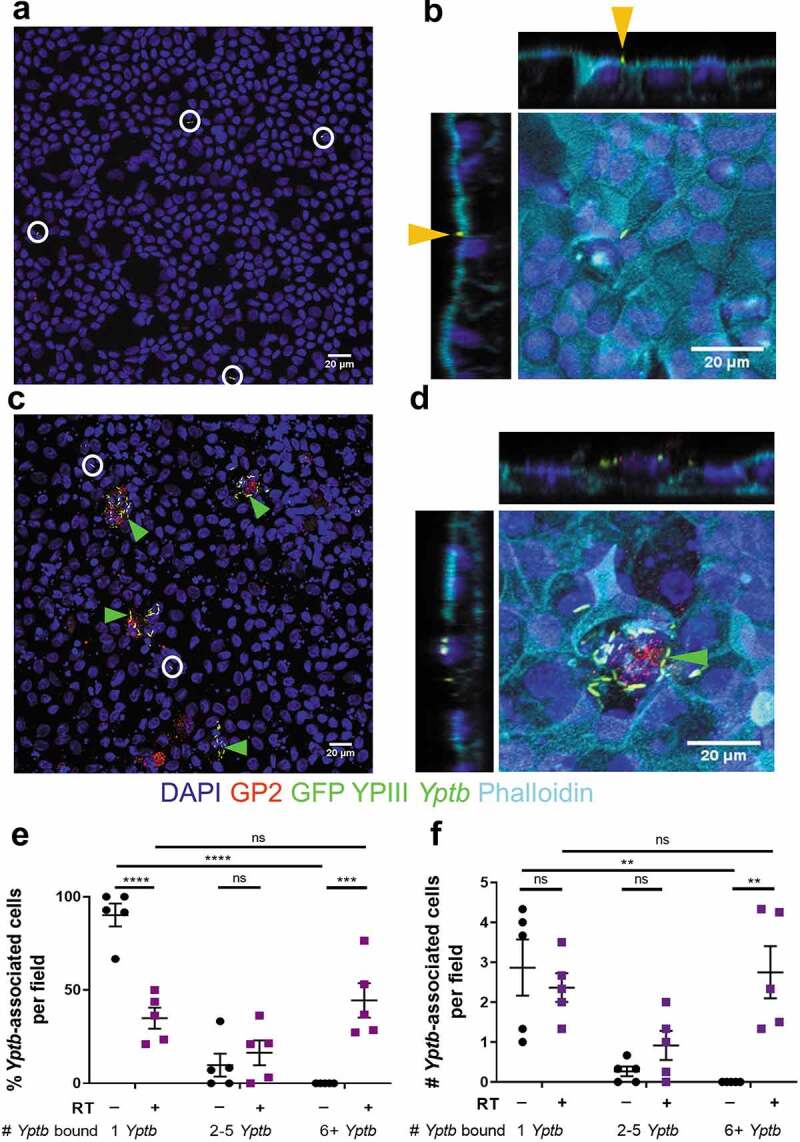
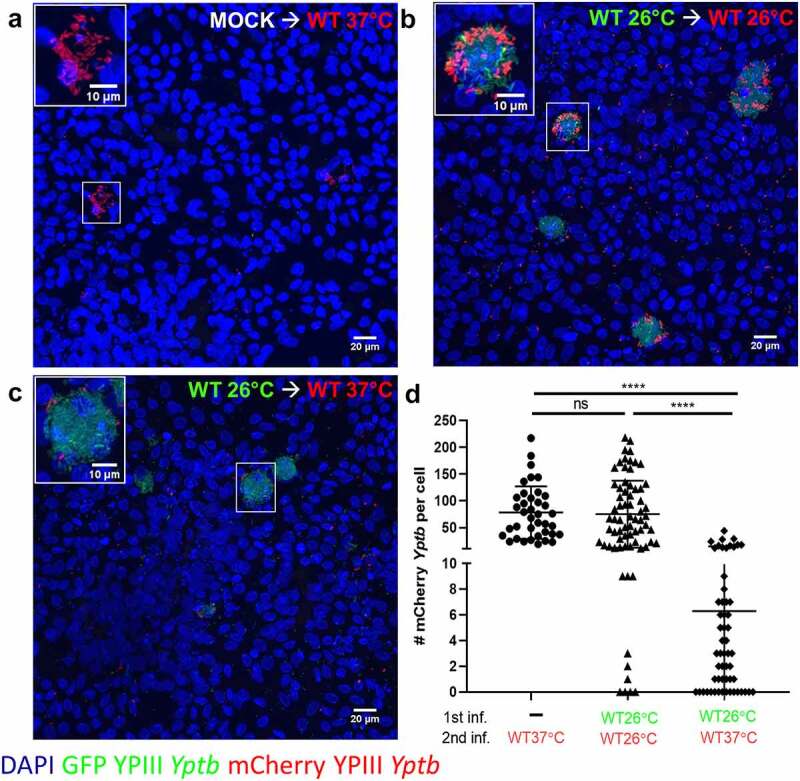
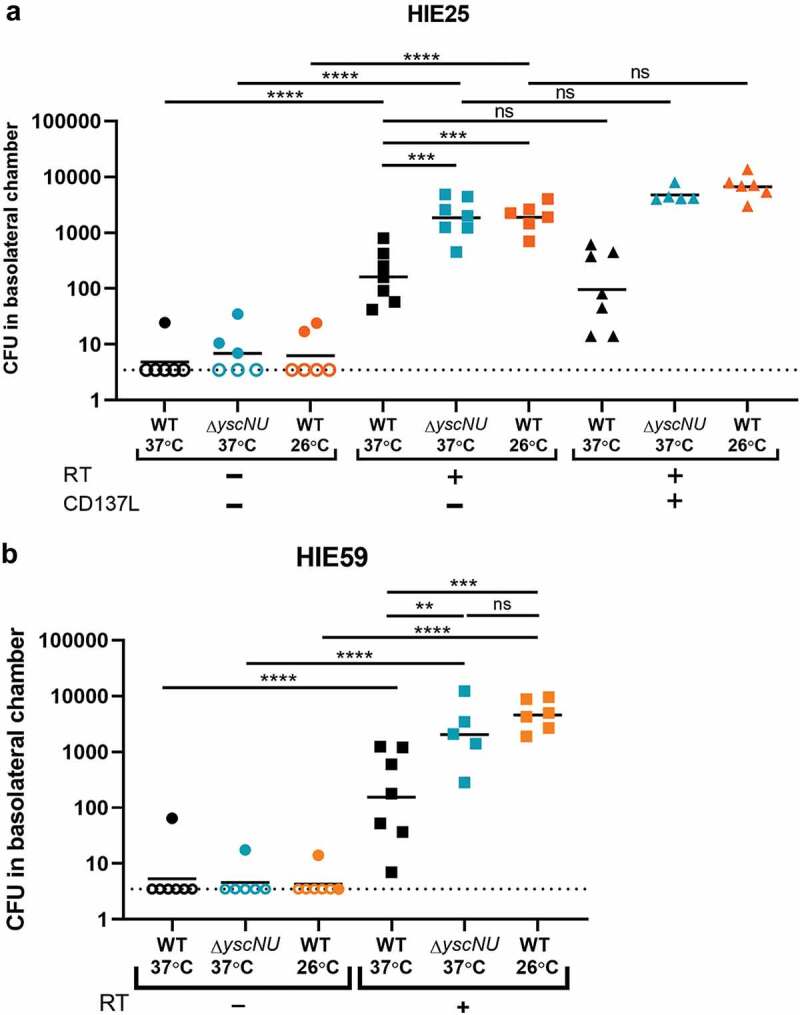
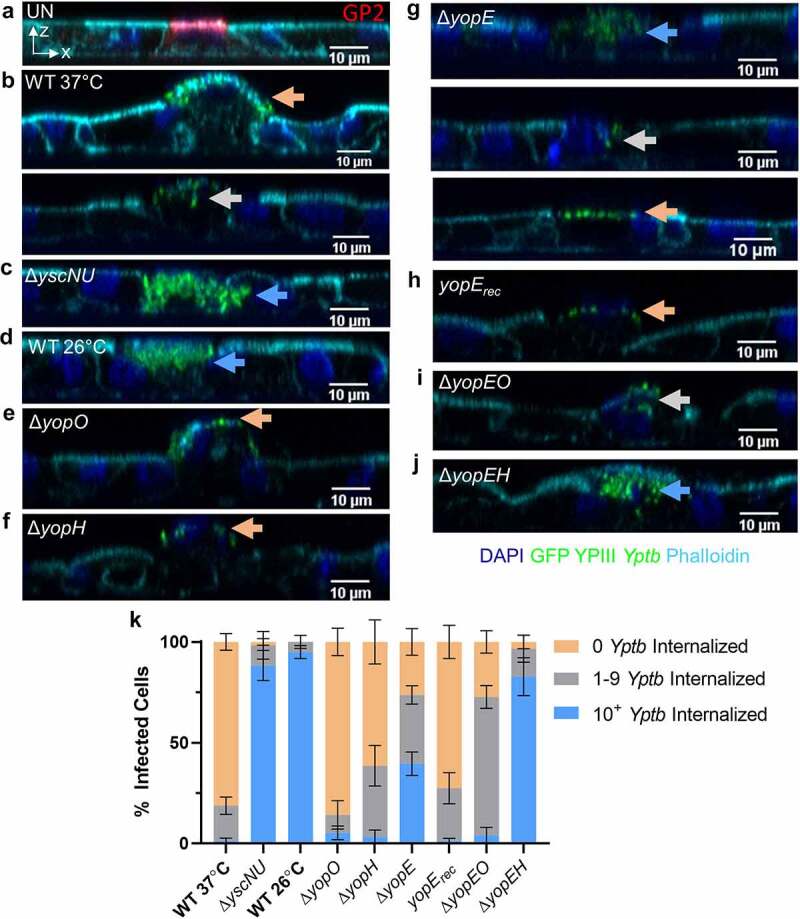
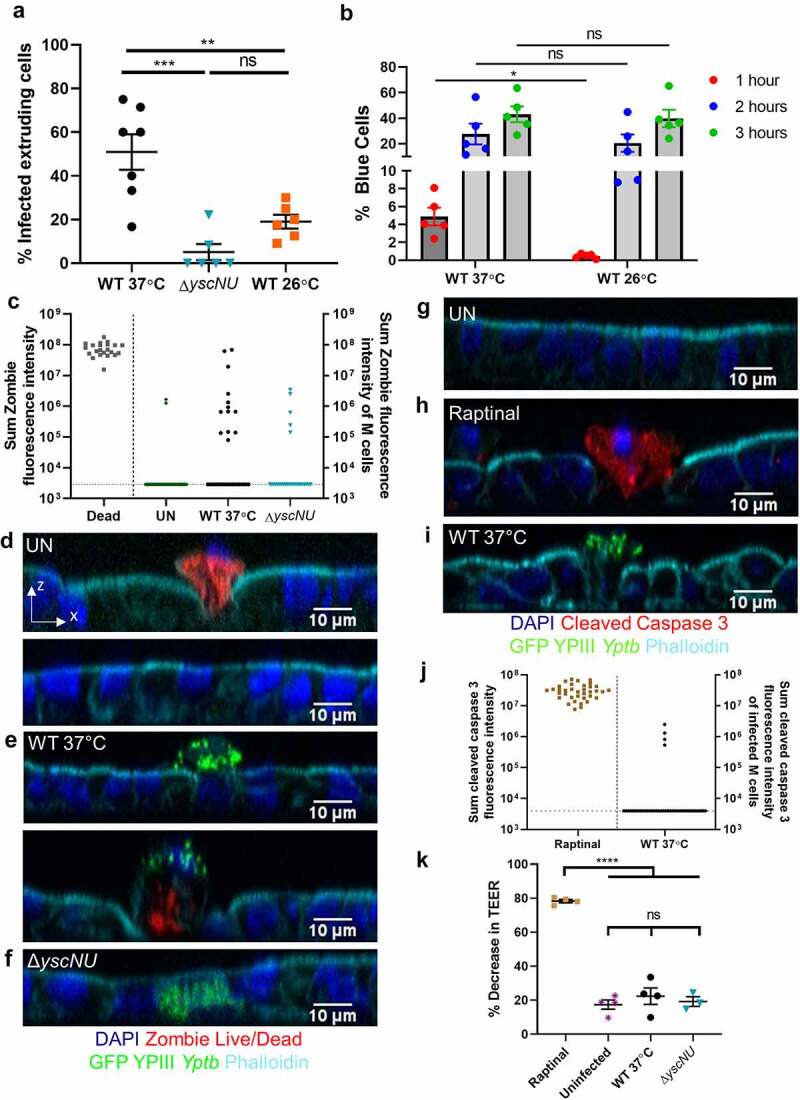
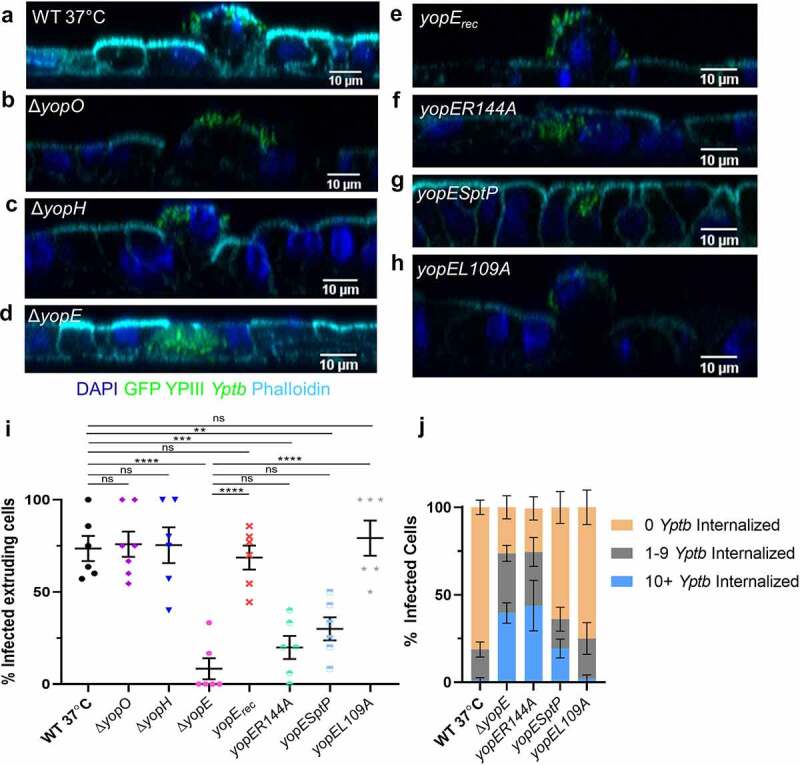
Many pathogens use M cells to access the underlying Peyer's patches and spread to systemic sites via the lymph as demonstrated by ligated loop murine intestinal models. However, the study of interactions between M cells and microbial pathogens has stalled due to the lack of cell culture systems. To overcome this obstacle, we use human ileal enteroid-derived monolayers containing five intestinal cell types including M cells to study the interactions between the enteric pathogen, (), and M cells. The type three secretion system (T3SS) effector Yops inhibit host defenses including phagocytosis and are critical for colonization of the intestine and Peyer's patches. Therefore, it is not understood how traverses through M cells to breach the epithelium. By growing under two physiological conditions that mimic the early infectious stage (low T3SS-expression) or host-adapted stage (high T3SS-expression), we found that large numbers of specifically associated with M cells, recapitulating murine studies. Transcytosis through M cells was significantly higher by expressing low levels of T3SS, because YopE and YopH prevented uptake. YopE also caused M cells to extrude from the epithelium without inducing cell-death or disrupting monolayer integrity. Sequential infection with early infectious stage reduced host-adapted association with M cells. These data underscore the strength of enteroids as a model by discovering that Yops impede M cell function, indicating that early infectious stage more effectively penetrates M cells while the host may defend against M cell penetration of host-adapted .
许多病原体利用 M 细胞进入黏膜下层的派尔集合淋巴结,并通过淋巴液扩散到全身部位,这在结扎环式的鼠肠模型中得到了证实。然而,由于缺乏细胞培养系统,M 细胞与微生物病原体之间相互作用的研究已经停滞不前。为了克服这一障碍,我们使用含有五种肠细胞类型(包括 M 细胞)的人回肠类器官衍生的单层来研究肠道病原体 () 与 M 细胞之间的相互作用。III 型分泌系统(T3SS)效应蛋白 Yops 抑制包括吞噬作用在内的宿主防御机制,对于肠道和派尔集合淋巴结的定植至关重要。因此,尚不清楚如何通过 M 细胞穿透上皮细胞。通过在两种生理条件下(低 T3SS 表达模拟早期感染阶段,高 T3SS 表达模拟宿主适应阶段)培养 ,我们发现大量的 与 M 细胞特异性相关,这与鼠类研究结果一致。当 低水平表达 T3SS 时,穿过 M 细胞的易位明显增加,因为 YopE 和 YopH 阻止了 的摄取。YopE 还导致 M 细胞从上皮细胞中挤出,而不会诱导细胞死亡或破坏单层完整性。用早期感染阶段的 进行连续感染,降低了宿主适应阶段的 与 M 细胞的关联。这些数据强调了类器官作为一种模型的优势,因为发现 Yops 会阻碍 M 细胞的功能,这表明早期感染阶段的 更有效地穿透 M 细胞,而宿主可能会防御宿主适应阶段的 对 M 细胞的穿透。