Souza Rebeca Cecília, de Sousa Emerson Tavares, Sousa David, Sales Marcelo, Dos Santos Oliveira Rudyard, Mariano Maria Helena, Rushansky Eliézer, Amorim Gomes Ana Cláudia, Silva Emanuel
Department of Oral Surgery, Dental School, Pernambuco University, Recife, Pernambuco, Brazil.
Department of Dentistry, Federal University of Rio Grande do Norte, Natal, Rio Grande do Norte, Brazil.
Clin Cosmet Investig Dent. 2021 Nov 11;13:469-478. doi: 10.2147/CCIDE.S320537. eCollection 2021.
This study sought to investigate which temporomandibular disorders (TMD) can be expected in patients with ankylosing spondylitis (AS) and to determine the combined impact of these conditions on the psychological status, chronic pain, and functional disability.
A cross-sectional study composed of 30 patients between 18 and 65 years with ankylosing spondylitis was performed. The research protocol considered the evaluation of outcomes related to the ankylosing spondylitis (HLA-B27 antigen, Bath Ankylosing Spondylitis Disease Activity Index (BASDAI), Bath Ankylosing Spondylitis Functional Index (BASFI) and Health Assessment Questionnaire - Spondylitis (HAQ-S)) and temporomandibular disorders (axis I and II of the Research Diagnostic Criteria for Temporomandibular Disorders - RDC/TMD). Descriptive analyses were applied to express the results.
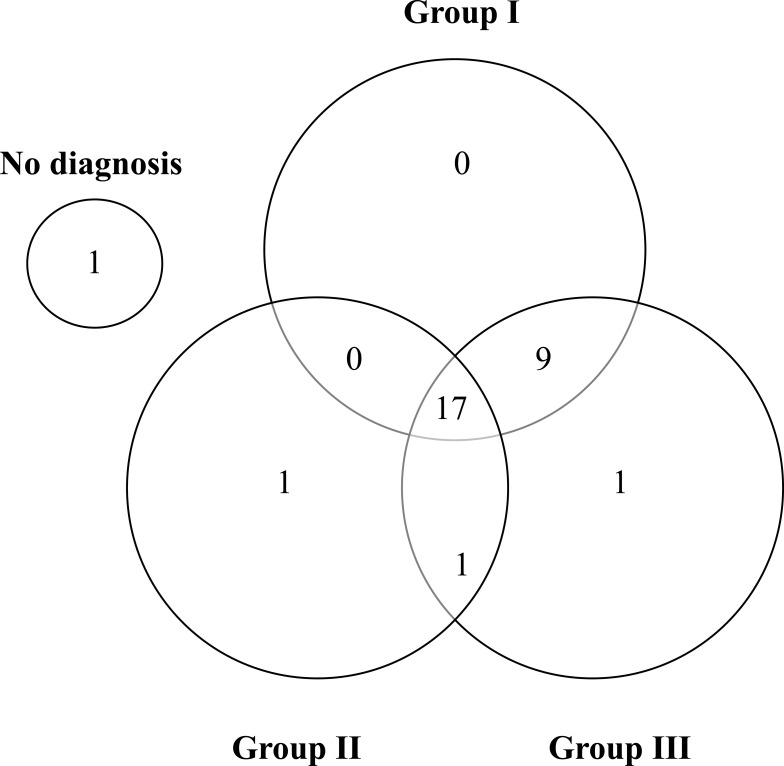
The sample presented both AS and TMD, most of them (24) were diagnosed with conventional AS (HLA-B27 positive). The BASDAI was scored as 7.70 (2.30) (high activity of AS disease). Functional disability represented by high scores of BASFI [7.00 (2.63)] and HAQ-S [1.79 (0.62)] demonstrates the severe impact of the disease on the daily routine and quality of life. According to RDC/TMD diagnostic criteria, 17 (57%) share the three groups of TMD, and 9 (30%) share two groups of TMD (Group I and III). Over 73% of the volunteers scored high levels of chronic pain (Grade III and IV) associated with a high depression scale score. The sample scored the somatization scale (with and without pain) as severe.
Patients with ankylosing spondylitis presented a high prevalence of temporomandibular disorder, most of them having the degenerative forms of TMJ disease. AS and TMD cause moderate to severe chronic pain and a negative impact on psychological status and functional capacities.
本研究旨在调查强直性脊柱炎(AS)患者可能出现哪些颞下颌关节紊乱(TMD),并确定这些病症对心理状态、慢性疼痛和功能残疾的综合影响。
对30例年龄在18至65岁之间的强直性脊柱炎患者进行了一项横断面研究。研究方案考虑了与强直性脊柱炎相关的结局评估(HLA - B27抗原、巴斯强直性脊柱炎疾病活动指数(BASDAI)、巴斯强直性脊柱炎功能指数(BASFI)和健康评估问卷 - 脊柱炎(HAQ - S))以及颞下颌关节紊乱(颞下颌关节紊乱研究诊断标准 - RDC/TMD的轴I和轴II)。采用描述性分析来表达结果。
该样本同时患有AS和TMD,其中大多数(24例)被诊断为传统型AS(HLA - B27阳性)。BASDAI评分为7.70(2.30)(AS疾病高活动度)。以BASFI高分[7.00(2.63)]和HAQ - S高分[1.79(0.62)]表示的功能残疾表明该疾病对日常生活和生活质量有严重影响。根据RDC/TMD诊断标准,17例(57%)属于TMD的三组,9例(30%)属于TMD的两组(I组和III组)。超过73%的志愿者慢性疼痛程度较高(III级和IV级),且抑郁量表得分较高。该样本在躯体化量表(有疼痛和无疼痛)上得分严重。
强直性脊柱炎患者颞下颌关节紊乱的患病率较高,其中大多数患有颞下颌关节疾病的退行性形式。AS和TMD会导致中度至重度慢性疼痛,并对心理状态和功能能力产生负面影响。