Son Juhee, Kim Mi-Jeong, Lee Ji Su, Kim Ji Young, Chun Eunyoung, Lee Ki-Young
Department of Immunology and Samsung Biomedical Research Institute, Sungkyunkwan University School of Medicine, Suwon, Korea.
CHA Vaccine Institute, Seongnam, Korea.
Immune Netw. 2021 Oct 26;21(5):e37. doi: 10.4110/in.2021.21.e37. eCollection 2021 Oct.
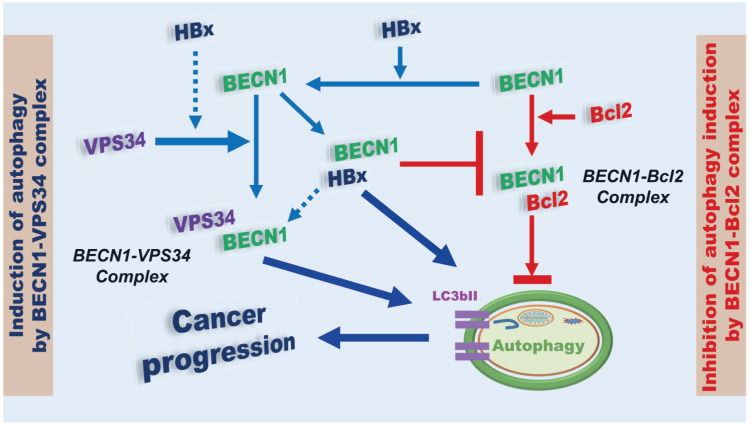
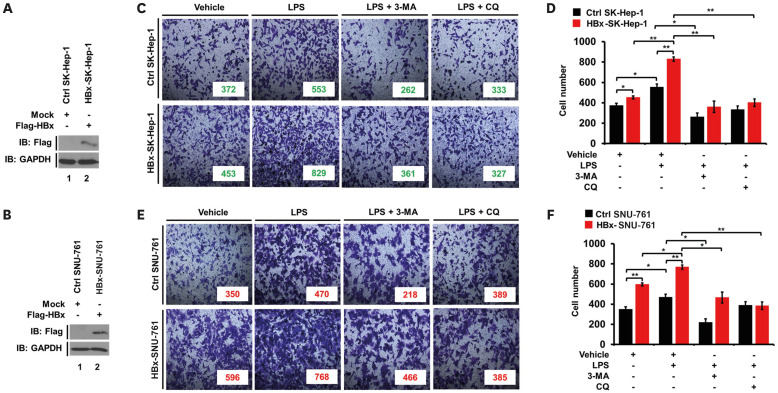
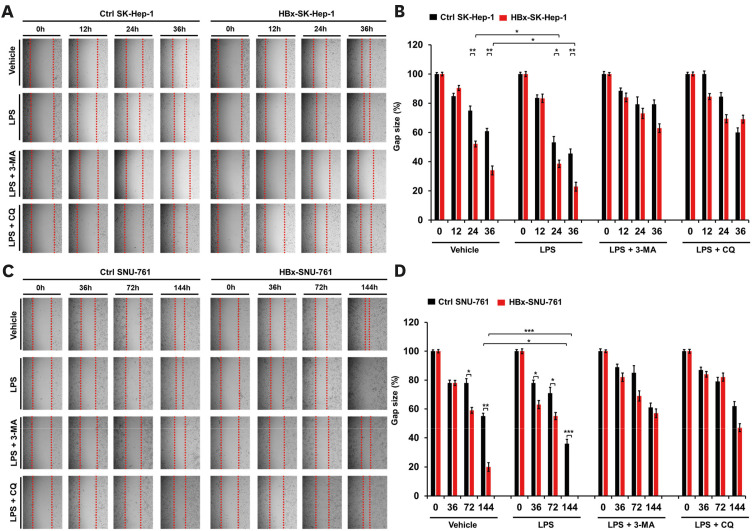
Hepatitis B virus X (HBx) protein has been reported as a key protein regulating the pathogenesis of HBV-induced hepatocellular carcinoma (HCC). Recent evidence has shown that HBx is implicated in the activation of autophagy in hepatic cells. Nevertheless, the precise molecular and cellular mechanism by which HBx induces autophagy is still controversial. Herein, we investigated the molecular and cellular mechanism by which HBx is involved in the TRAF6-BECN1-Bcl-2 signaling for the regulation of autophagy in response to TLR4 stimulation, therefore influencing the HCC progression. HBx interacts with BECN1 (Beclin 1) and inhibits the association of the BECN1-Bcl-2 complex, which is known to prevent the assembly of the pre-autophagosomal structure. Furthermore, HBx enhances the interaction between VPS34 and TRAF6-BECN1 complex, increases the ubiquitination of BECN1, and subsequently enhances autophagy induction in response to LPS stimulation. To verify the functional role of HBx in liver cancer progression, we utilized different HCC cell lines, HepG2, SK-Hep-1, and SNU-761. HBx-expressing HepG2 cells exhibited enhanced cell migration, invasion, and cell mobility in response to LPS stimulation compared to those of control HepG2 cells. These results were consistently observed in HBx-expressed SK-Hep-1 and HBx-expressed SNU-761 cells. Taken together, our findings suggest that HBx positively regulates the induction of autophagy through the inhibition of the BECN1-Bcl-2 complex and enhancement of the TRAF6-BECN1-VPS34 complex, leading to enhance liver cancer migration and invasion.
乙型肝炎病毒X(HBx)蛋白已被报道为调节HBV诱导的肝细胞癌(HCC)发病机制的关键蛋白。最近的证据表明,HBx与肝细胞自噬的激活有关。然而,HBx诱导自噬的确切分子和细胞机制仍存在争议。在此,我们研究了HBx参与TRAF6-BECN1-Bcl-2信号通路以调节对TLR4刺激的自噬反应从而影响HCC进展的分子和细胞机制。HBx与BECN1(Beclin 1)相互作用并抑制BECN1-Bcl-2复合物的结合,已知该复合物可阻止自噬前体结构的组装。此外,HBx增强VPS34与TRAF6-BECN1复合物之间的相互作用,增加BECN1的泛素化,随后增强对LPS刺激的自噬诱导。为了验证HBx在肝癌进展中的功能作用,我们使用了不同的HCC细胞系,HepG2、SK-Hep-1和SNU-761。与对照HepG2细胞相比,表达HBx的HepG2细胞在LPS刺激下表现出增强的细胞迁移、侵袭和细胞运动性。在表达HBx的SK-Hep-1和表达HBx的SNU-761细胞中也一致观察到这些结果。综上所述,我们的研究结果表明,HBx通过抑制BECN1-Bcl-2复合物和增强TRAF6-BECN1-VPS34复合物来正向调节自噬的诱导,从而导致肝癌迁移和侵袭增强。