Yi You-Cai, Liang Rui, Chen Xiao-Yu, Fan Hui-Ning, Chen Ming, Zhang Jing, Zhu Jin-Shui
Department of Gastroenterology, Shanghai Jiao Tong University Affiliated Sixth People's Hospital, Shanghai, China.
Front Oncol. 2021 Nov 2;11:768879. doi: 10.3389/fonc.2021.768879. eCollection 2021.
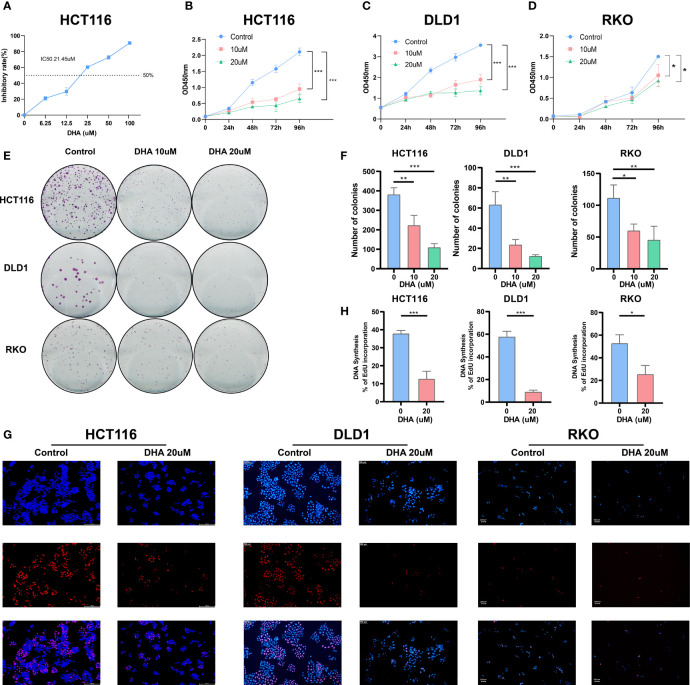
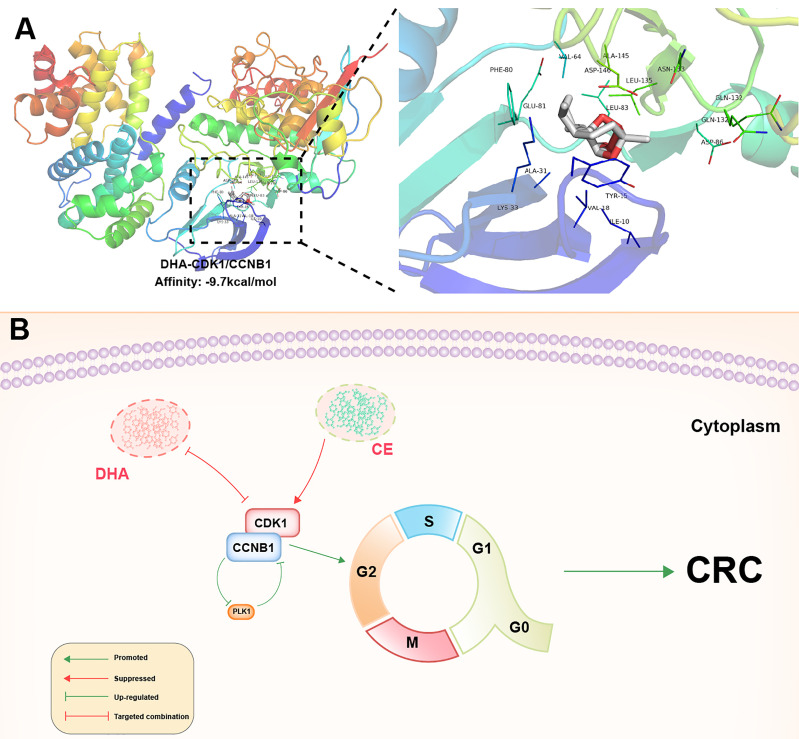
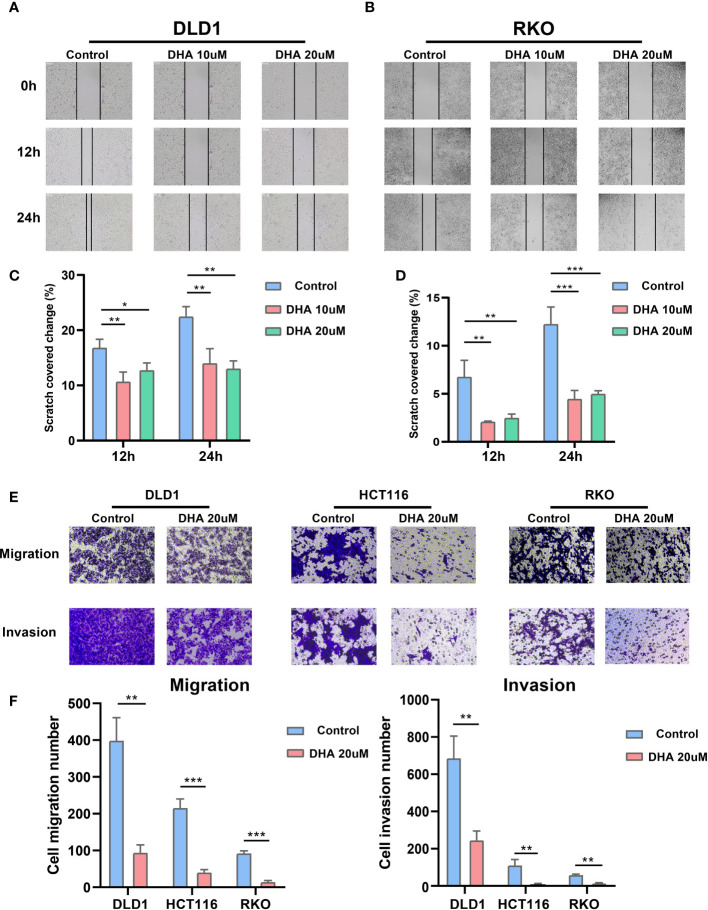
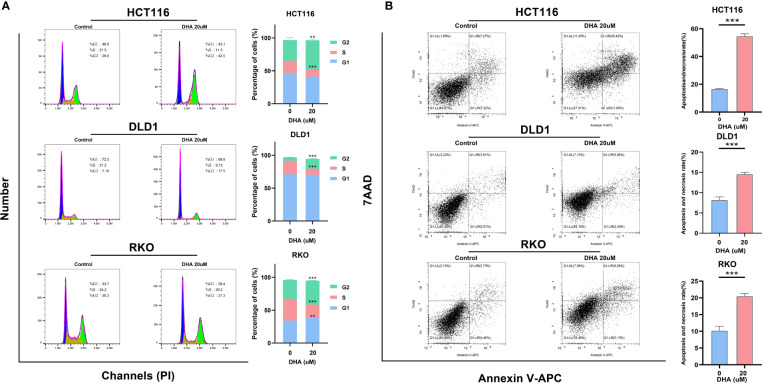
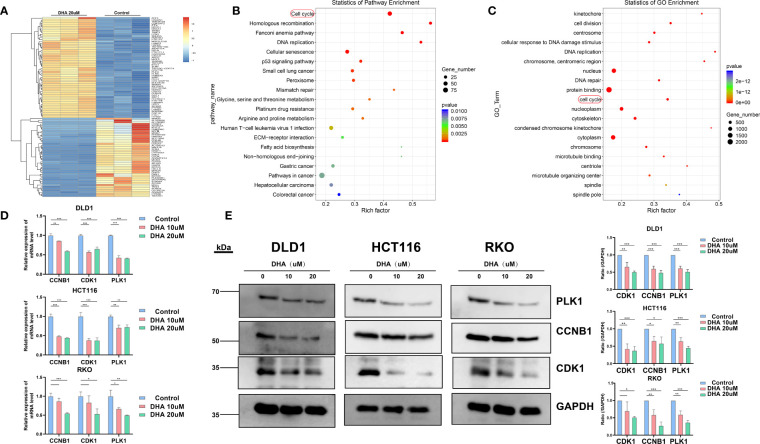
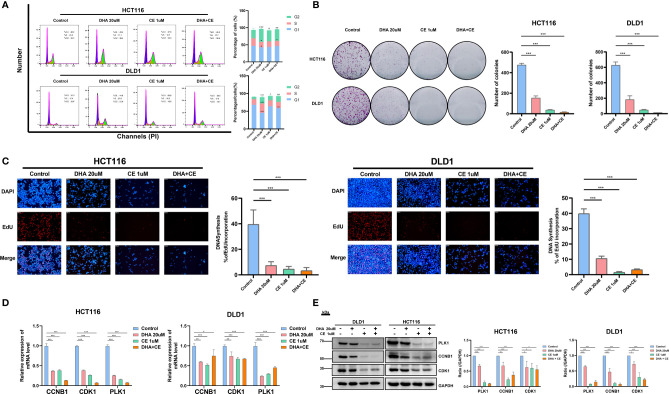
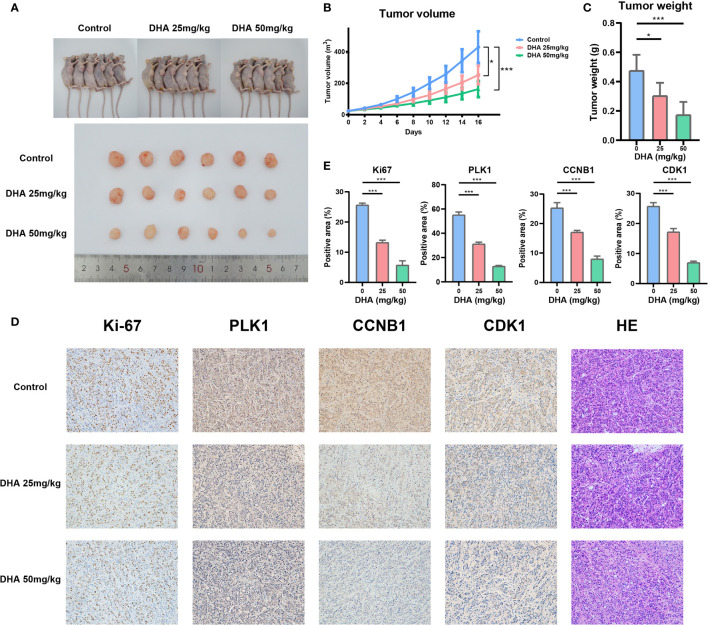
Dihydroartemisinin (DHA), a well-known antimalarial drug, has been widely investigated for its antitumor effects in multiple malignancies. However, its effects and regulatory mechanisms in colorectal cancer (CRC) are still unproved. In this study, experiments including CCK8, EdU, Transwell, and flow cytometry analyses and an tumorigenesis model were conducted to assess the effects of DHA on the bio-behaviors of CRC cells. Additionally, RNA-seq combined with gene ontology and Kyoto Encyclopedia of Genes and Genomes analyses was used to obtain the targets of DHA, and these were verified by molecular docking, qRT-PCR, and Western blotting. As a result, we found that DHA significantly suppressed the proliferation, DNA synthesis, and invasive capabilities and induced cell apoptosis and cell cycle arrest in HCT116, DLD1, and RKO cells and . Further analyses indicated that the targets of DHA were predominantly enriched in cell cycle-associated pathways, including CDK1, CCNB1, and PLK1; and DHA could bind with the CDK1/CCNB1 complex and inhibit the activation of CDK1/CCNB1/PLK1 signaling. Moreover, cucurbitacin E, a specific inhibitor of the CDK1/CCNB1 axis, enhanced the inhibitory effects of DHA on DNA synthesis and colony formation in HCT116 and DLD1 cells. In short, DHA could suppress the tumorigenesis and cycle progression of CRC cells by targeting CDK1/CCNB1/PLK1 signaling.
双氢青蒿素(DHA)是一种著名的抗疟药物,其在多种恶性肿瘤中的抗肿瘤作用已得到广泛研究。然而,其在结直肠癌(CRC)中的作用及调控机制仍未得到证实。在本研究中,进行了包括CCK8、EdU、Transwell和流式细胞术分析以及肿瘤发生模型等实验,以评估DHA对CRC细胞生物学行为的影响。此外,采用RNA测序结合基因本体论和京都基因与基因组百科全书分析来获取DHA的靶点,并通过分子对接、qRT-PCR和蛋白质免疫印迹法对这些靶点进行验证。结果发现,DHA显著抑制HCT116、DLD1和RKO细胞的增殖、DNA合成及侵袭能力,并诱导细胞凋亡和细胞周期停滞。进一步分析表明,DHA的靶点主要富集在细胞周期相关通路中,包括CDK1、CCNB1和PLK1;且DHA可与CDK1/CCNB1复合物结合并抑制CDK1/CCNB1/PLK1信号的激活。此外,葫芦素E作为CDK1/CCNB1轴的特异性抑制剂,增强了DHA对HCT116和DLD1细胞DNA合成及集落形成的抑制作用。简而言之,DHA可通过靶向CDK1/CCNB1/PLK1信号通路抑制CRC细胞的肿瘤发生和细胞周期进程。