Chang Jiang, Yang Qingzhuang, Liu Xiangwei, Li Wang, Gao Lianghui
Department of Hepatobiliary and Pancreatic Surgery, The First Affiliated Hospital of Hainan Medical University, Haikou, Hainan 570102, P.R. China.
Department of Hepatobiliary Surgery, People's Hospital of Hetian Area, Hetian, Xinjiang 848000, P.R. China.
Oncol Lett. 2024 Aug 2;28(4):474. doi: 10.3892/ol.2024.14607. eCollection 2024 Oct.
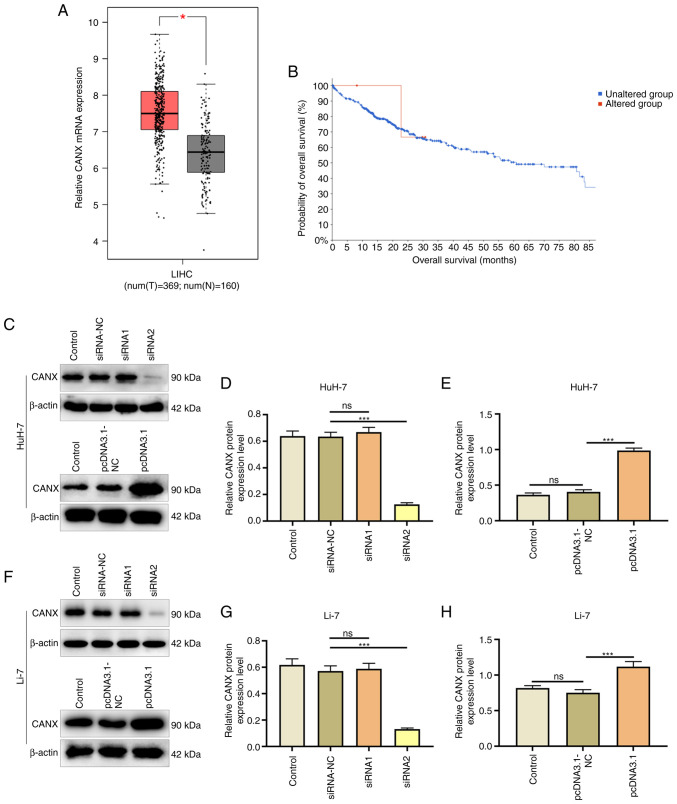
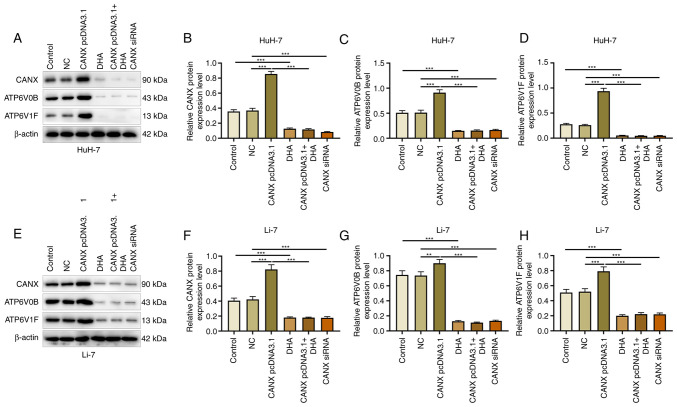
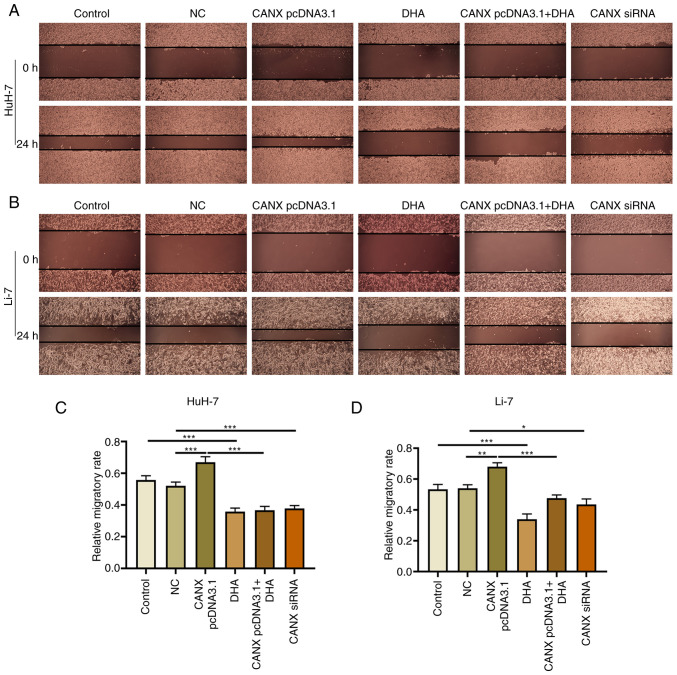
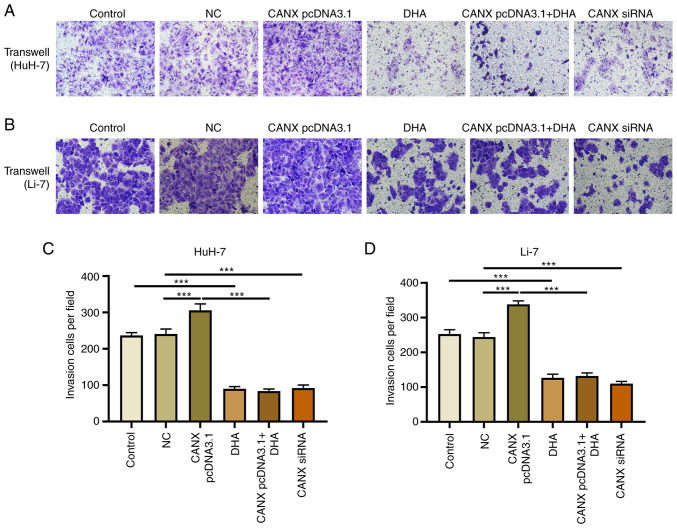
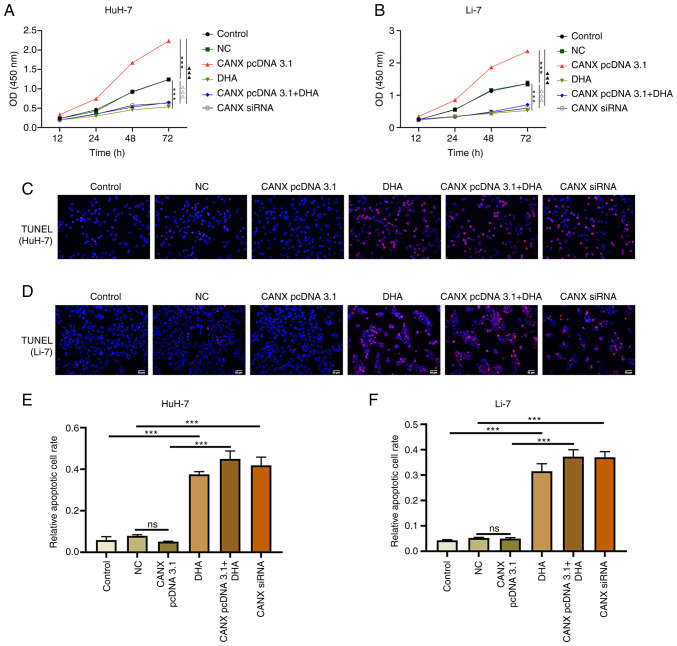
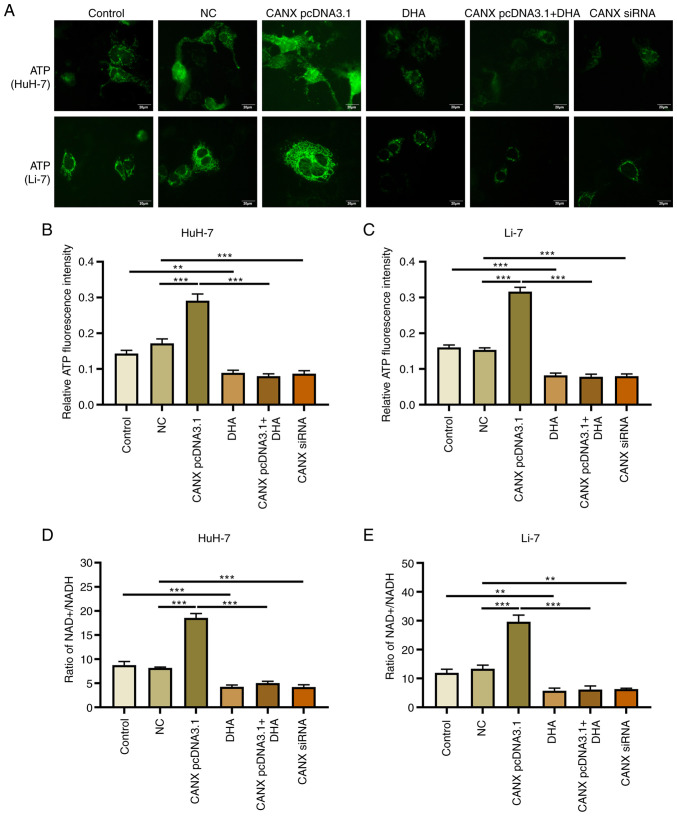
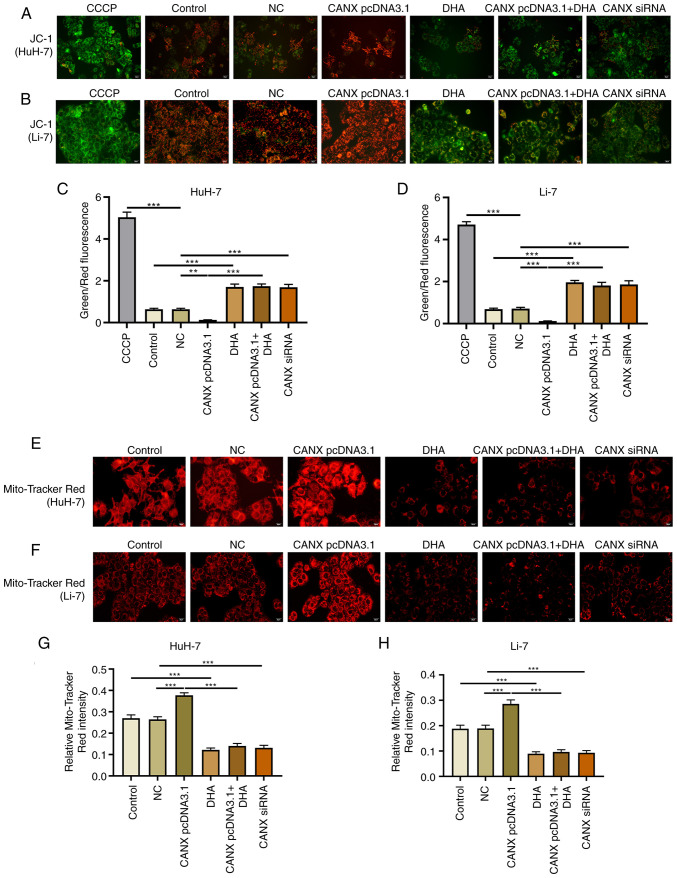
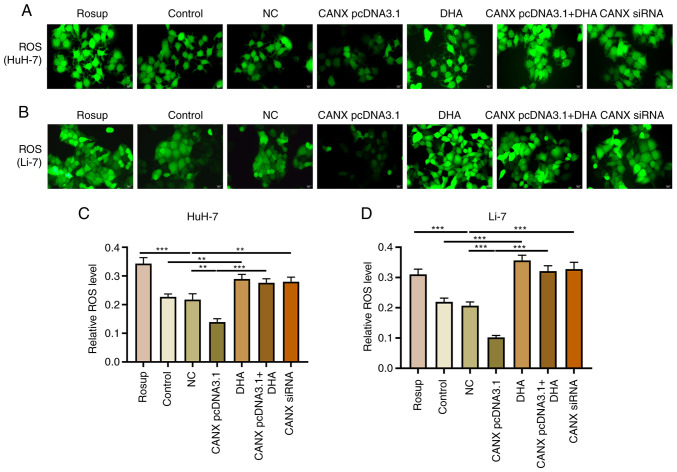
Dihydroartemisinin (DHA) may inhibit the migration and invasion of liver cancer cells by reducing ATP synthase production (specifically ATP1A1 and ATP5H) through the calcium/calmodulin dependent protein kinase kinase 2/solute carrier family 8 member B1 signaling pathway. However, it is unclear whether DHA regulates ATP synthase activity by modulating other calcium ion signals to inhibit the energy metabolism and the transfer of hepatocellular carcinoma (HCC) cells. Using the Gene Expression Profiling Interactive Analysis database, a search for specific expression genes in liver cancer tissues was performed. Human HCC HuH-7 and Li-7 cells were used to produce CANX overexpression and small interfering RNA cell models. The study assessed changes in cell proliferation, apoptosis, migration and invasion. Reactive oxygen species production, ATP production, mitochondrial membrane potential (JC-1), NAD/NADH ratio and mitochondrial fluorescence were also evaluated. Western blotting was used to assess changes in CANX, ATP6V1 domain (ATP6V1F) and V0 domain (ATP6V0B) protein expression levels. The results demonstrated that CANX is highly expressed in liver cancer tissues. Furthermore, CANX regulated malignant biological behavior, mediated mitochondrial function and energy metabolism. However, these effects were inhibited by DHA, which decreased the expression of CANX, ATP6V0B and ATP6V1F. The findings of the present study underscore the central role of CANX in affecting the malignant biological behavior of liver cancer cells by regulating mitochondrial function and energy metabolism. Additionally, they indicate that DHA serves an anticancer role by inhibiting CANX expression.
双氢青蒿素(DHA)可能通过钙/钙调蛋白依赖性蛋白激酶激酶2/溶质载体家族8成员B1信号通路减少ATP合酶(特别是ATP1A1和ATP5H)的产生,从而抑制肝癌细胞的迁移和侵袭。然而,尚不清楚DHA是否通过调节其他钙离子信号来调节ATP合酶活性,以抑制肝细胞癌(HCC)细胞的能量代谢和转移。利用基因表达谱交互式分析数据库,对肝癌组织中的特异性表达基因进行了搜索。使用人肝癌HuH-7和Li-7细胞构建钙网蛋白(CANX)过表达和小干扰RNA细胞模型。该研究评估了细胞增殖、凋亡、迁移和侵袭的变化。还评估了活性氧的产生、ATP的产生、线粒体膜电位(JC-1)、NAD/NADH比值和线粒体荧光。采用蛋白质印迹法评估CANX、ATP6V1结构域(ATP6V1F)和V0结构域(ATP6V0B)蛋白表达水平的变化。结果表明,CANX在肝癌组织中高表达。此外,CANX调节恶性生物学行为,介导线粒体功能和能量代谢。然而,DHA抑制了这些作用,降低了CANX、ATP6V0B和ATP6V1F的表达。本研究结果强调了CANX在通过调节线粒体功能和能量代谢影响肝癌细胞恶性生物学行为中的核心作用。此外,这些结果表明DHA通过抑制CANX表达发挥抗癌作用。