Hong Ted, Parameswaran Sreeja, Donmez Omer A, Miller Daniel, Forney Carmy, Lape Michael, Saint Just Ribeiro Mariana, Liang Jun, Edsall Lee E, Magnusen Albert F, Miller William, Chepelev Iouri, Harley John B, Zhao Bo, Kottyan Leah C, Weirauch Matthew T
Center for Autoimmune Genomics and Etiology, Cincinnati Children's Hospital Medical Center, Cincinnati, Ohio 45229, USA.
Department of Pharmacology and Systems Physiology, University of Cincinnati, College of Medicine, Cincinnati, Ohio 45229, USA.
Genome Res. 2021 Dec;31(12):2185-2198. doi: 10.1101/gr.264705.120. Epub 2021 Nov 19.
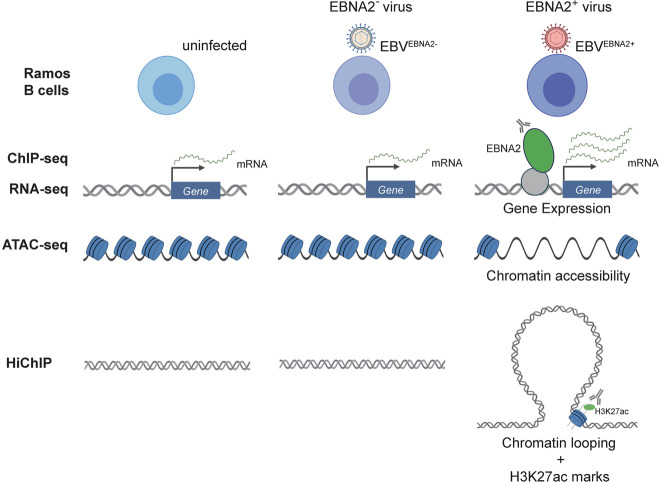
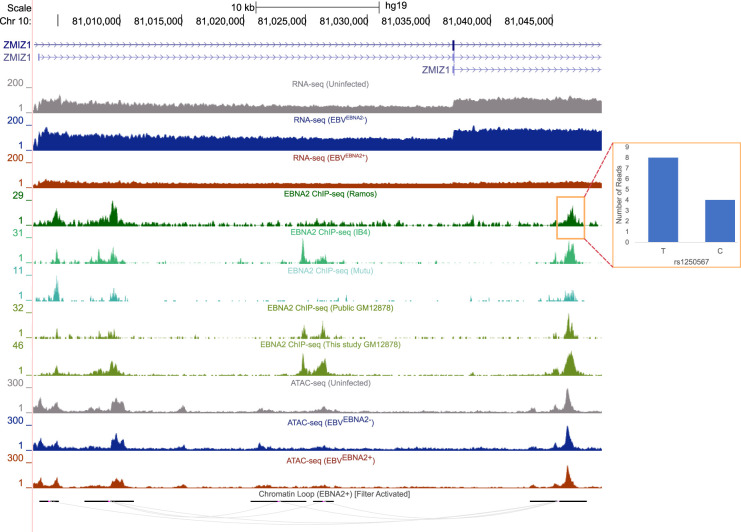
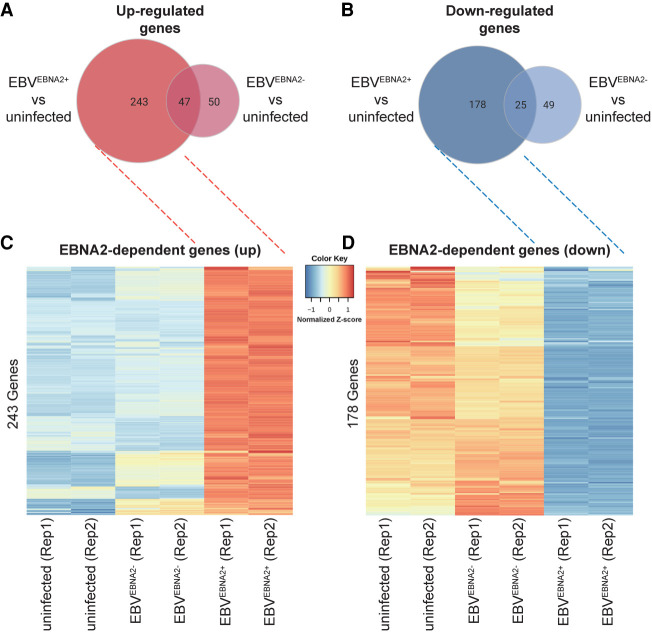
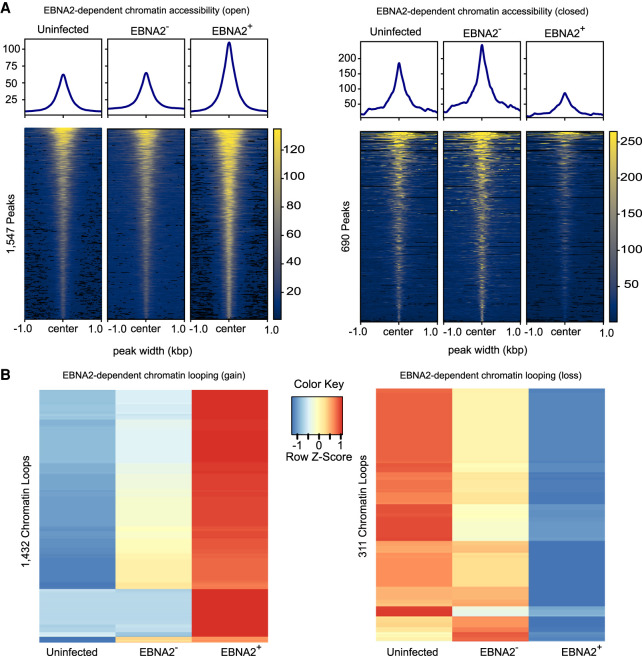
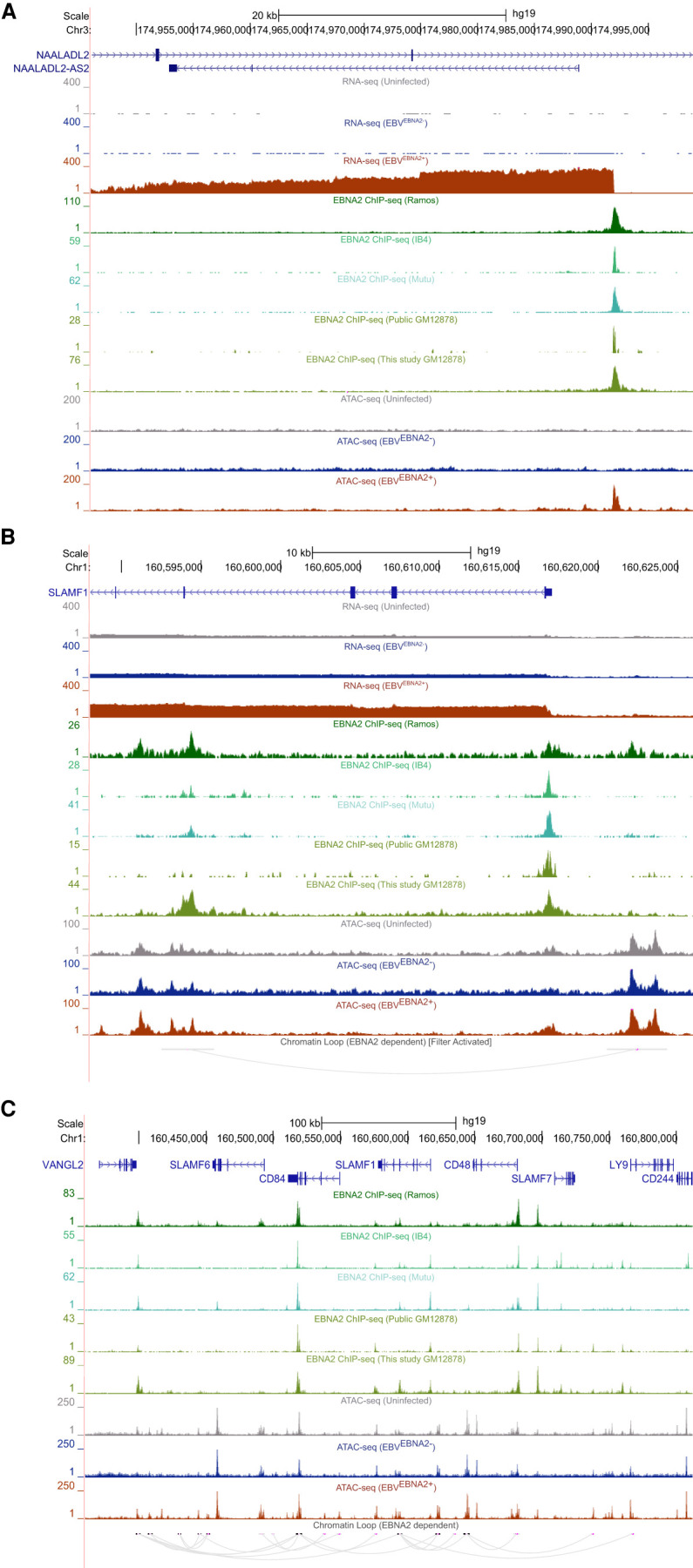
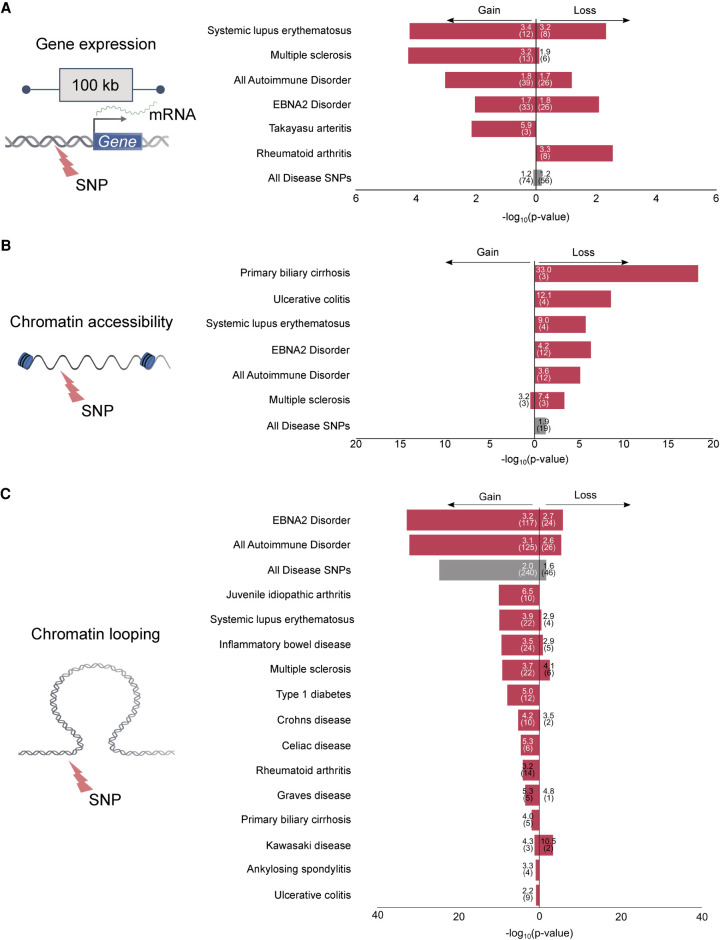
The interplay between environmental and genetic factors plays a key role in the development of many autoimmune diseases. In particular, the Epstein-Barr virus (EBV) is an established contributor to multiple sclerosis, lupus, and other disorders. Previously, we showed that the EBV nuclear antigen 2 (EBNA2) transactivating protein occupies up to half of the risk loci for a set of seven autoimmune disorders. To further examine the mechanistic roles played by EBNA2 at these loci on a genome-wide scale, we globally examined gene expression, chromatin accessibility, chromatin looping, and EBNA2 binding in a B cell line that was (1) uninfected, (2) infected with a strain of EBV lacking EBNA2, or (3) infected with a strain that expresses EBNA2. We identified more than 400 EBNA2-dependent differentially expressed human genes and more than 5000 EBNA2 binding events in the human genome. ATAC-seq analysis revealed more than 2000 regions in the human genome with EBNA2-dependent chromatin accessibility, and HiChIP data revealed more than 1700 regions where EBNA2 altered chromatin looping interactions. Autoimmune genetic risk loci were highly enriched at the sites of these EBNA2-dependent chromatin-altering events. We present examples of autoimmune risk genotype-dependent EBNA2 events, nominating genetic risk mechanisms for autoimmune risk loci such as Taken together, our results reveal important interactions between host genetic variation and EBNA2-driven disease mechanisms. Further, our study highlights a critical role for EBNA2 in rewiring human gene regulatory programs through rearrangement of the chromatin landscape and nominates these interactions as components of genetic mechanisms that influence the risk of multiple autoimmune diseases.
环境因素与遗传因素之间的相互作用在许多自身免疫性疾病的发展中起着关键作用。特别是,爱泼斯坦-巴尔病毒(EBV)是导致多发性硬化症、狼疮和其他疾病的既定因素。此前,我们发现EBV核抗原2(EBNA2)反式激活蛋白占据了一组七种自身免疫性疾病中多达一半的风险位点。为了在全基因组范围内进一步研究EBNA2在这些位点所起的机制作用,我们在一个B细胞系中全面检测了基因表达、染色质可及性、染色质环化以及EBNA2结合情况,该细胞系(1)未感染,(2)感染了一株缺乏EBNA2的EBV毒株,或(3)感染了一株表达EBNA2的毒株。我们在人类基因组中鉴定出了400多个依赖于EBNA2的差异表达人类基因以及5000多个EBNA2结合事件。ATAC-seq分析揭示了人类基因组中2000多个具有依赖于EBNA2的染色质可及性的区域,HiChIP数据揭示了1700多个EBNA2改变染色质环化相互作用的区域。自身免疫性遗传风险位点在这些依赖于EBNA2的染色质改变事件的位点高度富集。我们展示了自身免疫性风险基因型依赖的EBNA2事件的例子,为自身免疫性风险位点(如……)提名了遗传风险机制。总之,我们的结果揭示了宿主遗传变异与EBNA2驱动的疾病机制之间的重要相互作用。此外,我们的研究突出了EBNA2在通过染色质景观重排来重新连接人类基因调控程序中的关键作用,并将这些相互作用指定为影响多种自身免疫性疾病风险的遗传机制的组成部分。