Key Lab of New Animal Drug Project, Lanzhou, 730050, Gansu Province, People's Republic of China.
Key Lab of Veterinary Pharmaceutical Development, Ministry of Agriculture, Lanzhou, 730050, People's Republic of China.
Sci Rep. 2021 Nov 19;11(1):22626. doi: 10.1038/s41598-021-99351-4.
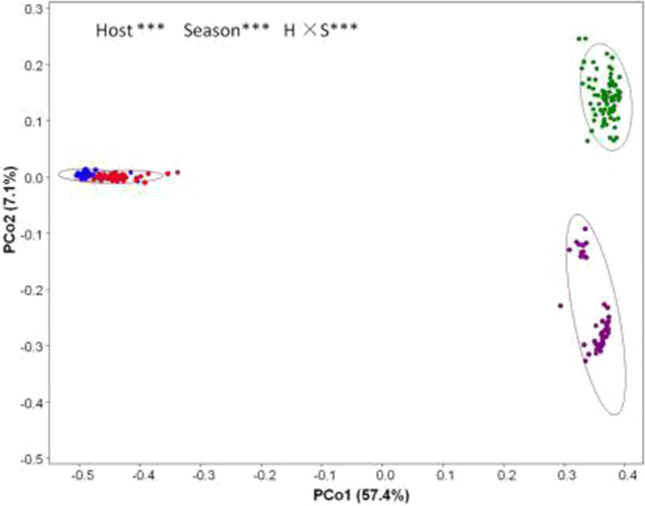
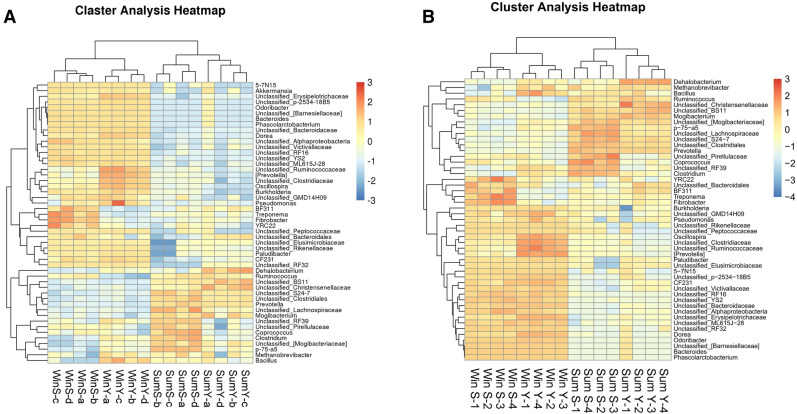
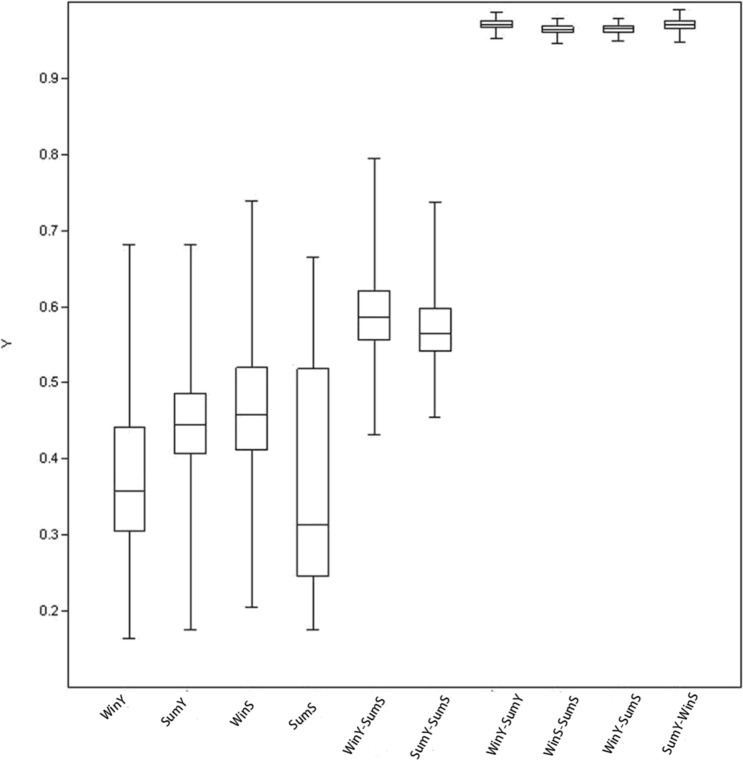
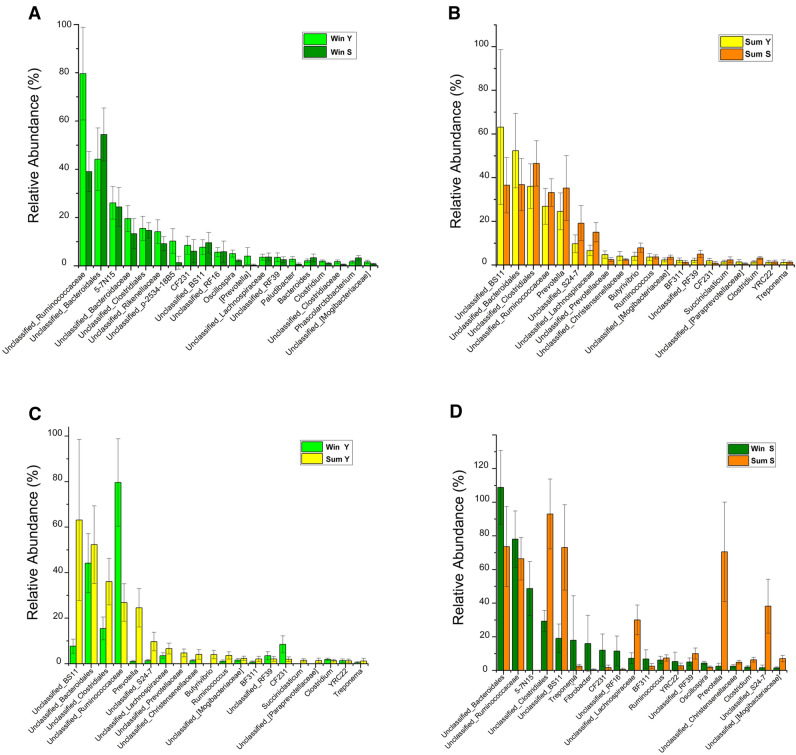
Yaks and Tibetan sheep are important and renowned livestock of the Qinghai-Tibetan Plateau (QTP). Both host genetics and environmental factors can shape the composition of gut microbiota, however, there is still no consensus on which is the more dominant factor. To investigate the influence of hosts and seasons on the gut microbiome diversity component, we collected fecal samples from yaks and Tibetan sheep across different seasons (summer and winter), during which they consumed different diets. Using 16S rRNA sequencing, principal component analysis (PCoA) data showed that PCo1 explained 57.4% of the observed variance (P = 0.001) and clearly divided winter samples from summer ones, while PCo2 explained 7.1% of observed variance (P = 0.001) and mainly highlighted differences in host species. Cluster analysis data revealed that the gut microbiota composition displayed a convergence caused by season and not by genetics. Further, we profiled the gut microbial community and found that the more dominant genera in yak and Tibetan sheep microbiota were influenced by seasonal diets factors rather than genetics. This study therefore indicated that seasonal diet can trump host genetics even at higher taxonomic levels, thus providing a cautionary note for the breeding and management of these two species.
牦牛和藏羊是青藏高原(QTP)重要而著名的家畜。宿主遗传和环境因素都可以塑造肠道微生物群的组成,但对于哪个因素更为主导,目前仍没有共识。为了研究宿主和季节对肠道微生物多样性组成的影响,我们在不同季节(夏季和冬季)采集了牦牛和藏羊的粪便样本,在此期间它们食用不同的饲料。使用 16S rRNA 测序,主成分分析(PCoA)数据表明,PCo1 解释了 57.4%的可观察方差(P=0.001),清楚地区分了冬季和夏季样本,而 PCo2 解释了 7.1%的可观察方差(P=0.001),主要突出了宿主物种的差异。聚类分析数据显示,肠道微生物群落的组成由于季节而不是遗传因素而趋于一致。此外,我们对肠道微生物群落进行了分析,发现牦牛和藏羊微生物群中更为优势的属受到季节性饮食因素的影响,而不是遗传因素。因此,本研究表明,季节性饮食甚至可以在更高的分类学水平上胜过宿主遗传,这为这两个物种的繁殖和管理提供了一个警示。