Faculty of Industrial and Systems Engineering, Tarbiat Modares University, 1411713116, Tehran, Iran.
Center of Excellence in Healthcare Systems Engineering, Tarbiat Modares University, 1411713116, Tehran, Iran.
BMC Med Inform Decis Mak. 2021 Nov 20;21(1):321. doi: 10.1186/s12911-021-01680-x.
Cardiovascular diseases (CVDs) are always considered by healthcare specialists for different reasons, including extensive prevalence, increased costs, chronicity, and high risk of death. The control of CVDs is highly influenced by behavior and lifestyle and it seems necessary to train special abilities about lifestyle and behavior modification to improve self-care skills for patients, and their caregivers. As a result, the development of effective training systems should be considered by healthcare specialists.
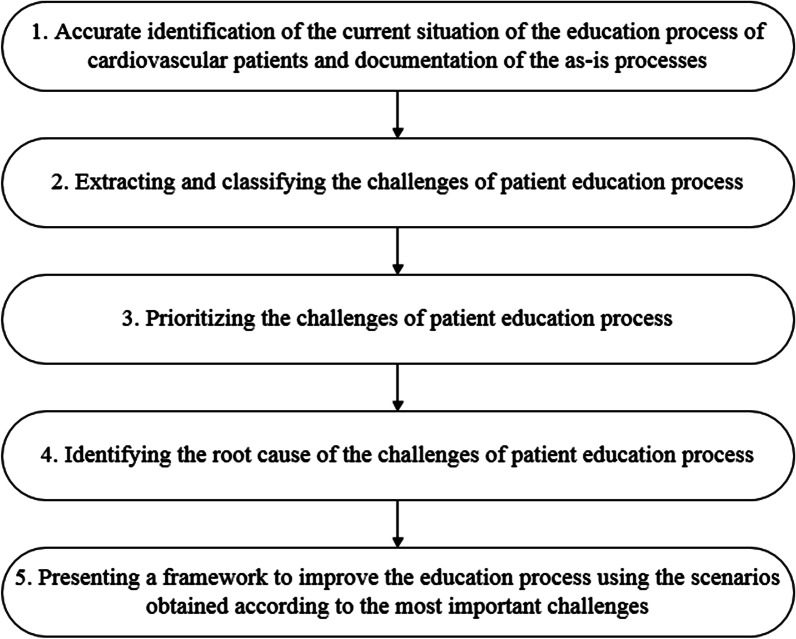
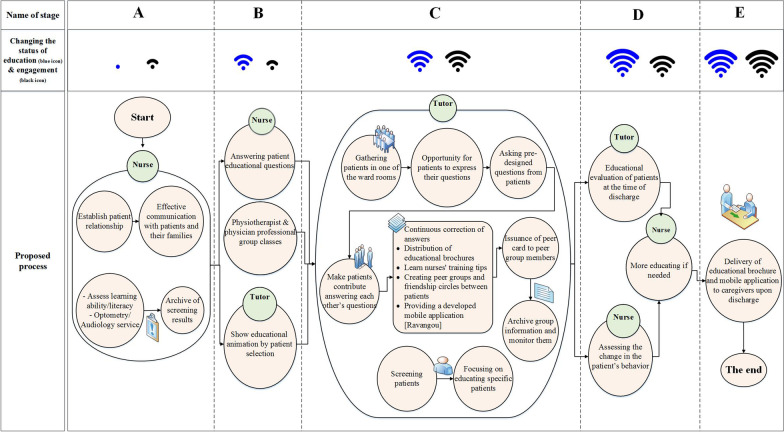
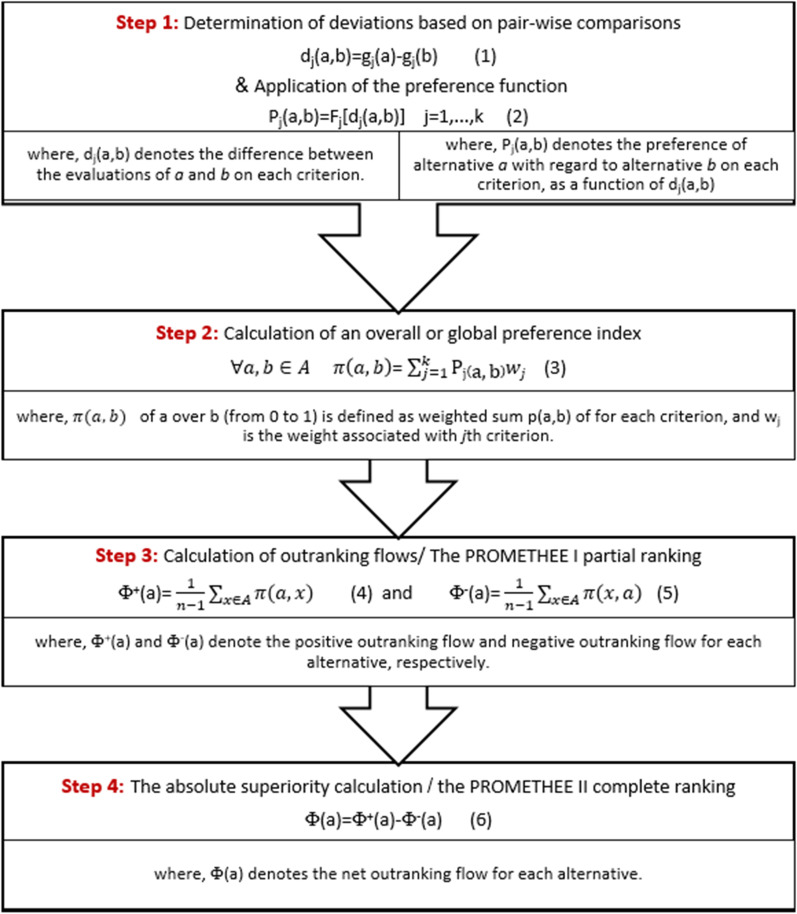
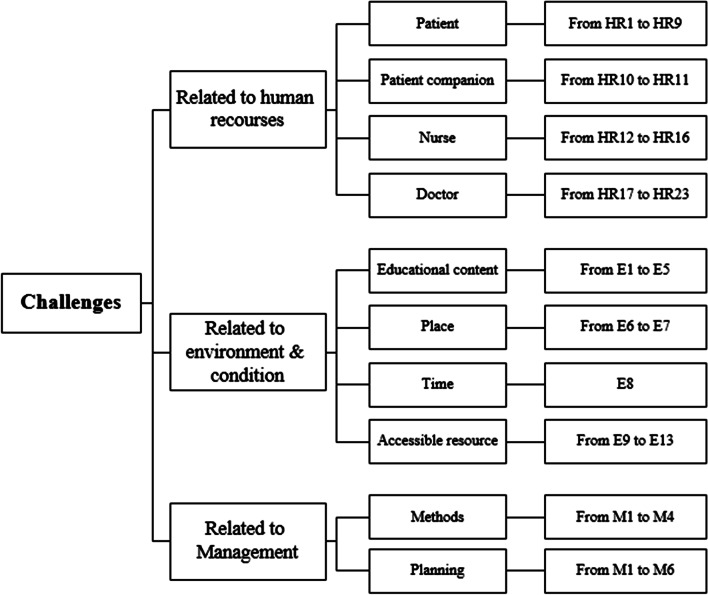
Hence, in this study, a framework for improving cardiovascular patients' education processes is presented. Initially, an existing training system for cardiovascular patients is reviewed. Using field observations and targeted interviews with hospital experts, all components of its educating processes are identified, and their process maps are drawn up. After that, challenges in the training system are extracted with the aid of in-depth semi-structured interviews with experts. Due to the importance and different influence of the identified challenges, they are prioritized using a Multiple Criteria Decision-making (MCDM) method, and then their root causes were investigated. Finally, a novel framework is proposed and evaluated with hospital experts' help to improve the main challenges.
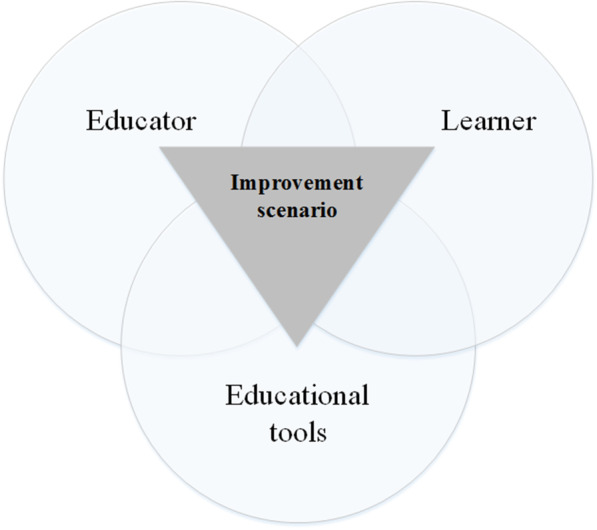
The most important challenges included high nursing workload and shortage of time, lack of understanding of training concepts by patients, lack of attention to training, disruption of the training processes by the patients' caregivers, and patient's weakness in understanding the standard language. In identifying the root causes, learner, educator, and educational tools are the most effective in the training process; therefore, the improvement scenarios were designed accordingly in the proposed framework.
Our study indicated that presenting a framework with applying different quantitative and qualitative methods has great potential to improve the processes of patient education for chronic diseases such as cardiovascular disease.
心血管疾病(CVDs)一直是医疗保健专家关注的焦点,原因包括广泛的流行率、增加的成本、慢性和高死亡率。CVD 的控制受行为和生活方式的影响很大,似乎有必要培养关于生活方式和行为改变的特殊能力,以提高患者及其护理人员的自我护理技能。因此,医疗保健专家应该考虑开发有效的培训系统。
因此,在本研究中,提出了一种改善心血管患者教育过程的框架。首先,回顾了现有的心血管患者培训系统。通过对医院专家进行现场观察和针对性访谈,确定了其教育过程的所有组成部分,并绘制了其流程图。然后,通过对专家进行深入的半结构化访谈,提取培训系统中的挑战。由于所确定的挑战的重要性和不同影响,使用多准则决策(MCDM)方法对其进行优先级排序,然后调查其根本原因。最后,提出了一个新的框架,并在医院专家的帮助下进行了评估,以改善主要挑战。
最重要的挑战包括护理工作量大且时间短、患者对培训概念理解不足、对培训重视不够、患者护理人员干扰培训过程以及患者理解标准语言的能力较弱。在确定根本原因时,学习者、教育者和教育工具在培训过程中最有效;因此,在提出的框架中相应地设计了改进方案。
我们的研究表明,应用不同的定量和定性方法提出框架具有很大的潜力,可以改善心血管等慢性病患者的教育过程。