Department of Pathology, MitoCare Center, Anatomy and Cell Biology, Thomas Jefferson University, Philadelphia, Pennsylvania, USA.
Molecular and Cellular Oncogenesis, The Wistar Institute, Philadelphia, Pennsylvania, USA.
J Biol Chem. 2022 Jan;298(1):101436. doi: 10.1016/j.jbc.2021.101436. Epub 2021 Nov 19.
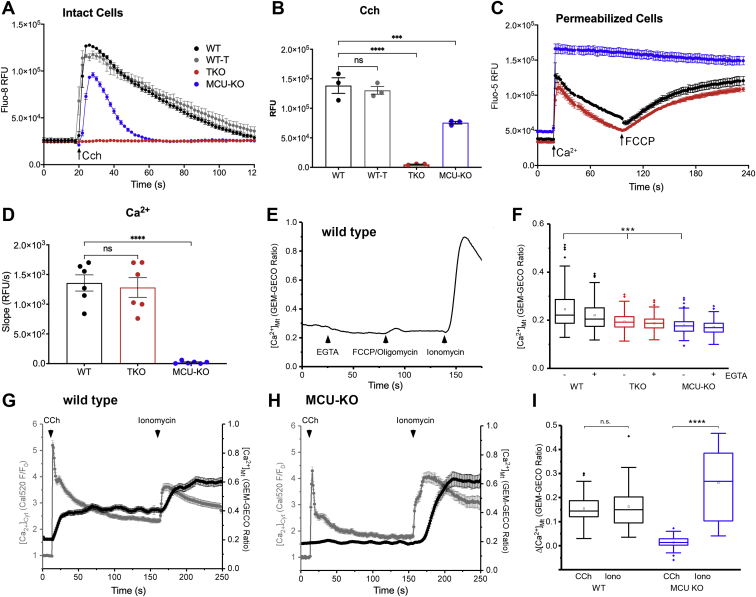
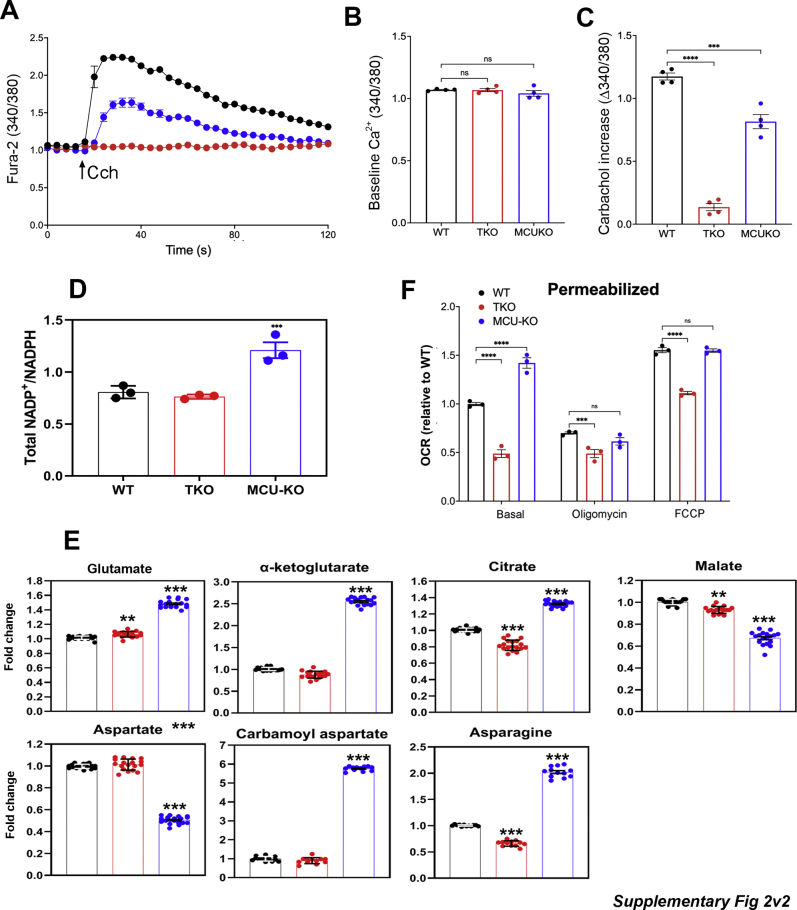
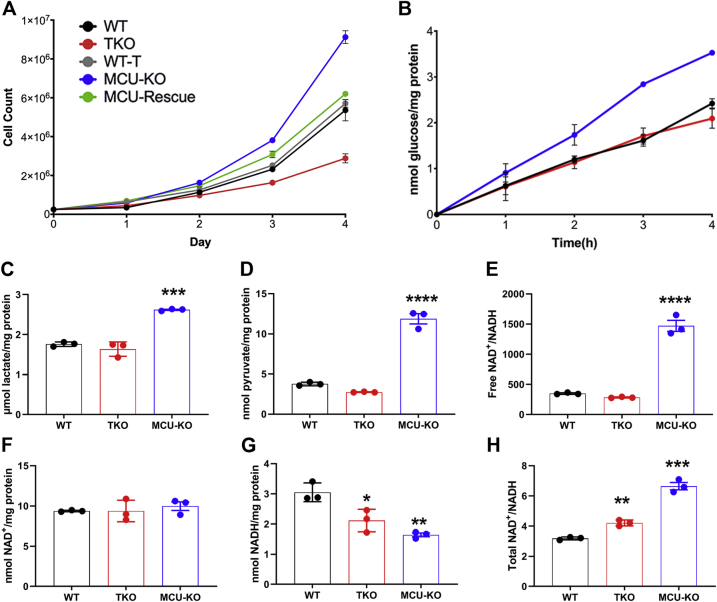
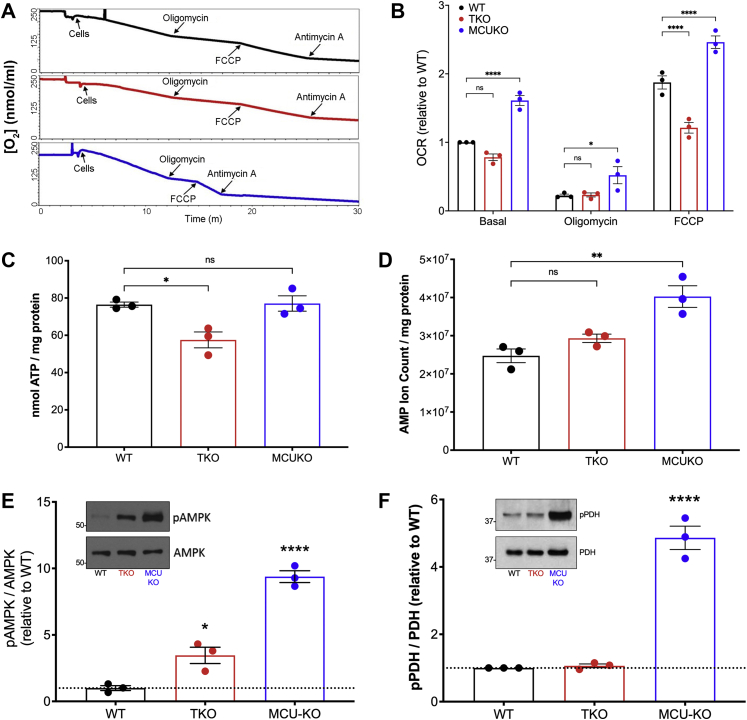
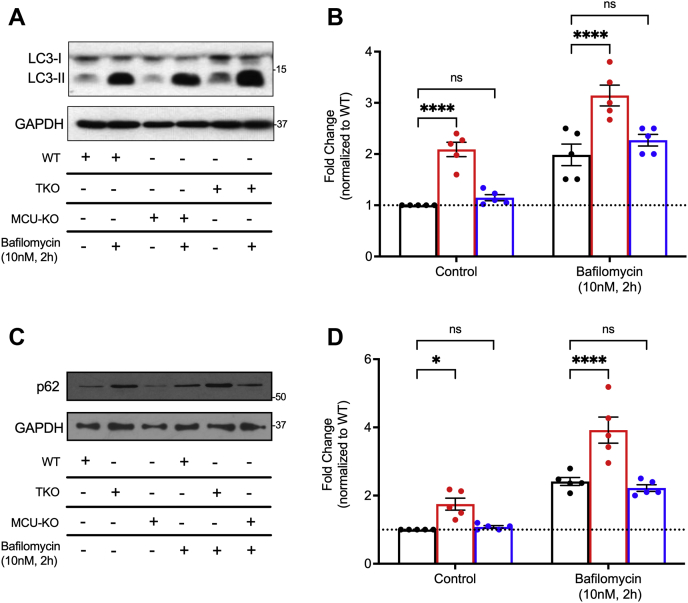
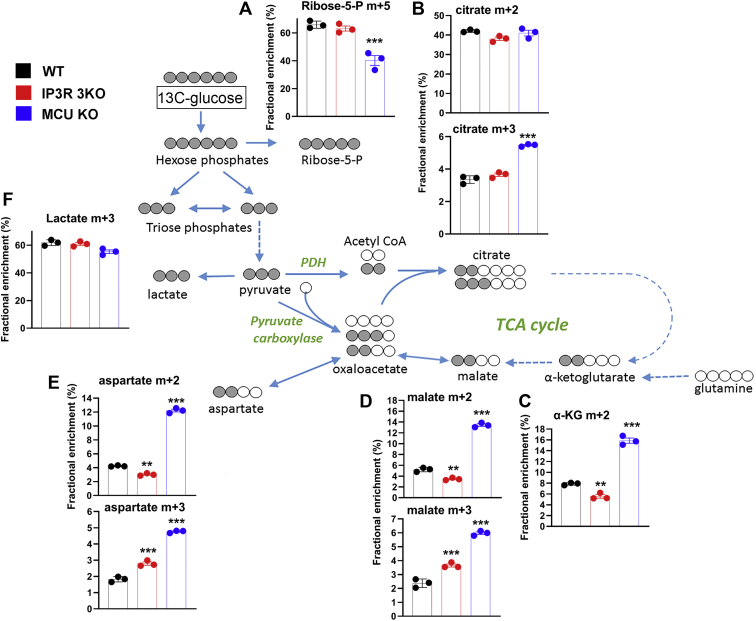
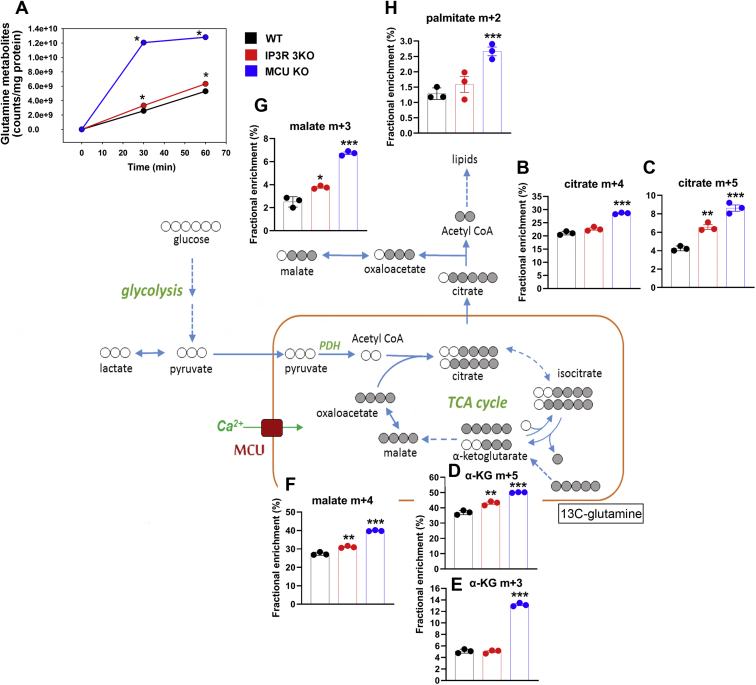
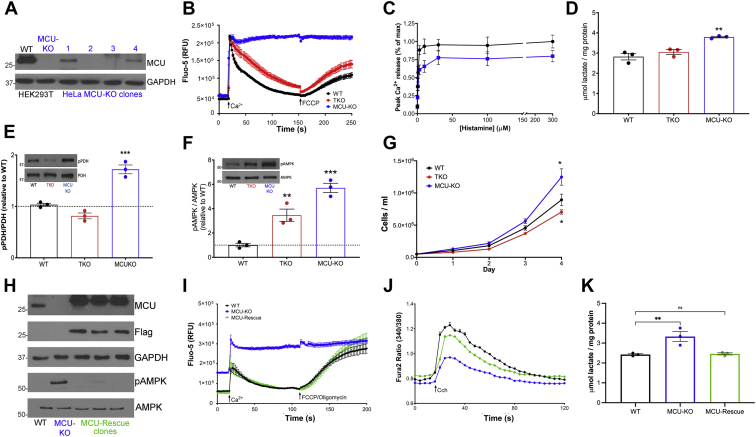
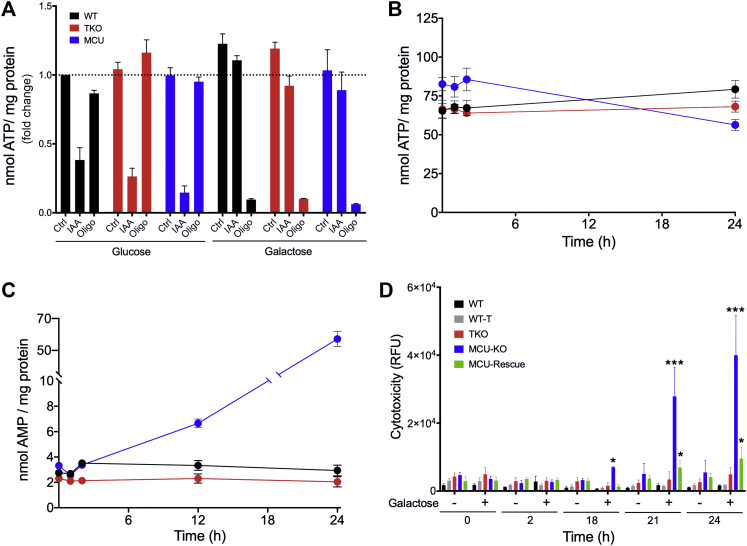
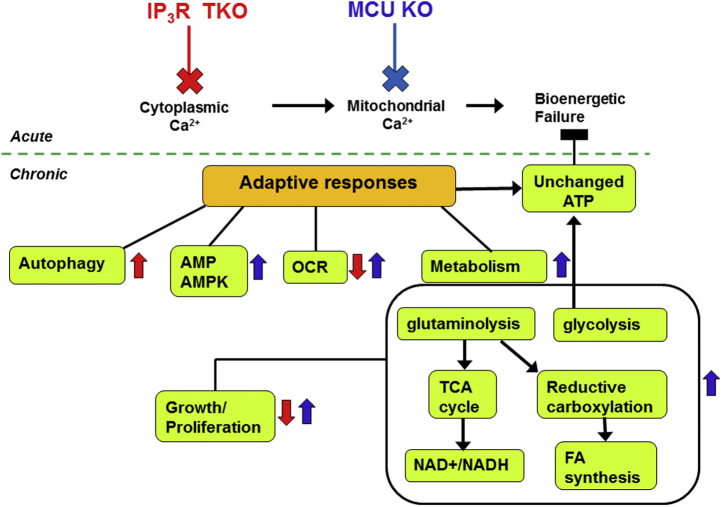
Calcium signaling is essential for regulating many biological processes. Endoplasmic reticulum inositol trisphosphate receptors (IPRs) and the mitochondrial Ca uniporter (MCU) are key proteins that regulate intracellular Ca concentration. Mitochondrial Ca accumulation activates Ca-sensitive dehydrogenases of the tricarboxylic acid (TCA) cycle that maintain the biosynthetic and bioenergetic needs of both normal and cancer cells. However, the interplay between calcium signaling and metabolism is not well understood. In this study, we used human cancer cell lines (HEK293 and HeLa) with stable KOs of all three IPR isoforms (triple KO [TKO]) or MCU to examine metabolic and bioenergetic responses to the chronic loss of cytosolic and/or mitochondrial Ca signaling. Our results show that TKO cells (exhibiting total loss of Ca signaling) are viable, displaying a lower proliferation and oxygen consumption rate, with no significant changes in ATP levels, even when made to rely solely on the TCA cycle for energy production. MCU KO cells also maintained normal ATP levels but showed increased proliferation, oxygen consumption, and metabolism of both glucose and glutamine. However, MCU KO cells were unable to maintain ATP levels and died when relying solely on the TCA cycle for energy. We conclude that constitutive Ca signaling is dispensable for the bioenergetic needs of both IPR TKO and MCU KO human cancer cells, likely because of adequate basal glycolytic and TCA cycle flux. However, in MCU KO cells, the higher energy expenditure associated with increased proliferation and oxygen consumption makes these cells more prone to bioenergetic failure under conditions of metabolic stress.
钙信号对于调节许多生物过程至关重要。内质网肌醇三磷酸受体(IPR)和线粒体钙单向转运体(MCU)是调节细胞内 Ca 浓度的关键蛋白。线粒体 Ca 积累激活三羧酸(TCA)循环的 Ca 敏感脱氢酶,维持正常和癌细胞的生物合成和生物能量需求。然而,钙信号和代谢之间的相互作用尚不清楚。在这项研究中,我们使用稳定敲除三种 IPR 同工型(三重 KO [TKO])或 MCU 的人癌细胞系(HEK293 和 HeLa),以检查细胞溶质和/或线粒体 Ca 信号持续缺失对代谢和生物能量的反应。我们的结果表明,TKO 细胞(表现出 Ca 信号的完全缺失)是可行的,增殖率和耗氧率较低,尽管仅依赖 TCA 循环产生能量,ATP 水平没有明显变化。MCU KO 细胞也保持正常的 ATP 水平,但增殖、耗氧和葡萄糖及谷氨酰胺代谢增加。然而,当仅依赖 TCA 循环获取能量时,MCU KO 细胞无法维持 ATP 水平并死亡。我们得出结论,组成性钙信号对于 IPR TKO 和 MCU KO 人癌细胞的生物能量需求是可有可无的,可能是由于基础糖酵解和 TCA 循环通量充足。然而,在 MCU KO 细胞中,与增殖和耗氧增加相关的更高能量消耗使这些细胞在代谢应激条件下更容易发生生物能量衰竭。