Diabetes Unit, Department of Pediatrics, Faculty of Medicine, Ain Shams University, Cairo, Egypt.
Instituto Hispalense de Pediatría, Vithas Almería, Almería, Spain.
Front Endocrinol (Lausanne). 2021 Nov 5;12:735554. doi: 10.3389/fendo.2021.735554. eCollection 2021.
Frequency, dimensions, management, and outcomes of the COVID-19 pandemic in children with endocrine disorders and diabetes were assessed.
A cross-sectional electronic survey was distributed to the global network of endocrine societies. Respondents' professional and practice profiles, clinic sizes, their country of practice, and the impact of COVID-19 on endocrine diseases were investigated.
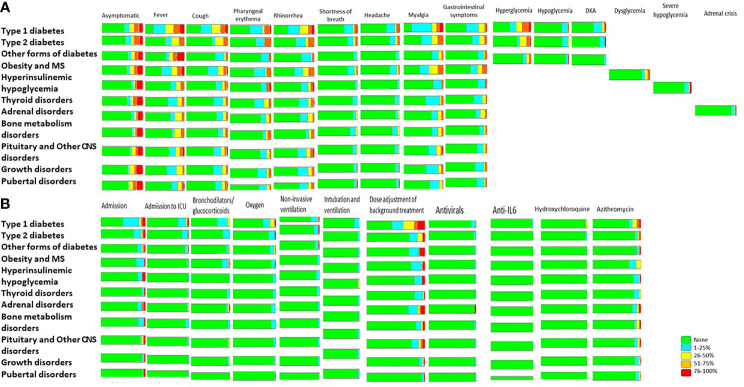
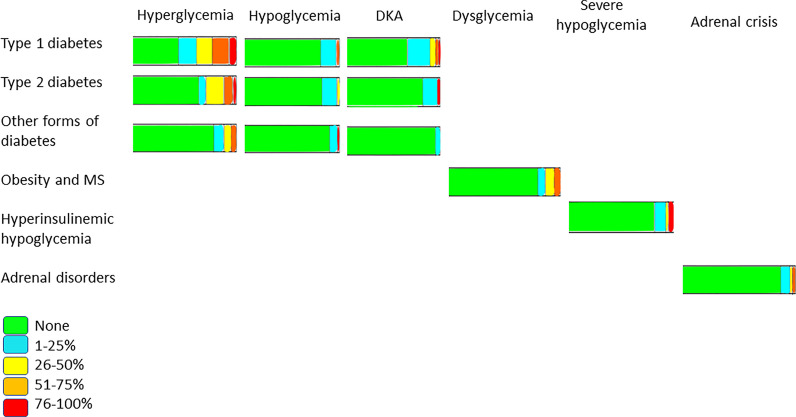
Respondents from 131 pediatric endocrine centers in 51 countries across all continents completed the survey. Routine check-ups and education were altered in most pediatric endocrine clinics. Over 20% of clinics experienced a shortage of critical medications or essential supplies. ICU treatment was required for patients with diabetes and COVID-19 in 21.2% of centers. In diabetes, 44% of respondents reported increased diabetic ketoacidosis episodes in newly diagnosed cases and 30% in established cases. Biopsychosocial and behavioral changes were explicitly reported to be occurring among pediatric patients with endocrine disorders.
This large global survey conducted during the COVID-19 pandemic highlights that diabetes is more challenging to manage than any other pediatric endocrine disorder, with an increased risk of morbidity. Psychological distress due to COVID-19 needs to be recognized and addressed. The importance of close contact with healthcare professionals should be emphasized, and medical supplies should be readily available to all patients.
评估了儿童内分泌紊乱和糖尿病患者在 COVID-19 大流行期间的发病频率、维度、管理和结局。
我们向全球内分泌学会网络分发了一份横断面电子调查问卷。调查了受访者的专业和执业概况、诊所规模、所在国家/地区以及 COVID-19 对内分泌疾病的影响。
来自各大洲 51 个国家的 131 个儿科内分泌中心的受访者完成了这项调查。大多数儿科内分泌诊所改变了常规检查和教育方式。超过 20%的诊所出现了关键药物或基本用品短缺的情况。21.2%的中心有 COVID-19 合并糖尿病的患者需要入住 ICU 治疗。在糖尿病患者中,44%的受访者报告新诊断病例中糖尿病酮症酸中毒发作增加,30%的受访者报告确诊病例中糖尿病酮症酸中毒发作增加。研究明确报告称,内分泌疾病患儿出现了生物心理社会行为变化。
在 COVID-19 大流行期间进行的这项大型全球调查强调,与任何其他儿科内分泌疾病相比,糖尿病更难管理,且发病风险更高。需要认识和解决 COVID-19 带来的心理困扰。应强调与医护人员保持密切联系的重要性,且应为所有患者提供充足的医疗用品。