Riccobono Dario, Genta Giancarlo, Moreland Scott, Backes Paul
Department of Mechanical and Aerospace Engineering (DIMEAS), Politecnico Di Torino, Corso Duca degli Abruzzi 24, 10129 Turin, Italy.
Jet Propulsion Laboratory, California Institute of Technology, 4800 Oak Grove Drive, Pasadena, CA 91109 USA.
CEAS Space J. 2021;13(2):155-174. doi: 10.1007/s12567-020-00330-8. Epub 2020 Aug 17.
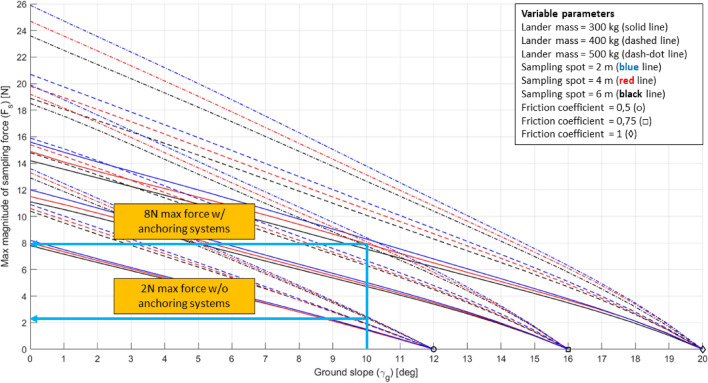
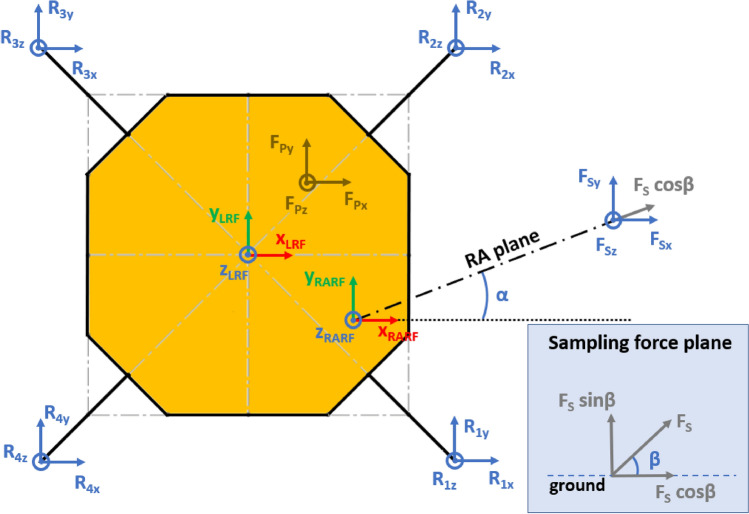
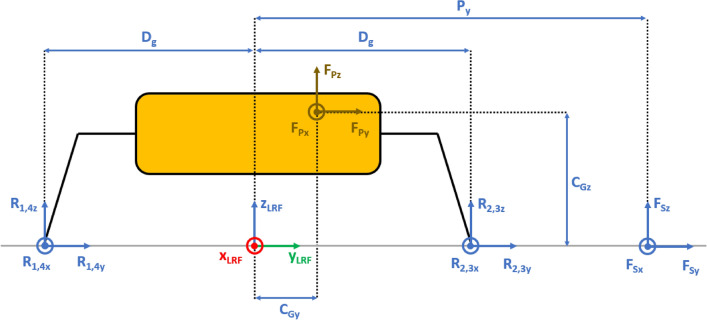
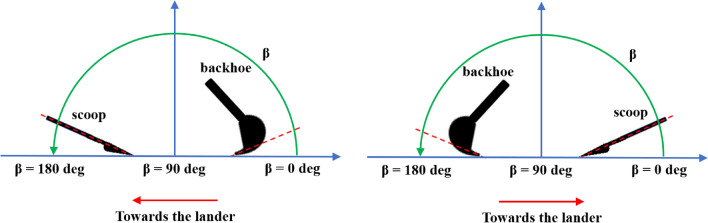
The analysis of robotic systems (e.g. landers and rovers) involved in sampling operations on planetary bodies is crucial to ensure mission success, since those operations generate forces that could affect the stability of the robotic system. This paper presents MISTRAL (MultIdisciplinary deSign Tool for Robotic sAmpLing), a novel tool conceived for trade space exploration during early conceptual and preliminary design phases, where a rapid and broad evaluation is required for a very high number of configurations and boundary conditions. The tool rapidly determines the preliminary design envelope of a sampling apparatus to guarantee the stability condition of the whole robotic system. The tool implements a three-dimensional analytical model capable to reproduce several scenarios, being able to accept various input parameters, including the physical and geometrical characteristics of the robotic system, the properties related to the environment and the characteristics related to the sampling system. This feature can be exploited to infer multidisciplinary high-level requirements concerning several other elements of the investigated system, such as robotic arms and footpads. The presented research focuses on the application of MISTRAL to landers. The structure of the tool and the analysis model are presented. Results from the application of the tool to real mission data from NASA's Phoenix Mars lander are included. Moreover, the tool was adopted for the definition of the high-level requirements of the lander for a potential future mission to the surface of Saturn's moon Enceladus, currently under investigation at NASA Jet Propulsion Laboratory. This case study was included to demonstrate the tool's capabilities. MISTRAL represents a comprehensive, versatile, and powerful tool providing guidelines for cognizant decisions in the early and most crucial stages of the design of robotic systems involved in sampling operations on planetary bodies.
对参与行星体采样操作的机器人系统(如着陆器和漫游车)进行分析,对于确保任务成功至关重要,因为这些操作会产生可能影响机器人系统稳定性的力。本文介绍了MISTRAL(用于机器人采样的多学科设计工具),这是一种在概念设计和初步设计早期阶段用于探索设计空间的新型工具,在此阶段需要对大量配置和边界条件进行快速而全面的评估。该工具能快速确定采样设备的初步设计范围,以保证整个机器人系统的稳定性。该工具实现了一个三维分析模型,能够再现多种场景,能够接受各种输入参数,包括机器人系统的物理和几何特性、与环境相关的属性以及与采样系统相关的特性。这一特性可用于推断与所研究系统其他几个元素相关的多学科高层次要求,如机器人手臂和脚垫。本文所展示的研究重点是MISTRAL在着陆器上的应用。介绍了该工具的结构和分析模型。还包括将该工具应用于美国国家航空航天局凤凰号火星着陆器实际任务数据的结果。此外,该工具还被用于为美国国家航空航天局喷气推进实验室目前正在研究的未来可能前往土星卫星土卫二表面的任务定义着陆器的高层次要求。纳入这个案例研究是为了展示该工具的能力。MISTRAL是一个全面、通用且强大的工具,为参与行星体采样操作的机器人系统设计的早期和最关键阶段的明智决策提供指导。