Batiha Gaber El-Saber, Gari Abdulrahim, Elshony Norhan, Shaheen Hazem M, Abubakar Murtala Bello, Adeyemi Sherif Babatunde, Al-Kuraishy Hayder M
Department of Pharmacology and Therapeutics, Faculty of Veterinary Medicine, Damanhour University, Damanhour, 22511, AlBeheira, Egypt.
Department of Obstetrics & Gynecology, Faculty of Medicine, Umm-Al-Qura University, Makkah, Saudi Arabia.
Int J Cardiol Cardiovasc Risk Prev. 2021 Dec;11:200121. doi: 10.1016/j.ijcrp.2021.200121. Epub 2021 Nov 13.
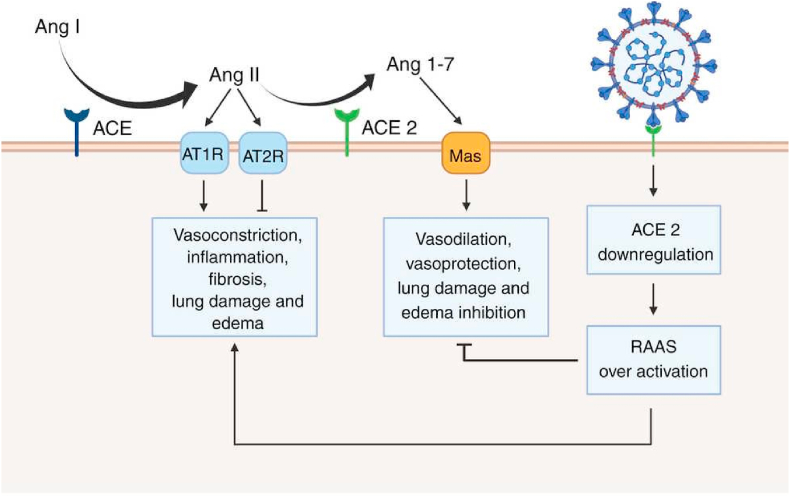
Coronavirus disease 2019 (COVID-19) is suspected to mainly be more deleterious in patients with underlying cardiovascular diseases (CVD). There is a strong association between hypertension and COVID-19 severity. The binding of SARS-CoV-2 to the angiotensin-converting enzyme 2 (ACE2) leads to deregulation of the renin-angiotensin-aldosterone system (RAAS) through down-regulation of ACE2 with subsequent increment of the harmful Ang II serum levels and reduction of the protective Ang-(1-7). Both angiotensin receptor blockers (ARBs) and angiotensin-converting enzyme inhibitors (ACEIs) are commonly used to manage hypertension.
Objective was to illustrate the potential link between hypertension and COVID-19 regarding the role of angiotensin receptor blockers (ARBs) and angiotensin-converting enzyme inhibitors (ACEIs) in hypertensive patients with COVID-19.
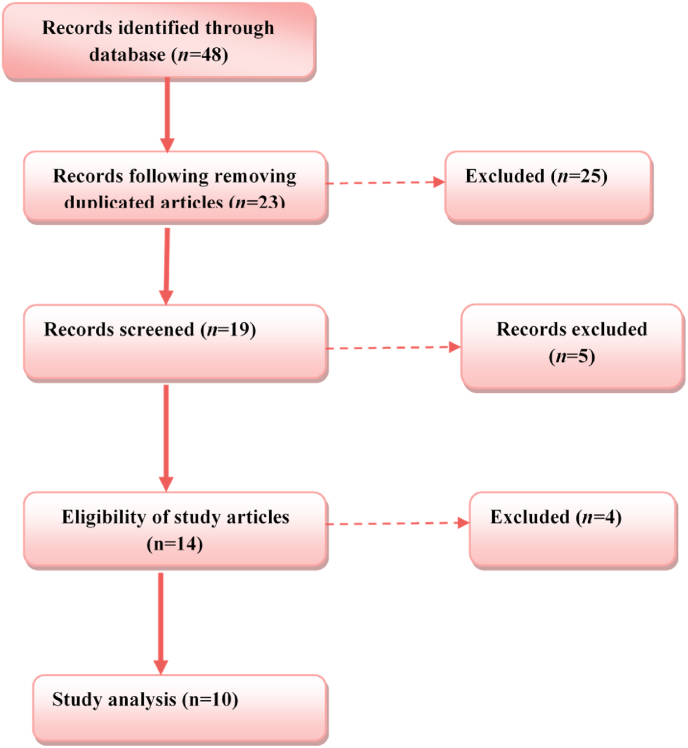
We carried out comprehensive databases search from late December 2019 to early January 2021 by using online engines of Web of Science, Research gate, Scopus, Google Scholar, and PubMed for published and preprinted articles.
The present study's findings showed that hypertension is regarded as an independent risk factor for COVID-19 severity. Both ACEIs and ARBs are beneficial in managing hypertensive patients.
This study concluded that hypertension increases COVID-19 severity due to underlying endothelial dysfunctions and coagulopathy. COVID-19 might augment the hypertensive complications due to down-regulation of ACE2. The use of ACEIs or ARBs might be beneficial in the management of hypertensive patients with COVID-19.
2019年冠状病毒病(COVID-19)被怀疑对患有潜在心血管疾病(CVD)的患者危害更大。高血压与COVID-19严重程度之间存在密切关联。严重急性呼吸综合征冠状病毒2(SARS-CoV-2)与血管紧张素转换酶2(ACE2)结合,通过下调ACE2导致肾素-血管紧张素-醛固酮系统(RAAS)失调,随后有害的血管紧张素II血清水平升高,而具有保护作用的血管紧张素-(1-7)减少。血管紧张素受体阻滞剂(ARBs)和血管紧张素转换酶抑制剂(ACEIs)都常用于治疗高血压。
旨在阐述高血压与COVID-19之间的潜在联系,涉及血管紧张素受体阻滞剂(ARBs)和血管紧张素转换酶抑制剂(ACEIs)在COVID-19高血压患者中的作用。
我们在2019年12月下旬至2021年1月初期间,通过使用科学网、研究之门、Scopus、谷歌学术和PubMed的在线引擎,对已发表和预印的文章进行了全面的数据库检索。
本研究结果表明,高血压被视为COVID-19严重程度的独立危险因素。ACEIs和ARBs在治疗高血压患者方面均有益处。
本研究得出结论,高血压由于潜在的内皮功能障碍和凝血病而增加COVID-19的严重程度。COVID-19可能因ACE2下调而加剧高血压并发症。使用ACEIs或ARBs可能对COVID-19高血压患者的管理有益。