Department of Pediatrics and the National School of Tropical Medicine, Baylor College of Medicine, Houston, Texas, United States of America.
Texas A&M Veterinary Medical Diagnostic Laboratory, College Station, Texas, United States of America.
PLoS Negl Trop Dis. 2021 Nov 23;15(11):e0009868. doi: 10.1371/journal.pntd.0009868. eCollection 2021 Nov.
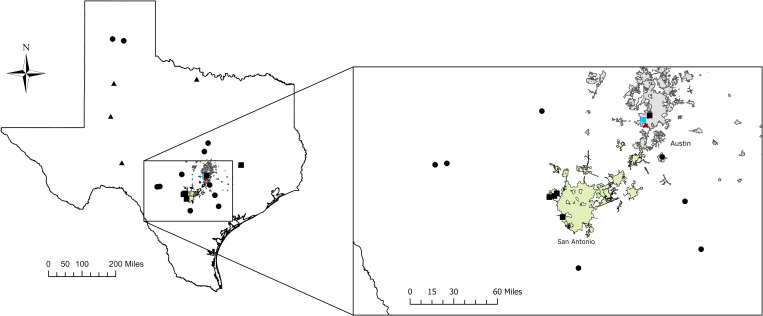
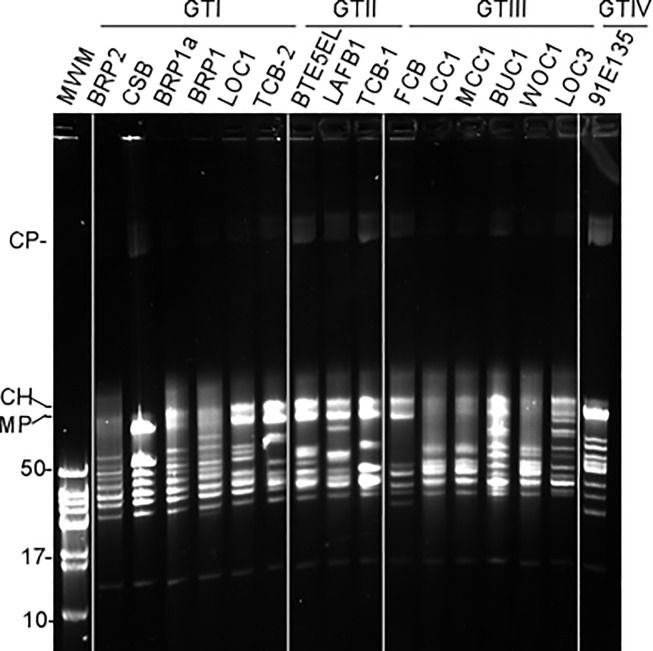
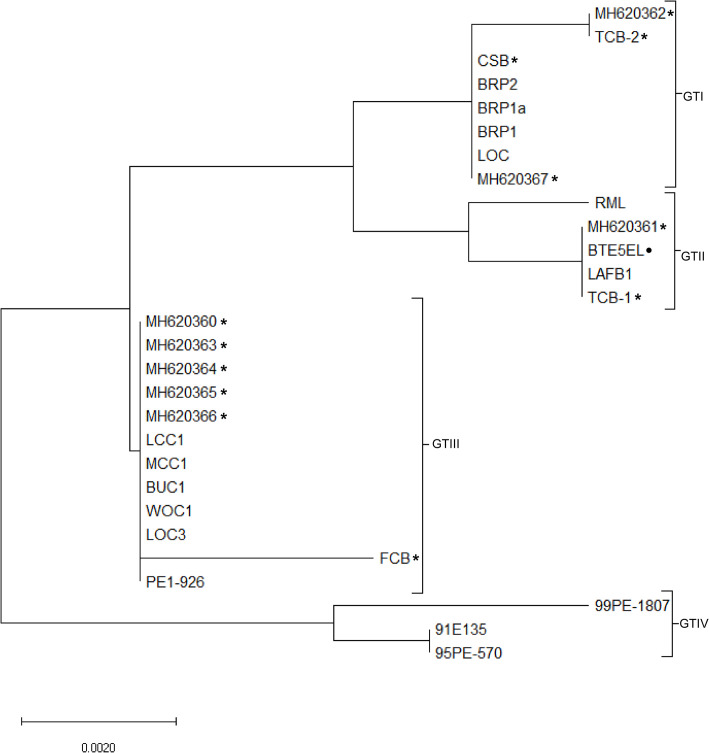
Borrelia turicatae is a causative agent of tick-borne relapsing fever (TBRF) in the subtropics and tropics of the United States and Latin America. Historically, B. turicatae was thought to be maintained in enzootic cycles in rural areas. However, there is growing evidence that suggests the pathogen has established endemic foci in densely populated regions of Texas. With the growth of homelessness in the state and human activity in city parks, it was important to implement field collection efforts to identify areas where B. turicatae and its vector circulate. Between 2017 and 2020 we collected Ornithodoros turicata ticks in suburban and urban areas including public and private parks and recreational spaces. Ticks were fed on naïve mice and spirochetes were isolated from the blood. Multilocus sequence typing (MLST) was performed on eight newly obtained isolates and included previously reported sequences. The four chromosomal loci targeted for MLST were 16S ribosomal RNA (rrs), flagellin B (flaB), DNA gyrase B (gyrB), and the intergenic spacer (IGS). Given the complexity of Borrelia genomes, plasmid diversity was also evaluated. These studies indicate that the IGS locus segregates B. turicatae into four genomic types and plasmid diversity is extensive between isolates. Furthermore, B. turicatae and its vector have established endemic foci in parks and recreational areas in densely populated settings of Texas.
土耳其包柔螺旋体是美国和拉丁美洲亚热带和热带地区蜱传回归热(TBRF)的病原体。历史上,人们认为土耳其包柔螺旋体在农村地区的地方性循环中维持。然而,越来越多的证据表明,该病原体已在德克萨斯州人口密集地区建立了地方性流行中心。随着该州无家可归者的增加和城市公园的人类活动,有必要进行实地采集工作,以确定土耳其包柔螺旋体及其传播媒介的循环区域。在 2017 年至 2020 年间,我们在包括公共和私人公园和娱乐空间在内的郊区和城市地区采集了土耳其钝缘蜱。将蜱喂给天真的老鼠,从血液中分离螺旋体。对从八个新获得的分离株进行了多位点序列分型(MLST),并包括以前报道的序列。针对 MLST 的四个染色体基因座是 16S 核糖体 RNA(rrs)、鞭毛蛋白 B(flaB)、DNA 回旋酶 B(gyrB)和基因间间隔(IGS)。鉴于博莱氏螺旋体基因组的复杂性,还评估了质粒多样性。这些研究表明,IGS 基因座将土耳其包柔螺旋体分为四个基因组类型,并且分离株之间的质粒多样性广泛。此外,土耳其包柔螺旋体及其传播媒介已在德克萨斯州人口密集地区的公园和娱乐区建立了地方性流行中心。