Department of Social and Administrative Pharmacy, Faculty of Pharmaceutical Sciences, Chulalongkorn University, Bangkok, Thailand.
Department of Population Medicine, Harvard Medical School and Harvard Pilgrim Health Care Institute, Landmark Center, Boston, MA, USA.
Int J Health Policy Manag. 2022 Sep 1;11(9):1625-1634. doi: 10.34172/ijhpm.2021.138. Epub 2021 Sep 22.
Each country manages access to anticancer drugs differently due to variations in the structure and financing of the health system, but a summary of the various strategies used is absent. This study aimed to review and summarize financing strategies implemented across countries to facilitate access to high-cost anticancer drugs.
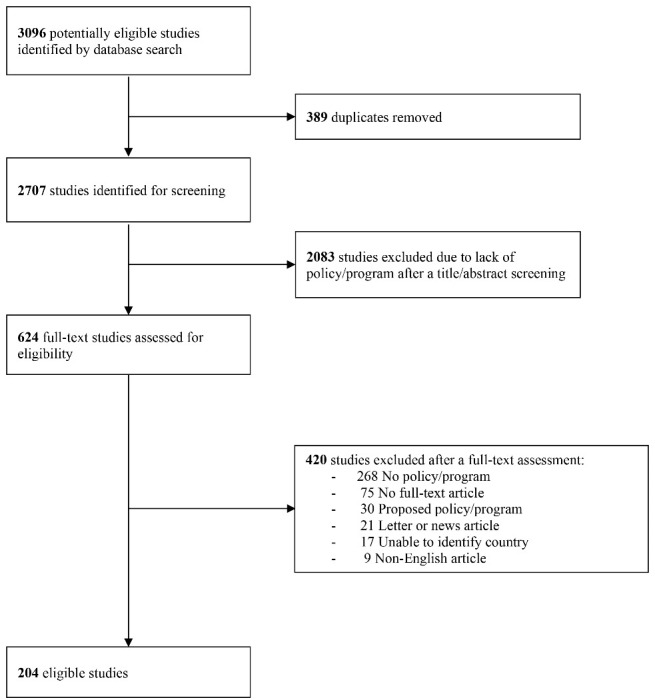
We conducted a systematic review of articles referenced in PubMed, Embase, and Web of Science through May 12, 2021. Articles published in the English language from 2000 that describe strategies implemented in different countries to facilitate access to high-cost anticancer drugs were included. Letters, news articles, and proposed strategies were excluded. Quality assessment was not performed as we aimed to summarize the strategies. Data were analyzed by thematic analysis. A review protocol was registered at PROSPERO (CRD42018068616).
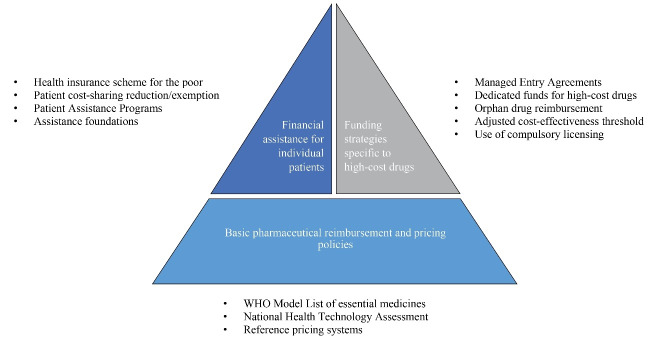
The review included 204 studies from 176 countries. Three themes of financing strategies were identified: (1) Basic pharmaceutical reimbursement and pricing policies, (2) Alternative funding strategies specific to high-cost drugs, and (3) Financial assistance for individual patients. Access in most countries depends mainly on basic pharmaceutical reimbursement policies (165 of 176 countries). Apart from that, high-income countries (HICs) tended to use funding strategies targeting high-cost drugs (72% of HICs vs 0%-24% of the rest), such as managed entry agreements (MEAs) or dedicated funds for high-cost drugs. In contrast, lower-income countries tended to implement financial assistance programs for cancer patients as a tool to increase access (32% of HICs vs 62%-79% of the rest).
Many countries have implemented a combination of strategies to increase access to high-cost anticancer drugs. Most low- and middle-income countries utilized placement of anticancer drugs on a national list of essential medicines and patient assistance programs (PAPs) to facilitate access, while many HICs implemented a broader range of strategies.
由于卫生系统结构和筹资的差异,每个国家对抗癌药物的管理方式也不同,但缺乏对各种策略的总结。本研究旨在回顾和总结各国为促进获得高成本抗癌药物而实施的筹资策略。
我们通过 5 月 12 日在 PubMed、Embase 和 Web of Science 中检索参考文献,对其进行了系统回顾。纳入了 2000 年以来以英文发表的、描述不同国家为促进获得高成本抗癌药物而实施的策略的文章。信件、新闻文章和拟议的策略被排除在外。由于我们旨在总结策略,因此未进行质量评估。数据通过主题分析进行分析。审查方案在 PROSPERO(CRD42018068616)上进行了注册。
该综述纳入了来自 176 个国家的 204 项研究。确定了三种筹资策略主题:(1)基本药物报销和定价政策,(2)针对高成本药物的替代筹资策略,以及(3)个别患者的财务援助。大多数国家的获得途径主要依赖基本药物报销政策(176 个国家中有 165 个)。除此之外,高收入国家(HIC)倾向于使用针对高成本药物的筹资策略(72%的 HIC 与 0%-24%的其他国家相比),如管理准入协议(MEA)或高成本药物专用基金。相比之下,低收入国家倾向于实施癌症患者的财务援助计划,作为增加获得途径的工具(79%的 HIC 与 62%-79%的其他国家相比)。
许多国家已经实施了一系列策略来增加获得高成本抗癌药物的机会。大多数中低收入国家利用将抗癌药物列入国家基本药物清单和患者援助计划(PAP)来促进获得药物,而许多高收入国家则实施了更广泛的策略。