Lindström Martin, Pirouzifard Mirnabi, Rosvall Maria
Social Medicine and Health Policy, Department of Clinical Sciences and Centre for Primary Health Care Research, Lund University, S-205 02, Malmö, Sweden.
Department of Community Medicine and Public Health, Sahlgrenska Academy, Institute of Medicine, University of Gothenburg, Sweden.
SSM Popul Health. 2021 Nov 6;16:100956. doi: 10.1016/j.ssmph.2021.100956. eCollection 2021 Dec.
To investigate associations between social capital, miniaturization of community and traditionalism and all-cause, cardiovascular (CVD), cancer and other causes mortality.
Prospective cohort study.
The 2008 public health survey in Scania in the southernmost part of Sweden was conducted with a postal questionnaire posted to a stratified random sample aged 18-80. The response rate was 54.1%. The baseline survey was linked to 8.3-year prospective public death register data. Analyses were conducted with survival analyses, adjusting for relevant factors.
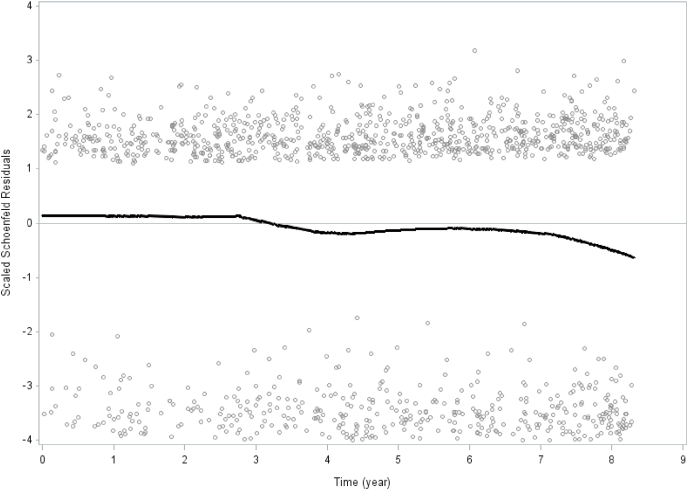
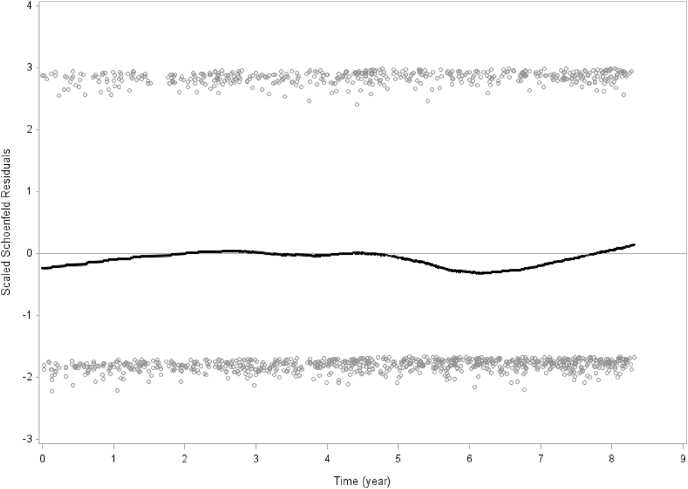
Among women 37.9% had low social participation and 37.8% low trust. Among men 40.9% had low social participation and 35.7% low trust. Low social capital (low social participation/low trust) and traditionalism (low social participation/high trust) have significantly higher total and cardiovascular mortality among women and men combined and among men, but not among women in the final models. The results for women are not significant in the full models for all-cause, CVD, cancer and all other causes mortality. Miniturization of community (high social participation/low trust) displays no statistically significant associations in the adjusted models. Social participation and trust, respectively, and total mortality show consistent Schoenfeld residuals over 8.3 years.
The associations between low social capital, traditionalism and mortality are stronger for men than for women, and may be partly mediated by health-related behaviors.
研究社会资本、社区小型化和传统主义与全因死亡率、心血管疾病(CVD)死亡率、癌症死亡率及其他原因死亡率之间的关联。
前瞻性队列研究。
对瑞典最南部斯科讷省2008年公共卫生调查采用邮寄问卷的方式,对象为18 - 80岁的分层随机样本。应答率为54.1%。基线调查与8.3年的前瞻性公共死亡登记数据相关联。采用生存分析并对相关因素进行调整后进行分析。
女性中,37.9%社会参与度低,37.8%信任度低。男性中,40.9%社会参与度低,35.7%信任度低。在最终模型中,低社会资本(低社会参与度/低信任度)和传统主义(低社会参与度/高信任度)在男性和女性总体以及男性中全因死亡率和心血管疾病死亡率显著更高,但在女性中并非如此。在全因死亡率、心血管疾病死亡率、癌症死亡率及所有其他原因死亡率的完整模型中,女性的结果不显著。社区小型化(高社会参与度/低信任度)在调整模型中未显示出统计学上的显著关联。社会参与度和信任度分别与全因死亡率在8.3年中显示出一致的舍恩费尔德残差。
低社会资本、传统主义与死亡率之间的关联在男性中比在女性中更强,并且可能部分由健康相关行为介导。