Alam Shahinul, Eslam Mohammad, Skm Hasan Nazmul, Anam Kamrul, Chowdhury Mohammad Abdul Baker, Khan Md Abdullah Saeed, Hasan Mohammad J, Mohamed Rosmawati
Department of Hepatology Bangabandhu Sheikh Mujib Medical University Dhaka Bangladesh.
Storr Liver Centre, Westmead Institute for Medical Research Westmead Hospital and University of Sydney Sydney New South Wales Australia.
JGH Open. 2021 Oct 4;5(11):1236-1249. doi: 10.1002/jgh3.12658. eCollection 2021 Nov.
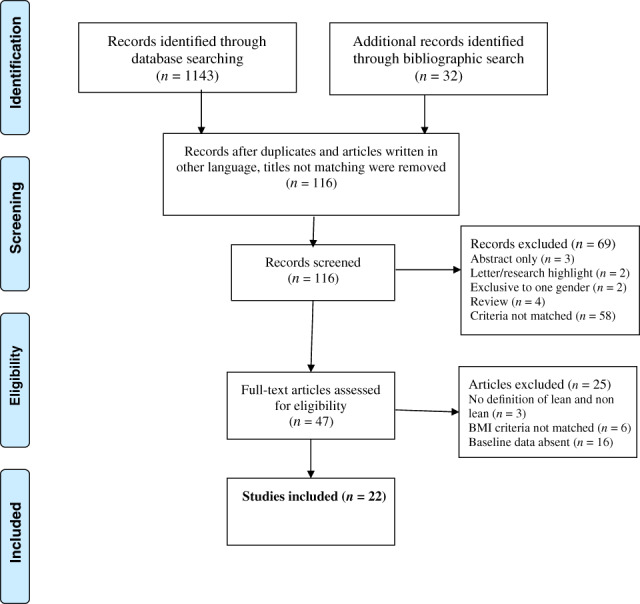
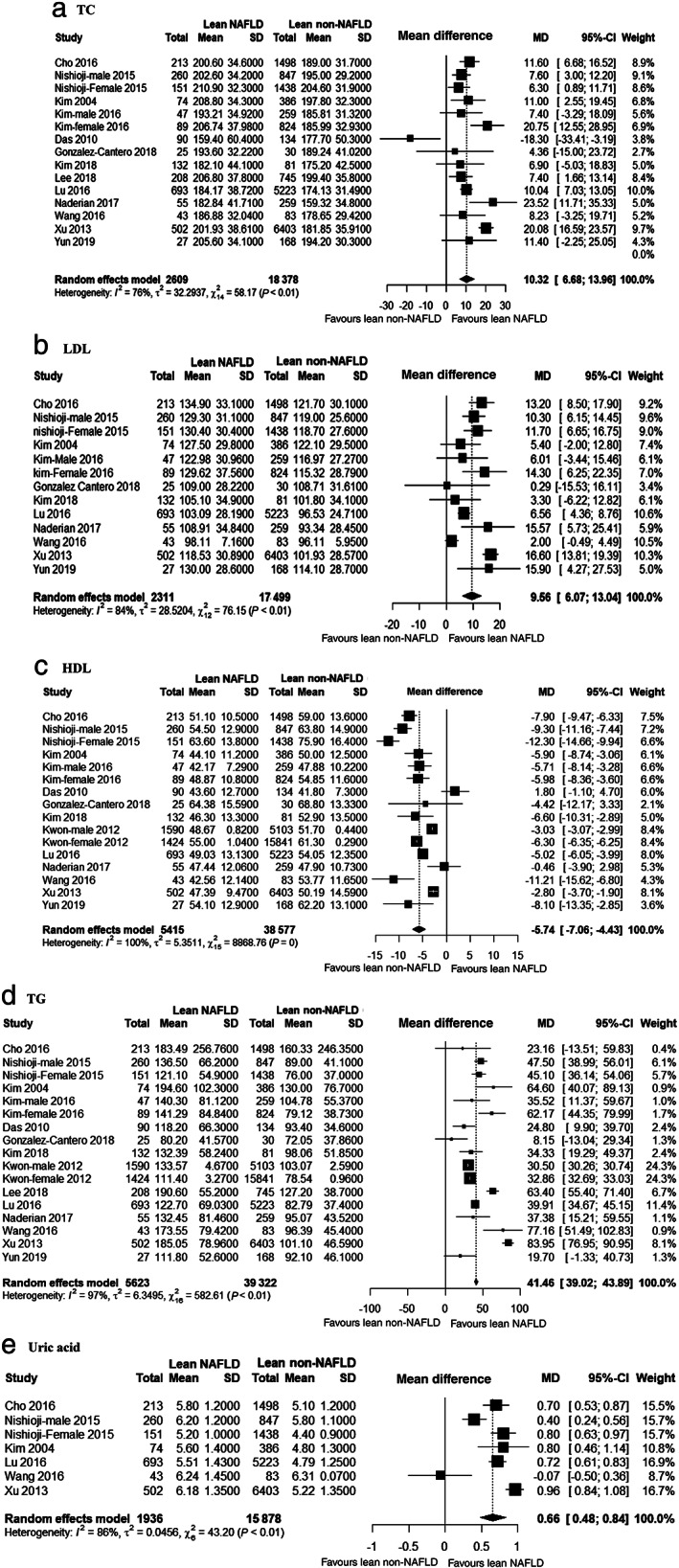
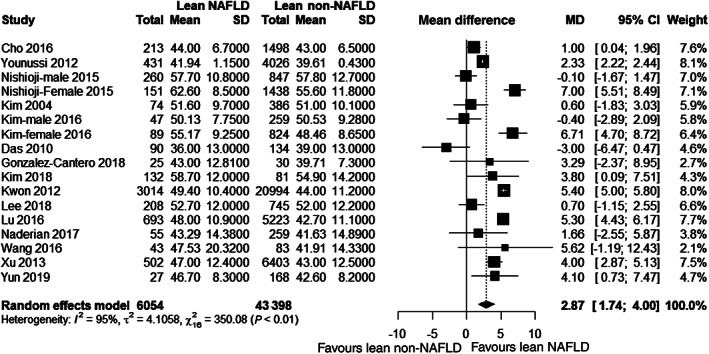
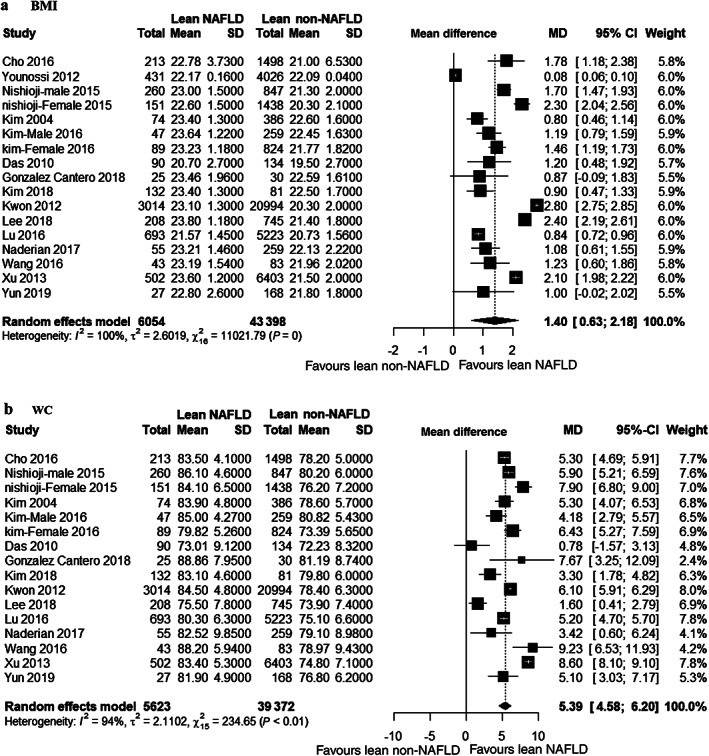
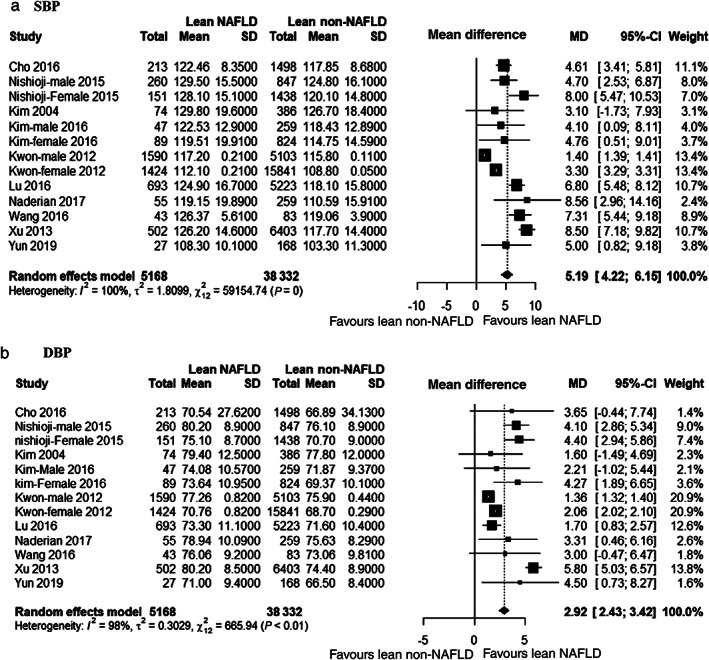
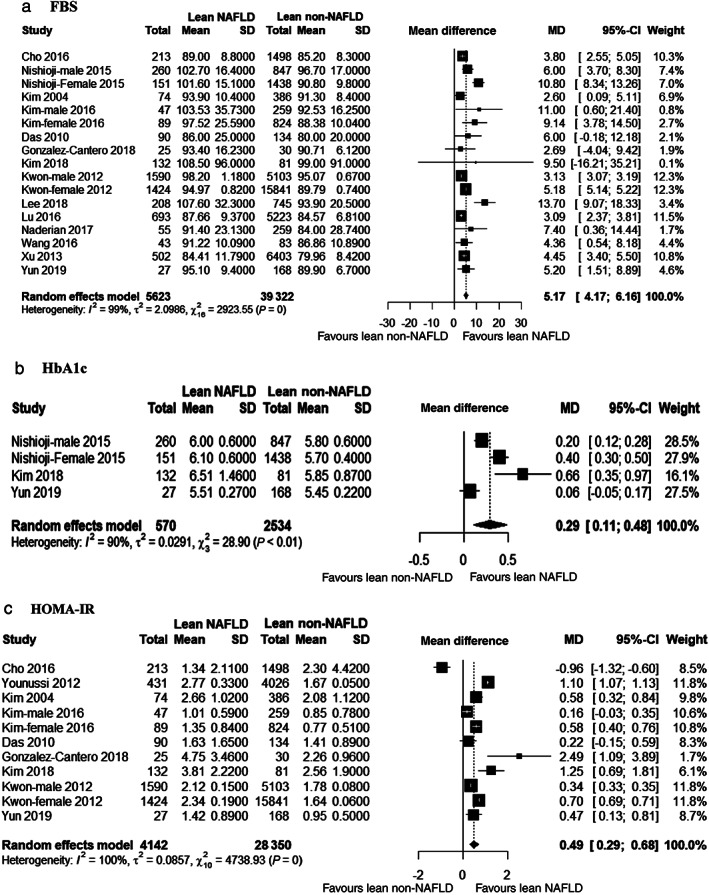
The pathophysiology and risk factors of nonalcoholic fatty liver disease (NAFLD) among lean patients is poorly understood and therefore investigated. We performed a meta-analysis of observational studies. Of 1175 articles found through searching from Medline/PubMed, Banglajol, and Google Scholar by two independent investigators, 22 were selected. Data from lean ( = 6768) and obese ( = 9253) patients with NAFLD were analyzed; lean ( = 43 398) and obese ( = 9619) subjects without NAFLD served as controls. Age, body mass index, waist circumference, systolic blood pressure, and diastolic blood pressure (DBP) had significantly higher estimates in lean NAFLD patients than in lean non-NAFLD controls. Fasting blood sugar [MD(mean difference) 5.17 mg/dl, 95% CI(confidence interval) 4.14-6.16], HbA1c [MD 0.29%, 95% CI 0.11-0.48], and insulin resistance [HOMA-IR] [MD 0.49 U, 95% CI 0.29-0.68]) were higher in lean NAFLD patients than in lean non-NAFLD controls. All components of the lipid profile were raised significantly in the former group except high-density lipoprotein. An increased uric acid (UA) level was found to be associated with the presence of NAFLD among lean. Cardio-metabolic profiles of nonlean NAFLD patients significantly differs from the counter group. However, the magnitude of the difference of lipid and glycemic profile barely reached statistical significance when subjects were grouped according to lean and nonlean NAFLD. But DBP (slope: 0.19, < 0.037), HOMA-IR (slope: 0.58, < 0.001), and UA (slope: 0.36, = 0.022) were significantly higher if NAFLD was present compared to that of non-NAFLD group. Lean and nonlean NAFLD patients are metabolically similar and share common risk factors.
瘦型非酒精性脂肪性肝病(NAFLD)患者的病理生理学和危险因素尚不清楚,因此开展了相关研究。我们对观察性研究进行了荟萃分析。通过两名独立研究人员从Medline/PubMed、Banglajol和谷歌学术搜索到的1175篇文章中,选取了22篇。分析了瘦型(n = 6768)和肥胖型(n = 9253)NAFLD患者的数据;无NAFLD的瘦型(n = 43 398)和肥胖型(n = 9619)受试者作为对照。与瘦型非NAFLD对照相比,瘦型NAFLD患者的年龄、体重指数、腰围、收缩压和舒张压(DBP)估计值显著更高。瘦型NAFLD患者的空腹血糖[平均差(MD)5.17mg/dl,95%置信区间(CI)4.14 - 6.16]、糖化血红蛋白(HbA1c)[MD 0.29%,95% CI 0.11 - 0.48]和胰岛素抵抗[稳态模型评估胰岛素抵抗(HOMA-IR)][MD 0.49 U,95% CI 0.29 - 0.68]均高于瘦型非NAFLD对照。除高密度脂蛋白外,前一组的所有血脂成分均显著升高。发现尿酸(UA)水平升高与瘦型人群中NAFLD的存在相关。非瘦型NAFLD患者的心血管代谢特征与对照组有显著差异。然而,当根据瘦型和非瘦型NAFLD对受试者进行分组时,血脂和血糖特征的差异幅度几乎未达到统计学意义。但与非NAFLD组相比,如果存在NAFLD,DBP(斜率:0.19,P < 0.037)、HOMA-IR(斜率:0.58,P < 0.001)和UA(斜率:0.36)显著更高。瘦型和非瘦型NAFLD患者在代谢方面相似,且有共同的危险因素。