Dioubaté Nafissatou, Manet Hawa, Bangoura Charlotte, Sidibé Sidikiba, Kouyaté Mariama, Kolie Delphin, Ayadi Alison M El, Delamou Alexandre
Maferinyah National Center for Training and Research in Rural Health (CNFRSR), Forécariah, Guinea.
Africa Center of Excellence for Prevention and Control of Communicable Diseases (CEA-PCMT), University Gamal Abdel Nasser, Conakry, Guinea.
Front Glob Womens Health. 2021 Jul 15;2:655929. doi: 10.3389/fgwh.2021.655929. eCollection 2021.
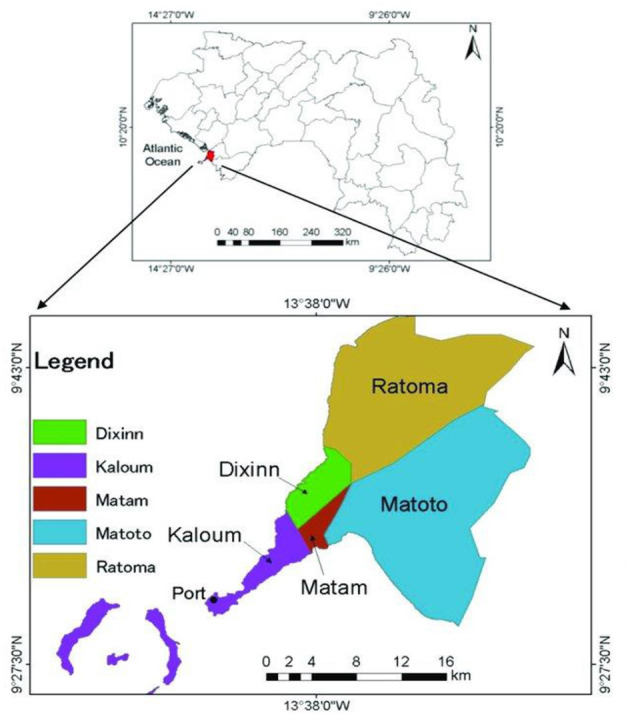
Despite efforts to improve access to family planning, contraceptive prevalence remains relatively low among adolescents and youth in Guinea. The objective of this study was to understand the barriers to the use of modern contraceptive methods among urban adolescents and youth (15-24 years) in Conakry, Guinea. This was a qualitative study using an exploratory design. It was conducted in the capital city of Guinea, Conakry in 2019. Respondents included adolescents and youth aged 15-24 years, health care providers, and parents of adolescents and youth. In-depth individual interviews (IDIs) and focus group discussions (FGDs) were used to collect the data. Sixty IDIs and ten FGDs were planned in Conakry. These data were recorded and transcribed, when applicable, from the local languages into French in an anonymous manner. The data were analyzed using a mixed (inductive and deductive) thematic approach following the elements of the socio-ecological model. Overall, 56 IDIs and 10 FGDs were conducted with 136 participants and included in this analysis. Respondents were adolescents (16%), youth (30%), and key informants (54%) who were health care providers (public and private), decision-makers, parents of adolescents and youth, and neighbors. Among adolescent respondents, 75% were female, and of the youth, 61% were female. Our analysis indicates various and interrelated barriers that limit the access and use of contraceptives by adolescents and youth. These included the individual (fear of side effects, cost, and rumor-related misinformation), interpersonal or family (spouse perception and sexuality taboo and perception of sexual activity before marriage), sociocultural (religious prohibitions and ethnicity), and health care system (breakdown of contraceptive methods in public health facilities, perception of service delivery, provider attitudes, visiting hours, geographic proximity of services, and quality of training received by health care providers) barriers. In our context, the use of modern contraceptive methods by adolescents and youth is influenced by an interaction of various barriers, including individual, interpersonal, sociocultural, and health care system factors. Strengthening contraceptive uptake interventions by involving different stakeholders, including adolescents, parents, religious, and community leaders, and improving the quality of sexual and reproductive health services would help in reducing barriers to contraceptive use among adolescents and youth.
尽管在改善计划生育服务可及性方面做出了努力,但几内亚青少年和青年中的避孕普及率仍然相对较低。本研究的目的是了解几内亚科纳克里市城市青少年和青年(15 - 24岁)使用现代避孕方法的障碍。这是一项采用探索性设计的定性研究。研究于2019年在几内亚首都科纳克里进行。受访者包括15 - 24岁的青少年和青年、医疗保健提供者以及青少年和青年的父母。通过深入个人访谈(IDI)和焦点小组讨论(FGD)收集数据。计划在科纳克里进行60次IDI和10次FGD。这些数据在适用时以匿名方式从当地语言记录并转录为法语。数据采用混合(归纳和演绎)主题分析法,依据社会生态模型的要素进行分析。总体而言,共进行了56次IDI和10次FGD,涉及136名参与者,并纳入了本分析。受访者包括青少年(16%)、青年(30%)和关键信息提供者(54%),后者为医疗保健提供者(公立和私立)、决策者、青少年和青年的父母以及邻居。在青少年受访者中,75%为女性,青年受访者中61%为女性。我们的分析表明,存在多种相互关联的障碍限制了青少年和青年获取和使用避孕药具。这些障碍包括个人层面(对副作用、成本以及谣言相关错误信息的担忧)、人际或家庭层面(配偶的看法、性禁忌以及对婚前性行为的看法)、社会文化层面(宗教禁令和种族)以及医疗保健系统层面(公共卫生设施中避孕方法的短缺、对服务提供的看法、提供者态度、就诊时间、服务的地理可及性以及医疗保健提供者接受的培训质量)的障碍。在我们的背景下,青少年和青年对现代避孕方法的使用受到多种障碍相互作用的影响,包括个人、人际、社会文化和医疗保健系统因素。让包括青少年、父母、宗教和社区领袖在内的不同利益相关者参与,加强避孕措施推广干预,并提高性健康和生殖健康服务质量,将有助于减少青少年和青年使用避孕药具的障碍。