Countdown to 2030 for Women's, Children's and Adolescents' Health, Centre for Global Public Health, Department of Community Health Sciences, University of Manitoba, Winnipeg, Manitoba, Canada.
African Population and Health Research Center, Nairobi, Kenya.
BMJ Glob Health. 2020 Jan 26;5(1):e002231. doi: 10.1136/bmjgh-2019-002231. eCollection 2020.
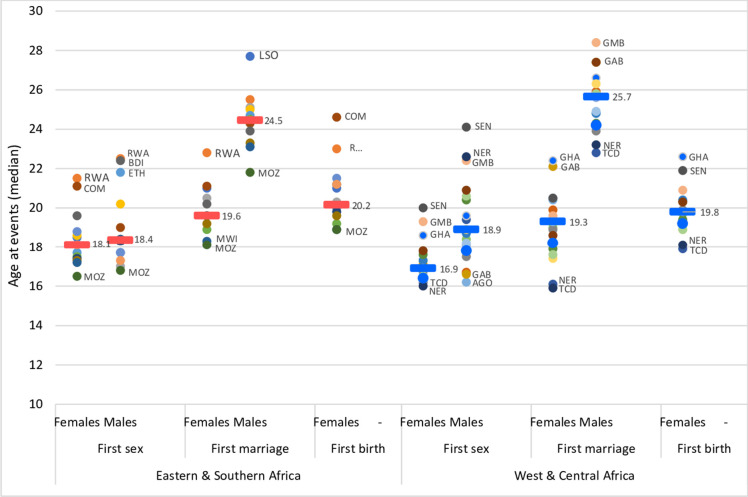
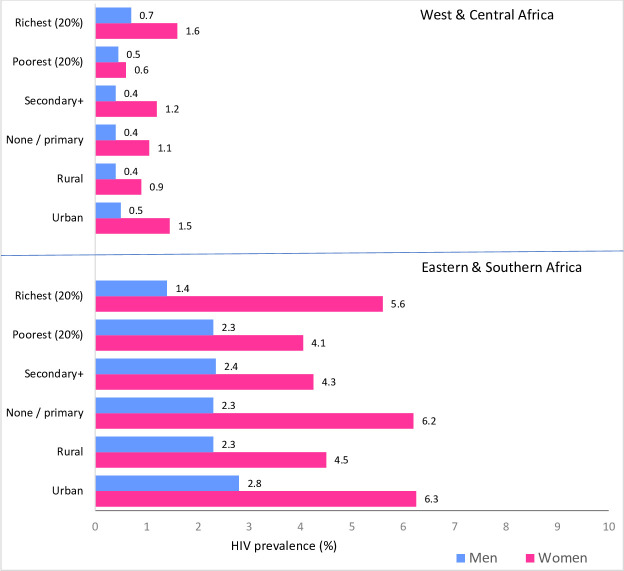
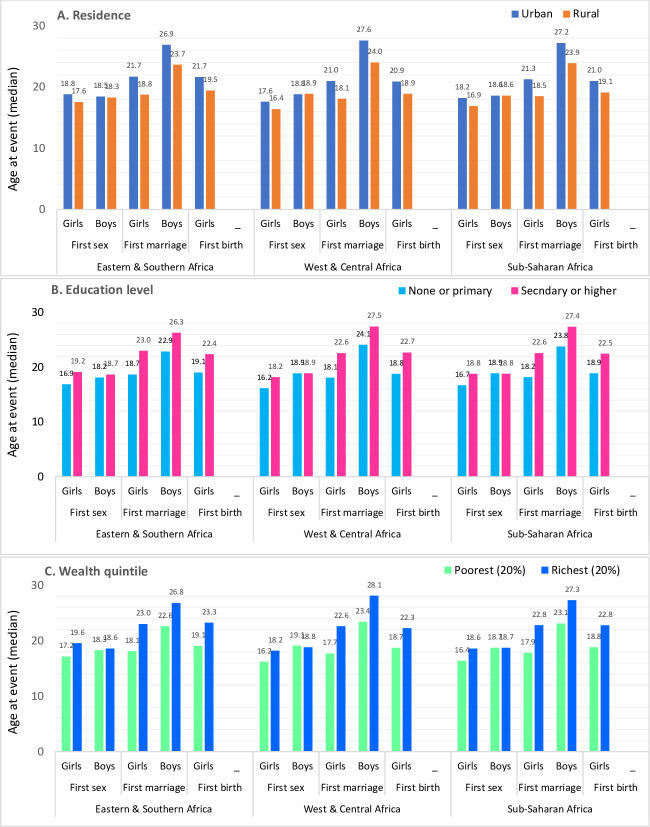
Adolescent sexual and reproductive health (ASRH) continues to be a major public health challenge in sub-Saharan Africa where child marriage, adolescent childbearing, HIV transmission and low coverage of modern contraceptives are common in many countries. The evidence is still limited on inequalities in ASRH by gender, education, urban-rural residence and household wealth for many critical areas of sexual initiation, fertility, marriage, HIV, condom use and use of modern contraceptives for family planning. We conducted a review of published literature, a synthesis of national representative Demographic and Health Surveys data for 33 countries in sub-Saharan Africa, and analyses of recent trends of 10 countries with surveys in around 2004, 2010 and 2015. Our analysis demonstrates major inequalities and uneven progress in many key ASRH indicators within sub-Saharan Africa. Gender gaps are large with little evidence of change in gaps in age at sexual debut and first marriage, resulting in adolescent girls remaining particularly vulnerable to poor sexual health outcomes. There are also major and persistent inequalities in ASRH indicators by education, urban-rural residence and economic status of the household which need to be addressed to make progress towards the goal of equity as part of the sustainable development goals and universal health coverage. These persistent inequalities suggest the need for multisectoral approaches, which address the structural issues underlying poor ASRH, such as education, poverty, gender-based violence and lack of economic opportunity.
青春期性与生殖健康(ASRH)仍然是撒哈拉以南非洲地区的一个主要公共卫生挑战,在许多国家,童婚、未成年生育、艾滋病毒传播和现代避孕措施覆盖率低等问题普遍存在。对于性初体验、生育率、婚姻、艾滋病毒、避孕套使用以及计划生育中现代避孕措施的使用等许多关键领域,关于性别、教育、城乡居住和家庭财富方面的 ASRH 不平等的证据仍然有限。我们对已发表的文献进行了回顾,对撒哈拉以南非洲 33 个国家的国家代表性人口与健康调查数据进行了综合分析,并对 10 个国家在 2004 年、2010 年和 2015 年进行的调查的近期趋势进行了分析。我们的分析表明,在撒哈拉以南非洲地区,许多关键的 ASRH 指标存在着严重的不平等和不平衡进展。性别差距很大,性初体验和初婚年龄差距几乎没有变化的证据,这导致少女仍然特别容易受到不良性健康结果的影响。在教育、城乡居住和家庭经济状况方面,ASRH 指标也存在着巨大而持久的不平等,需要加以解决,以便在可持续发展目标和全民健康覆盖的范围内朝着公平目标取得进展。这些持续存在的不平等现象表明,需要采取多部门办法来解决 ASRH 不良的结构性问题,如教育、贫困、性别暴力和缺乏经济机会。