Department of Aquatic Microbial Ecology, Institute of Hydrobiology, Biology Centre of the Academy of Sciences of the Czech Republic, České Budějovice, Czech Republic.
Department of Ecosystem Biology, Faculty of Science, University of South Bohemia, Branišovská, České Budějovice, Czech Republic.
mSphere. 2021 Dec 22;6(6):e0066121. doi: 10.1128/mSphere.00661-21. Epub 2021 Nov 24.
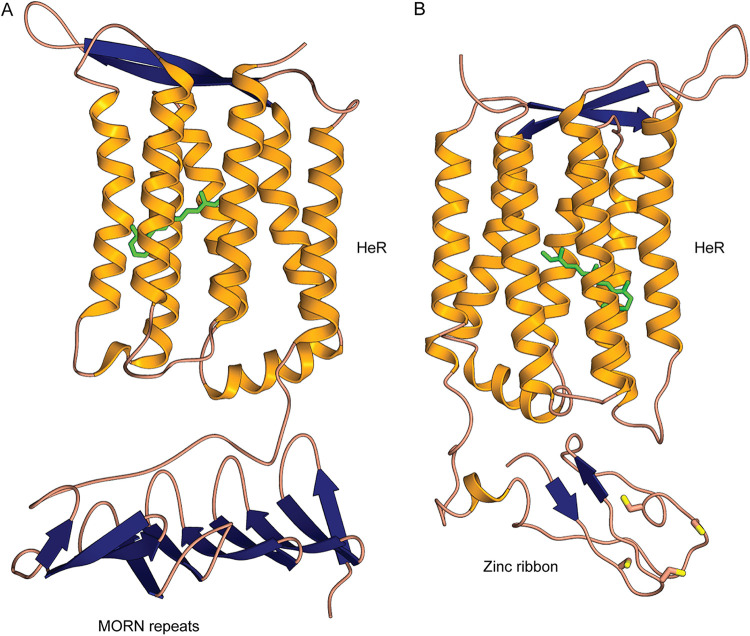
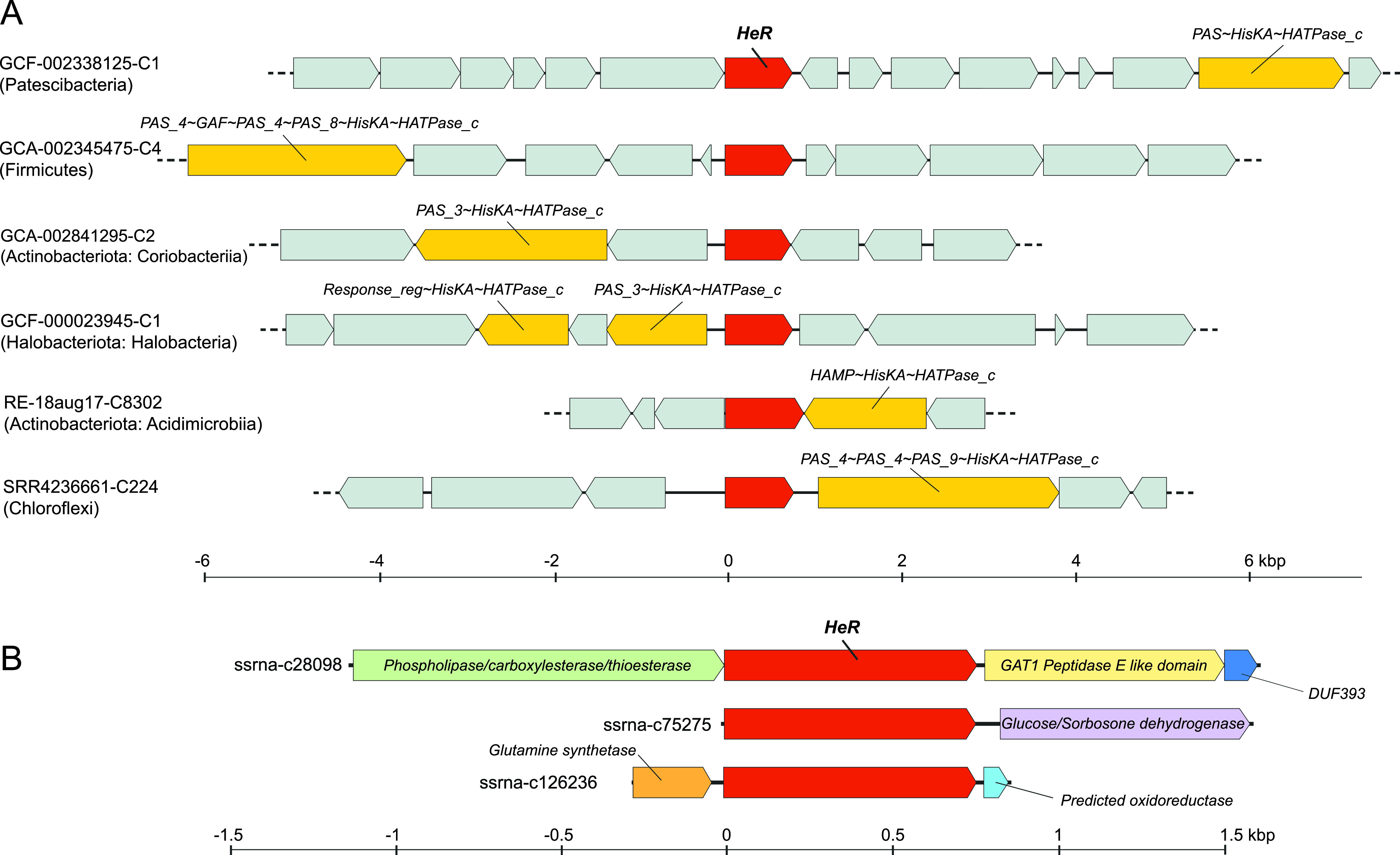
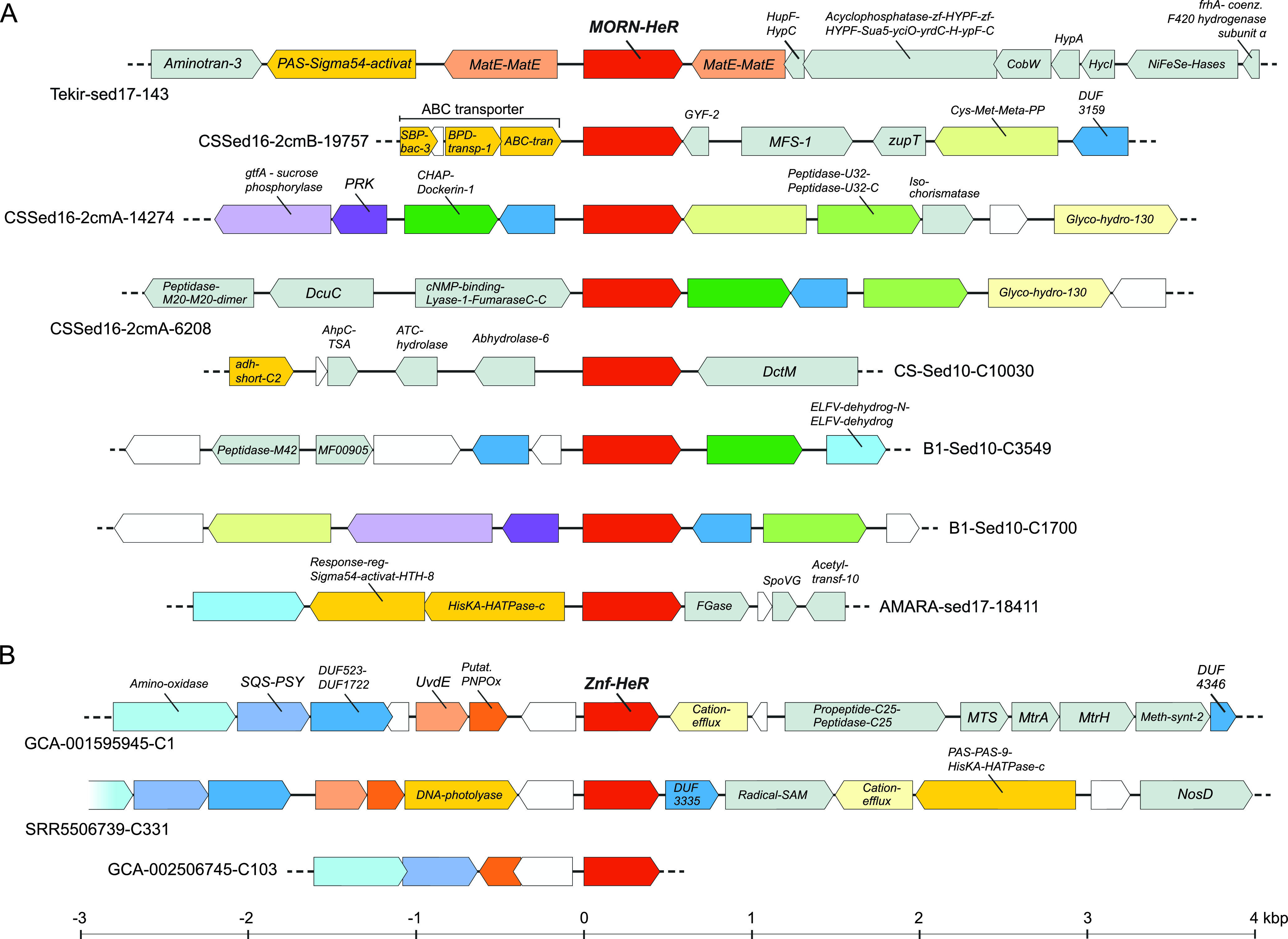
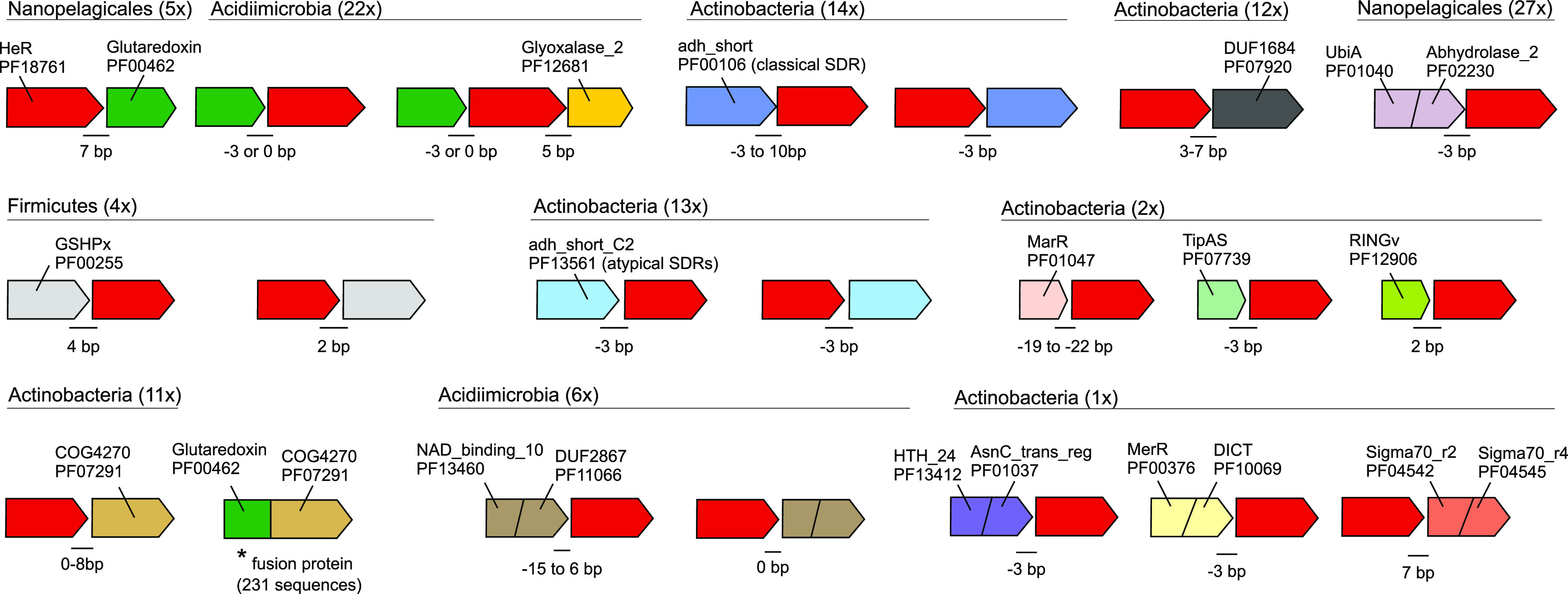
Rhodopsins are light-activated proteins displaying an enormous versatility of function as cation/anion pumps or sensing environmental stimuli and are widely distributed across all domains of life. Even with wide sequence divergence and uncertain evolutionary linkages between microbial (type 1) and animal (type 2) rhodopsins, the membrane orientation of the core structural scaffold of both was presumed universal. This was recently amended through the discovery of heliorhodopsins (HeRs; type 3), that, in contrast to known rhodopsins, display an inverted membrane topology and yet retain similarities in sequence, structure, and the light-activated response. While no ion-pumping activity has been demonstrated for HeRs and multiple crystal structures are available, fundamental questions regarding their cellular and ecological function or even their taxonomic distribution remain unresolved. Here, we investigated HeR function and distribution using genomic/metagenomic data with protein domain fusions, contextual genomic information, and gene coexpression analysis with strand-specific metatranscriptomics. We bring to resolution the debated monoderm/diderm occurrence patterns and show that HeRs are restricted to monoderms. Moreover, we provide compelling evidence that HeRs are a novel type of sensory rhodopsins linked to histidine kinases and other two-component system genes across phyla. In addition, we also describe two novel putative signal-transducing domains fused to some HeRs. We posit that HeRs likely function as generalized light-dependent switches involved in the mitigation of light-induced oxidative stress and metabolic circuitry regulation. Their role as sensory rhodopsins is corroborated by their photocycle dynamics and their presence/function in monoderms is likely connected to the higher sensitivity of these organisms to light-induced damage. Heliorhodopsins are enigmatic, novel rhodopsins with a membrane orientation that is opposite to all known rhodopsins. However, their cellular and ecological functions are unknown, and even their taxonomic distribution remains a subject of debate. We provide evidence that HeRs are a novel type of sensory rhodopsins linked to histidine kinases and other two-component system genes across phyla boundaries. In support of this, we also identify two novel putative signal transducing domains in HeRs that are fused with them. We also observe linkages of HeRs to genes involved in mitigation of light-induced oxidative stress and increased carbon and nitrogen metabolism. Finally, we synthesize these findings into a framework that connects HeRs with the cellular response to light in monoderms, activating light-induced oxidative stress defenses along with carbon/nitrogen metabolic circuitries. These findings are consistent with the evolutionary, taxonomic, structural, and genomic data available so far.
视紫红质是光激活蛋白,具有作为阳离子/阴离子泵或感知环境刺激的巨大多功能性,广泛分布于所有生命领域。即使微生物(1 型)和动物(2 型)视紫红质之间的序列差异很大,并且进化联系不确定,但两者核心结构支架的膜取向被认为是普遍的。这一观点最近因发现了与已知视紫红质相反的膜拓扑结构的海洋视紫红质(HeRs;3 型)而得到修正,但它们在序列、结构和光激活反应方面仍具有相似性。虽然尚未证明 HeRs 具有离子泵活性,并且有多个晶体结构可用,但关于它们的细胞和生态功能甚至分类分布的基本问题仍未得到解决。在这里,我们使用基因组/元基因组数据、蛋白质结构域融合、上下文基因组信息以及带有链特异性宏转录组学的基因共表达分析,研究了 HeR 的功能和分布。我们解决了有争议的单胚层/双胚层发生模式的问题,并表明 HeRs 仅限于单胚层。此外,我们提供了令人信服的证据表明,HeRs 是一种新型的与组氨酸激酶和其他双组分系统基因相关的感觉视紫红质。此外,我们还描述了两个与一些 HeRs 融合的新型假定信号转导结构域。我们认为,HeRs 可能作为与光诱导氧化应激和代谢电路调节相关的广义光依赖性开关发挥作用。它们作为感觉视紫红质的作用得到了它们的光循环动力学的证实,并且它们在单胚层中的存在/功能可能与这些生物体对光诱导损伤的更高敏感性有关。海洋视紫红质是一种神秘的新型视紫红质,其膜取向与所有已知的视紫红质相反。然而,它们的细胞和生态功能尚不清楚,甚至它们的分类分布仍然存在争议。我们提供的证据表明,HeRs 是一种新型的感觉视紫红质,与跨越门界的组氨酸激酶和其他双组分系统基因相关。支持这一观点的是,我们还在 HeRs 中鉴定了两个与它们融合的新型假定信号转导结构域。我们还观察到 HeRs 与参与减轻光诱导氧化应激和增加碳氮代谢的基因之间存在联系。最后,我们将这些发现综合到一个框架中,将 HeRs 与单胚层细胞对光的反应联系起来,激活光诱导氧化应激防御以及碳/氮代谢电路。这些发现与迄今为止可用的进化、分类、结构和基因组数据一致。