Department of Infectious Diseases, King's College London, Faculty of Life Sciences & Medicine, London SE1 9RT, UK.
Department of Physics, Randall Centre for Cell and Molecular Biophysics, and London Centre for Nanotechnology, King's College London, London WC2R 2LS, UK.
Dev Cell. 2021 Dec 6;56(23):3192-3202.e8. doi: 10.1016/j.devcel.2021.10.022. Epub 2021 Nov 23.
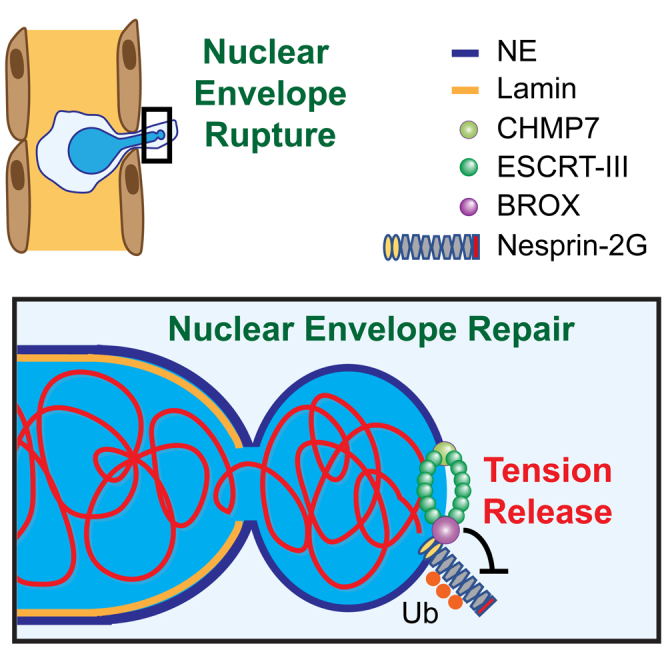
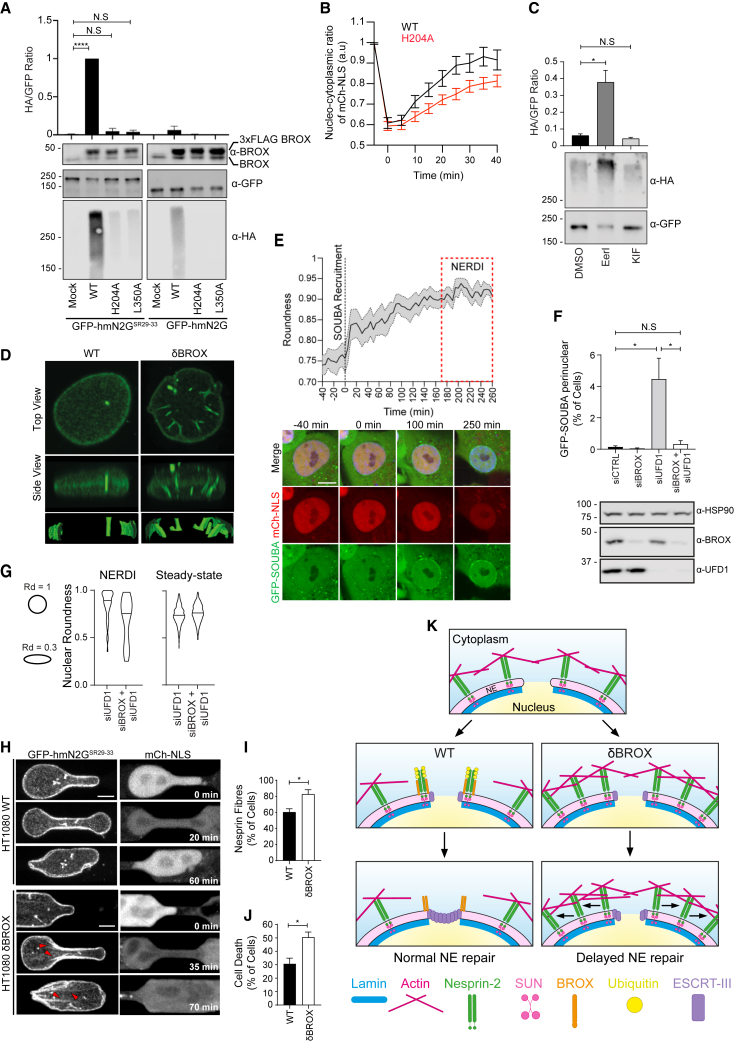
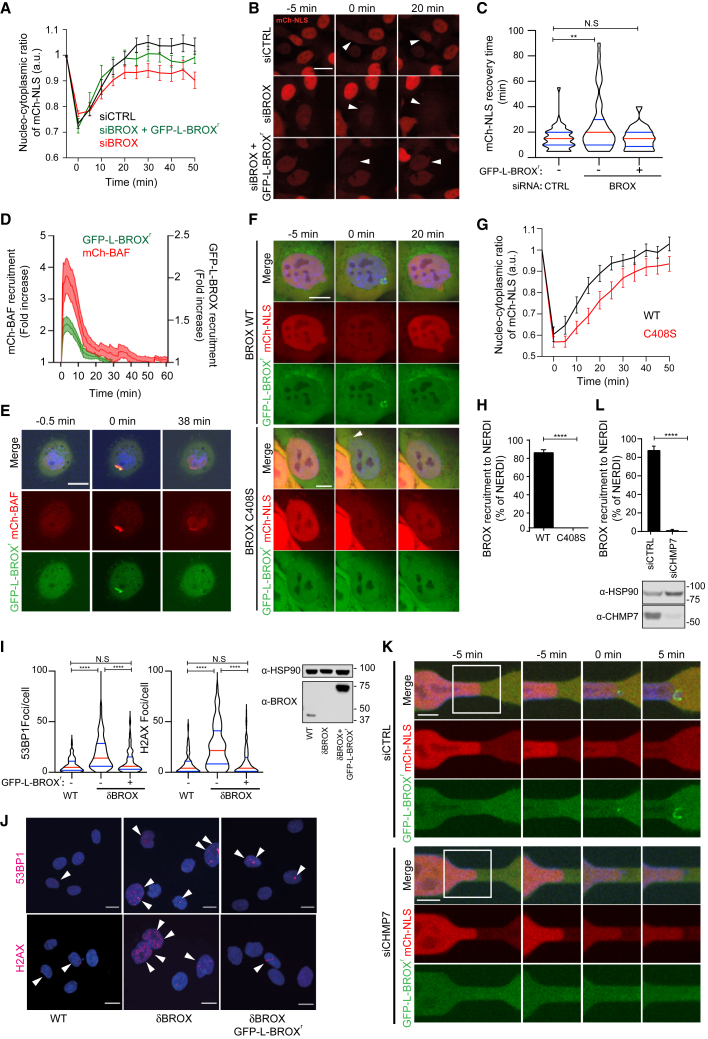
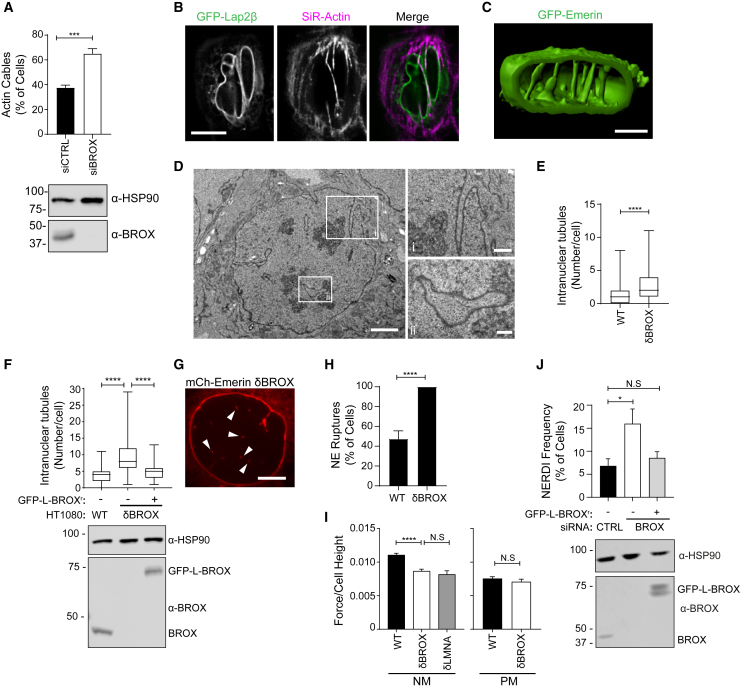
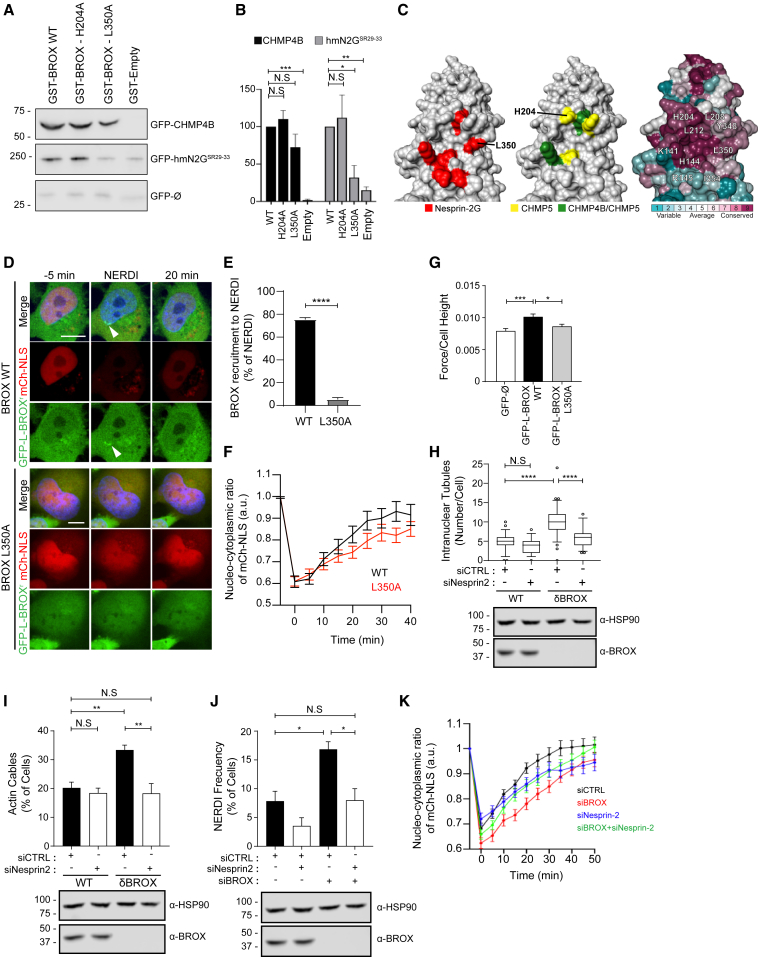
Transient nuclear envelope ruptures during interphase (NERDI) occur due to cytoskeletal compressive forces at sites of weakened lamina, and delayed NERDI repair results in genomic instability. Nuclear envelope (NE) sealing is completed by endosomal sorting complex required for transport (ESCRT) machinery. A key unanswered question is how local compressive forces are counteracted to allow efficient membrane resealing. Here, we identify the ESCRT-associated protein BROX as a crucial factor required to accelerate repair of the NE. Critically, BROX binds Nesprin-2G, a component of the linker of nucleoskeleton and cytoskeleton complex (LINC). This interaction promotes Nesprin-2G ubiquitination and facilitates the relaxation of mechanical stress imposed by compressive actin fibers at the rupture site. Thus, BROX rebalances excessive cytoskeletal forces in cells experiencing NE instability to promote effective NERDI repair. Our results demonstrate that BROX coordinates mechanoregulation with membrane remodeling to ensure the maintenance of nuclear-cytoplasmic compartmentalization and genomic stability.
核膜瞬时破裂(NERDI)发生在细胞间期,是由于核纤层薄弱部位的细胞骨架压缩力所致,NERDI 修复的延迟会导致基因组不稳定。核膜(NE)的封闭是由内体分选复合物必需的运输(ESCRT)机制完成的。一个悬而未决的关键问题是如何抵消局部压缩力以允许有效的膜重新封闭。在这里,我们确定 ESCRT 相关蛋白 BROX 是加速 NE 修复所必需的关键因素。至关重要的是,BROX 结合了核骨架和细胞骨架连接复合物(LINC)的连接蛋白 Nesprin-2G。这种相互作用促进了 Nesprin-2G 的泛素化,并有助于缓解破裂部位压缩性肌动蛋白纤维施加的机械应力。因此,BROX 在经历 NE 不稳定的细胞中重新平衡过度的细胞骨架力,以促进有效的 NERDI 修复。我们的研究结果表明,BROX 协调机械调节与膜重塑,以确保核细胞质区室的维持和基因组稳定性。