Tolonen Hanna, Reinikainen Jaakko, Koponen Päivikki, Elonheimo Hanna, Palmieri Luigi, Tijhuis Mariken J
Department of Public Health and Welfare, Finnish Institute for Health and Welfare (THL), Helsinki, Finland.
Department of Cardiovascular, Endocrine-metabolic Diseases and Ageing, Istituto Superiore di Sanità (ISS), Roma, Italy.
Arch Public Health. 2021 Nov 25;79(1):208. doi: 10.1186/s13690-021-00734-w.
Health indicators are used to monitor the health status and determinants of health of the population and population sub-groups, identify existing or emerging health problems which would require prevention and health promotion activities, help to target health care resources in the most adequate way as well as for evaluation of the success of public health actions both at the national and international level. The quality and validity of the health indicator depends both on available data and used indicator definition. In this study we will evaluate existing knowledge about comparability of different data sources for definition of health indicators, compare how selected health indicators presented in different international databases possibly differ, and finally, present the results from a case study from Finland on comparability of health indicators derived from different data sources at national level.
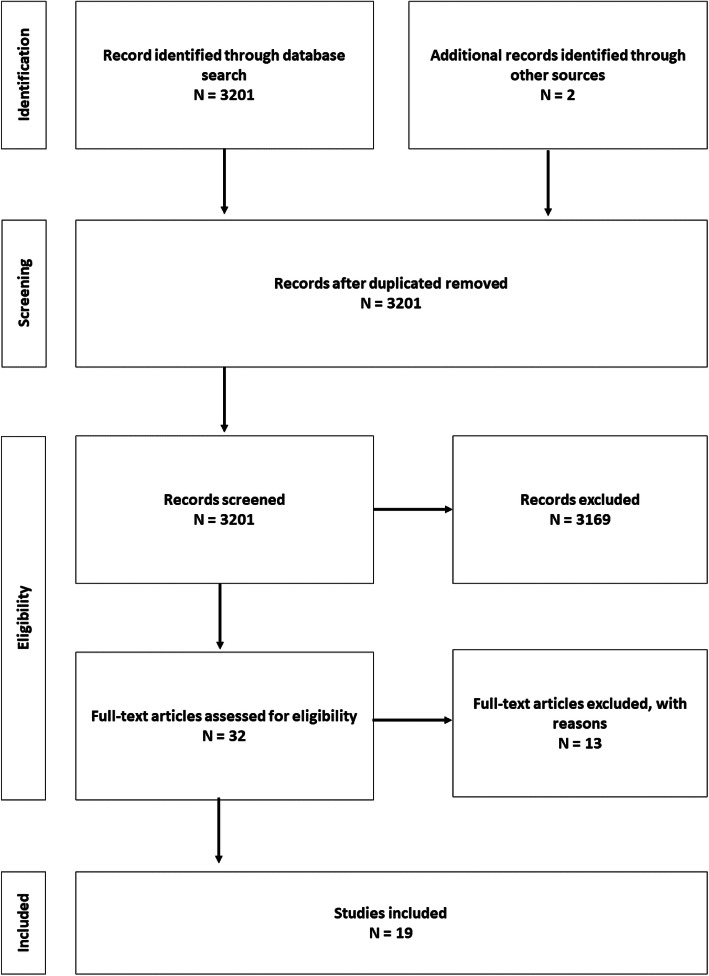
For comparisons, four health indicators were selected that were commonly available in international databases and available for the Finnish case study. These were prevalence of obesity, hypertension, diabetes, and asthma in the adult populations. Our evaluation has three parts: 1) a scoping review of the latest literature, 2) comparison of the prevalences presented in different international databases, and 3) a case study using data from Finland.
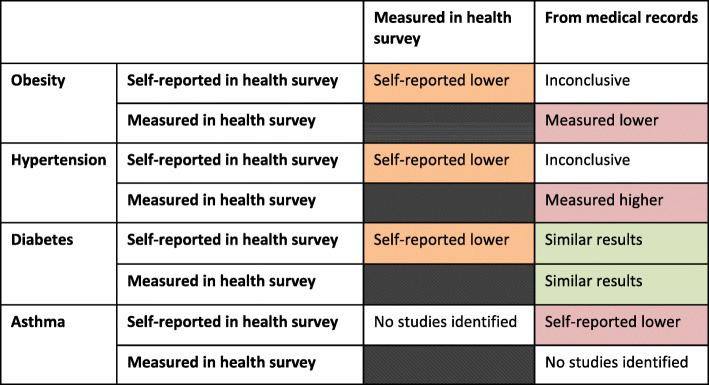
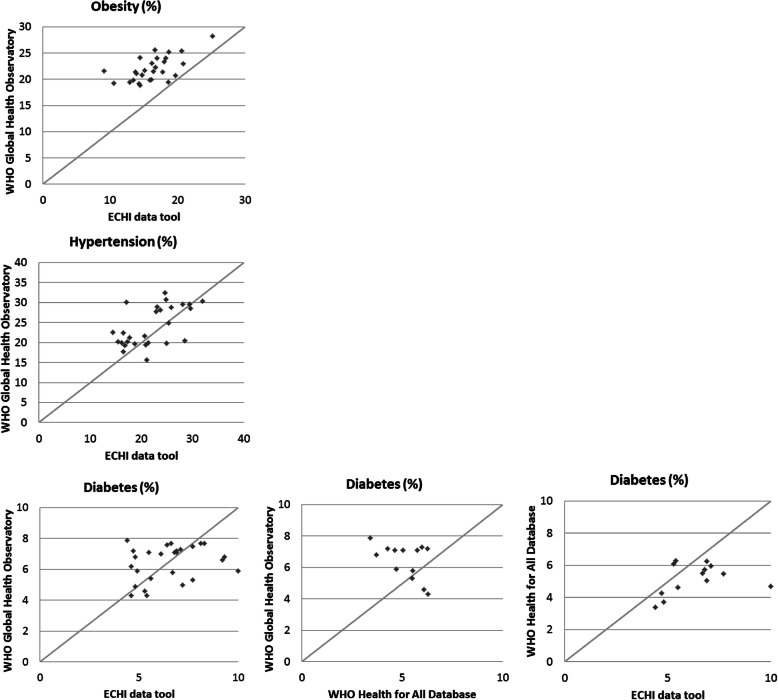
Literature shows that comparability of estimated outcomes for health indicators using different data sources such as self-reported questionnaire data from surveys, measured data from surveys or data from administrative health registers, varies between indicators. Also, the case study from Finland showed that diseases which require regular health care visits such as diabetes, comparability is high while for health outcomes which can remain asymptomatic for a long time such as hypertension, comparability is lower. In different international health related databases, country specific results differ due to variations in the used data sources but also due to differences in indicator definitions.
Reliable comparison of the health indicators over time and between regions within a country or across the countries requires common indicator definitions, similar data sources and standardized data collection methods.
健康指标用于监测人群及人群亚组的健康状况和健康决定因素,识别需要预防和健康促进活动的现有或新出现的健康问题,以最适当的方式帮助确定卫生保健资源的目标,以及评估国家和国际层面公共卫生行动的成效。健康指标的质量和有效性既取决于可用数据,也取决于所使用的指标定义。在本研究中,我们将评估关于不同数据源用于定义健康指标的可比性的现有知识,比较不同国际数据库中呈现的选定健康指标可能存在的差异,最后展示芬兰一项关于国家层面不同数据源得出的健康指标可比性的案例研究结果。
为进行比较,选择了四个在国际数据库中普遍可用且适用于芬兰案例研究的健康指标。这些指标是成年人群中肥胖、高血压、糖尿病和哮喘的患病率。我们的评估有三个部分:1)对最新文献的范围综述,2)不同国际数据库中呈现的患病率比较,3)使用芬兰数据的案例研究。
文献表明,使用不同数据源(如调查中的自我报告问卷数据、调查中的测量数据或行政卫生登记数据)估算健康指标结果的可比性因指标而异。此外,芬兰的案例研究表明,对于需要定期就医的疾病(如糖尿病),可比性较高,而对于可能长期无症状的健康结果(如高血压),可比性较低。在不同的国际健康相关数据库中,由于所用数据源的差异以及指标定义的不同,各国的具体结果也有所不同。
要在不同时间、一个国家内不同地区之间或不同国家之间对健康指标进行可靠比较,需要统一的指标定义、相似的数据源和标准化的数据收集方法。