Jödicke Ruben A, Huo Shufan, Kränkel Nicolle, Piper Sophie K, Ebinger Martin, Landmesser Ulf, Flöel Agnes, Endres Matthias, Nave Alexander H
Center for Stroke Research Berlin, Charité-Universitätsmedizin Berlin, Berlin, Germany.
Klinik und Hochschulambulanz für Neurologie, Charité-Universitätsmedizin Berlin, Berlin, Germany.
Front Neurol. 2021 Nov 8;12:731013. doi: 10.3389/fneur.2021.731013. eCollection 2021.
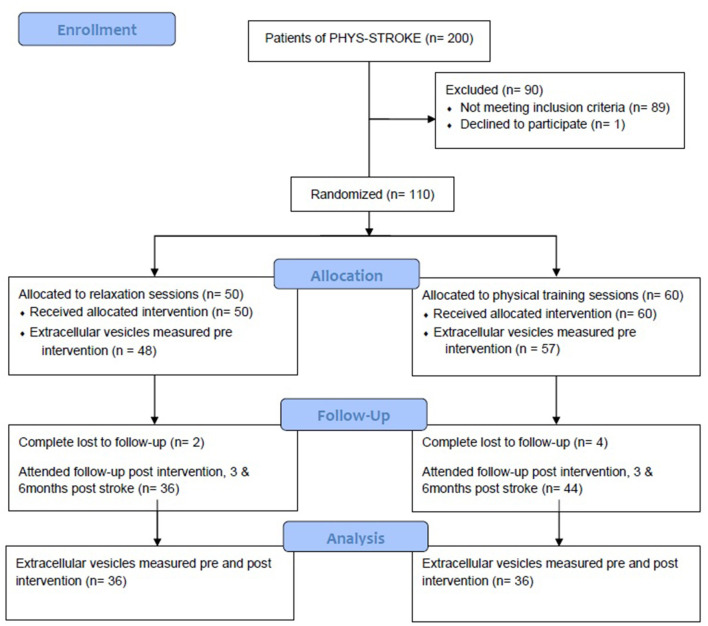
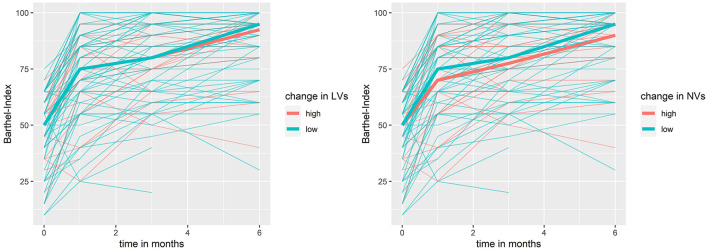
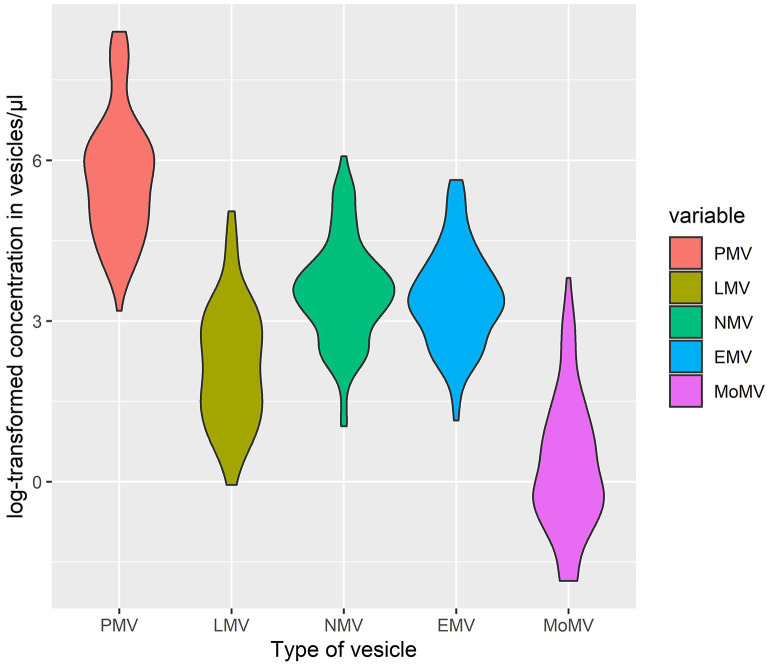
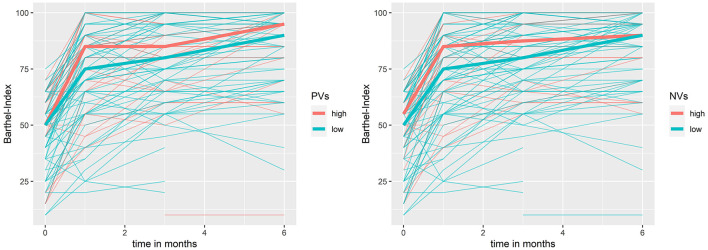
Extracellular vesicles (EV) are sub-1 μm bilayer lipid coated particles and have been shown play a role in long-term cardiovascular outcome after ischemic stroke. However, the dynamic change of EV after stroke and their implications for functional outcome have not yet been elucidated. Serial blood samples from 110 subacute ischemic stroke patients enrolled in the prospective study were analyzed. All patients participated in the trial and received 4-week aerobic training or relaxation sessions. Levels of endothelial-derived (EnV: Annexin V+, CD45-, CD41-, CD31+/CD144+/CD146+), leukocyte-derived (LV: Annexin V+, CD45+, CD41-), monocytic-derived (MoV: Annexin V+, CD41-, CD14+), neuronal-derived (NV: Annexin V+, CD41-, CD45-, CD31-, CD144-, CD146-, CD56+/CD171+/CD271+), and platelet-derived (PV: Annexin V+, CD41+) EV were assessed via fluorescence-activated cell sorting before and after the trial intervention. The levels of EV at baseline were dichotomized at the 75th percentile, with the EV levels at baseline above the 75th percentile classified as "high" otherwise as "low." The dynamic of EV was classified based on the difference between baseline and post intervention, defining increases above the 75th percentile as "high increase" otherwise as "low increase." Associations of baseline levels and change in EV concentrations with Barthel Index (BI) and cardiovascular events in the first 6 months post-stroke were analyzed using mixed model regression analyses and cox regression. Both before and after intervention PV formed the largest population of vesicles followed by NV and EnV. In mixed-model regression analyses, low NV [-8.57 (95% CI -15.53 to -1.57)] and low PV [-6.97 (95% CI -13.92 to -0.01)] at baseline were associated with lower BI in the first 6 months post-stroke. Patients with low increase in NV [8.69 (95% CI 2.08-15.34)] and LV [6.82 (95% CI 0.25-13.4)] were associated with reduced BI in the first 6 months post-stroke. Neither baseline vesicles nor their dynamic were associated with recurrent cardiovascular events. This is the first report analyzing the concentration and the dynamic of EV regarding associations with functional outcome in patients with subacute stroke. Lower levels of PV and NV at baseline were associated with a worse functional outcome in the first 6 months post-stroke. Furthermore, an increase in NV and LV over time was associated with worse BI in the first 6 months post-stroke. Further investigation of the relationship between EV and their dynamic with functional outcome post-stroke are warranted. clinicaltrials.gov/, identifier: NCT01954797.
细胞外囊泡(EV)是直径小于1μm的双层脂质包膜颗粒,已被证明在缺血性中风后的长期心血管结局中起作用。然而,中风后EV的动态变化及其对功能结局的影响尚未阐明。对参与前瞻性研究的110例亚急性缺血性中风患者的系列血样进行了分析。所有患者均参与试验并接受了为期4周的有氧训练或放松课程。通过荧光激活细胞分选术评估试验干预前后内皮来源的(EnV:膜联蛋白V +、CD45-、CD41-、CD31 + / CD144 + / CD146 +)、白细胞来源的(LV:膜联蛋白V +、CD45 +、CD41-)、单核细胞来源的(MoV:膜联蛋白V +、CD41-、CD14 +)、神经元来源的(NV:膜联蛋白V +、CD41-、CD45-、CD31-、CD144-、CD146-、CD56 + / CD171 + / CD271 +)和血小板来源的(PV:膜联蛋白V +、CD41 +)EV的水平。基线时的EV水平在第75百分位数处进行二分法划分,基线时EV水平高于第75百分位数的分类为“高”,否则为“低”。根据基线与干预后之间的差异对EV的动态进行分类,将高于第75百分位数的增加定义为“高增加”,否则为“低增加”。使用混合模型回归分析和cox回归分析中风后前6个月中EV浓度的基线水平和变化与Barthel指数(BI)和心血管事件的关联。干预前后,PV均构成最大的囊泡群体,其次是NV和EnV。在混合模型回归分析中,基线时低水平的NV [-8.57(95%CI -15.53至-1.57)]和低水平的PV [-6.97(95%CI -13.92至-0.01)]与中风后前6个月中较低的BI相关。NV [8.69(95%CI 2.08 - 15.34)]和LV [6.82(95%CI 0.25 - 13.4)]增加较低的患者与中风后前6个月中BI降低相关。基线囊泡及其动态均与复发性心血管事件无关。这是第一份分析亚急性中风患者中EV浓度和动态与功能结局关联的报告。基线时较低水平的PV和NV与中风后前6个月中较差的功能结局相关。此外,随着时间的推移,NV和LV的增加与中风后前6个月中较差的BI相关。有必要进一步研究EV及其动态与中风后功能结局之间的关系。clinicaltrials.gov/,标识符:NCT01954797。