Department of Hepatopancreatobiliary Surgery, the Second People' s Hospital of Yibin, Yibin, Sichuan, 644000, P.R. China.
Center for Diagnosis and Treatment of Digestive Diseases, the Second People' s Hospital of Yibin, Yibin, Sichuan, 644000, P.R. China.
BMC Cancer. 2021 Nov 25;21(1):1276. doi: 10.1186/s12885-021-08982-3.
Cancer development is strictly correlated to composition and physical properties of the extracellular matrix. Particularly, a higher matrix stiffness has been demonstrated to promote tumor sustained growth. Our purpose was to explore the role of matrix stiffness in liver cancer development.
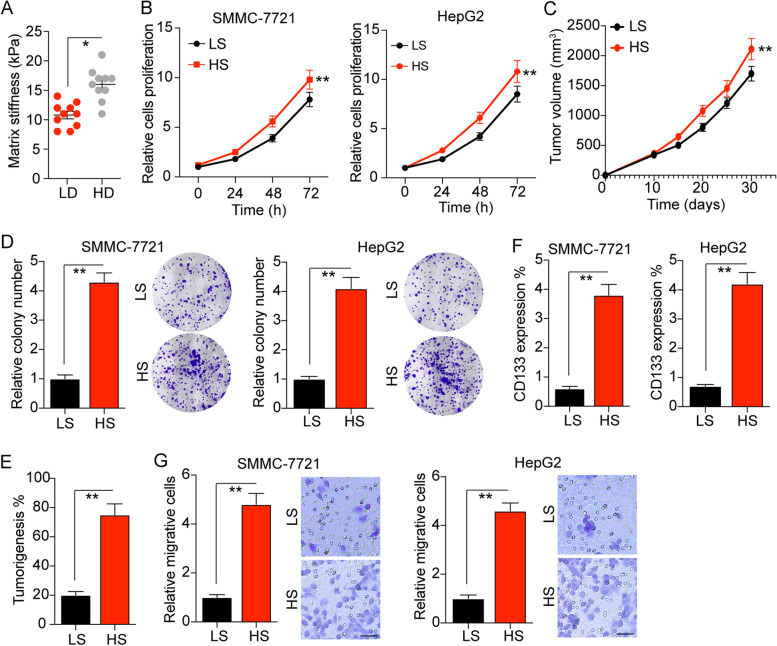
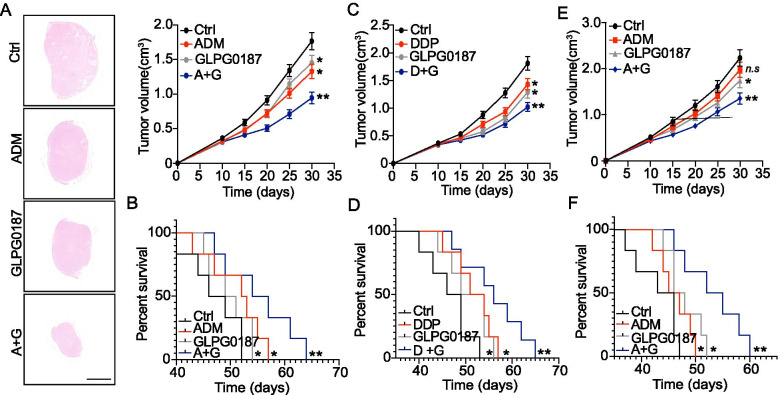
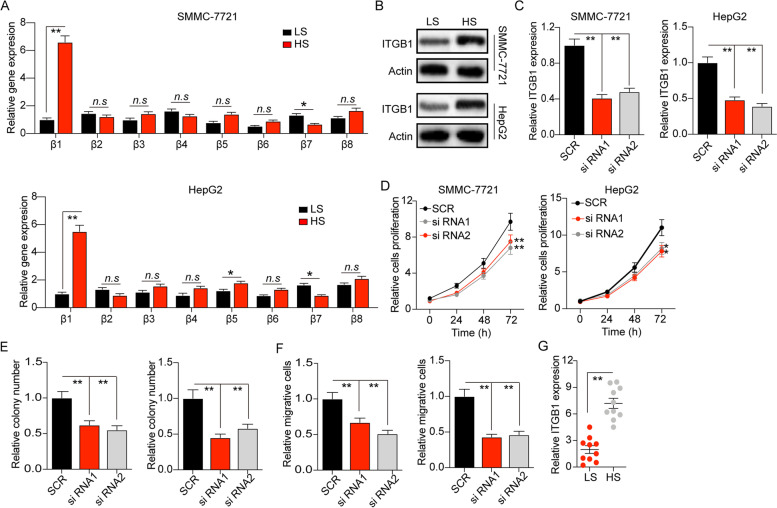
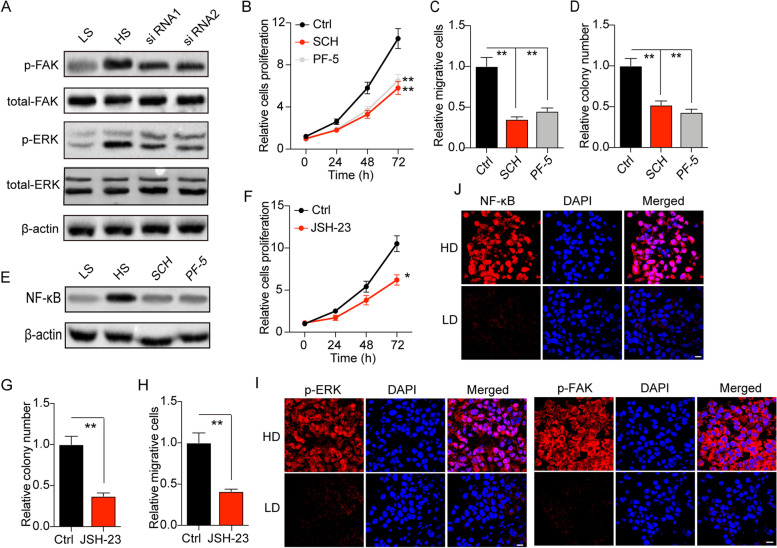
The matrix stiffness of tumor tissues was determined by atomic force microscopy (AFM) analysis. In vitro, we used a tunable Polyacrylamide (PA) hydrogels culture system for liver cancer cells culture. The expression level of integrin β1, phosphorylated FAK, ERK1/2, and NF-κB in SMMC-7721 cells was measured by western blotting analysis. We performed MTT, colony formation and transwell assay to examine the tumorigenic and metastatic potential of SMMC-7721 cells cultured on the tunable PA hydrogels. SMMC-7721 cancer xenografts were established to explore the anticancer effects of integrin inhibitors.
Our study provided evidence that liver tumor tissues from metastatic patients possessed a higher matrix stiffness, when compared to the non-metastatic group. Liver cancer cells cultured on high stiffness PA hydrogels displayed enhanced tumorigenic potential and migrative properties. Mechanistically, activation of integrin β1/FAK/ ERK1/2/NF-κB signaling pathway was observed in SMMC-7721 cells cultured on high stiffness PA hydrogels. Inhibition of ERK1/2, FAK, and NF-κB signaling suppressed the pro-tumor effects induced by matrix stiffness. Combination of chemotherapy and integrin β1 inhibitor suppressed the tumor growth and prolonged survival time in hepatocellular cancer xenografts.
A higher matrix stiffness equipped tumor cells with enhanced stemness and proliferative characteristics, which was dependent on the activation of integrin β1/FAK/ERK1/2/NF-κB signaling pathway. Blockade of integrin signals efficiently improved the outcome of chemotherapy, which described an innovative approach for liver cancer treatment.
癌症的发展与细胞外基质的组成和物理性质密切相关。特别是,较高的基质硬度已被证明可以促进肿瘤的持续生长。我们的目的是探索基质硬度在肝癌发展中的作用。
通过原子力显微镜(AFM)分析确定肿瘤组织的基质硬度。在体外,我们使用可调聚丙酰胺(PA)水凝胶培养系统培养肝癌细胞。通过 Western blot 分析测量 SMMC-7721 细胞中整合素 β1、磷酸化 FAK、ERK1/2 和 NF-κB 的表达水平。我们进行 MTT、集落形成和 Transwell 分析,以检查在可调 PA 水凝胶上培养的 SMMC-7721 细胞的致瘤和转移潜能。建立 SMMC-7721 癌症异种移植模型,以探索整合素抑制剂的抗癌作用。
我们的研究提供了证据,即与非转移性组相比,转移性患者的肝肿瘤组织具有更高的基质硬度。在高硬度 PA 水凝胶上培养的肝癌细胞显示出增强的致瘤潜力和迁移特性。在机制上,在高硬度 PA 水凝胶上培养的 SMMC-7721 细胞中观察到整合素 β1/FAK/ERK1/2/NF-κB 信号通路的激活。抑制 ERK1/2、FAK 和 NF-κB 信号通路抑制了基质硬度诱导的促肿瘤作用。化疗和整合素β1 抑制剂的联合抑制了肝癌异种移植瘤的生长并延长了生存时间。
更高的基质硬度赋予肿瘤细胞增强的干性和增殖特性,这依赖于整合素β1/FAK/ERK1/2/NF-κB 信号通路的激活。阻断整合素信号有效地改善了化疗的效果,为肝癌治疗提供了一种创新方法。