Michael Smith Laboratories and Department of Microbiology and Immunology, University of British Columbia, Vancouver, BC, Canada.
Unité de Pathogénie Microbienne Moléculaire, Institut Pasteur, Paris, France.
Nat Commun. 2021 Nov 25;12(1):6860. doi: 10.1038/s41467-021-27191-x.
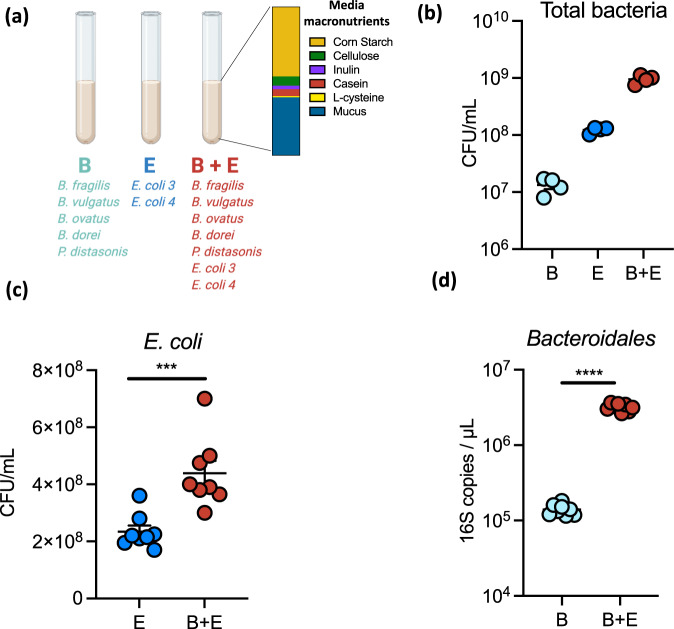
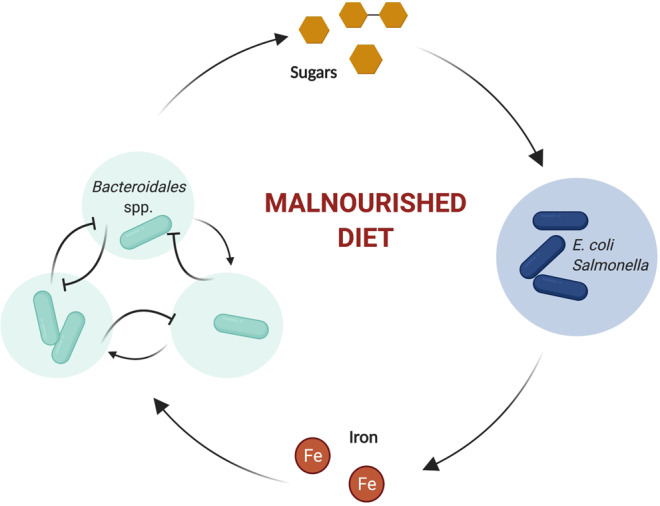
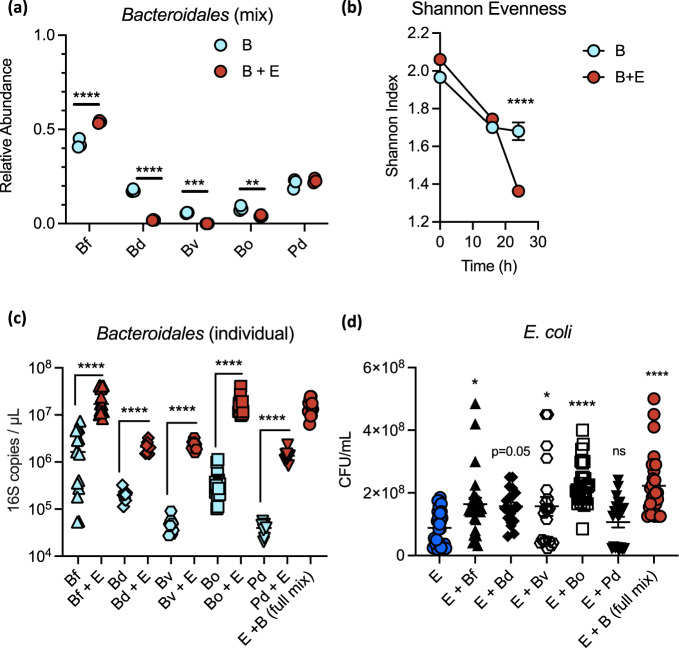
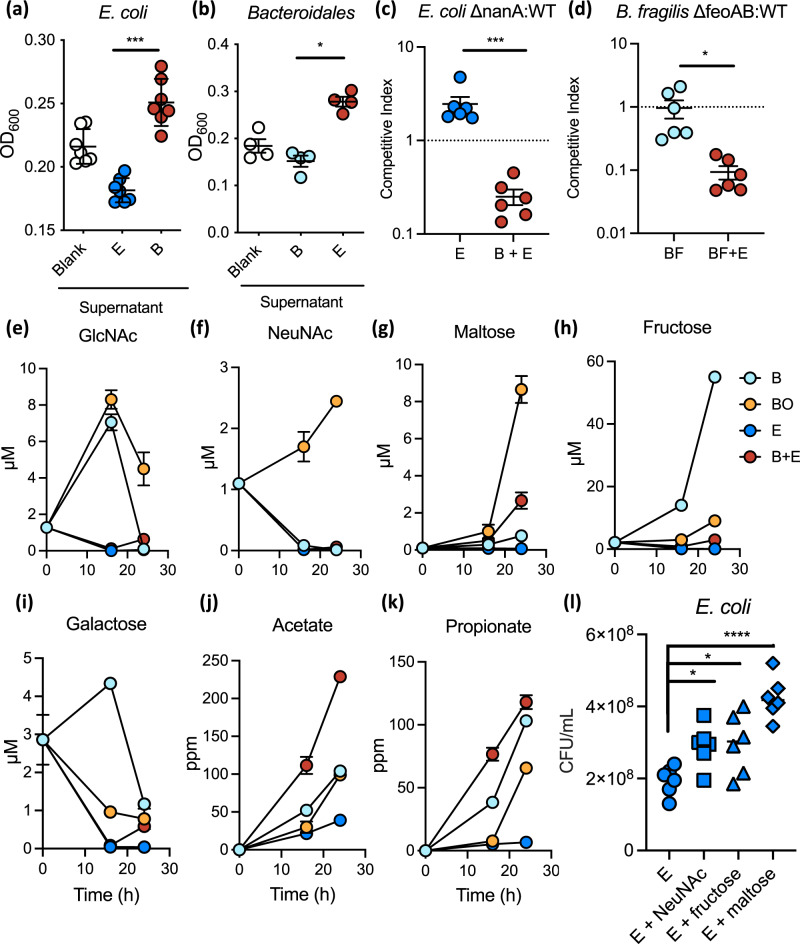
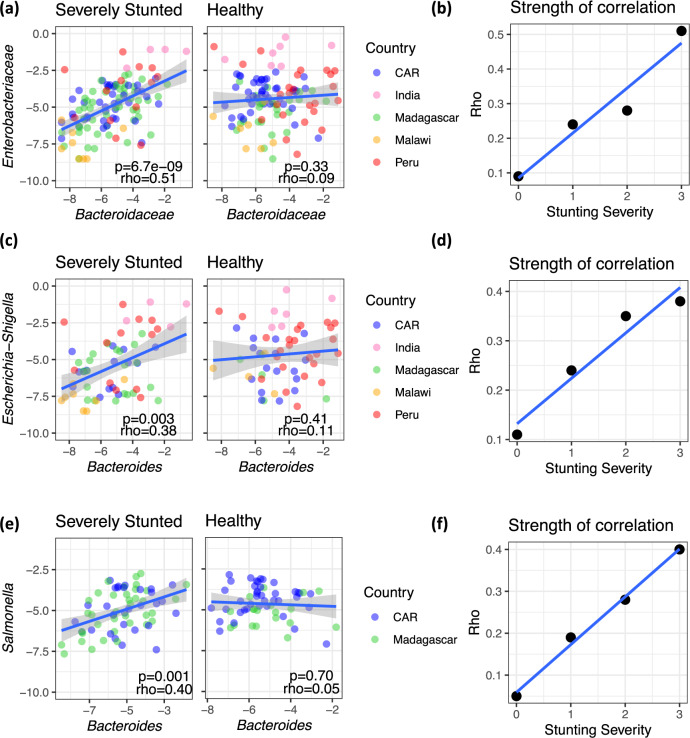
Child undernutrition is a global health issue associated with a high burden of infectious disease. Undernourished children display an overabundance of intestinal pathogens and pathobionts, and these bacteria induce enteric dysfunction in undernourished mice; however, the cause of their overgrowth remains poorly defined. Here, we show that disease-inducing human isolates of Enterobacteriaceae and Bacteroidales spp. are capable of multi-species symbiotic cross-feeding, resulting in synergistic growth of a mixed community in vitro. Growth synergy occurs uniquely under malnourished conditions limited in protein and iron: in this context, Bacteroidales spp. liberate diet- and mucin-derived sugars and Enterobacteriaceae spp. enhance the bioavailability of iron. Analysis of human microbiota datasets reveals that Bacteroidaceae and Enterobacteriaceae are strongly correlated in undernourished children, but not in adequately nourished children, consistent with a diet-dependent growth synergy in the human gut. Together these data suggest that dietary cross-feeding fuels the overgrowth of pathobionts in undernutrition.
儿童营养不足是一个全球性的健康问题,与传染病负担沉重有关。营养不良的儿童肠道中存在过多的病原体和条件致病菌,这些细菌会导致营养不良的小鼠出现肠道功能障碍;然而,它们过度生长的原因仍不清楚。在这里,我们表明,引起疾病的人类肠杆菌科和拟杆菌科的分离株能够进行多物种共生交叉喂养,从而导致体外混合群落的协同生长。生长协同作用仅在营养不良的条件下发生,这种条件下蛋白质和铁有限:在这种情况下,拟杆菌科释放饮食和粘蛋白衍生的糖,肠杆菌科增强铁的生物利用度。对人类微生物组数据集的分析表明,拟杆菌科和肠杆菌科在营养不良的儿童中呈强相关,但在营养充足的儿童中不相关,这与人类肠道中依赖饮食的生长协同作用一致。这些数据表明,饮食交叉喂养为营养不良时条件致病菌的过度生长提供了燃料。