CAS Center for Excellence in Molecular Cell Science, Shanghai Institute of Biochemistry and Cell Biology, Chinese Academy of Sciences, University of Chinese Academy of Sciences, 333 Haike Road, Shanghai, 201210, China.
Institute of Precision Medicine, the Ninth People's Hospital, Shanghai Jiao Tong University School of Medicine, 115 Jinzun Road, Shanghai, 200125, China.
Nat Commun. 2021 Nov 25;12(1):6869. doi: 10.1038/s41467-021-27244-1.
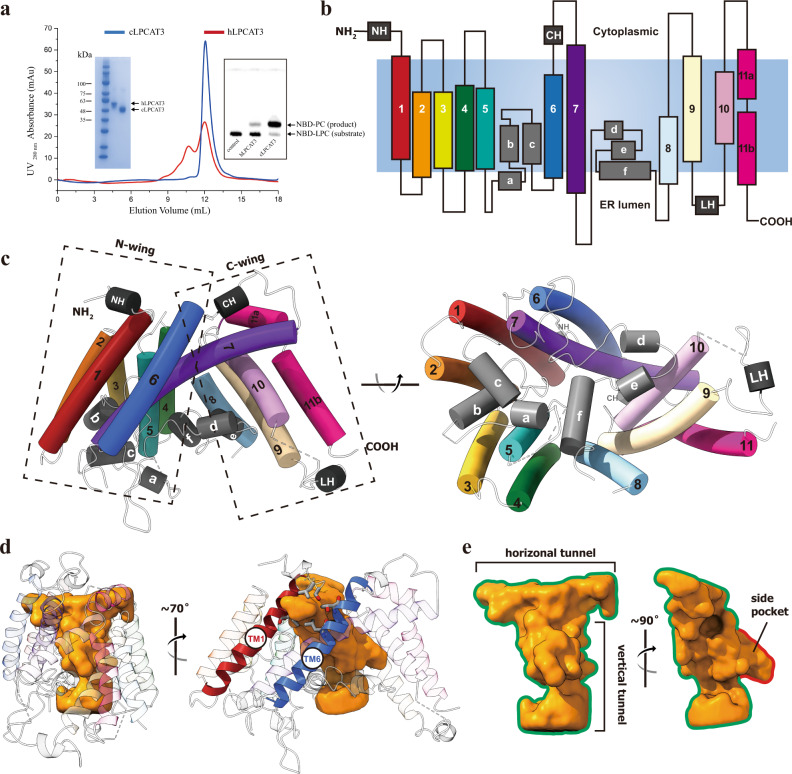
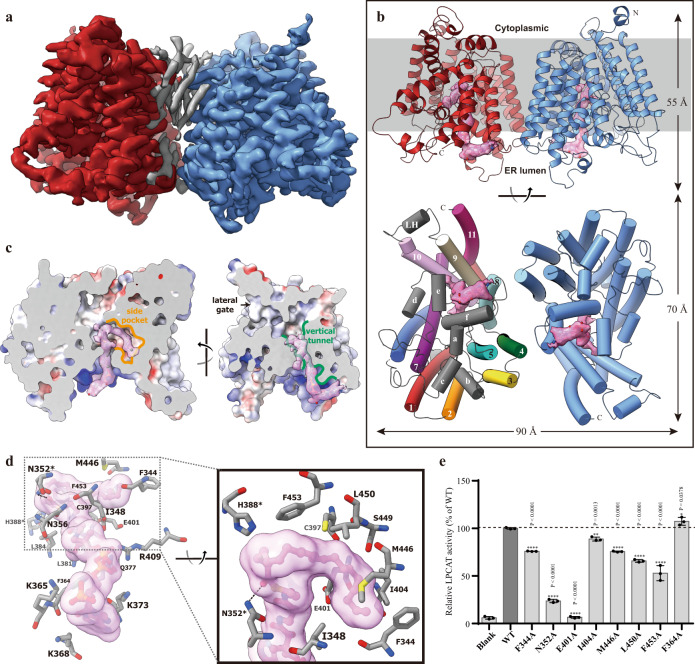
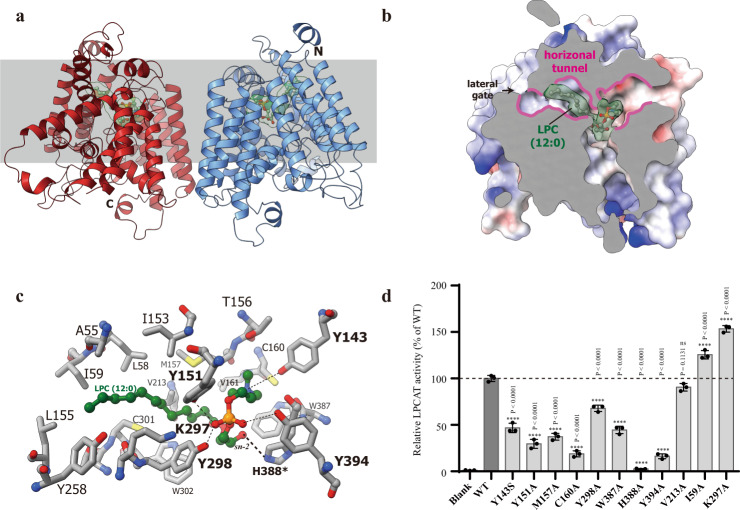
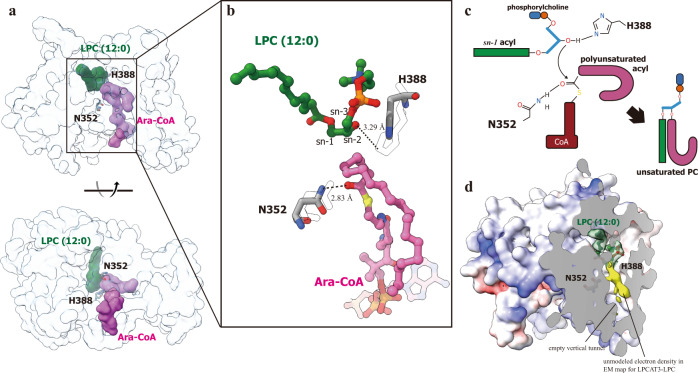
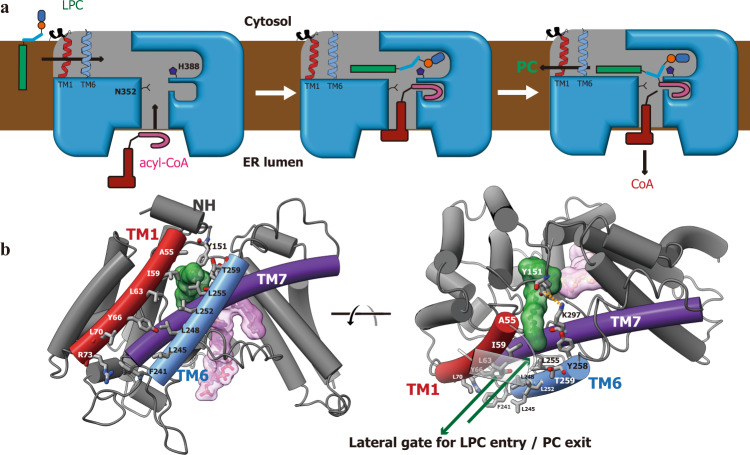
As the major component of cell membranes, phosphatidylcholine (PC) is synthesized de novo in the Kennedy pathway and then undergoes extensive deacylation-reacylation remodeling via Lands' cycle. The re-acylation is catalyzed by lysophosphatidylcholine acyltransferase (LPCAT) and among the four LPCAT members in human, the LPCAT3 preferentially introduces polyunsaturated acyl onto the sn-2 position of lysophosphatidylcholine, thereby modulating the membrane fluidity and membrane protein functions therein. Combining the x-ray crystallography and the cryo-electron microscopy, we determined the structures of LPCAT3 in apo-, acyl donor-bound, and acyl receptor-bound states. A reaction chamber was revealed in the LPCAT3 structure where the lysophosphatidylcholine and arachidonoyl-CoA were positioned in two tunnels connected near to the catalytic center. A side pocket was found expanding the tunnel for the arachidonoyl CoA and holding the main body of arachidonoyl. The structural and functional analysis provides the basis for the re-acylation of lysophosphatidylcholine and the substrate preference during the reactions.
作为细胞膜的主要成分,磷脂酰胆碱(PC)是在肯尼通路中从头合成的,然后通过兰兹循环进行广泛的去酰基-再酰基重塑。再酰基化由溶血磷脂酰胆碱酰基转移酶(LPCAT)催化,在人类的四个 LPCAT 成员中,LPCAT3 优先将多不饱和酰基引入溶血磷脂酰胆碱的 sn-2 位,从而调节膜的流动性和其中的膜蛋白功能。我们结合 X 射线晶体学和冷冻电子显微镜,确定了 LPCAT3 在 apo、酰基供体结合和酰基受体结合状态下的结构。在 LPCAT3 结构中揭示了一个反应室,其中溶血磷脂酰胆碱和花生四烯酰辅酶 A 位于靠近催化中心的两个连接的隧道中。发现了一个侧袋,用于扩展花生四烯酰辅酶 A 的隧道并容纳花生四烯酰基的主体。结构和功能分析为溶血磷脂酰胆碱的再酰基化和反应过程中的底物偏好提供了基础。