Laboratory of Reproductive Biology, Graduate School of Integrated Sciences for Life, Hiroshima University, Higashi-Hiroshima, Japan.
Department of Molecular and Cellular Biology, Baylor College of Medicine, Houston, Texas, USA.
Commun Biol. 2021 Nov 25;4(1):1334. doi: 10.1038/s42003-021-02849-w.
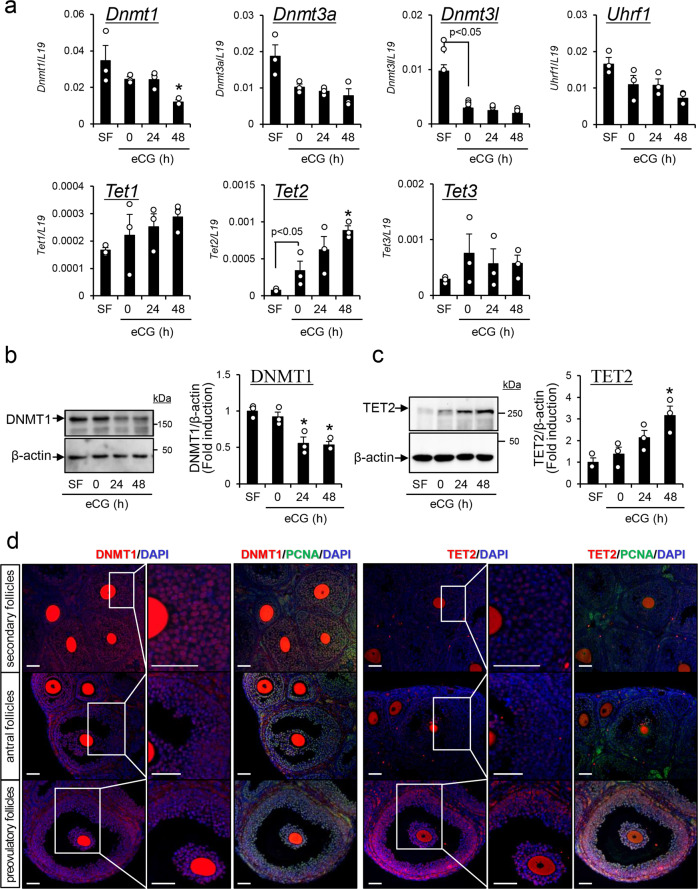
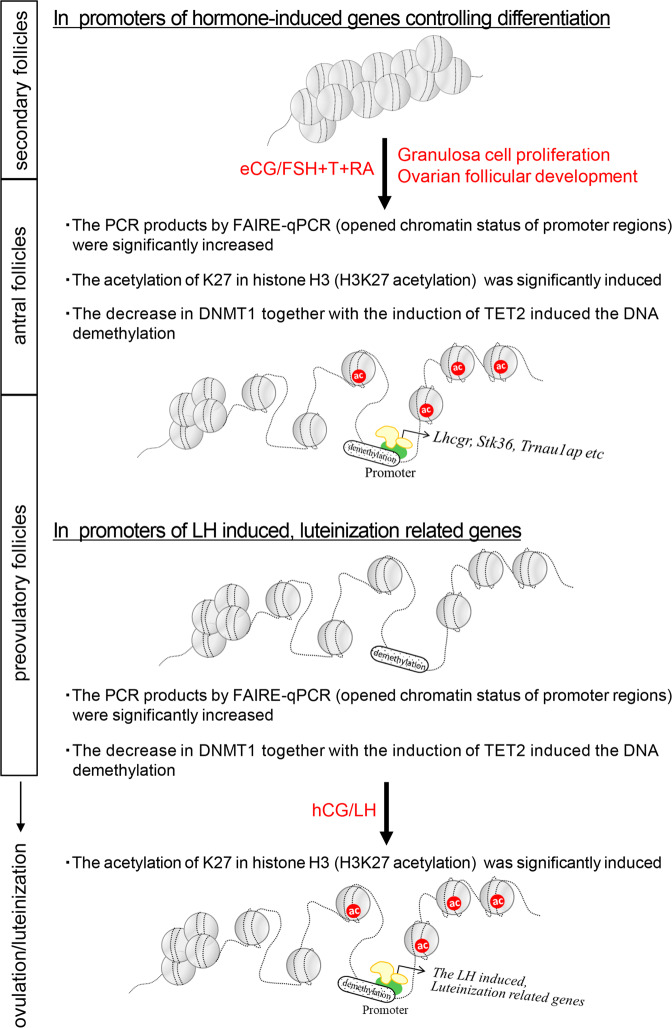
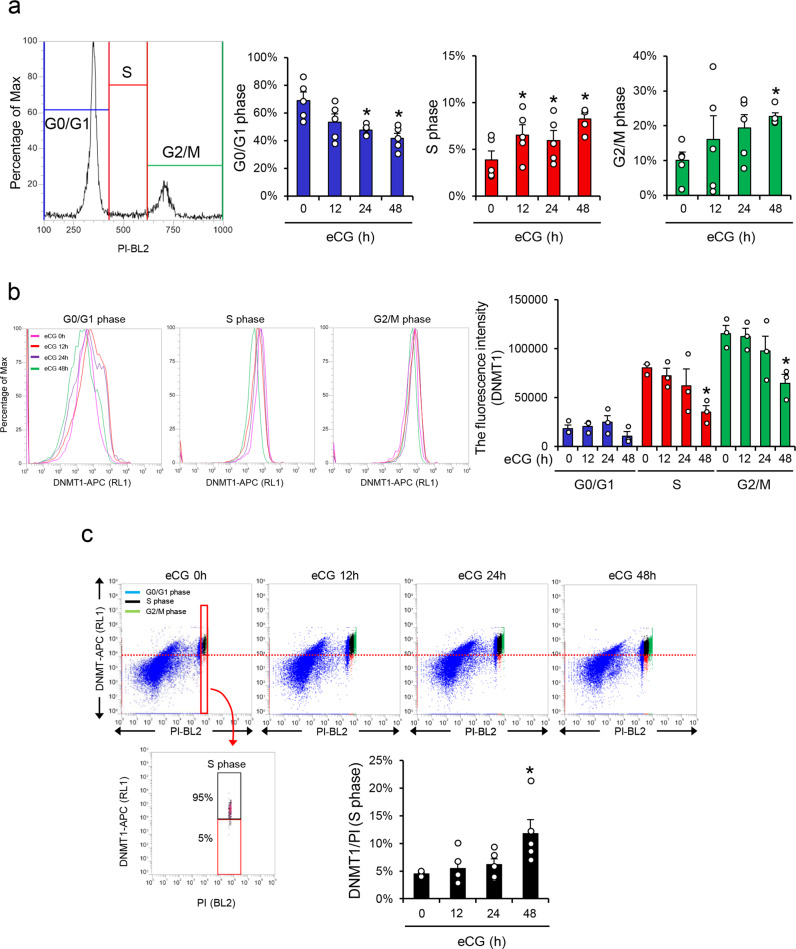
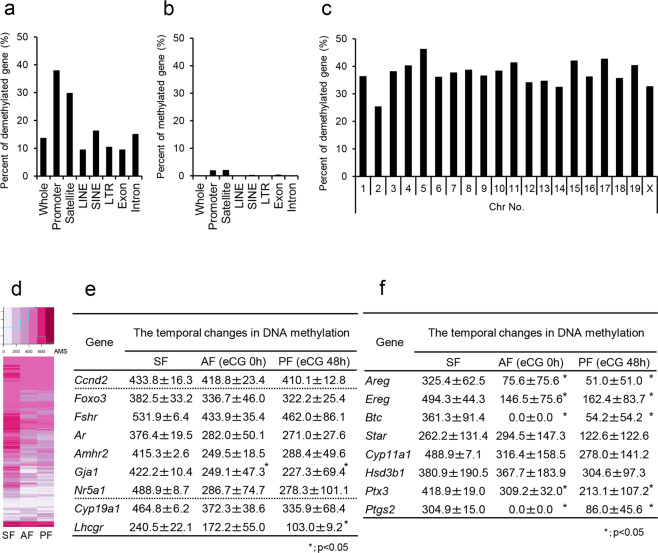
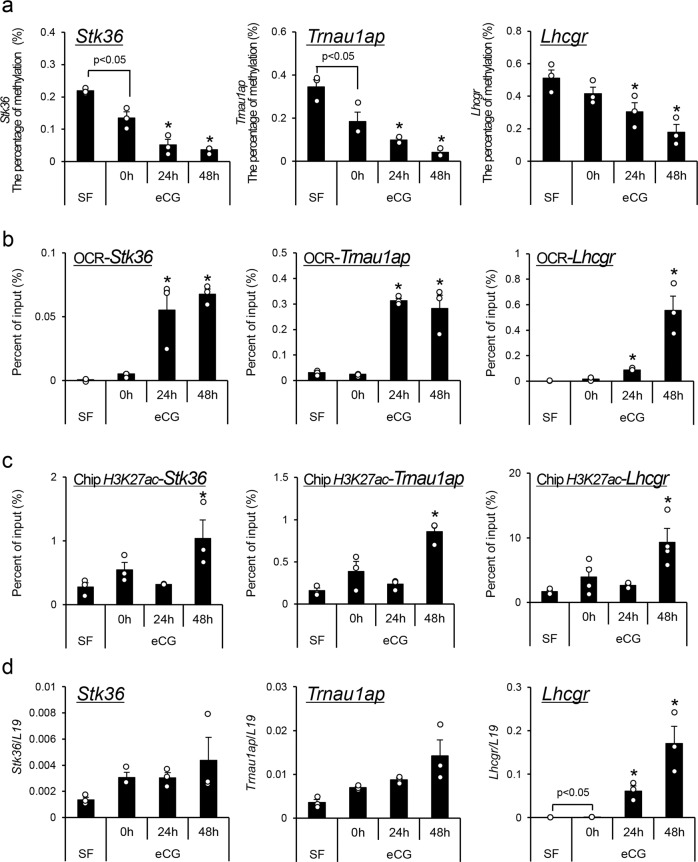
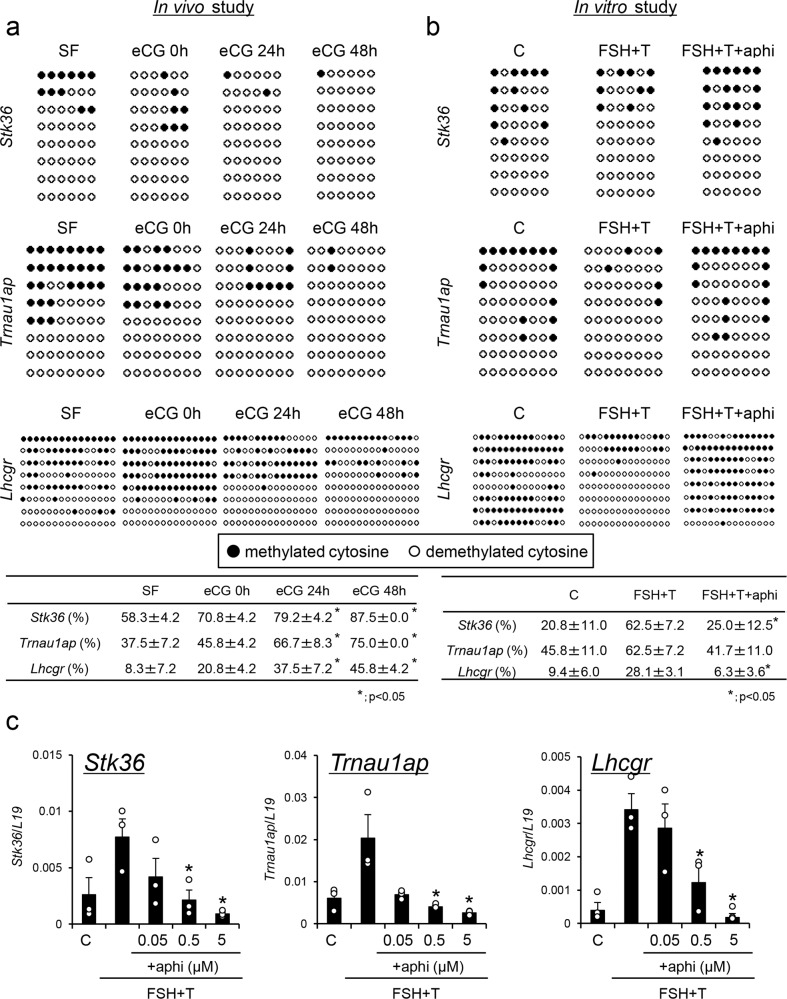
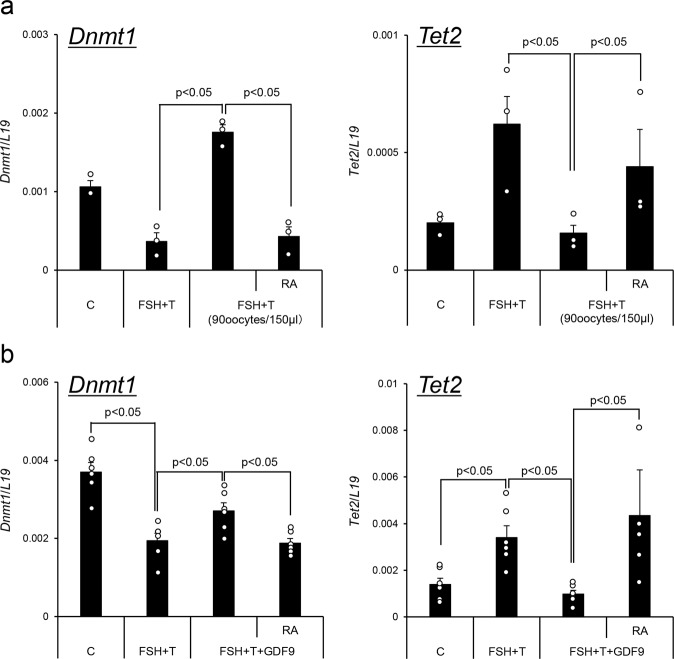
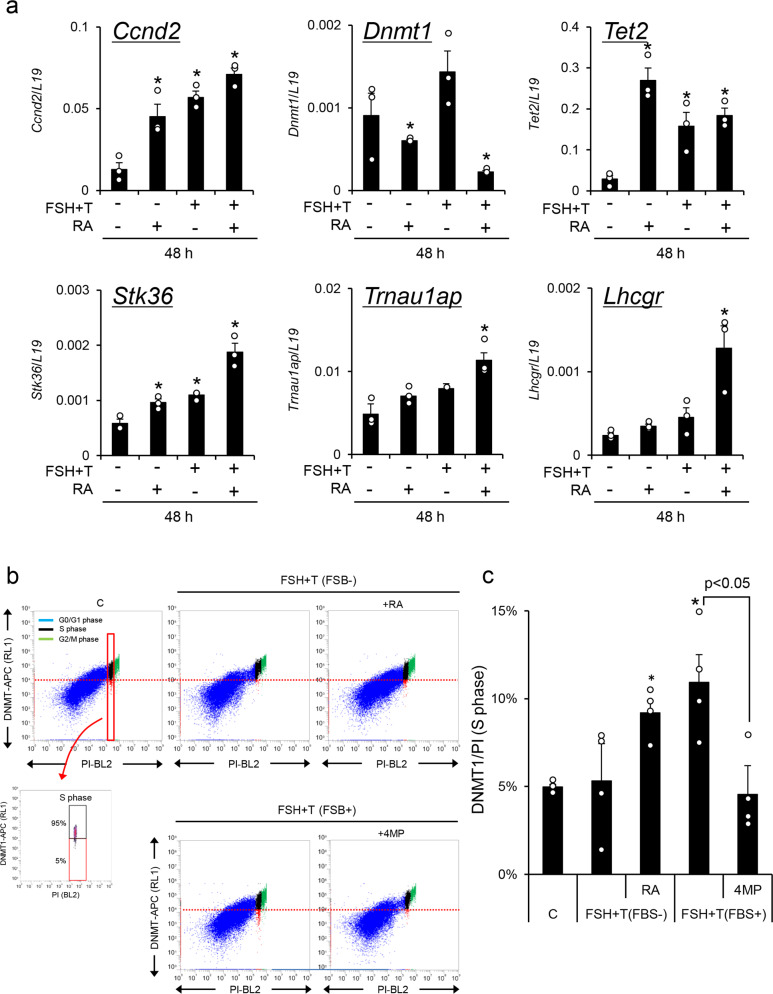
During ovarian follicular development, granulosa cells proliferate and progressively differentiate to support oocyte maturation and ovulation. To determine the underlying links between proliferation and differentiation in granulosa cells, we determined changes in 1) the expression of genes regulating DNA methylation and 2) DNA methylation patterns, histone acetylation levels and genomic DNA structure. In response to equine chorionic gonadotropin (eCG), granulosa cell proliferation increased, DNA methyltransferase (DNMT1) significantly decreased and Tet methylcytosine dioxygenase 2 (TET2) significantly increased in S-phase granulosa cells. Comprehensive MeDIP-seq analyses documented that eCG treatment decreased methylation of promoter regions in approximately 40% of the genes in granulosa cells. The expression of specific demethylated genes was significantly increased in association with specific histone modifications and changes in DNA structure. These epigenetic processes were suppressed by a cell cycle inhibitor. Based on these results, we propose that the timing of sequential epigenetic events is essential for progressive, stepwise changes in granulosa cell differentiation.
在卵巢卵泡发育过程中,颗粒细胞增殖并逐渐分化,以支持卵母细胞成熟和排卵。为了确定颗粒细胞增殖和分化之间的潜在联系,我们确定了 1)调节 DNA 甲基化的基因表达的变化和 2)DNA 甲基化模式、组蛋白乙酰化水平和基因组 DNA 结构的变化。在对马绒毛膜促性腺激素(eCG)的反应中,颗粒细胞增殖增加,S 期颗粒细胞中的 DNA 甲基转移酶(DNMT1)显著减少,Tet 甲基胞嘧啶双加氧酶 2(TET2)显著增加。全面的 MeDIP-seq 分析记录表明,eCG 处理降低了颗粒细胞中约 40%基因启动子区域的甲基化。与特定的组蛋白修饰和 DNA 结构变化相关的特定去甲基化基因的表达显著增加。这些表观遗传过程被细胞周期抑制剂所抑制。基于这些结果,我们提出,连续的表观遗传事件的时间安排对于颗粒细胞分化的渐进、逐步变化是至关重要的。