Jiang Chen, Diao Fan, Sang Yong-Juan, Xu Na, Zhu Rui-Lou, Wang Xiu-Xing, Chen Zhong, Tao Wei-Wei, Yao Bing, Sun Hai-Xiang, Huang Xing-Xu, Xue Bin, Li Chao-Jun
MOE Key Laboratory of Model Animal for Disease Study, Model Animal Research Center and School of Medicine, Nanjing University, National Resource Centre for Mutant Mice, Nanjing, China.
Collaborative Innovation Platform for Reproductive Biology and Technology of the Medical School of Nanjing University, Nanjing, China.
PLoS Genet. 2017 Jan 10;13(1):e1006535. doi: 10.1371/journal.pgen.1006535. eCollection 2017 Jan.
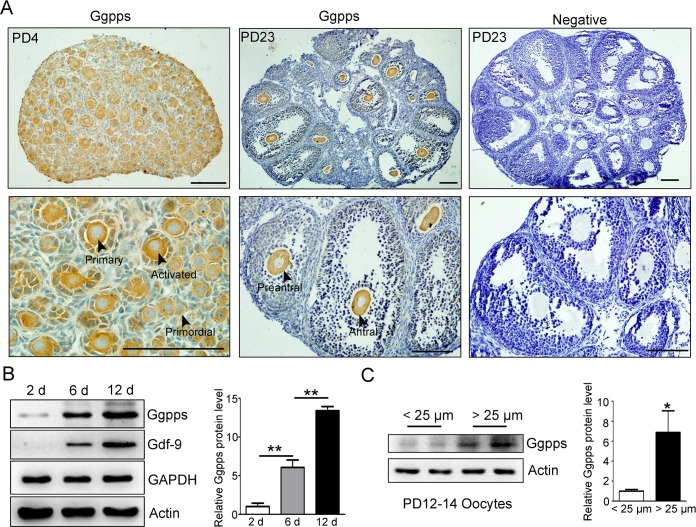
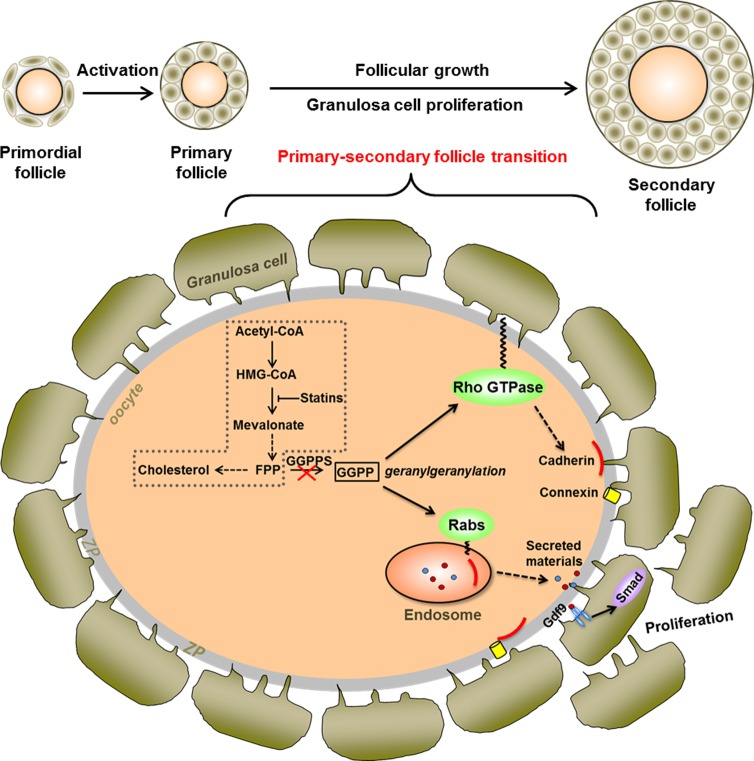
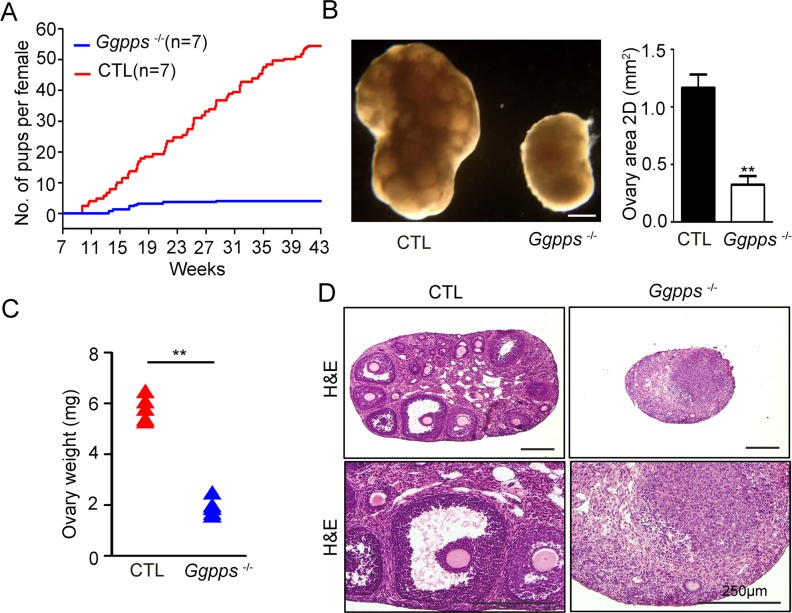
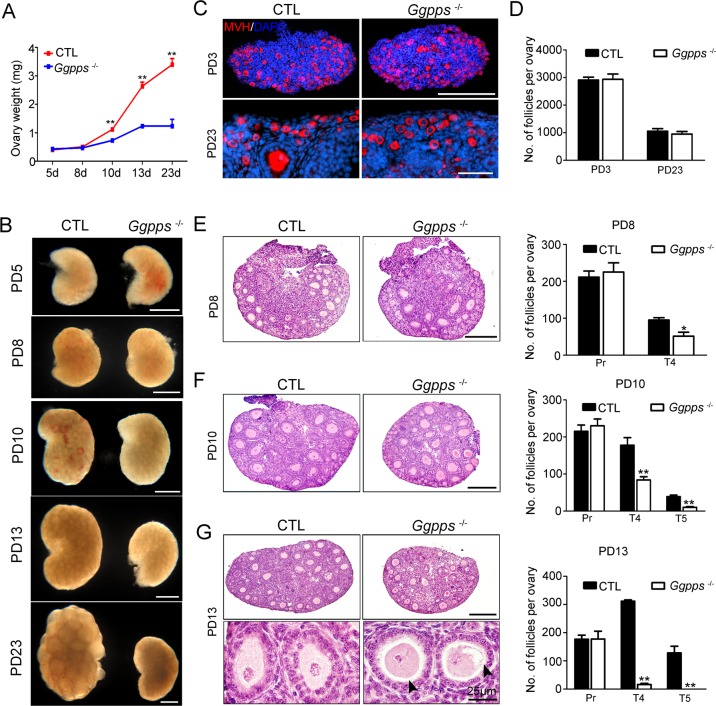
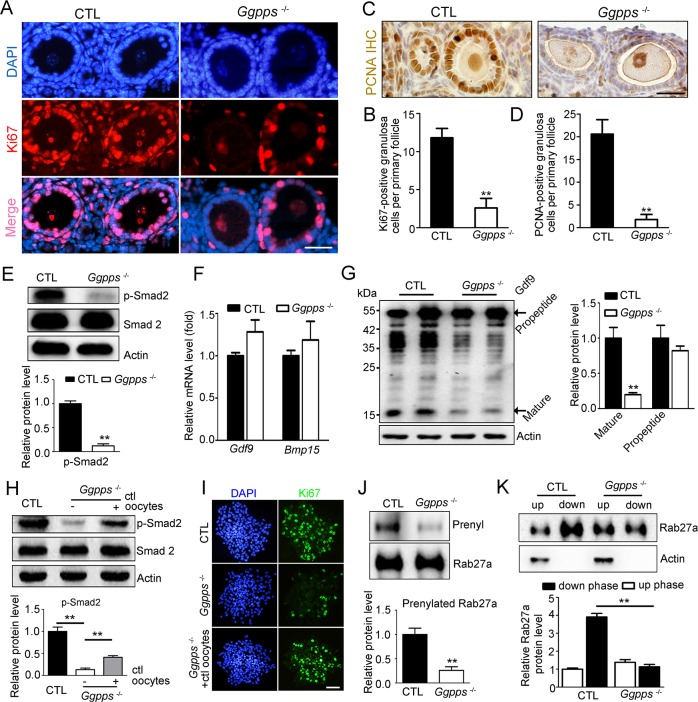
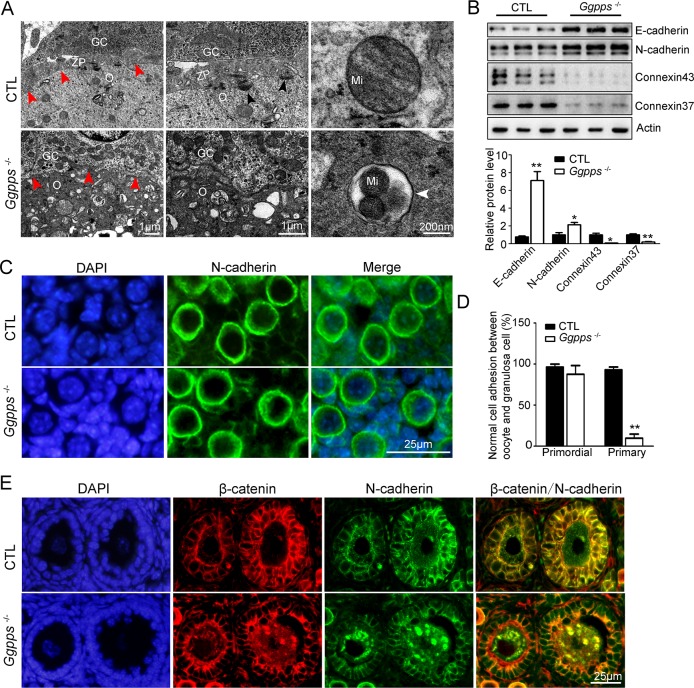
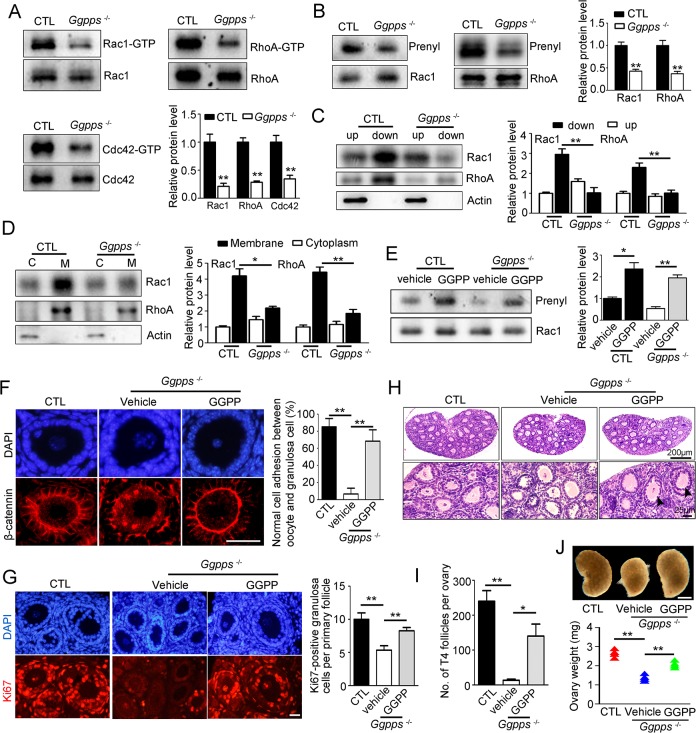
Folliculogenesis is a progressive and highly regulated process, which is essential to provide ova for later reproductive life, requires the bidirectional communication between the oocyte and granulosa cells. This physical connection-mediated communication conveys not only the signals from the oocyte to granulosa cells that regulate their proliferation but also metabolites from the granulosa cells to the oocyte for biosynthesis. However, the underlying mechanism of establishing this communication is largely unknown. Here, we report that oocyte geranylgeranyl diphosphate (GGPP), a metabolic intermediate involved in protein geranylgeranylation, is required to establish the oocyte-granulosa cell communication. GGPP and geranylgeranyl diphosphate synthase (Ggpps) levels in oocytes increased during early follicular development. The selective depletion of GGPP in mouse oocytes impaired the proliferation of granulosa cells, primary-secondary follicle transition and female fertility. Mechanistically, GGPP depletion inhibited Rho GTPase geranylgeranylation and its GTPase activity, which was responsible for the accumulation of cell junction proteins in the oocyte cytoplasm and the failure to maintain physical connection between oocyte and granulosa cells. GGPP ablation also blocked Rab27a geranylgeranylation, which might account for the impaired secretion of oocyte materials such as Gdf9. Moreover, GGPP administration restored the defects in oocyte-granulosa cell contact, granulosa cell proliferation and primary-secondary follicle transition in Ggpps depletion mice. Our study provides the evidence that GGPP-mediated protein geranylgeranylation contributes to the establishment of oocyte-granulosa cell communication and then regulates the primary-secondary follicle transition, a key phase of folliculogenesis essential for female reproductive function.
卵泡发生是一个渐进且高度受调控的过程,对于为后期生殖生活提供卵子至关重要,它需要卵母细胞与颗粒细胞之间的双向通讯。这种由物理连接介导的通讯不仅传递从卵母细胞到颗粒细胞的信号以调节其增殖,还传递从颗粒细胞到卵母细胞的代谢物用于生物合成。然而,建立这种通讯的潜在机制在很大程度上尚不清楚。在此,我们报告卵母细胞香叶基香叶基二磷酸(GGPP),一种参与蛋白质香叶基香叶基化的代谢中间体,是建立卵母细胞 - 颗粒细胞通讯所必需的。在卵泡早期发育过程中,卵母细胞中的GGPP和香叶基香叶基二磷酸合酶(Ggpps)水平升高。小鼠卵母细胞中GGPP的选择性耗竭会损害颗粒细胞的增殖、初级 - 次级卵泡转变以及雌性生育能力。从机制上讲,GGPP耗竭会抑制Rho GTP酶的香叶基香叶基化及其GTP酶活性,这导致细胞连接蛋白在卵母细胞细胞质中积累以及无法维持卵母细胞与颗粒细胞之间的物理连接。GGPP缺失还会阻断Rab27a的香叶基香叶基化,这可能解释了卵母细胞物质如Gdf9分泌受损的原因。此外,给予GGPP可恢复Ggpps耗竭小鼠中卵母细胞 - 颗粒细胞接触、颗粒细胞增殖和初级 - 次级卵泡转变的缺陷。我们的研究提供了证据,表明GGPP介导的蛋白质香叶基香叶基化有助于建立卵母细胞 - 颗粒细胞通讯,进而调节初级 - 次级卵泡转变,这是卵泡发生中对雌性生殖功能至关重要的关键阶段。