Zhang Xue, Wei Xuan, Bai Gaigai, Huang Xueyao, Hu Shunxue, Mao Hongluan, Liu Peishu
Department of Obstetrics and Gynecology, Qilu Hospital of Shandong University, Jinan, Shandong, People's Republic of China.
Key Laboratory of Gynecology Oncology of Shandong Province, Qilu Hospital of Shandong University, Jinan, Shandong, People's Republic of China.
Cancer Manag Res. 2021 Nov 16;13:8629-8646. doi: 10.2147/CMAR.S336672. eCollection 2021.
Ovarian cancer is the most lethal gynecologic malignancy. Resistance to platinum-based chemotherapy affects the overall survival of patients. This study used an integrated bioinformatics to find the poorly understood molecular mechanisms underlying platinum resistance in ovarian cancer.
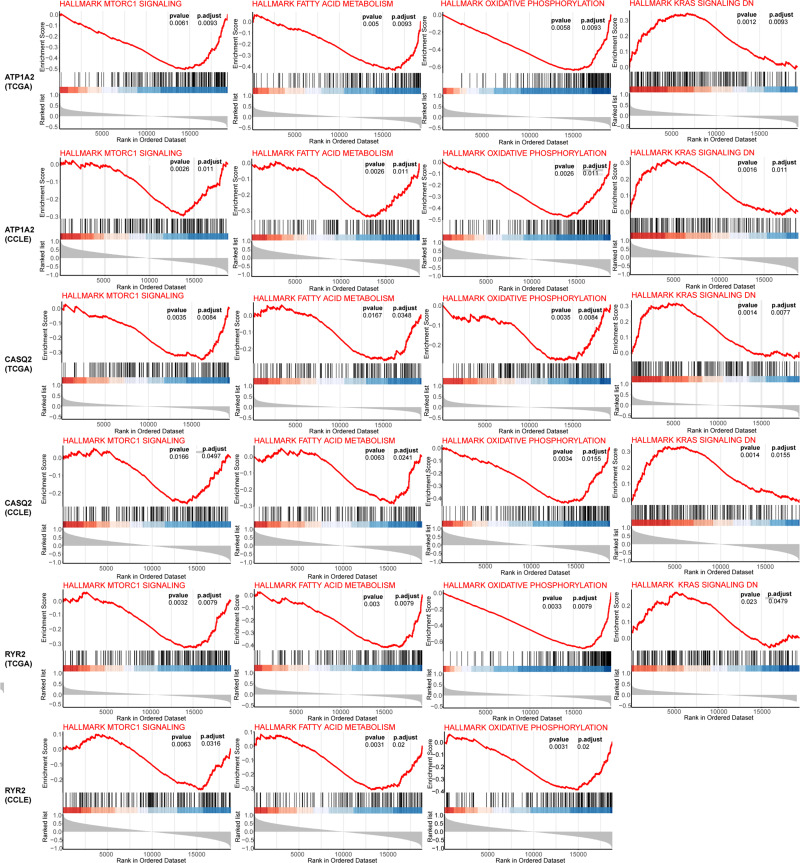
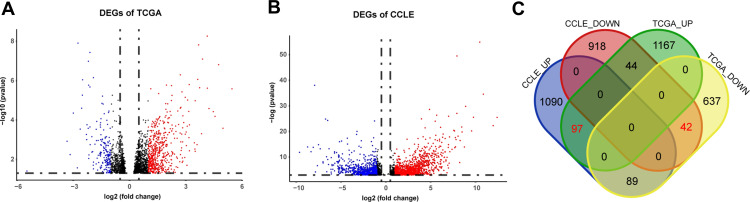
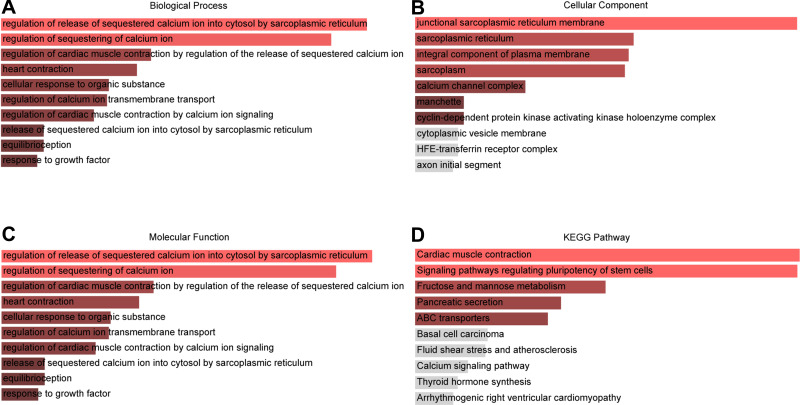
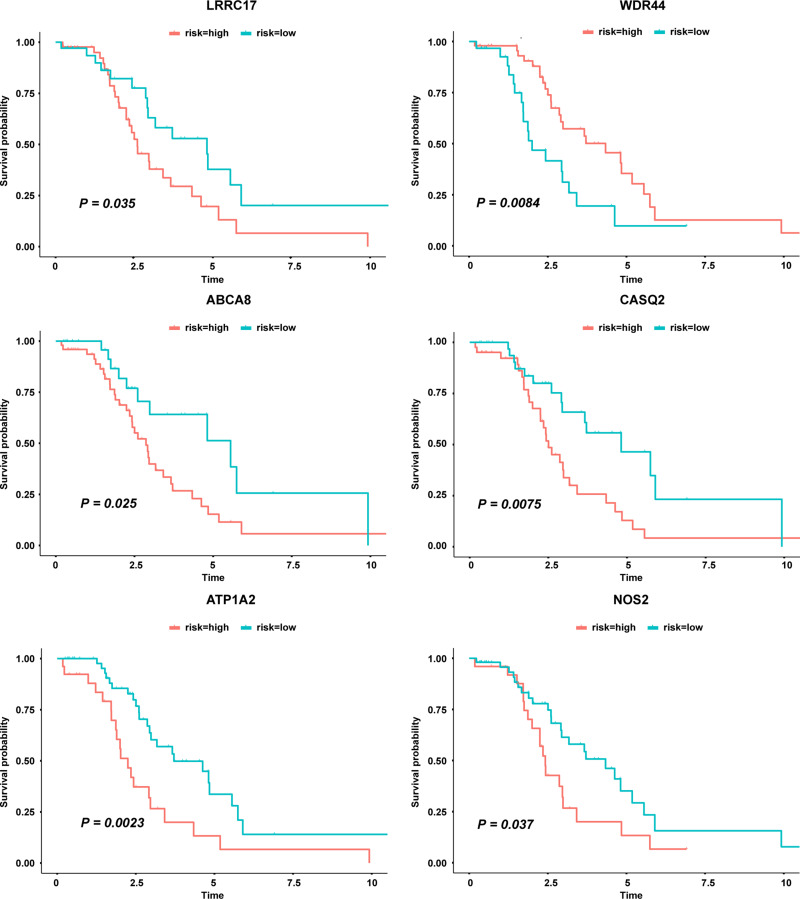
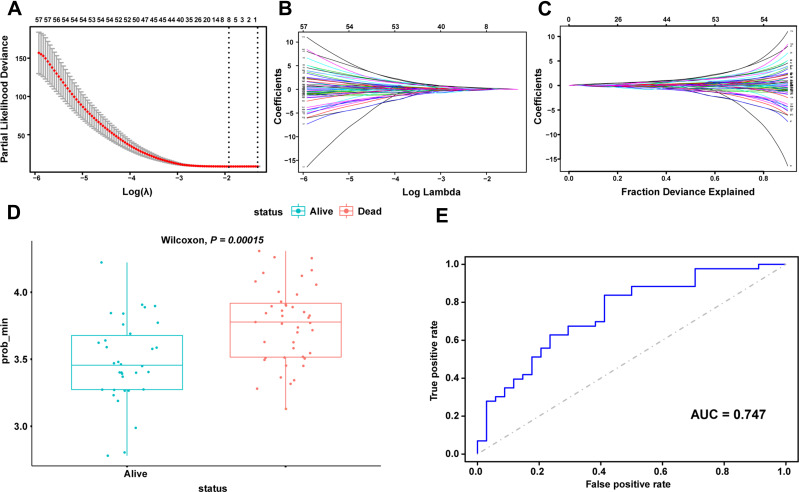
Based on the RNA-seq data of tissues in The Cancer Genome Atlas (TCGA) and RNA-seq data of cells from the Cancer Cell Encyclopedia (CCLE), we integrated differentially expressed genes (DEGs) in ovarian cancer tissue and cells. After screening for DEGs related to platinum resistance, we conducted survival analysis and built protein interaction networks to identify genes that may affect prognosis and interact with each other. Least absolute shrinkage and selection operator (Lasso) regression analysis was used to construct a predictive model. Immunohistochemistry and Western blot were used to validate the results. Finally, gene set enrichment analysis (GSEA) was performed on the expression of genes individually.
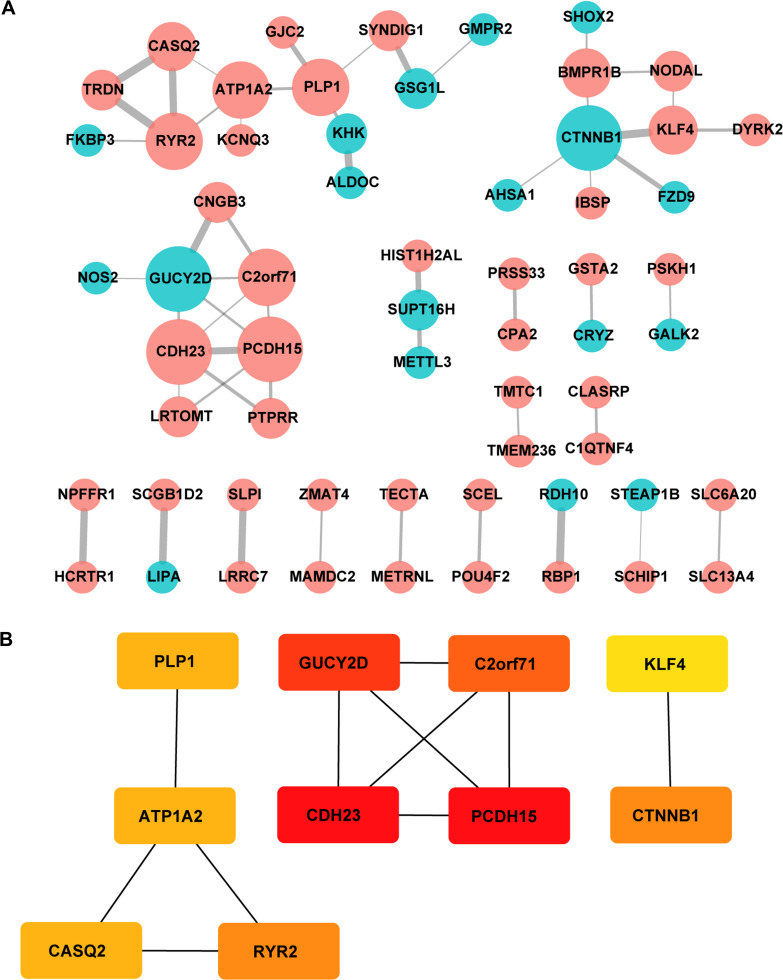
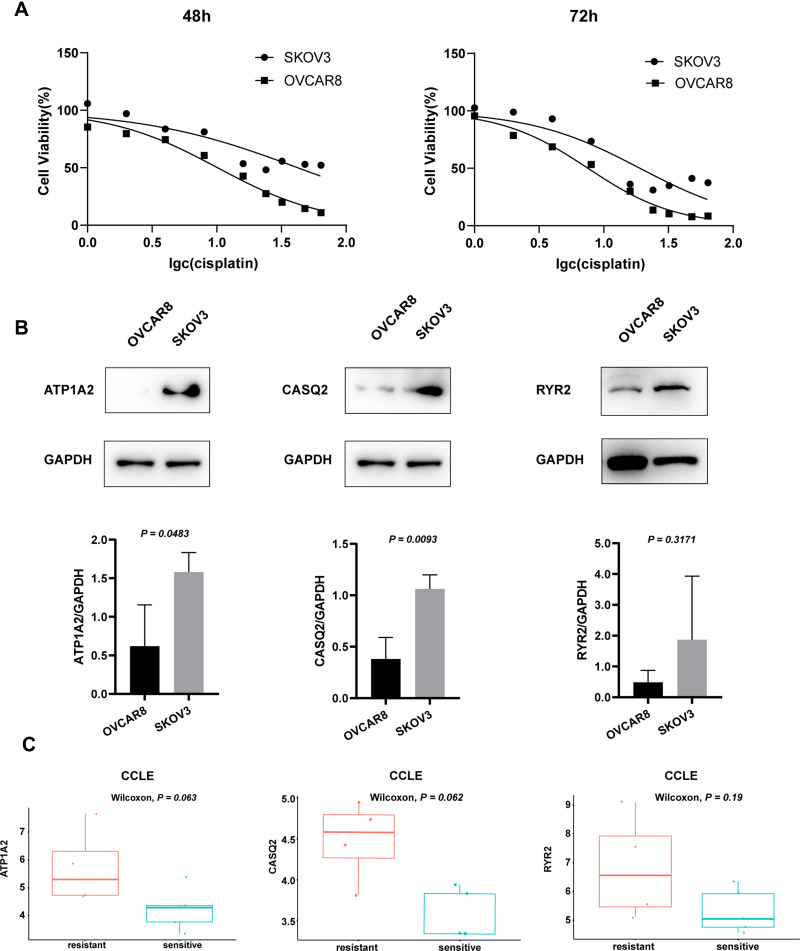
We found that ATPase Na/K transporting subunit alpha 2 (ATP1A2), calsequestrin 2 (CASQ2) and ryanodine receptor 2 (RYR2) interacted with each other and could predict resistance to platinum-based therapy, correlating negatively with prognosis. Moreover, we constructed a predictive model based on nine genes, including ATP1A2 and CASQ2. Immunohistochemistry and Western blot validated the upregulation of these genes in ovarian cancer tissue samples and cell lines. The immunohistochemistry results also confirmed the prognostic value of ATP1A2, CASQ2 and RYR2. GSEA predicted that ATP1A2, CASQ2 and RYR2 may act on the KRAS and mTORC1 pathways and participate in metabolic reprogramming and regulation of calcium homeostasis in platinum-resistant cells.
ATP1A2, CASQ2 and RYR2 were highly expressed in platinum-resistant ovarian cancer. ATP1A2 and CASQ2 were related to the prognosis of platinum-resistant ovarian cancer patients. These genes might act on KARS and mTORC1 pathways and participate in metabolic reprogramming and regulation of calcium homeostasis in platinum-resistant cells.
卵巢癌是最致命的妇科恶性肿瘤。对铂类化疗的耐药性影响患者的总体生存。本研究采用综合生物信息学方法来寻找卵巢癌中铂耐药潜在的、尚未被充分理解的分子机制。
基于癌症基因组图谱(TCGA)中的组织RNA测序数据以及癌症细胞百科全书(CCLE)中的细胞RNA测序数据,我们整合了卵巢癌组织和细胞中的差异表达基因(DEG)。在筛选出与铂耐药相关的DEG后,我们进行了生存分析并构建了蛋白质相互作用网络,以识别可能影响预后并相互作用的基因。使用最小绝对收缩和选择算子(Lasso)回归分析构建预测模型。采用免疫组织化学和蛋白质印迹法验证结果。最后,对各个基因的表达进行基因集富集分析(GSEA)。
我们发现ATP酶钠/钾转运亚基α2(ATP1A2)、肌集钙蛋白2(CASQ2)和兰尼碱受体2(RYR2)相互作用,并且可以预测对铂类疗法的耐药性,与预后呈负相关。此外,我们基于包括ATP1A2和CASQ2在内的9个基因构建了一个预测模型。免疫组织化学和蛋白质印迹法验证了这些基因在卵巢癌组织样本和细胞系中的上调。免疫组织化学结果也证实了ATP1A2、CASQ2和RYR2的预后价值。GSEA预测ATP1A2、CASQ2和RYR2可能作用于KRAS和mTORC1通路,并参与铂耐药细胞中的代谢重编程和钙稳态调节。
ATP1A2、CASQ2和RYR2在铂耐药的卵巢癌中高表达。ATP1A2和CASQ2与铂耐药卵巢癌患者的预后相关。这些基因可能作用于KARS和mTORC1通路,并参与铂耐药细胞中的代谢重编程和钙稳态调节。