Xia Siyang, Dweck Hany K M, Lutomiah Joel, Sang Rosemary, McBride Carolyn S, Rose Noah H, Ayala Diego, Powell Jeffrey R
Department of Ecology and Evolutionary Biology Yale University New Haven Connecticut USA.
Department of Molecular, Cellular and Developmental Biology Yale University New Haven Connecticut USA.
Ecol Evol. 2021 Nov 9;11(22):16327-16343. doi: 10.1002/ece3.8332. eCollection 2021 Nov.
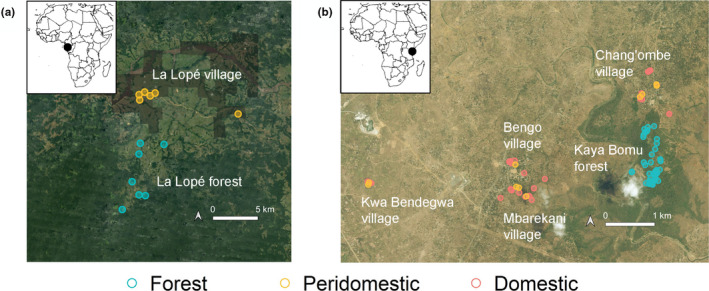
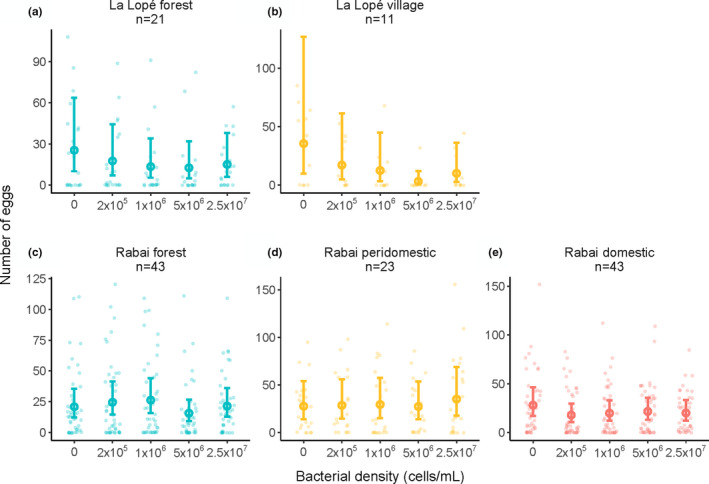
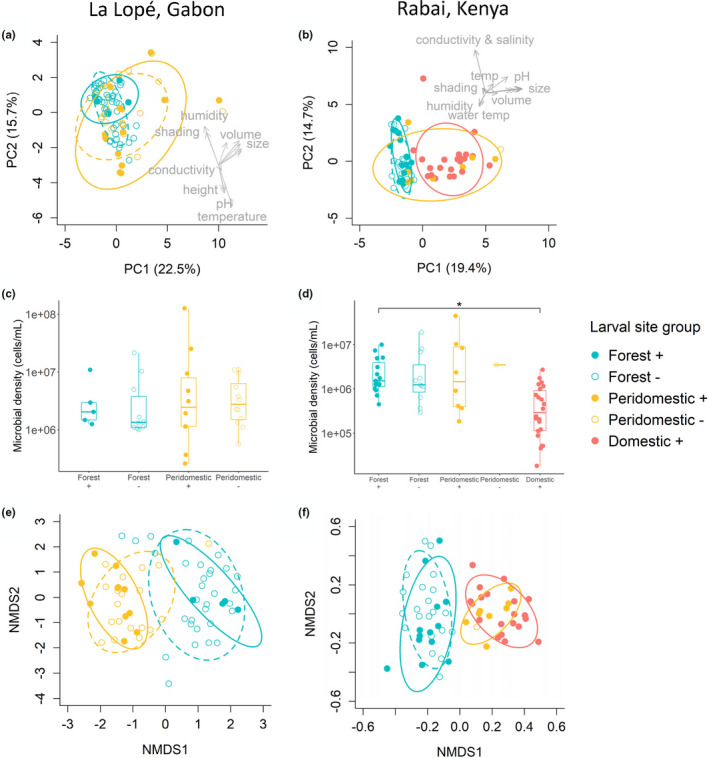
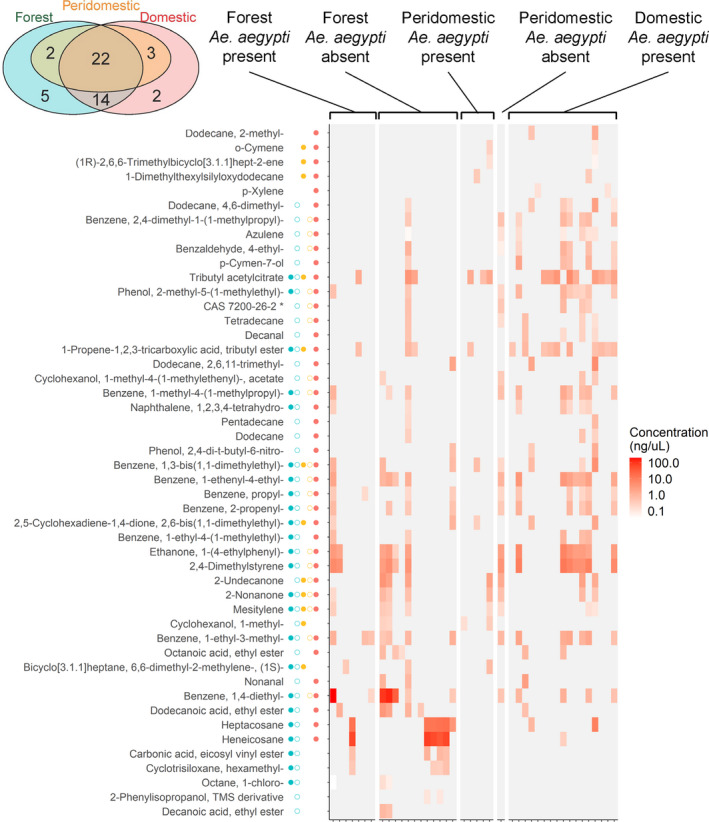
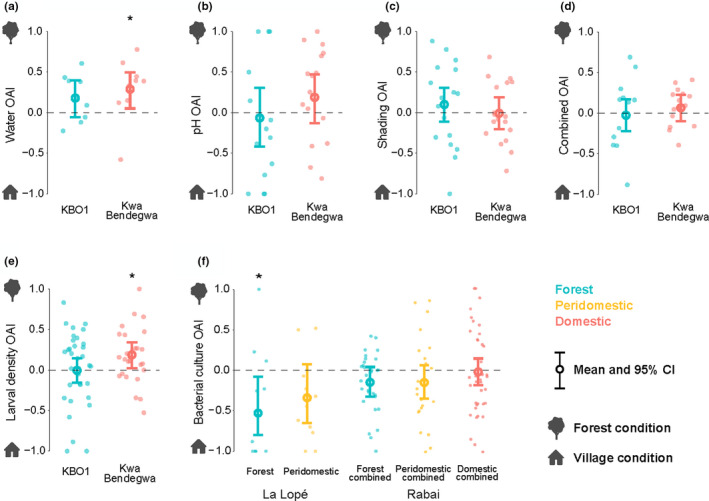
Adaptations to anthropogenic domestic habitats contribute to the success of the mosquito as a major global vector of several arboviral diseases. The species inhabited African forests before expanding into domestic habitats and spreading to other continents. Despite a well-studied evolutionary history, how this species initially moved into human settlements in Africa remains unclear. During this initial habitat transition, African switched their larval sites from natural water containers like tree holes to artificial containers like clay pots. Little is known about how these natural versus artificial containers differ in their characteristics. Filling this knowledge gap could provide valuable information for studying the evolution of associated with larval habitat changes. As an initial effort, in this study, we characterized the microenvironments of larval sites in forest and domestic habitats in two African localities: La Lopé, Gabon, and Rabai, Kenya. Specifically, we measured the physical characteristics, microbial density, bacterial composition, and volatile chemical profiles of multiple larval sites. In both localities, comparisons between natural containers in the forests and artificial containers in the villages revealed significantly different microenvironments. We next examined whether the between-habitat differences in larval site microenvironments lead to differences in oviposition, a key behavior affecting larval distribution. Forest readily accepted the artificial containers we placed in the forests. Laboratory choice experiments also did not find distinct oviposition preferences between forest and village colonies. These results suggested that African are likely generalists in their larval site choices. This flexibility to accept various containers with a wide range of physical, microbial, and chemical conditions might allow to use human-stored water as fallback larval sites during dry seasons, which is hypothesized to have initiated the domestic evolution of .
对人为居住环境的适应有助于蚊子成为几种虫媒病毒疾病的主要全球传播媒介并取得成功。该物种最初栖息于非洲森林,后来扩展到居住环境并传播到其他大陆。尽管其进化历史已得到充分研究,但该物种最初是如何进入非洲人类住区的仍不清楚。在这一最初的栖息地转变过程中,非洲蚊子将其幼虫栖息地从树洞等天然水体容器转变为陶罐等人工容器。关于这些天然容器与人工容器在特性上有何不同,人们知之甚少。填补这一知识空白可为研究与幼虫栖息地变化相关的蚊子进化提供有价值的信息。作为初步尝试,在本研究中,我们对两个非洲地区(加蓬的拉洛佩和肯尼亚的拉拜)森林和居住栖息地中蚊子幼虫栖息地的微环境进行了特征描述。具体而言,我们测量了多个幼虫栖息地的物理特性、微生物密度、细菌组成和挥发性化学特征。在这两个地区,森林中的天然容器与村庄中的人工容器之间的比较显示出微环境存在显著差异。接下来,我们研究了幼虫栖息地微环境的栖息地间差异是否会导致产卵差异,产卵是影响幼虫分布的关键行为。森林中的蚊子欣然接受了我们放置在森林中的人工容器。实验室选择实验也未发现森林和村庄蚊子群体之间有明显的产卵偏好。这些结果表明,非洲蚊子在幼虫栖息地选择上可能是通才。这种接受各种具有广泛物理、微生物和化学条件的容器的灵活性,可能使蚊子在旱季能够将人类储存的水用作备用幼虫栖息地,据推测,这引发了蚊子的居家进化。