University of Groningen, University Medical Center Groningen, Department of Medical Microbiology and Infection Prevention, Groningen, The Netherlands.
University of Bern, Institute for Infectious Diseases, Bern, Switzerland.
Microb Genom. 2021 Nov;7(11). doi: 10.1099/mgen.0.000695.
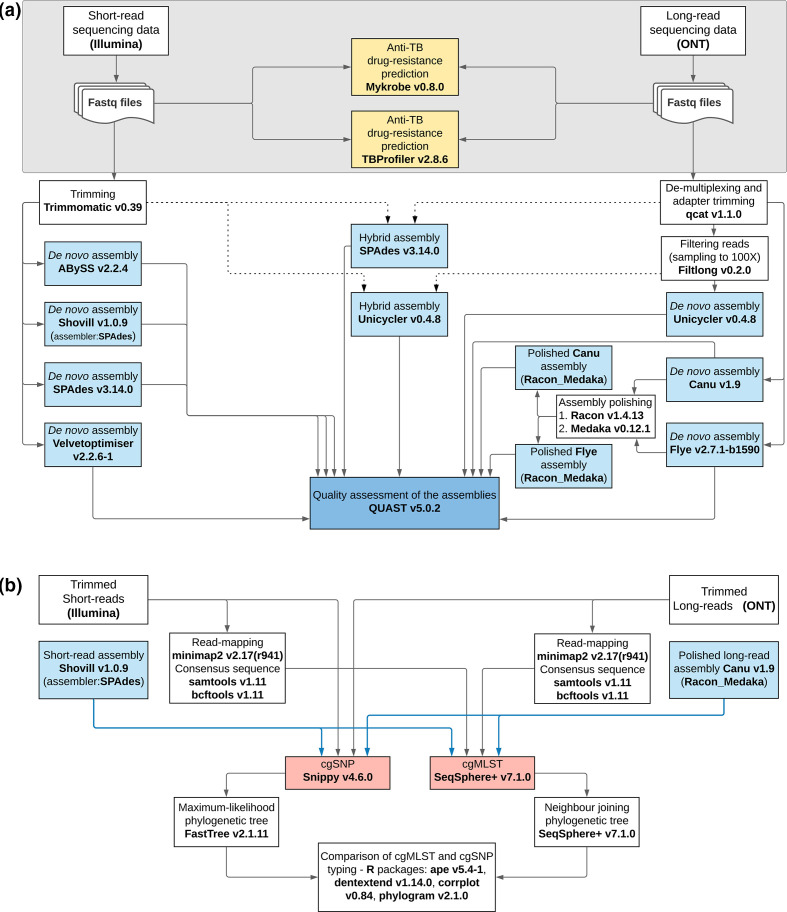
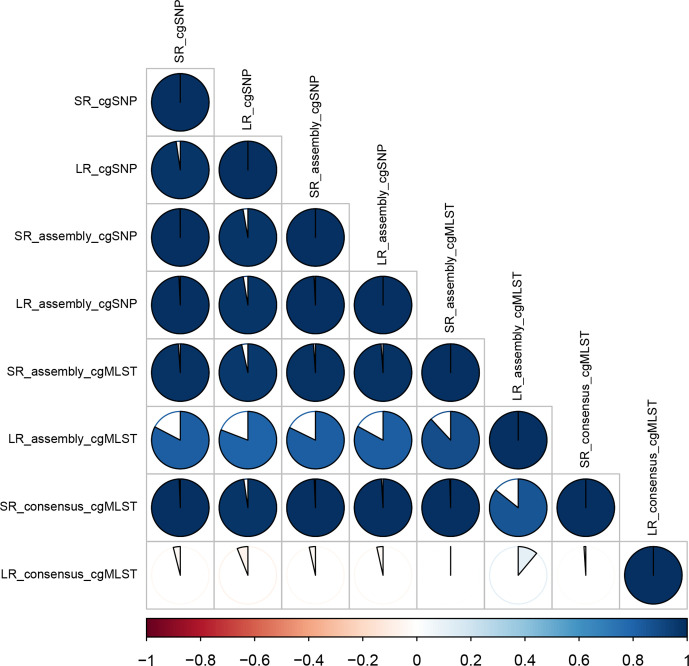
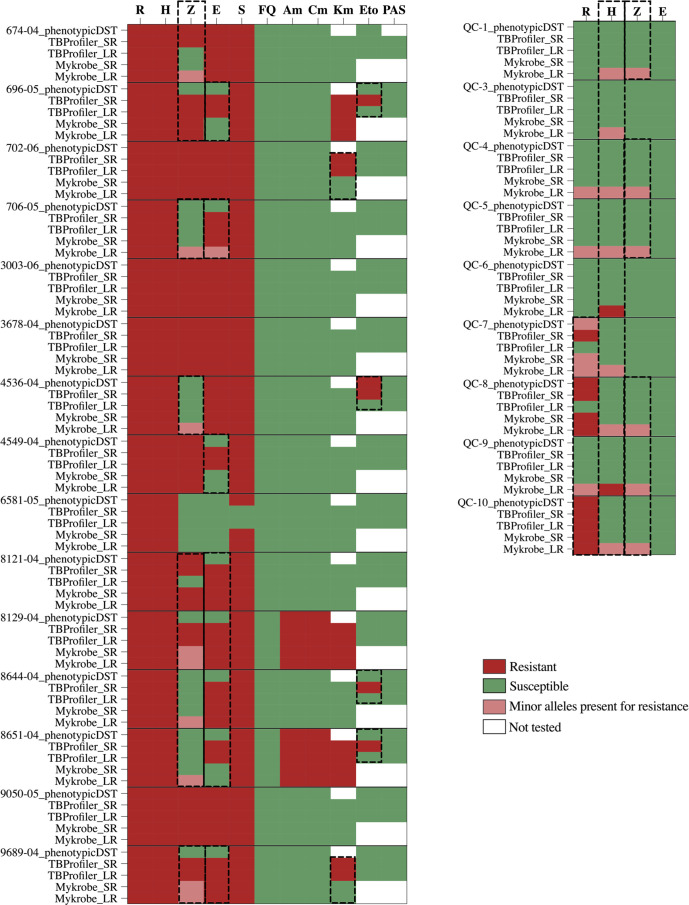
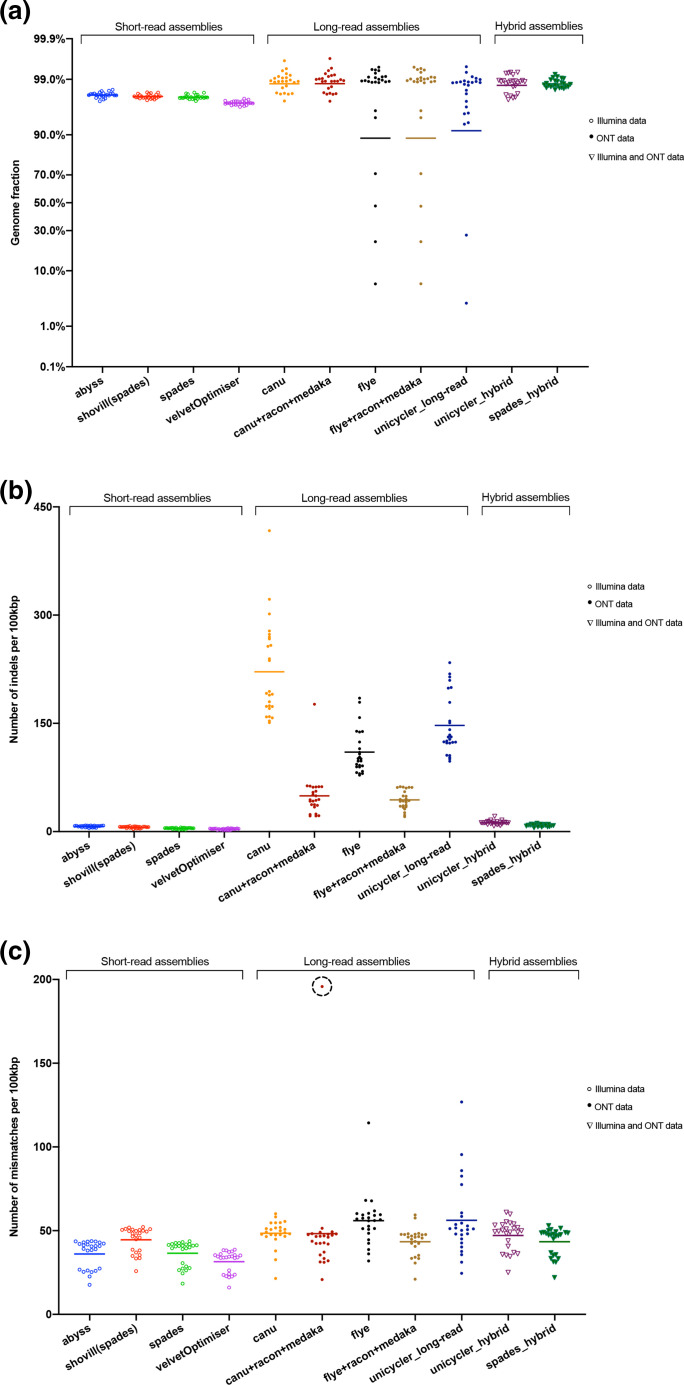
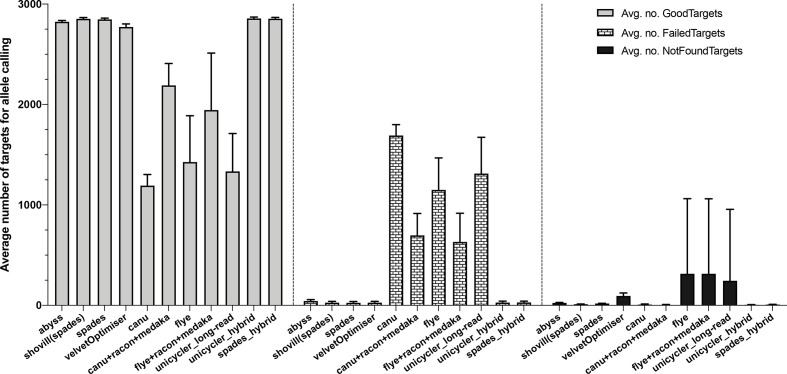
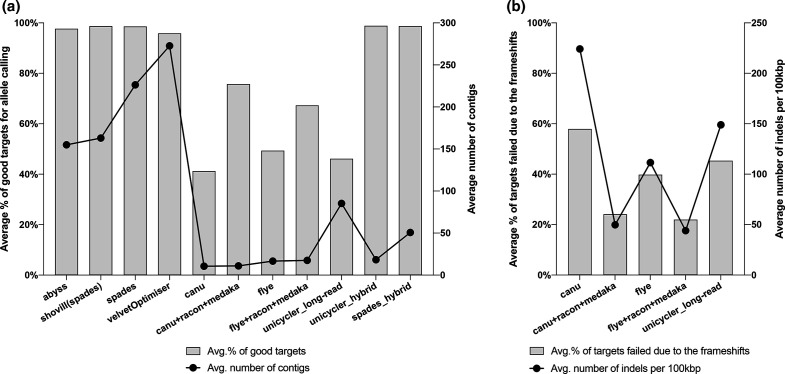
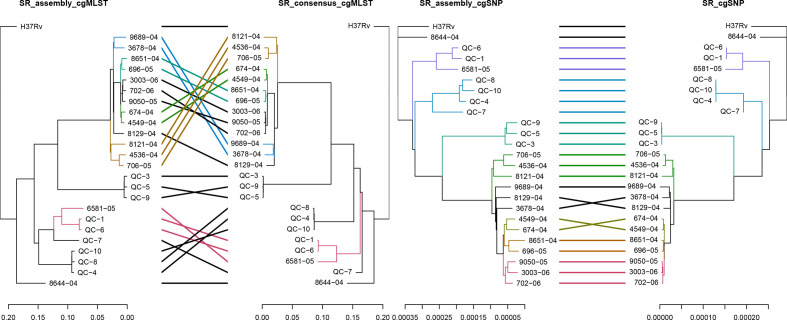
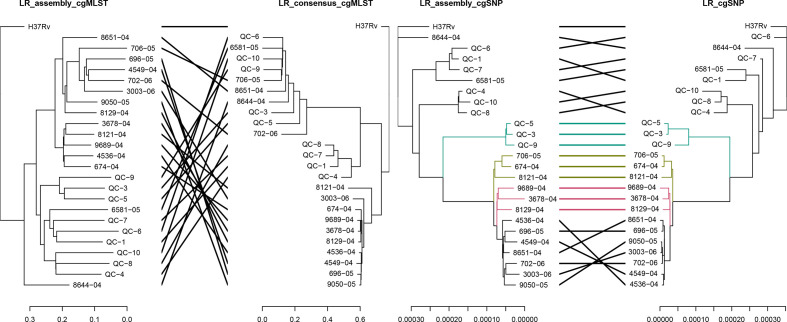
Whole-genome sequencing (WGS) of (MTB) isolates can be used to get an accurate diagnosis, to guide clinical decision making, to control tuberculosis (TB) and for outbreak investigations. We evaluated the performance of long-read (LR) and/or short-read (SR) sequencing for anti-TB drug-resistance prediction using the TBProfiler and Mykrobe tools, the fraction of genome recovery, assembly accuracies and the robustness of two typing approaches based on core-genome SNP (cgSNP) typing and core-genome multi-locus sequence typing (cgMLST). Most of the discrepancies between phenotypic drug-susceptibility testing (DST) and drug-resistance prediction were observed for the first-line drugs rifampicin, isoniazid, pyrazinamide and ethambutol, mainly with LR sequence data. Resistance prediction to second-line drugs made by both TBProfiler and Mykrobe tools with SR- and LR-sequence data were in complete agreement with phenotypic DST except for one isolate. The SR assemblies were more accurate than the LR assemblies, having significantly (<0.05) fewer indels and mismatches per 100 kbp. However, the hybrid and LR assemblies had slightly higher genome fractions. For LR assemblies, Canu followed by Racon, and Medaka polishing was the most accurate approach. The cgSNP approach, based on either reads or assemblies, was more robust than the cgMLST approach, especially for LR sequence data. In conclusion, anti-TB drug-resistance prediction, particularly with only LR sequence data, remains challenging, especially for first-line drugs. In addition, SR assemblies appear more accurate than LR ones, and reproducible phylogeny can be achieved using cgSNP approaches.
全基因组测序(WGS)可用于准确诊断、指导临床决策、控制结核病(TB)和暴发调查。我们使用 TBProfiler 和 Mykrobe 工具评估了长读(LR)和/或短读(SR)测序在抗结核药物耐药性预测中的性能,包括基因组回收率、组装准确性以及两种基于核心基因组单核苷酸多态性(cgSNP)分型和核心基因组多位点序列分型(cgMLST)的分型方法的稳健性。表型药敏试验(DST)和耐药性预测之间的大多数差异主要是由于 LR 序列数据,观察到一线药物利福平、异烟肼、吡嗪酰胺和乙胺丁醇。除了一个分离株外,TBProfiler 和 Mykrobe 工具使用 SR 和 LR 序列数据对二线药物的耐药预测与表型 DST 完全一致。SR 组装比 LR 组装更准确,每 100 kbp 的插入缺失和错配数量明显(<0.05)更少。然而,混合和 LR 组装具有略高的基因组分数。对于 LR 组装,Canu 加 Racon 和 Medaka 抛光是最准确的方法。基于读取或组装的 cgSNP 方法比 cgMLST 方法更稳健,特别是对于 LR 序列数据。总之,抗结核药物耐药性预测,尤其是仅使用 LR 序列数据,仍然具有挑战性,特别是对于一线药物。此外,SR 组装似乎比 LR 组装更准确,并且可以使用 cgSNP 方法实现可重复的系统发育。