Liu Lulu, Bulley Adam, Irish Muireann
School of Psychology, The University of Sydney, Sydney, NSW 2006, Australia.
Brain and Mind Centre, The University of Sydney, Sydney, NSW 2050, Australia.
Brain Sci. 2021 Nov 12;11(11):1502. doi: 10.3390/brainsci11111502.
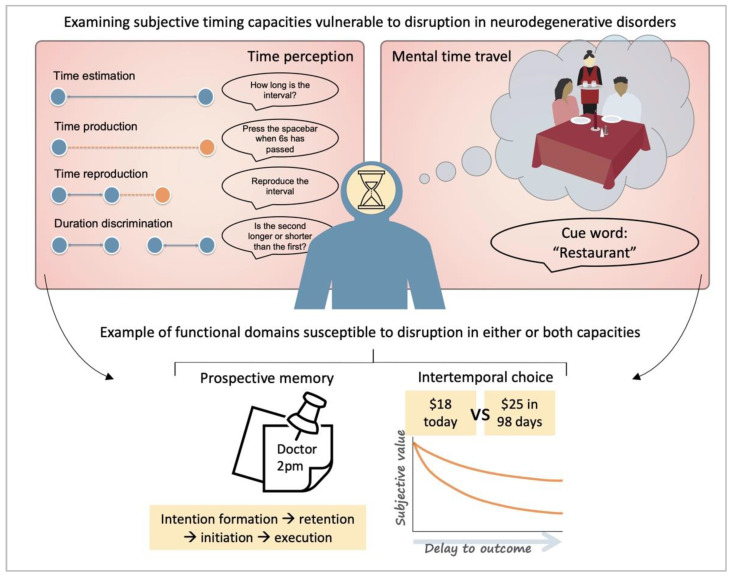
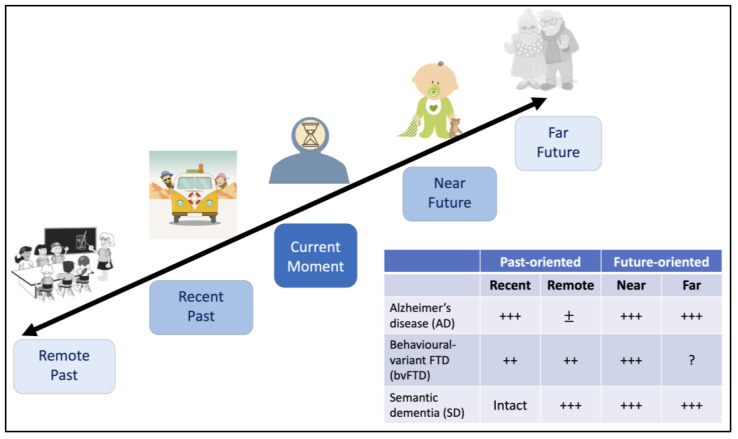
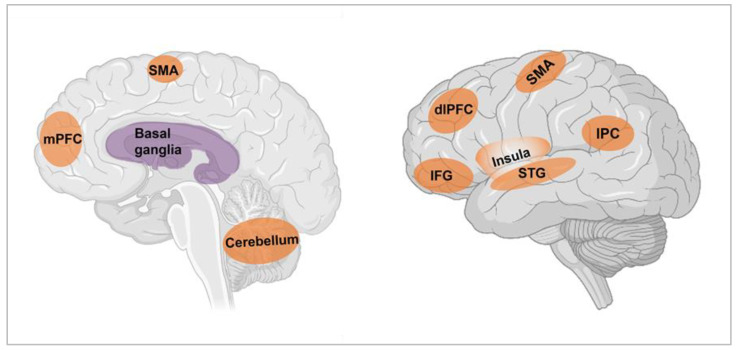
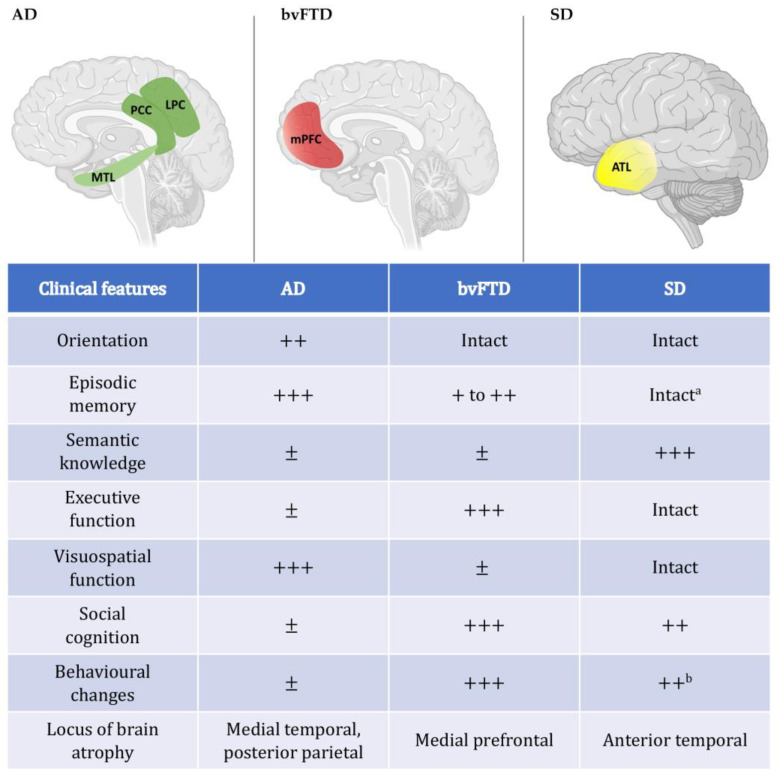
The capacity for subjective time in humans encompasses the perception of time's unfolding from moment to moment, as well as the ability to traverse larger temporal expanses of past- and future-oriented thought via mental time travel. Disruption in time perception can result in maladaptive outcomes-from the innocuous lapse in timing that leads to a burnt piece of toast, to the grievous miscalculation that produces a traffic accident-while disruption to mental time travel can impact core functions from planning appointments to making long-term decisions. Mounting evidence suggests that disturbances to both time perception and mental time travel are prominent in dementia syndromes. Given that such disruptions can have severe consequences for independent functioning in everyday life, here we aim to provide a comprehensive exposition of subjective timing dysfunction in dementia, with a view to informing the management of such disturbances. We consider the neurocognitive mechanisms underpinning changes to both time perception and mental time travel across different dementia disorders. Moreover, we explicate the functional implications of altered subjective timing by reference to two key and representative adaptive capacities: prospective memory and intertemporal decision-making. Overall, our review sheds light on the transdiagnostic implications of subjective timing disturbances in dementia and highlights the high variability in performance across clinical syndromes and functional domains.
人类的主观时间能力包括对时间从一个时刻到下一个时刻展开的感知,以及通过心理时间旅行跨越以过去和未来为导向的更大时间跨度进行思考的能力。时间感知的中断会导致适应不良的结果——从导致烤面包片烤焦的无害计时失误,到造成交通事故的严重误判——而心理时间旅行的中断会影响从安排约会到做出长期决策等核心功能。越来越多的证据表明,时间感知和心理时间旅行的干扰在痴呆综合征中很突出。鉴于此类干扰会对日常生活中的独立功能产生严重后果,我们在此旨在全面阐述痴呆中的主观计时功能障碍,以便为管理此类干扰提供参考。我们考虑了不同痴呆症中时间感知和心理时间旅行变化背后的神经认知机制。此外,我们通过参考两个关键且具有代表性的适应能力:前瞻性记忆和跨期决策,来阐述主观计时改变的功能影响。总体而言,我们的综述揭示了痴呆中主观计时干扰的跨诊断意义,并强调了临床综合征和功能领域表现的高度变异性。