Namboodiri Vijay M K, Mihalas Stefan, Marton Tanya M, Hussain Shuler Marshall G
Department of Neuroscience, Johns Hopkins University Baltimore, MD, USA.
Allen Institute for Brain Science Seattle, WA, USA.
Front Behav Neurosci. 2014 Feb 28;8:61. doi: 10.3389/fnbeh.2014.00061. eCollection 2014.
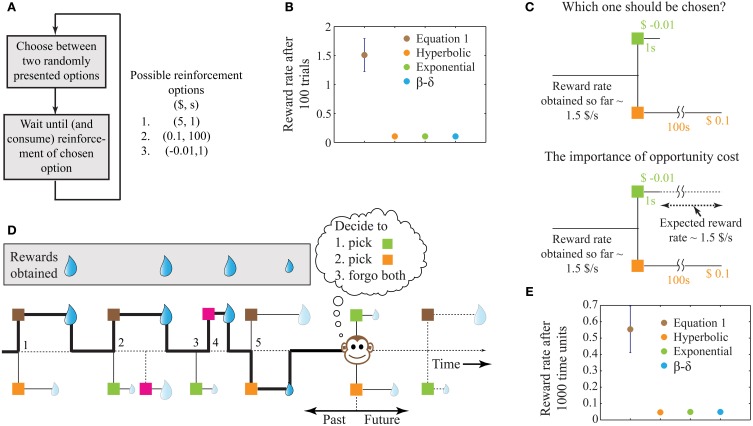
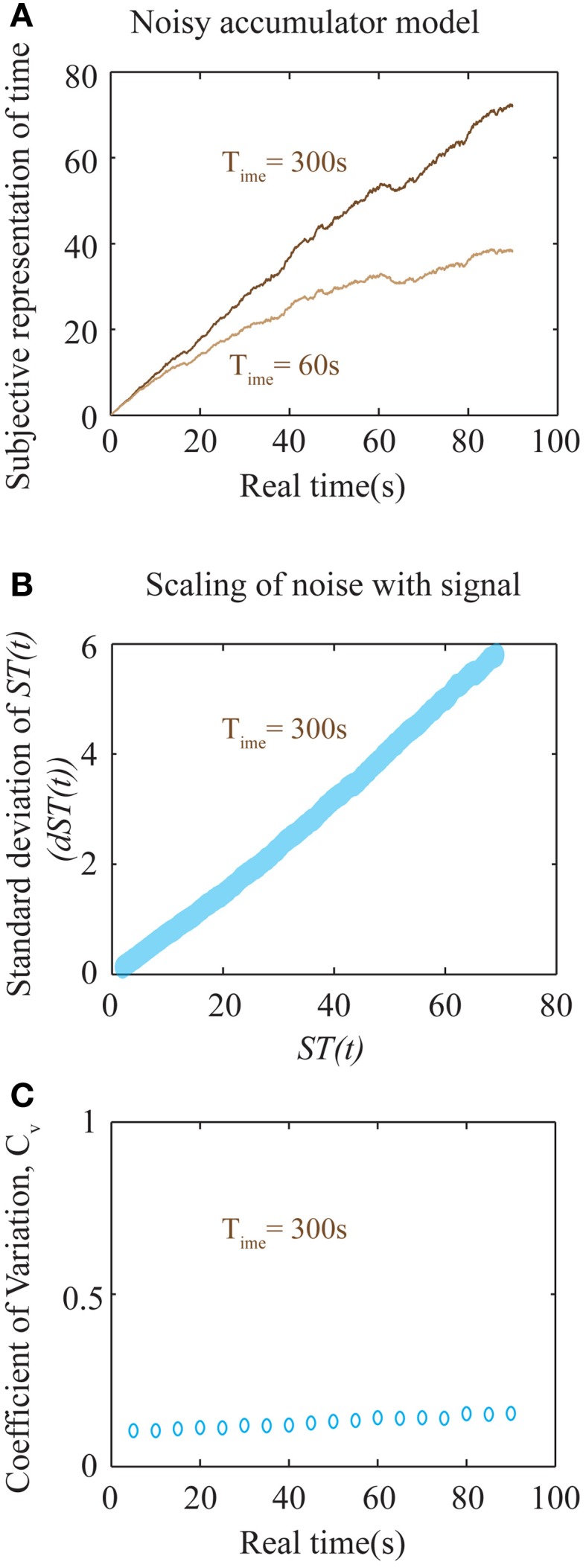
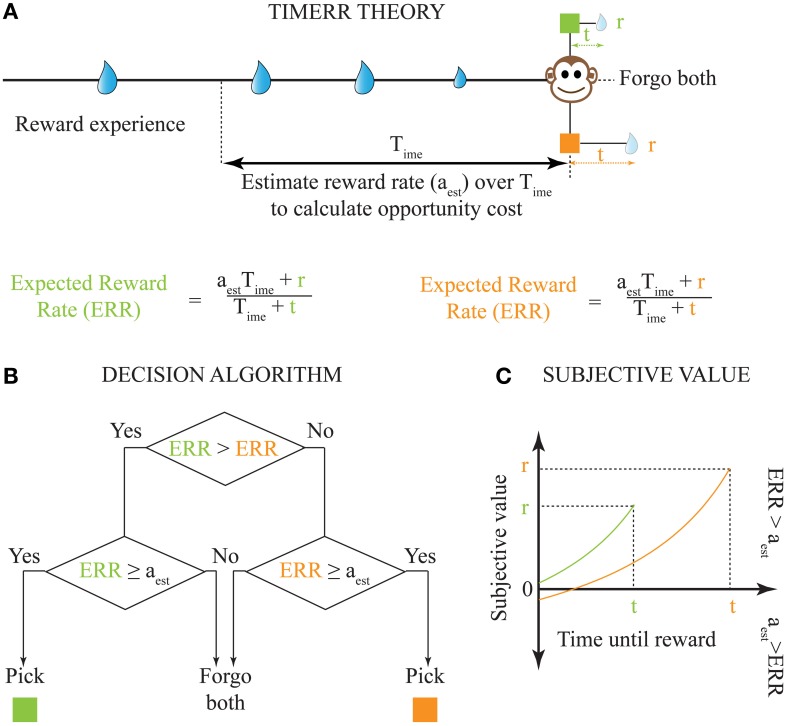
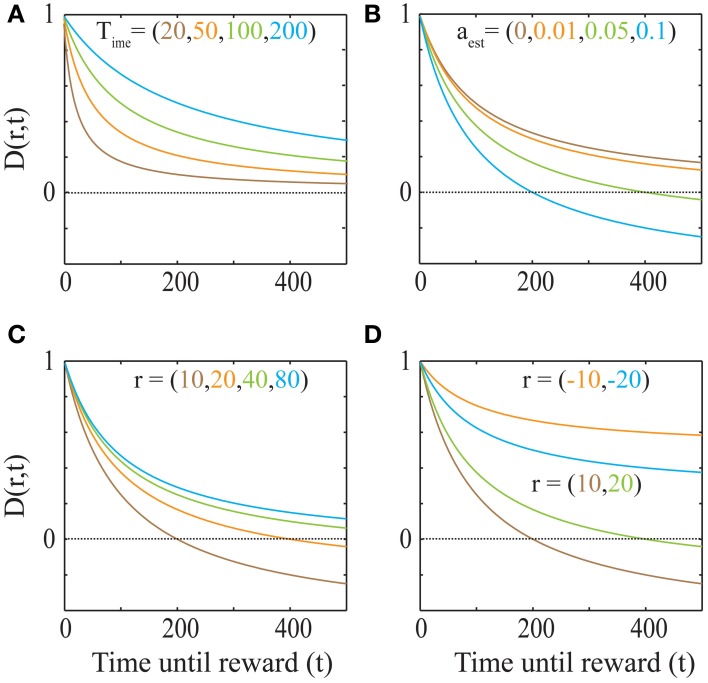
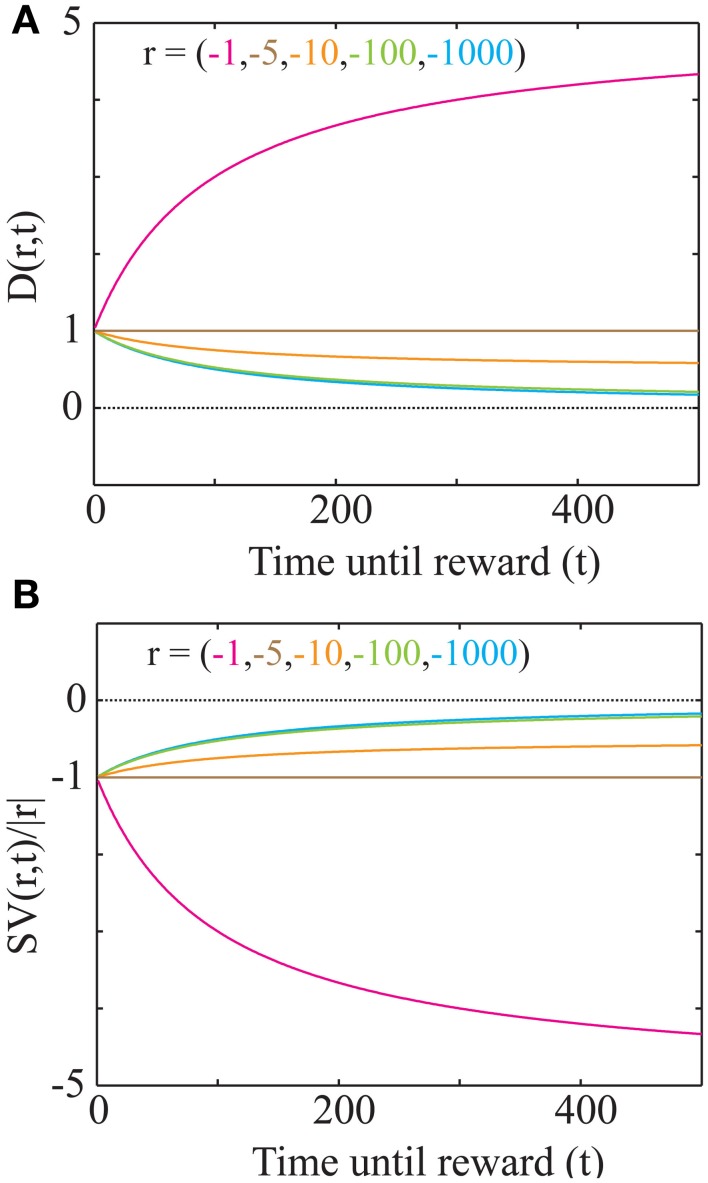
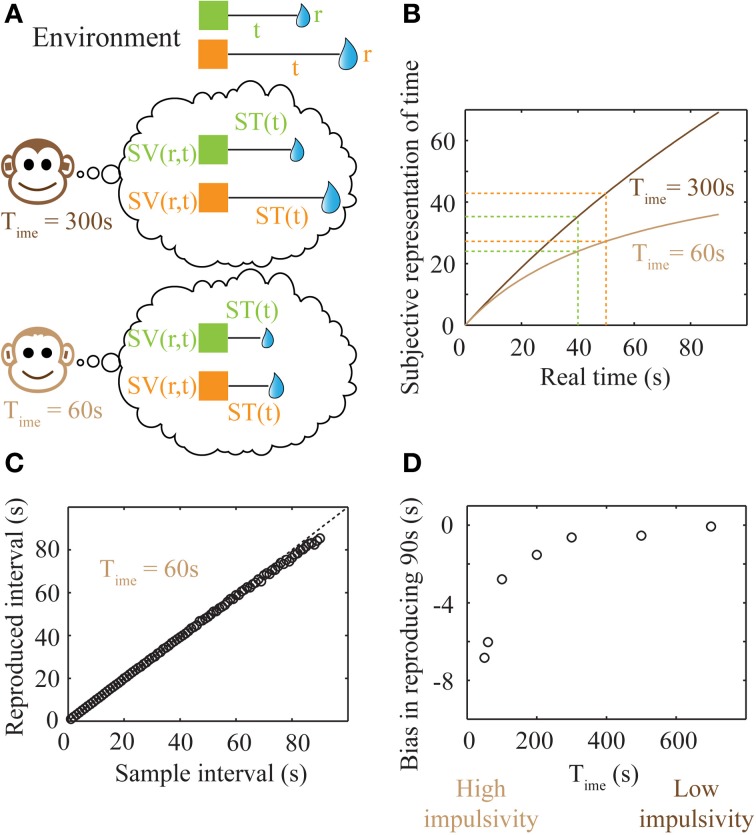
Animals and humans make decisions based on their expected outcomes. Since relevant outcomes are often delayed, perceiving delays and choosing between earlier vs. later rewards (intertemporal decision-making) is an essential component of animal behavior. The myriad observations made in experiments studying intertemporal decision-making and time perception have not yet been rationalized within a single theory. Here we present a theory-Training-Integrated Maximized Estimation of Reinforcement Rate (TIMERR)-that explains a wide variety of behavioral observations made in intertemporal decision-making and the perception of time. Our theory postulates that animals make intertemporal choices to optimize expected reward rates over a limited temporal window which includes a past integration interval-over which experienced reward rate is estimated-as well as the expected delay to future reward. Using this theory, we derive mathematical expressions for both the subjective value of a delayed reward and the subjective representation of the delay. A unique contribution of our work is in finding that the past integration interval directly determines the steepness of temporal discounting and the non-linearity of time perception. In so doing, our theory provides a single framework to understand both intertemporal decision-making and time perception.
动物和人类基于预期结果做出决策。由于相关结果往往具有延迟性,感知延迟并在即时奖励与延迟奖励之间做出选择(跨期决策)是动物行为的一个重要组成部分。在研究跨期决策和时间感知的实验中所做的大量观察结果,尚未在单一理论中得到合理的解释。在此,我们提出一种理论——强化率训练整合最大化估计(TIMERR)——它解释了在跨期决策和时间感知中所做的各种行为观察。我们的理论假定,动物做出跨期选择是为了在一个有限的时间窗口内优化预期奖励率,这个时间窗口包括一个过去的整合区间(在这个区间内估计经历的奖励率)以及未来奖励的预期延迟。利用这个理论,我们推导出了延迟奖励的主观价值和延迟的主观表征的数学表达式。我们工作的一个独特贡献在于发现,过去的整合区间直接决定了时间折扣的陡峭程度和时间感知的非线性。通过这样做,我们的理论提供了一个单一的框架来理解跨期决策和时间感知。