Graduate School of Pharmaceutical Sciences, The University of Tokyo, 7-3-1 Hongo, Bunkyo-ku, Tokyo 113-0033, Japan.
Graduate School of Pharmaceutical Sciences, Keio University, 1-5-30 Shibakoen, Minato-ku, Tokyo 105-8512, Japan.
Biomolecules. 2021 Oct 20;11(11):1553. doi: 10.3390/biom11111553.
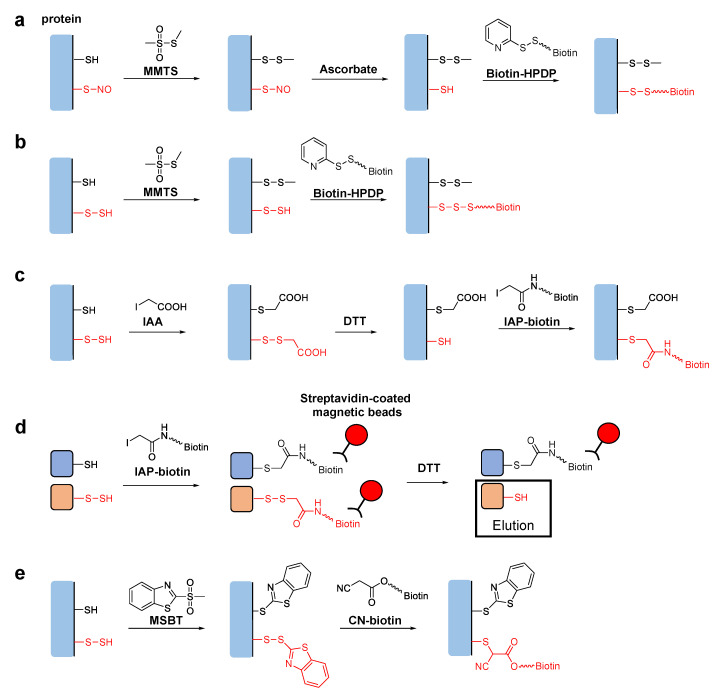
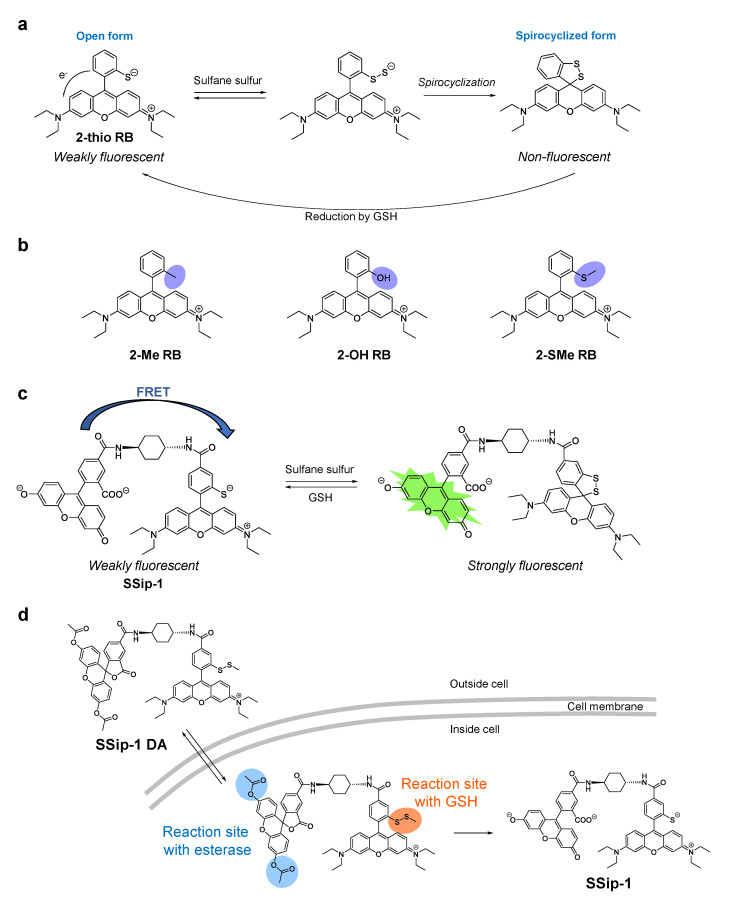
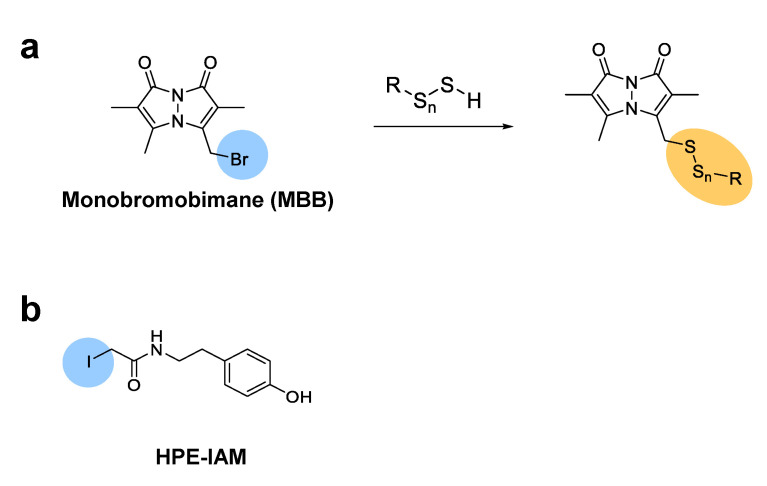
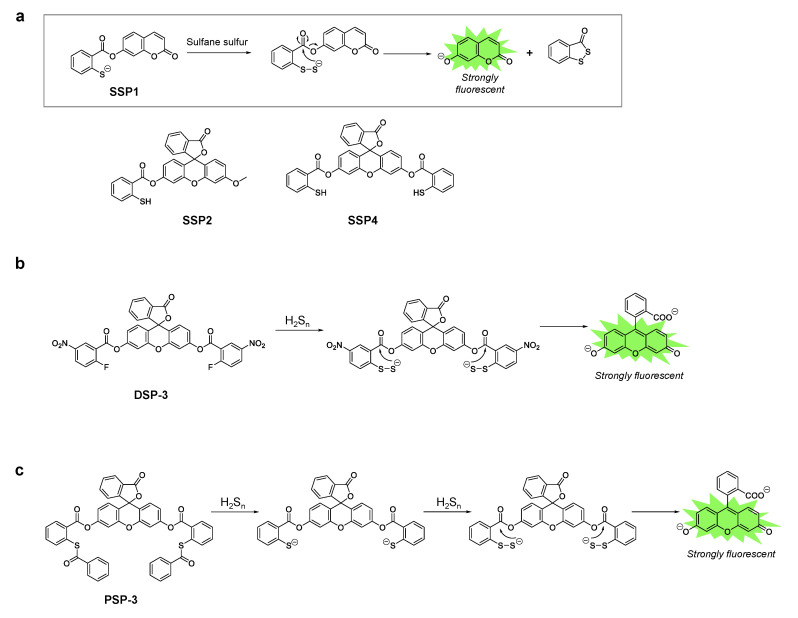
Hydrogen sulfide and its oxidation products are involved in many biological processes, and sulfane sulfur compounds, which contain sulfur atoms bonded to other sulfur atom(s), as found in hydropersulfides (R-S-SH), polysulfides (R-S-S-S-R), hydrogen polysulfides (HS), etc., have attracted increasing interest. To characterize their physiological and pathophysiological roles, selective detection techniques are required. Classically, sulfane sulfur compounds can be detected by cyanolysis, involving nucleophilic attack by cyanide ion to cleave the sulfur-sulfur bonds. The generated thiocyanate reacts with ferric ion, and the resulting ferric thiocyanate complex can be easily detected by absorption spectroscopy. Recent exploration of the properties of sulfane sulfur compounds as both nucleophiles and electrophiles has led to the development of various chemical techniques for detection, isolation, and bioimaging of sulfane sulfur compounds in biological samples. These include tag-switch techniques, LC-MS/MS, Raman spectroscopy, and fluorescent probes. Herein, we present an overview of the techniques available for specific detection of sulfane sulfur species in biological contexts.
硫化氢及其氧化产物参与许多生物过程,而含有与其他硫原子键合的硫原子的磺烷硫化合物,如氢过硫化物(R-S-SH)、多硫化物(R-S-S-S-R)、氢多硫化物(HS)等,引起了越来越多的关注。为了表征它们的生理和病理生理作用,需要选择性检测技术。经典的方法是通过硫氰酸酯酶解来检测磺烷硫化合物,涉及氰离子的亲核攻击以切断硫-硫键。生成的硫氰酸盐与铁离子反应,生成的铁硫氰酸盐络合物可以通过吸收光谱法轻松检测。最近对磺烷硫化合物作为亲核试剂和亲电试剂的性质的探索,导致了各种用于检测、分离和生物成像生物样品中磺烷硫化合物的化学技术的发展。这些包括标记转换技术、LC-MS/MS、拉曼光谱和荧光探针。本文综述了用于特定检测生物背景下磺烷硫物种的技术。