Department of Radiation Oncology, Eberhard-Karls University, 72076 Tübingen, Germany.
Department of Hematology and Oncology, University Hospital Tuebingen, Children's Hospital, 72076 Tuebingen, Germany.
Biomolecules. 2021 Oct 21;11(11):1561. doi: 10.3390/biom11111561.
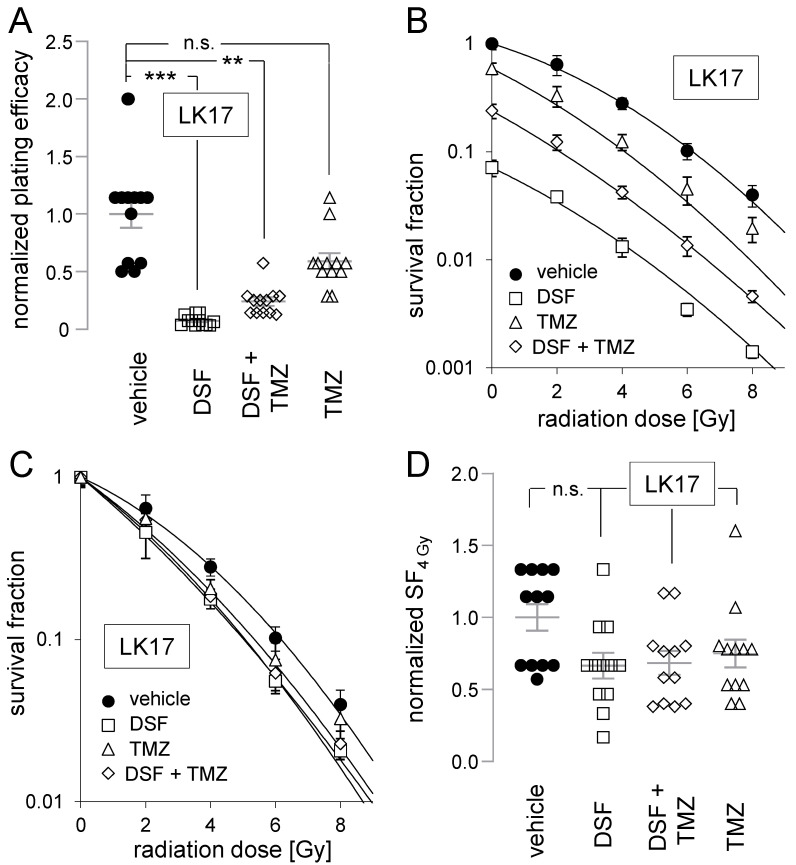
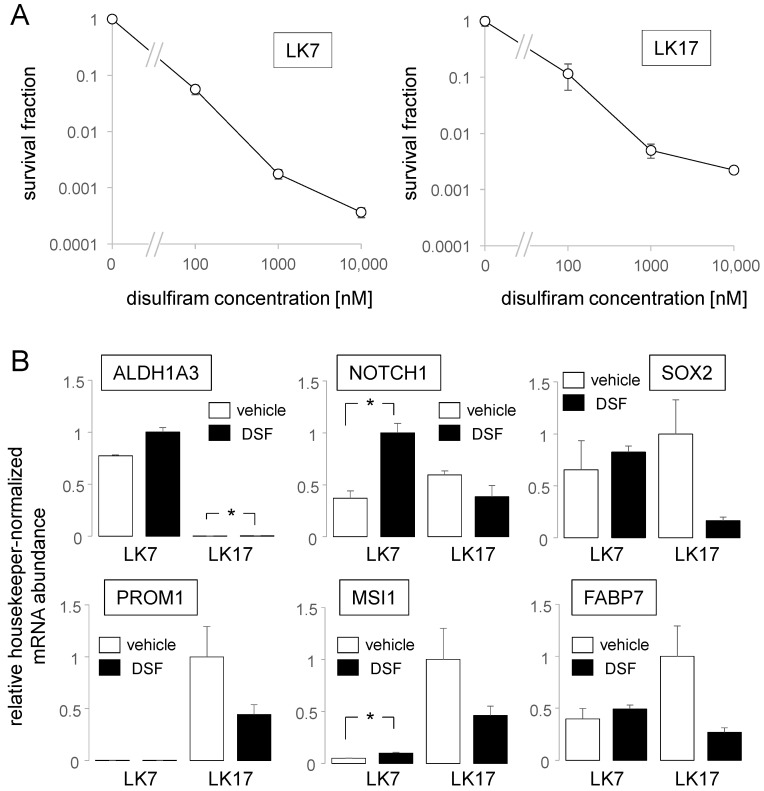
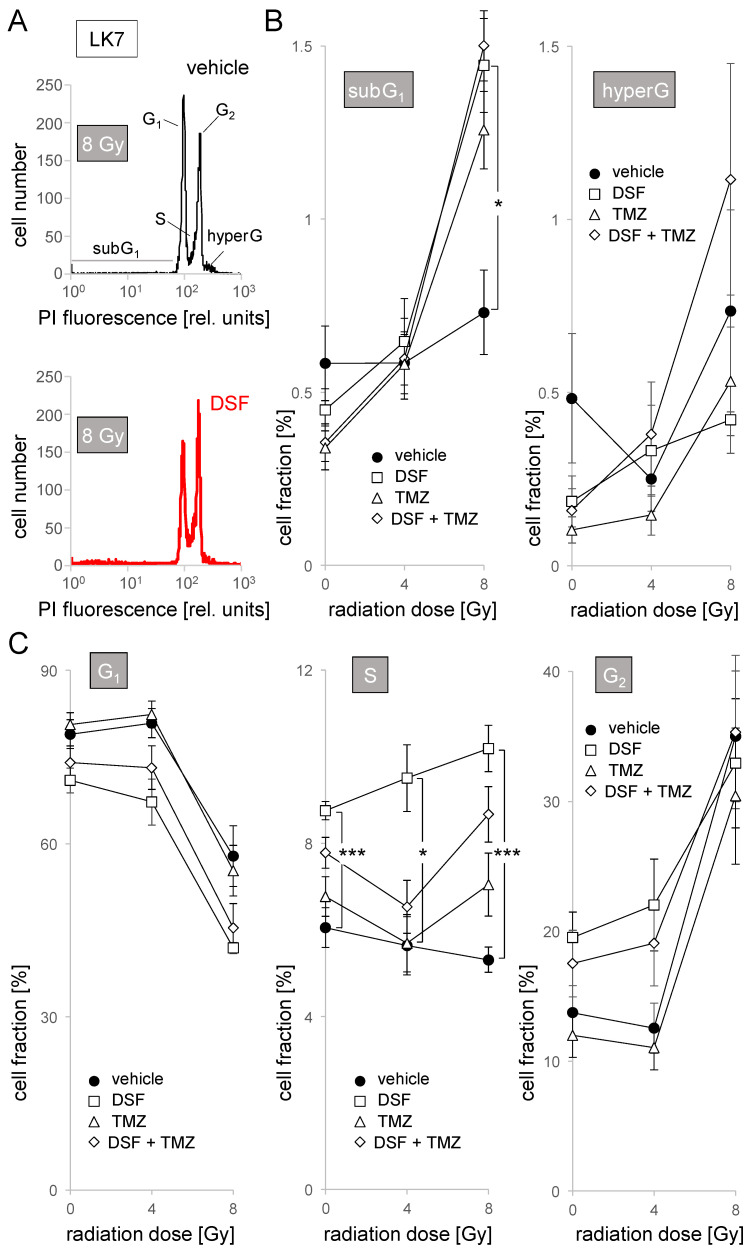
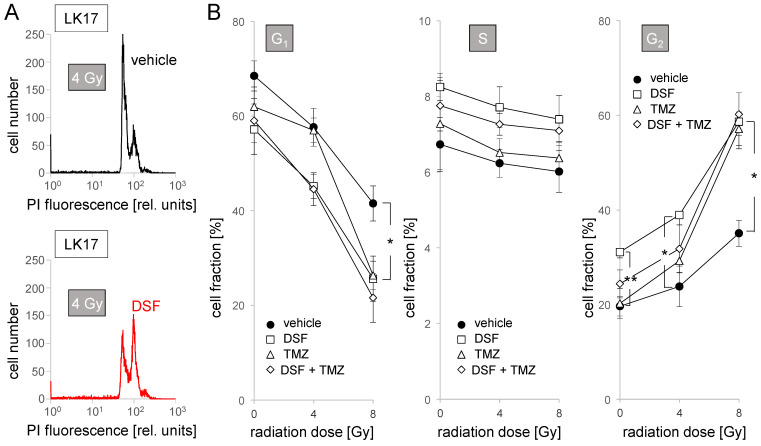
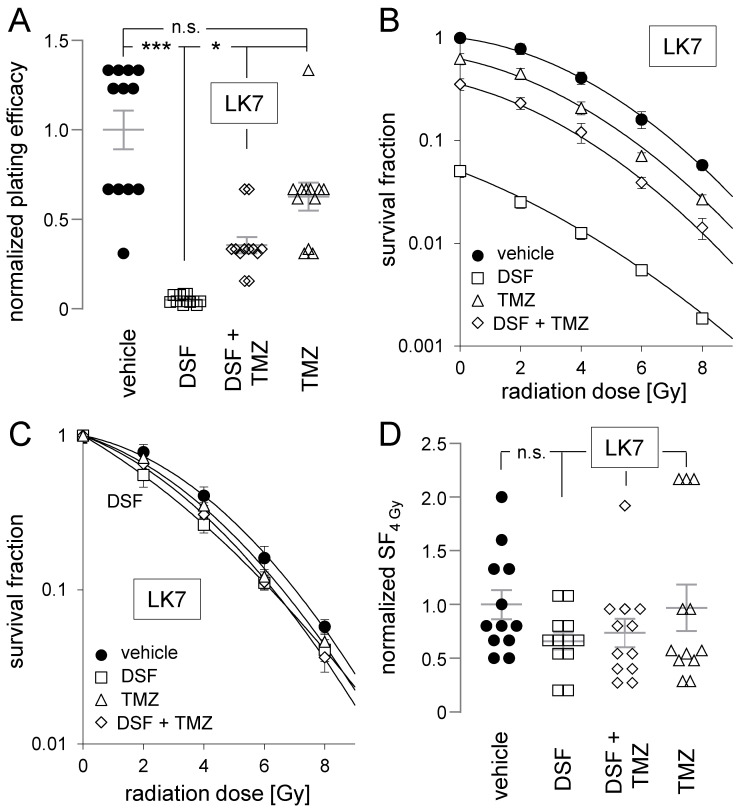
Mesenchymal glioblastoma stem cells (GSCs), a subpopulation in glioblastoma that are responsible for therapy resistance and tumor spreading in the brain, reportedly upregulate aldehyde dehydrogenase isoform-1A3 (ALDH1A3) which can be inhibited by disulfiram (DSF), an FDA-approved drug formerly prescribed in alcohol use disorder. Reportedly, DSF in combination with Cu ions exerts multiple tumoricidal, chemo- and radio-therapy-sensitizing effects in several tumor entities. The present study aimed to quantify these DSF effects in glioblastoma stem cells in vitro, regarding dependence on ALDH1A3 expression. To this end, two patient-derived GSC cultures with differing ALDH1A3 expression were pretreated (in the presence of CuSO, 100 nM) with DSF (0 or 100 nM) and the DNA-alkylating agent temozolomide (0 or 30 µM) and then cells were irradiated with a single dose of 0-8 Gy. As read-outs, cell cycle distribution and clonogenic survival were determined by flow cytometry and limited dilution assay, respectively. As a result, DSF modulated cell cycle distribution in both GSC cultures and dramatically decreased clonogenic survival independently of ALDH1A3 expression. This effect was additive to the impairment of clonogenic survival by radiation, but not associated with radiosensitization. Of note, cotreatment with temozolomide blunted the DSF inhibition of clonogenic survival. In conclusion, DSF targets GSCs independent of ALDH1A3 expression, suggesting a therapeutic efficacy also in glioblastomas with low mesenchymal GSC populations. As temozolomide somehow antagonized the DSF effects, strategies for future combination of DSF with the adjuvant standard therapy (fractionated radiotherapy and concomitant temozolomide chemotherapy followed by temozolomide maintenance therapy) are not supported by the present study.
间质神经胶质瘤干细胞(GSCs)是神经胶质瘤中的一个亚群,它们负责治疗抵抗和肿瘤在大脑中的扩散。据报道,它们上调醛脱氢酶同工酶 1A3(ALDH1A3),而该酶可被 FDA 批准的药物戒酒硫(DSF)抑制,戒酒硫曾用于治疗酒精使用障碍。据报道,DSF 与铜离子联合在几种肿瘤实体中具有多种杀肿瘤、化疗和放疗增敏作用。本研究旨在体外定量研究 DSF 对神经胶质瘤干细胞的作用,以及其对 ALDH1A3 表达的依赖性。为此,使用两种具有不同 ALDH1A3 表达的患者源性 GSC 培养物,用 DSF(0 或 100 nM)和 DNA 烷化剂替莫唑胺(0 或 30 µM)预处理(在 CuSO4,100 nM 的存在下),然后用 0-8 Gy 的单次剂量照射细胞。作为读出结果,通过流式细胞术和有限稀释分析分别测定细胞周期分布和集落形成存活能力。结果显示,DSF 调节了两种 GSC 培养物的细胞周期分布,并独立于 ALDH1A3 表达显著降低了集落形成存活能力。这种作用与辐射引起的集落形成存活能力的损害相加,但与放射增敏无关。值得注意的是,与替莫唑胺联合治疗减弱了 DSF 对集落形成存活能力的抑制作用。总之,DSF 独立于 ALDH1A3 表达靶向 GSCs,提示在间充质 GSC 比例较低的神经胶质瘤中也具有治疗效果。由于替莫唑胺在某种程度上拮抗了 DSF 的作用,因此本研究不支持将 DSF 与辅助标准治疗(分次放疗和同时给予替莫唑胺化疗,随后给予替莫唑胺维持治疗)联合应用的策略。